
What Are Mylar Bags? The Complete Guide for 2026
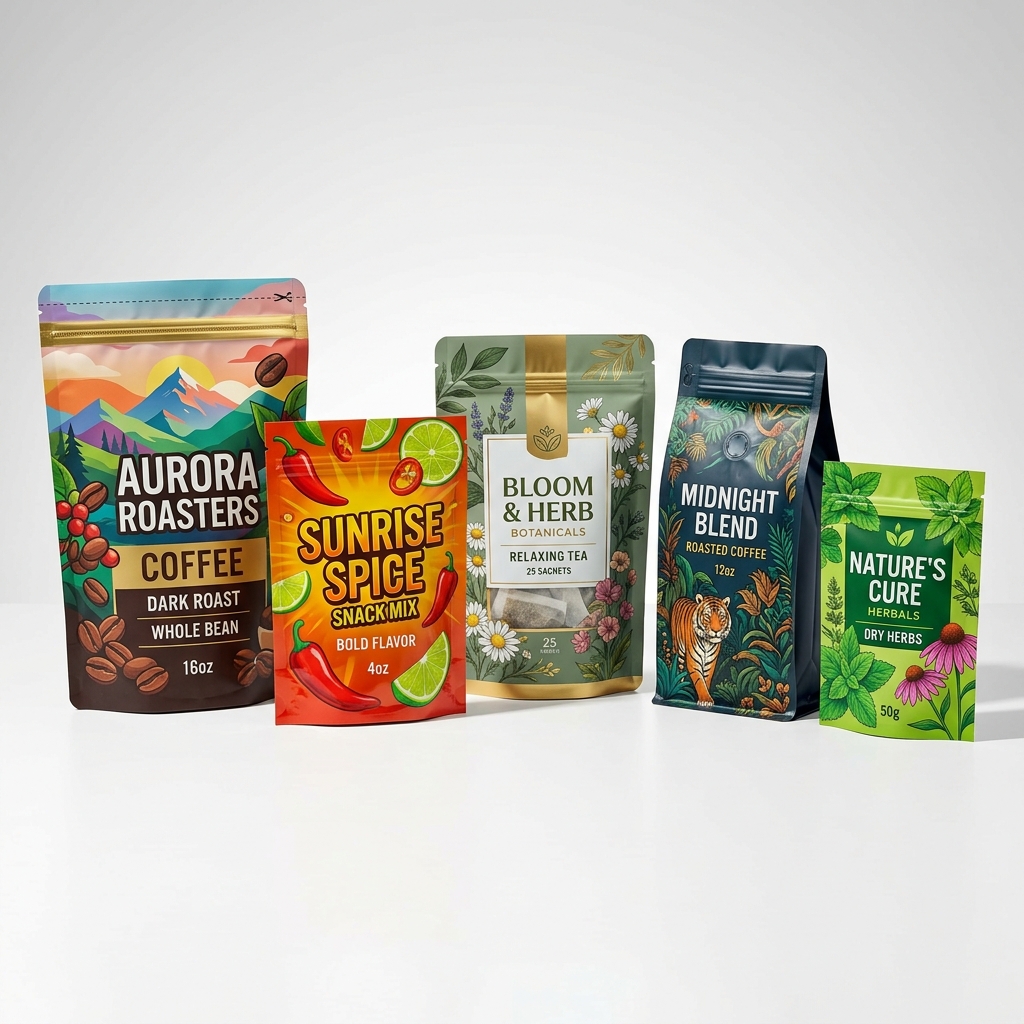
What Is Mylar? Understanding the Material
Mylar is a brand name for BoPET (biaxially-oriented polyethylene terephthalate) film originally developed by DuPont in the 1950s. The term "mylar bag" now refers to any multi-layer barrier pouch using PET film as its structural base. According to Cubit Packaging, modern mylar bags use a tri-layer construction: PET exterior for strength and printability, aluminum foil middle layer for barrier performance, and PE (polyethylene) inner layer for heat-seal capability.
How Mylar Bags Work: The Barrier Science
The effectiveness of mylar bags comes from their multi-layer barrier construction. Each layer serves a specific purpose:
- PET (Polyethylene Terephthalate): The outer layer provides structural strength, puncture resistance, and a smooth surface for high-quality printing. BoPET film is stretched in two directions during manufacturing, creating exceptional tensile strength.
- Aluminum Foil: The middle layer is the key barrier element. Aluminum foil blocks 100% of light transmission and creates a near-perfect barrier against oxygen (OTR < 0.1 cc/m²/day) and moisture (WVTR < 0.01 g/m²/day).
- PE (Polyethylene): The inner layer provides food-safe contact surface and enables heat sealing. LLDPE (Linear Low-Density PE) is preferred for its superior seal strength.
Types of Mylar Bags
Mylar bags are available in several configurations, each designed for specific applications:
Stand-Up Pouches (Doypacks)
The most popular format, featuring a gusseted bottom that allows the bag to stand upright on retail shelves. Available with resealable zippers, clear windows, and child-resistant closures. Ideal for coffee, snacks, cannabis, and supplements.
Flat Mylar Bags
Three-side-sealed bags without a gusset. More compact and economical, these are ideal for, samples, sachets, and single-serve portions. Available with tear notches for easy opening.
Gusseted Bags
Side or bottom gussets expand to accommodate larger volumes. Popular for coffee (with degassing valve), pet food, and bulk products. Can include tin-tie closures.
Child-Resistant (CR) Bags
Specialized closure mechanisms (pinch-n-slide, press-to-close) certified to ASTM D3475 standards. Required for cannabis products in all legal US states and many pharmaceutical applications.
Mylar Bag Thickness Guide
Thickness is measured in mils (thousandths of an inch) or microns (µm). The right thickness depends on your product and storage duration:
| Thickness | Best For | Barrier Level |
|---|---|---|
| 2.5 mil (63 µm) | Sachets, samples, light snacks | Standard |
| 3.5 mil (89 µm) | Coffee, retail snacks, spices | Good |
| 5.0 mil (127 µm) | Cannabis, long-term food storage | High |
| 7.0 mil (178 µm) | Military MRE, industrial storage | Maximum |
Common Uses for Mylar Bags
Mylar bags serve a wide range of industries and applications:
- Long-term food storage: With oxygen absorbers, mylar bags preserve dry goods for 25-30 years
- Cannabis packaging: Child-resistant, smell-proof, and state-compliant options
- Coffee and tea: Degassing valve compatible with excellent aroma preservation
- Supplements and pharmaceuticals: GMP-ready packaging with moisture barriers
- Pet food and treats: Durable resealable pouches with heavy-duty construction
- Electronics: Anti-static and moisture protection for sensitive components
How to Choose the Right Mylar Bag
According to Cubit Packaging engineers, selecting the right mylar bag requires evaluating four key factors:
- Product type: Dry goods, liquids, or powders each require different barrier specifications
- Shelf life target: Short-term retail (3.5 mil) vs. long-term storage (5+ mil)
- Regulatory requirements: FDA compliance, child-resistant certification, state labeling
- Retail presentation: Stand-up for shelf display, flat for compact shipping, gusseted for volume
Mylar Bags vs. Other Packaging
Compared to standard plastic bags and paper packaging, mylar bags provide significantly superior barrier performance. Standard plastic bags offer no light protection and limited oxygen barriers, resulting in 1-2 year shelf life. Paper bags provide no moisture or oxygen barrier. Mylar bags with aluminum lamination block 100% of light and provide near-perfect gas barriers, extending shelf life to decades.
Ready to order custom mylar bags? Get a free quote from Cubit Packaging — MOQ 500 units with free design support.
Continue Learning About Mylar Bags
- What Is Mylar Made Of? — Deep dive into BoPET polymer chemistry and manufacturing.
- Types of Mylar Bags — Every format compared with decision-making frameworks.
- Custom Mylar Bags Buyer's Guide — Complete guide to ordering custom-printed mylar bags.
- How to Seal Mylar Bags — Sealing techniques for every equipment type.
- Mylar Bag Thickness Guide — How to choose the right mil for your application.
Shop Mylar Bags
- Custom Mylar Bags — Fully customizable from 500 units
- Mylar Bags — Browse all mylar bag products
- Stand-Up Pouches — Self-standing retail format
Need mylar bags on a rush timeline?
Whether you are stocking a dispensary, launching a food product, or prepping for an event, rush mylar bag production is available in 5-7 business days. Check the complete rush mylar bag guide or request a rush quote directly.
🛍️ Ready to Order Custom Mylar Bags?
Now that you know what mylar bags are and how they work, design your own. Cubit offers custom printed mylar bags from $0.05/unit — smell-proof, food-grade barrier pouches with your branding. 500 unit MOQ.
→ Browse Custom Mylar Bags · Design with AI · Get a Free Quote
Related Mylar Guides
Explore our complete mylar bag resource library:
- How to Seal Mylar Bags: 3 Methods at Exact Temps — Heat sealer, impulse sealer & iron guide with step-by-step photos
- Mylar Bags + Oxygen Absorbers for Food Storage — Exact absorber sizes for every food type with printable chart
- Mylar Bags vs Vacuum Seal — Which method lasts longer? Full 2026 comparison
- Cannabis & CBD Mylar Bags Compliance Guide — Child-resistant packaging & state labeling requirements
- Coffee Mylar Bags Packaging Guide — Degassing valves, barrier properties & custom printing for roasters
- Custom Mylar Bags Buyer's Guide — Ordering, pricing, printing methods & MOQs
- Eco-Friendly Mylar Bag Alternatives — Sustainable options for 2026
Ready to order? Browse Custom Mylar Bags → — fully printed, smell-proof, resealable. Starting at $0.08/unit with 500 MOQ. Get a free quote →