
Compliance
Cannabis & CBD Mylar Bags: Compliance, Child-Resistant Packaging & Custom Design Guide (2026)
Humizair by Cubit
April 14, 2026
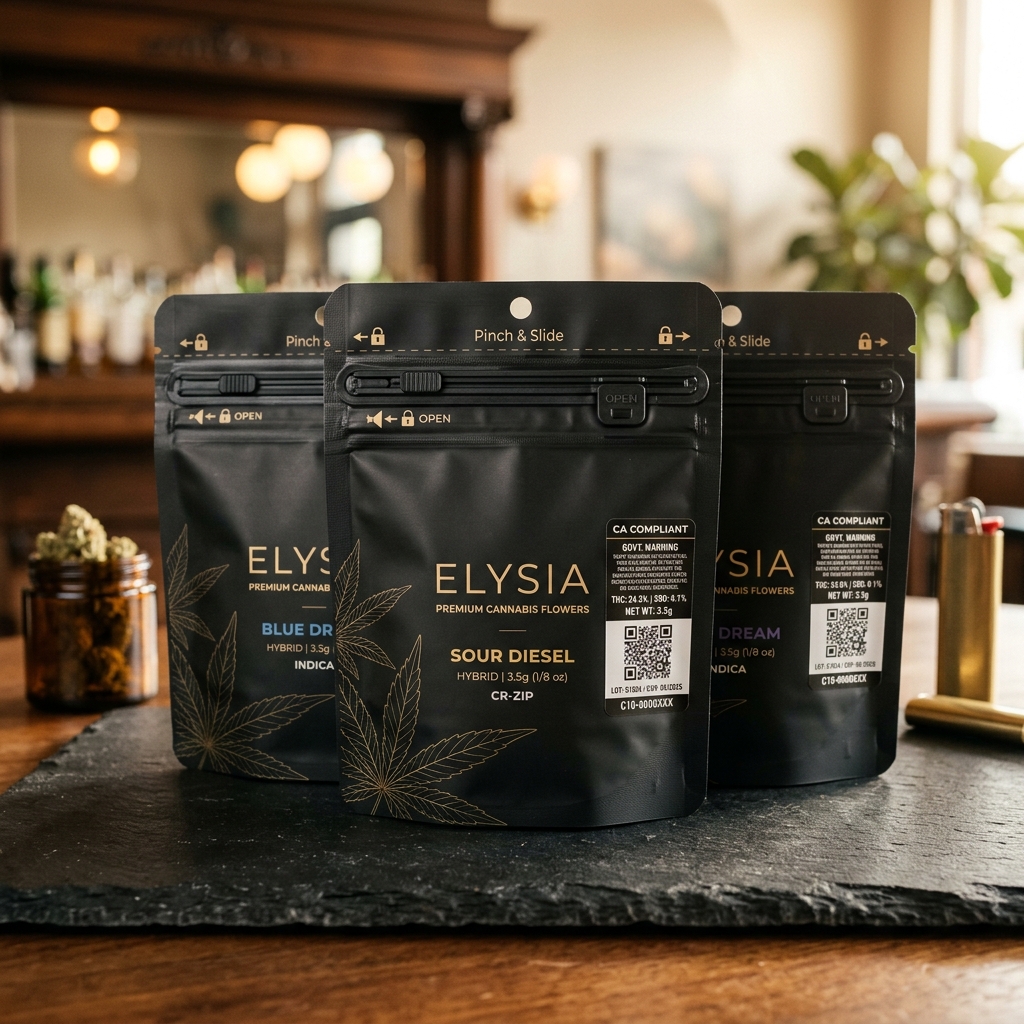
The cannabis industry's relationship with packaging is unlike any other consumer product category. A coffee roaster chooses packaging primarily for freshness and shelf appeal. A cannabis brand must navigate a maze of federal, state, and sometimes municipal regulations — where a single non-compliant label or missing warning can result in product recalls, fines, or loss of license.
Mylar bags have become the dominant packaging format for flower, pre-rolls, edibles, and concentrates across legal markets. They are lightweight, cost-effective, customizable, and — when properly manufactured — meet all barrier and child-resistance requirements. But "mylar bag" is a broad category, and not all bags are created equal for cannabis compliance.
This guide breaks down everything cannabis and CBD brands need to know about compliant mylar packaging in 2026.
Cannabis products degrade when exposed to oxygen, light, moisture, and temperature extremes. Specifically:
Quality mylar bags with aluminum lamination address all three vectors:
| Property | Cannabis Mylar Bag (5 mil+) |
|---|---|
| Oxygen barrier | < 1.0 cc/m²/day |
| Moisture barrier | < 0.05 g/m²/day |
| Light block | 99.9% UV/visible |
| Odor containment | Excellent (sealed bags) |
Compliant mylar bags cost $0.15–$0.60 per unit (depending on size, CR mechanism, and printing), compared to $1.00–$3.50 for rigid CR containers like push-and-turn jars or tin cans. For brands processing thousands of SKUs per month, this cost difference is significant.
Child-resistant packaging for cannabis must meet 16 CFR § 1700.20, the testing protocol developed by the Consumer Product Safety Commission (CPSC) under the Poison Prevention Packaging Act. The protocol requires:
| CR Mechanism | How It Works | Difficulty for Children | Ease for Adults |
|---|---|---|---|
| Press-and-slide zipper | Requires pressing two specific points while sliding | ⭐⭐⭐⭐ | ⭐⭐⭐⭐ |
| Tear-notch with CR zipper | Initial tear opening + CR zipper for reclose | ⭐⭐⭐⭐ | ⭐⭐⭐⭐⭐ |
| Button-lock exit bag | Push button mechanism to release seal | ⭐⭐⭐⭐⭐ | ⭐⭐⭐ |
| Pinch-and-slide | Must pinch specific points while sliding open | ⭐⭐⭐⭐ | ⭐⭐⭐⭐ |
Critical note: Not all "child-resistant" bags on the market have actually been CPSC-tested. Demand a copy of the CPSC test report or letter of compliance from your bag supplier. Using untested bags puts your license at risk.
While requirements vary by state, a compliant cannabis mylar bag label in 2026 generally must include:
Multiple states have cracked down on packaging that could attract children, particularly for edible products:
| Feature | Standard | Premium |
|---|---|---|
| Thickness | 4–5 mil | 6–8 mil |
| Layers | PET/PE | PET/AL/PE or PET/VMPET/PE |
| CR mechanism | Press-and-slide | Button-lock or tear-notch+CR |
| Finish | Gloss or matte | Matte with spot UV, soft-touch |
| Printing | Up to 8 colors | Full CMYK + Pantone match |
| Product Type | Recommended Size | Common Weights |
|---|---|---|
| Flower (small) | 3.5" × 5.5" | 1g, 3.5g (eighth) |
| Flower (medium) | 4" × 6.5" | 7g (quarter), 14g (half) |
| Flower (large) | 6" × 9" | 28g (ounce) |
| Pre-rolls | 3" × 8" or 4" × 10" | 1–5 pack |
| Edibles | 4" × 6" | 100mg package |
| Concentrates | 3" × 4" | 0.5g–1g |
Hemp-derived CBD products (containing ≤ 0.3% THC by dry weight, as defined under the 2018 Farm Bill) face a different but overlapping regulatory landscape:
In most legal states, yes — child-resistant packaging is required for all cannabis products intended for consumer sale, including flower, edibles, concentrates, pre-rolls, and topicals. Some states allow non-CR packaging only for products sold exclusively to licensed processors or distributors (not end consumers). Always verify the specific requirements of your state licensing authority.
Technically yes, but this approach has significant compliance risks. Pre-printed custom bags ensure that all required warnings, symbols, and disclosures are permanently integrated into the design rather than relying on adhesive labels that can peel off, fade, or be removed. Many state inspectors specifically check for label adhesion and legibility during compliance reviews.
No packaging is truly "child-proof" — the correct term is "child-resistant." The CPSC standard (16 CFR § 1700.20) sets a benchmark where fewer than 20% of tested children can open the package within 5 minutes. The goal is to make the package significantly difficult for young children to open while remaining accessible to the adult consumer. Using the term "child-proof" on marketing materials could expose your brand to liability claims.
This depends on your state. In many states with both adult-use cannabis and hemp-CBD programs, CBD gummies are subject to the same child-resistant and labeling requirements as THC gummies. Even in states without specific CBD packaging laws, the CPSC may consider CBD gummies an "accessible hazard" for children, making CR packaging a prudent risk-management decision regardless of legal mandate.
Work with a packaging supplier that has dedicated cannabis compliance expertise. A qualified supplier will review your artwork against current state regulations, flag potential issues, and provide a compliance checklist sign-off before entering production. Cubit Packaging offers complimentary compliance review for all cannabis packaging orders.
Navigate cannabis packaging compliance with confidence. Cubit Packaging manufactures CPSC-tested child-resistant mylar bags with custom branding, QR-ready labels, and full regulatory compliance — from 1,000 units. Get your compliance consultation →
Cubit offers custom printed mylar bags from $0.05/unit — smell-proof, food-grade barrier pouches with child-resistant, ziplock, and heat-seal options. 500 unit MOQ.
📖 Read the complete guide: What Are Mylar Bags? The Complete Guide for 2026 — Everything you need to know about mylar bag types, materials, thickness, food safety, and more.
Start your custom mylar bag order. Custom Printed Mylar Bags → — FDA food-grade, full barrier protection. Starting at $0.08/unit. Get a free quote →
Design your packaging free in 60s
Try the free AI packaging design toolReady to Order Custom Mylar Bags?
Custom printed mylar bags from 500 units. Food-grade, smell-proof, child-resistant options. Free design support + 3D mockup.