
Packaging Guides
Mailer Box vs Shipping Box: What's the Difference and Which Do You Need?
Cubit Packaging
March 26, 2026
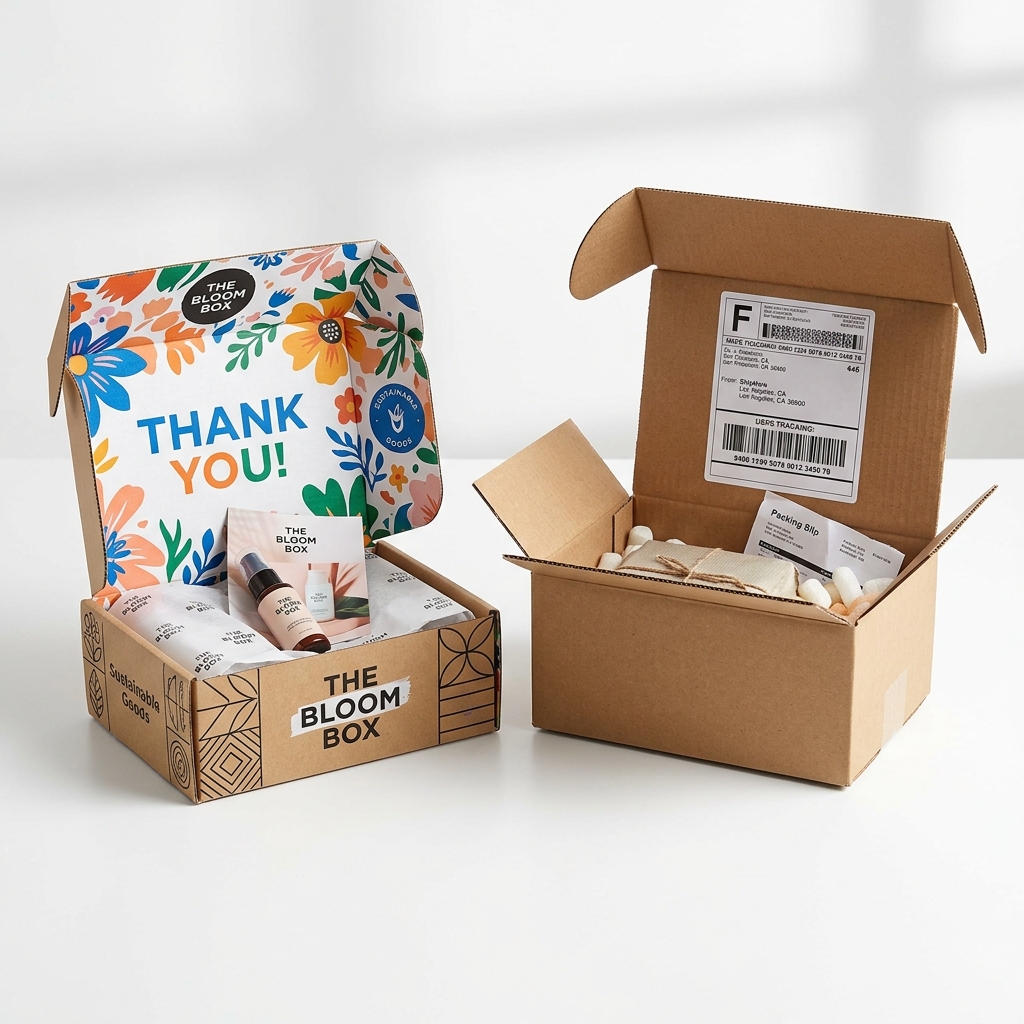
Definition: A mailer box (also called a tuck-top mailer or REFT box) is a one-piece corrugated packaging format that folds together with interlocking tabs and ships flat. It features full-color printing on both interior and exterior surfaces, creating a branded unboxing experience without requiring an outer shipping container.
Definition: A shipping box (technically called a Regular Slotted Container or RSC) is a corrugated box with four flaps on top and bottom that meet in the center and are sealed with packing tape. RSC boxes account for approximately 80% of all corrugated boxes produced globally (TAPPI, 2023).
One of the most common questions brands ask when starting with custom packaging: what is the difference between a mailer box and a shipping box? While both are corrugated boxes that protect products during shipping, they serve fundamentally different purposes and deliver very different customer experiences.
| Feature | Mailer Box | Shipping Box (RSC) |
|---|---|---|
| Also Called | Tuck-top mailer, literature mailer, REFT box | Regular Slotted Container, shipping carton |
| Primary Purpose | Brand presentation + shipping combined | Product protection during transport only |
| Construction | One-piece, self-locking tabs, no tape required | Four flaps, requires tape or staples to seal |
| Material | E-flute corrugated (1.5mm thick) | B-flute (3mm) or C-flute (4mm) corrugated |
| Printing | Full-color CMYK inside and outside; premium finishes available | Usually plain kraft or 1–2 color flexo print |
| Unboxing Experience | Premium — designed to impress the end customer | Basic — functional, not designed for presentation |
| Cost Range (500+ units) | $0.75–$3.50/unit | $0.30–$1.50/unit |
| Ships Flat? | Yes — assembles without tape or glue | Yes — but requires tape for assembly |
| Weight Capacity | Up to 5–10 lbs (E-flute) | Up to 30–65 lbs (B/C-flute) |
| Surface Quality | Smooth — excellent for high-resolution printing | Rough — corrugated fluting visible on surface |
| Best For | E-commerce, DTC, subscription boxes, gifts, PR packages | B2B shipping, warehouse fulfillment, heavy items |
Quotable Fact: Mailer boxes are the most popular custom packaging type for e-commerce brands, with demand growing at approximately 12% annually driven by the $6.3 trillion global e-commerce market (eMarketer, 2025).
A mailer box is a one-piece corrugated box designed specifically for direct-to-consumer shipping. It folds together with interlocking tabs that hold the box closed without requiring tape, creating a clean, premium, tape-free unboxing experience.
| Specification | Detail |
|---|---|
| Material | E-flute corrugated cardboard, 1.5mm thickness |
| Board weight | Typically 200–250 GSM liners |
| Closure mechanism | Self-locking tuck tabs (friction fit) |
| Print area | 100% of interior and exterior surfaces |
| Print method | Digital (under 500 units) or offset lithography (1,000+ units) |
| Common sizes | 6×4×2", 8×6×2", 10×8×3", 12×10×4", 14×10×4" |
| Max product weight | 5–10 lbs (2.3–4.5 kg) |
A shipping box — technically called a Regular Slotted Container (RSC) — is the most widely manufactured packaging format in the world. According to the Fibre Box Association, over 95% of all products in the United States are shipped in corrugated containers, with RSC boxes being the dominant format.
| Specification | Detail |
|---|---|
| Material | B-flute (3mm) or C-flute (4mm) corrugated |
| Board grade | Rated by ECT (Edge Crush Test) — standard 32 ECT |
| Closure mechanism | Four flaps sealed with packing tape or staples |
| Print area | Exterior only; limited print quality on fluted surface |
| Print method | Flexographic (1–3 colors) or plain kraft |
| Max product weight | 32 ECT: up to 65 lbs; 44 ECT: up to 95 lbs |
Key Concept: The "flute" is the wavy, arched layer of paper sandwiched between two flat liner boards in corrugated cardboard. Different flute sizes serve different purposes — thinner flutes print better while thicker flutes protect better.
| Flute Type | Thickness | Flutes Per Foot | Print Quality | Best For |
|---|---|---|---|---|
| E-Flute | 1.5 mm | 90 | Excellent (smooth) | Mailer boxes, folding cartons, retail displays |
| B-Flute | 3.0 mm | 47 | Good | Shipping boxes for medium-weight items |
| C-Flute | 4.0 mm | 39 | Fair (fluting visible) | Standard shipping boxes, max crush resistance |
| BC Double Wall | 6.5 mm | — | Poor | Heavy-duty industrial shipping, 95+ lb loads |
The fundamental tradeoff: thinner flutes (E-flute) have smoother surfaces for high-resolution printing but less crush resistance. Thicker flutes (C-flute) provide superior stacking strength but have a visibly wavy surface that reduces print quality.
Quotable Insight: For products under 5–10 lbs, a custom mailer box can serve as both product packaging AND shipping container — a strategy called single-pack shipping that eliminates the need for an outer box, reducing total packaging cost by 30–40% and material waste by up to 50%.
Benefits of the single-pack shipping approach:
However, if your product is fragile, heavy (over 10 lbs), or shipping via carriers with aggressive handling, a mailer box inside a shipping box provides the best protection.
Cost comparison for a medium-sized box (approximately 10×8×3 inches):
| Quantity | Custom Mailer Box (E-flute, CMYK) | Plain Shipping Box (C-flute, kraft) | Cost Difference |
|---|---|---|---|
| 250 units | $2.50–$3.50/unit | $0.80–$1.20/unit | Mailer costs 2–3× more |
| 500 units | $1.50–$2.50/unit | $0.50–$0.90/unit | Mailer costs 2–3× more |
| 1,000 units | $1.00–$2.00/unit | $0.35–$0.70/unit | Mailer costs 2–3× more |
| 5,000+ units | $0.60–$1.20/unit | $0.25–$0.45/unit | Mailer costs 2–3× more |
Shipping boxes are 55–65% cheaper per unit, but they deliver zero brand value. For DTC brands, the additional investment in custom mailer boxes is typically recovered through 40% higher repeat purchase rates and organic social media exposure from unboxing content (Dotcom Distribution, 2024).
Yes. Mailer boxes are made from corrugated cardboard, which is one of the most widely recycled materials globally — with a 93.6% recycling rate in the United States (American Forest and Paper Association, 2024). Both kraft and white mailer boxes are accepted by curbside recycling programs. Remove any plastic inserts or foam before recycling.
No. Mailer boxes have self-locking tuck tabs that hold the box closed through friction. However, when shipping through carriers like USPS, UPS, or FedEx, adding a single strip of clear tape is recommended to ensure the box stays closed during handling and sorting.
Measure your product dimensions (length × width × height) and add 0.5–1 inch of clearance on each side for tissue paper or protective cushioning. The box should be snug to prevent shifting but not so tight that removal is difficult. Most popular sizes: 6×4×2" for small items (jewelry, cosmetics), 10×8×3" for medium products (apparel, food), and 14×10×4" for larger items (shoes, electronics).
Yes. Mailer boxes are specifically designed for full-color CMYK printing on both interior and exterior surfaces. This dual-sided printing capability is one of the primary advantages over shipping boxes — the outside represents your brand publicly, and the inside creates the surprise-and-delight unboxing moment.
Both are made from recyclable corrugated cardboard. Mailer boxes use E-flute (thinner, 1.5mm = less material), while shipping boxes use B or C-flute (thicker, 3–4mm = more material). From a sustainability perspective, single-pack shipping with a mailer box (eliminating the outer shipping box entirely) uses approximately 40–50% less total material per shipment than a product box nested inside a shipping box.
The choice between a mailer box and a shipping box comes down to one question: who is opening the box? If the end customer opens it, invest in a branded mailer box that creates a memorable experience. If a warehouse worker or retailer opens it, a standard shipping box provides efficient, cost-effective protection.
Many brands use both — custom mailer boxes for DTC orders and shipping boxes for wholesale and B2B fulfillment. At Cubit Packaging, both options are available with MOQs starting at 100 units.
Ready to order? Custom Corrugated Boxes → — any size, 32-44 ECT, full-color printing. From $0.50/unit, 500 MOQ. Get a free quote →
Design your packaging free in 60s
Try the free AI packaging design toolNeed Custom Packaging?
Get a free quote with pricing, MOQs, and turnaround time for your custom packaging project.