
Eco-Friendly Mylar Bag Alternatives for 2026
The Recycling Problem with Traditional Mylar
Standard mylar bags use a multi-layer laminate (PET/Aluminum/PE) that cannot be mechanically separated for recycling. The bonded layers contaminate recycling streams and are rejected by municipal recycling facilities. This means traditional mylar bags end up in landfills where the aluminum layer prevents biodegradation. According to the Flexible Packaging Association, less than 6% of multi-layer flexible packaging is recycled globally.
Eco-Friendly Alternatives
1. Mono-Material Recyclable Pouches
Mono-material pouches use a single polymer type (typically PE or PP) throughout all layers, making them compatible with existing recycling infrastructure. Advanced metallization and barrier coatings replace the aluminum foil layer. These bags achieve 70-80% of traditional mylar barrier performance and are accepted in How2Recycle Store Drop-Off programs.
- Barrier: Good (not as strong as aluminum foil)
- Recyclability: Curbside or store drop-off
- Best for: Retail snacks, coffee, pet food (6-18 month shelf life products)
2. Compostable Bio-Based Films
Made from PLA (polylactic acid), cellulose, or PHA (polyhydroxyalkanoate) bioplastics. These films break down in industrial composting facilities within 90-180 days. ASTM D6400 and EN 13432 certified for commercial composting.
- Barrier: Moderate (suitable for short shelf life products)
- Recyclability: Industrially compostable
- Best for: Short-shelf products, samples, single-serve (3-6 month shelf life)
3. PCR (Post-Consumer Recycled) Content
Traditional mylar bag structures made with 30-50% recycled plastic content. Same barrier performance as virgin materials but with significantly reduced environmental footprint. Carbon footprint reduction of 40-60% compared to virgin-only bags.
- Barrier: Excellent (same as standard mylar)
- Recyclability: Same as conventional (limited)
- Best for: Brands wanting to reduce carbon footprint without sacrificing performance
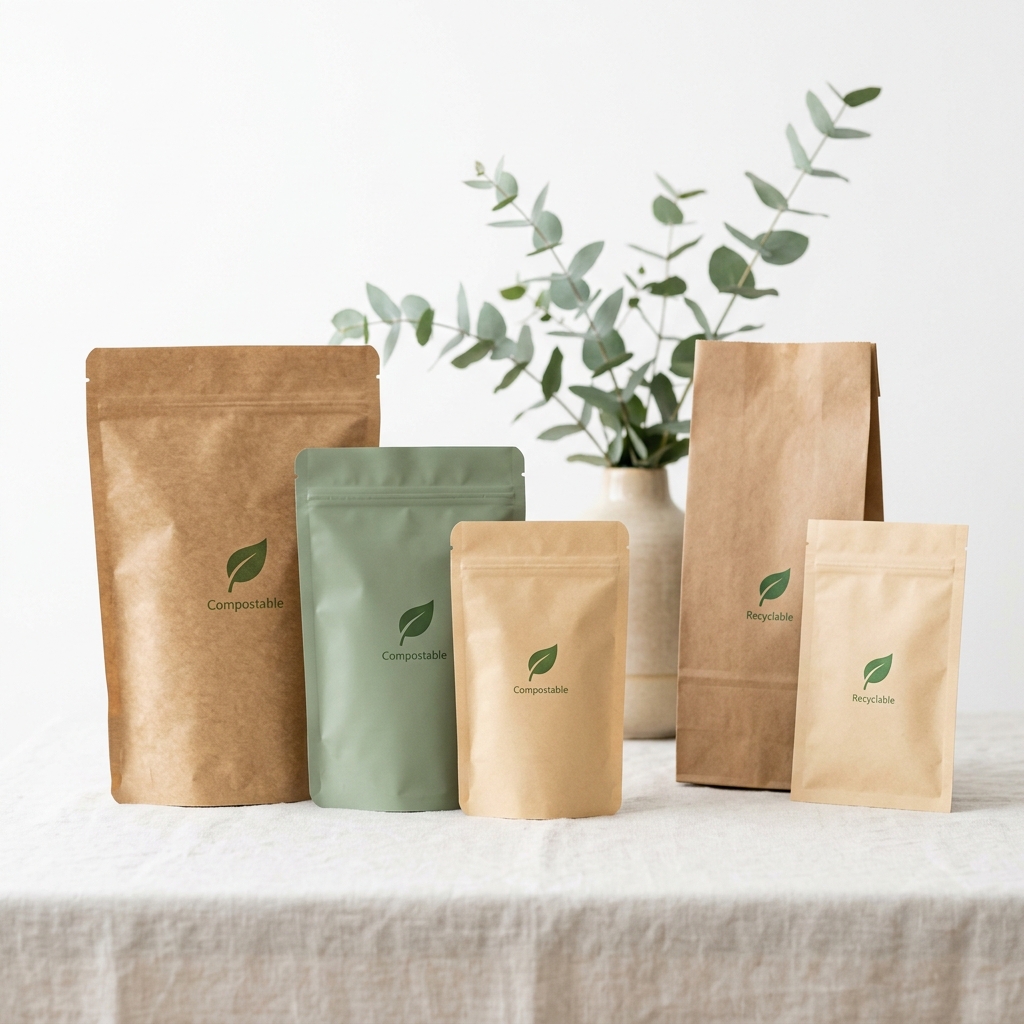
4. Paper-Based Barrier Pouches
Kraft paper exterior with thin barrier coating. Provides a natural, premium aesthetic while maintaining acceptable moisture and oxygen barriers. Perfect for organic, natural, and artisan brands.
Barrier Performance Comparison
| Material | O₂ Barrier | Moisture Barrier | Shelf Life | Recyclable |
|---|---|---|---|---|
| Standard Mylar (PET/AL/PE) | Excellent | Excellent | 25-30 years | No |
| Mono-Material PE | Good | Good | 6-18 months | Yes |
| Compostable (PLA/Cellulose) | Moderate | Moderate | 3-6 months | Compostable |
| PCR Content (30-50%) | Excellent | Excellent | 25-30 years | No |
| Paper-Based Barrier | Moderate | Good | 3-12 months | Yes |
Cubit Green: Sustainable Packaging Program
Cubit Packaging offers all four eco-friendly alternatives through our Cubit Green program. We help brands transition to sustainable packaging with material consultation, barrier testing, and shelf life validation. No compromise on design quality — all eco-friendly options support full-color custom printing.
Ready to go green? Explore Cubit Green or request a sustainability consultation.
Related Guides
- What Is Mylar Made Of? — Understand the material science to appreciate why alternatives are needed.
- Packaging Trends 2026 — Sustainability is trend #1 for 2026 packaging.
- Food Grade Mylar Bags — FDA compliance for all packaging materials, including eco alternatives.
- Stand-Up Pouches Guide — Flexible packaging formats leading the sustainability movement.
Shop Sustainable Packaging
- Eco-Friendly Packaging — Browse our full sustainable packaging line
- Kraft Mylar Bags — Natural kraft with recyclable materials
- Paper Bags — 100% recyclable paper packaging options
🛒 Order Custom Mylar Bags
Cubit offers custom printed mylar bags from $0.05/unit — smell-proof, food-grade barrier pouches with child-resistant, ziplock, and heat-seal options. 500 unit MOQ.
📖 Read the complete guide: What Are Mylar Bags? The Complete Guide for 2026 — Everything you need to know about mylar bag types, materials, thickness, food safety, and more.
Looking for sustainable alternatives? Custom Mylar Bags → — recyclable options available with custom printing. Browse eco-friendly packaging →