
Cubit
Rush Order
Home/Box Styles/Fold and Assemble
Fold and Assemble
All Box Styles

Fold and Assemble

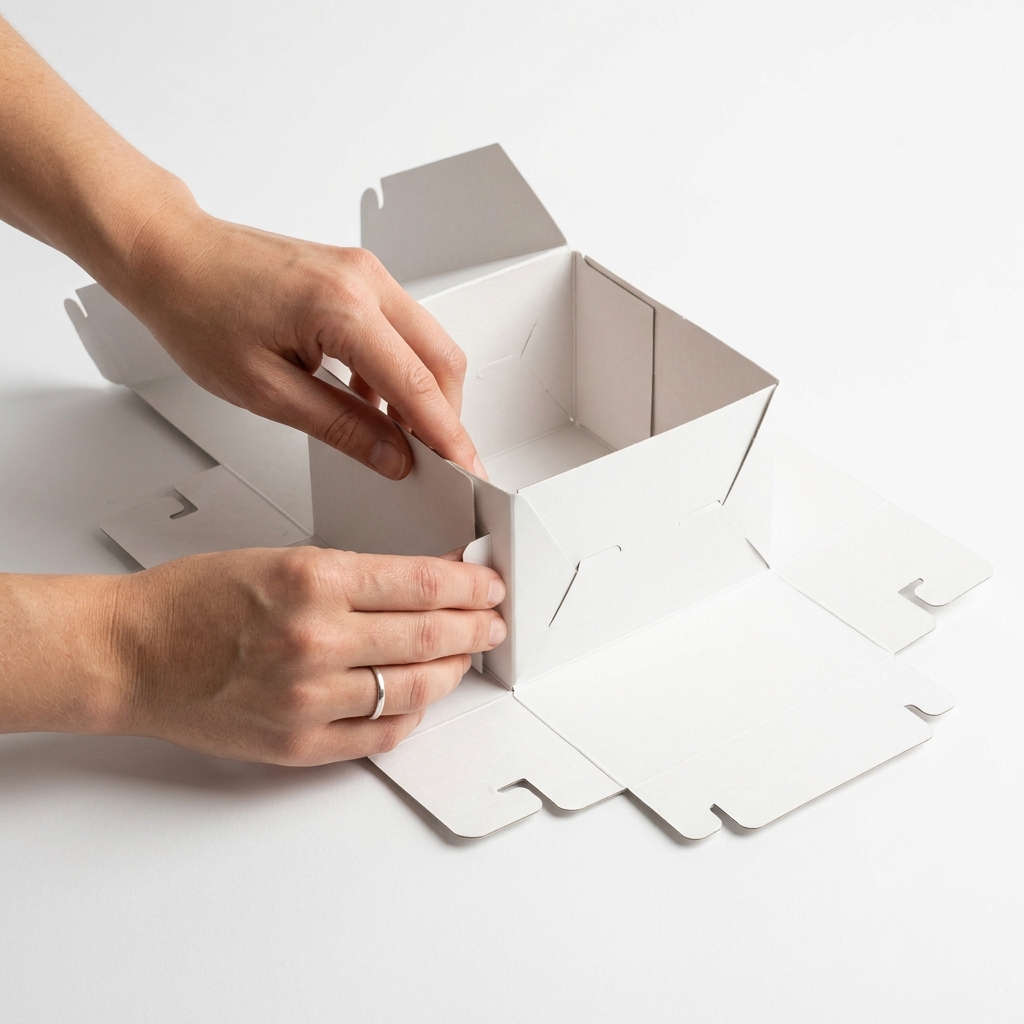
A fold and assemble box is a flat-sheet carton designed for manual assembly without any pre-gluing during manufacturing. Every fold, tab, and lock is die-cut into the flat sheet so the packer creates the complete box using only their hands. This approach gives the lowest possible per-unit production cost because the manufacturer skips the gluing station entirely. The trade-off is slower assembly speed: a fold-and-assemble box takes 10-20 seconds to build compared to under 1 second for a pre-glued auto bottom. This makes the format ideal for low-volume runs, seasonal products, and short-run promotional packaging where tooling and setup costs matter more than packing line throughput. Construction complexity ranges from simple four-fold trays to elaborate multi-tab structures that lock from multiple directions. Materials include SBS, kraft, and corrugated board. Cubit produces custom fold and assemble boxes from 100 units.

4 Materials Available7 Finishes Available
Cubit

Everything you need for packaging, in one place.

Products

  • Custom Boxes
  • Mailer Boxes
  • Corrugated Boxes
  • Rigid Boxes
  • Folding Cartons
  • Stand-Up Pouches
  • Custom Stickers
  • Custom Labels
  • Mylar Bags
  • All Products
  • All Categories

Platform

  • Cubit Store
  • Cubit Design
  • Cubit Flow
  • Cubit One
  • Cubit Green
  • Cubit Secure
  • AI Consultant

Industries

  • E-commerce & DTC
  • Food & Beverage
  • Cosmetics & Beauty
  • Cannabis & CBD
  • Pharmaceuticals
  • Coffee & Tea
  • Retail & CPG
  • Subscription Boxes
  • All Industries

Service Areas

  • Fremont, CA (HQ)
  • San Francisco
  • San Jose
  • Los Angeles
  • Oakland
  • Bay Area
  • California
  • All Locations

Company

  • About Us
  • Blog
  • Case Studies
  • Contact
  • Partners

Support

  • Help Center
  • Request a Quote
  • Bulk Packaging
  • Corporate Programs
  • Flexible Packaging
  • Wholesale Mylar Bags
  • Wholesale Poly Mailers
  • Wholesale Folding Cartons
  • ⚡ Rush Orders
  • Shipping Info
  • Returns
  • Contact Us
  • Barcode Generator
  • Pouch Dieline Generator
  • ECT Guide
  • Box Size Finder
  • Carbon Calculator
  • AI Dieline Generator
  • Packaging Mockup Generator
Stay updated with packaging trendsNo spam, unsubscribe anytime.
© 2026 Cubit. All rights reserved.
Privacy Policy•Terms of Service•Cookie Policy

Best For:

Small Business PackagingPop-Up ShopsArtisan & Handmade ProductsFarmers MarketsSubscription Box StartupsEvent Packaging
Free Shipping
8-12 Day Production
MOQ 100 Units

Technical Specifications

assembly
Manual fold along scored lines
max size
16 x 14 x 10 inches
min size
3 x 3 x 2 inches
closure type
Tab and slot or friction lock
ideal weight range
Up to 12 lbs
material compatibility
Kraft Paper, White Cardboard, Corrugated Cardboard

Available Materials

Choose the right substrate for your Fold and Assemble packaging based on product weight, sustainability goals, and print requirements.

White Cardboard

Recyclable

Kraft Paper

Eco Recyclable

Eco Kraft

Eco Recyclable

Corrugated Cardboard

Recyclable

Available Finishes

Enhance your Fold and Assemble with premium finishes that add tactile appeal and visual impact.

Gloss Lamination

Gloss lamination applies a clear, reflective polypropylene film over the entire printed surface. The film intensifies CMYK color values, making photographs and gradients look sharper and more saturated. Retail toy packaging, snack food boxes, and consumer electronics cartons use gloss lam because the shiny surface catches store lighting and draws attention at a distance. The trade-off is that gloss shows fingerprints and scratches more than matte. Film thickness runs 12-25 microns. The protective layer resists moisture, scuffing, and ink rubbing during transit. Gloss lamination runs through thermal or wet laminating equipment after printing and before die-cutting.

+10% price

Matte Lamination

Matte lamination bonds a thin non-reflective polypropylene film to the printed surface of the carton. The film eliminates glare, slightly mutes color saturation, and gives the box a smooth, flat appearance that reads as understated and premium. Matte lam hides minor printing imperfections and fingerprints better than gloss, which is why cosmetics and luxury food brands default to it. The lamination layer also protects against scuffing, moisture, and ink transfer during shipping and shelf handling. Film thickness runs 12-25 microns. Matte lamination pairs well with spot UV, where a glossy accent on a matte background creates high-contrast visual interest on logos and typography.

+10% price

Spot UV

Spot UV applies a clear ultraviolet-cured coating to specific areas of the box rather than the entire surface. The result is a glossy, raised accent on logos, typography, or decorative patterns that contrasts against the surrounding matte or uncoated surface. The UV coating cures instantly under ultraviolet light during production, which creates a hard, durable finish that resists scratching. Raised spot UV adds a thicker coating layer (10-20 microns above the surface) that you can feel with your fingertip. This finish requires a separate printing plate aligned precisely to the artwork, so setup costs are higher than full-surface coatings.

+12% price

Embossing

Embossing uses a matched set of metal dies to push the carton material upward, creating a raised three-dimensional pattern or logo on the surface. The male die presses from behind while the female die shapes the front face. The depth of the emboss depends on material thickness and fiber direction, typically ranging from 0.5mm to 2mm of lift. Deeper embossing works better on thicker board (400gsm+) because the fibers have more room to stretch without cracking. Embossing works without ink or foil for a subtle tone-on-tone texture, or combined with foil stamping for a raised metallic effect. Heat is applied during the process (120-160°C) to help the paperboard fibers hold their new shape permanently.

+15% price

Debossing

Debossing is the reverse of embossing: it presses a design into the carton surface to create a recessed, sunken impression. The male die pushes down from the front while the female die supports from behind. The result is a clean indentation that catches shadows and creates visual depth without adding any material to the surface. Debossing works well for brand logos, decorative borders, and subtle patterns where the tactile quality matters more than visibility from a distance. Like embossing, depth ranges from 0.5mm to 2mm depending on board thickness. Debossing pairs well with matte and soft-touch laminations where the recessed areas create a contrast texture against the smooth surrounding surface.

+15% price

Die Cutting

Die cutting uses a custom-shaped steel blade mounted on a wooden board to cut paperboard into specific shapes during production. Every box shape starts as a flat sheet that passes through a die-cutting press where the steel rule die stamps out the carton blank, score lines, and perforation cuts in a single press cycle. The die is custom-made for each box design, which involves a one-time tooling cost. Die-cut accuracy runs within 0.5mm tolerance on modern flatbed and rotary die cutters. Beyond standard box shapes, die cutting creates custom windows, thumb-cut openings, hang-tab holes, and decorative shapes. Complex dies with many cut lines cost more due to the additional steel rule bending.

+10% price

Aqueous Coating

Aqueous coating is a water-based clear coat applied to the printed surface to protect against fingerprints, scuffing, and ink smearing. Unlike UV and lamination finishes that use plastic films or chemical curing, aqueous coating dries through evaporation, which makes it the most environmentally friendly protective finish available. The coating adds a subtle sheen without the high gloss of UV or lamination. It runs through the printing press in-line, which means no separate finishing step and faster production turnaround. Aqueous coating is FDA-compliant for indirect food contact packaging and recyclable with standard paper streams.

+5% price

Expert Packaging Guide

Fold and Assemble packaging from Cubit is fully customizable with 4 material options including White Cardboard, Kraft Paper, Eco Kraft and 1 more and 7 finish options. Every order includes free design assistance from our packaging engineers, who will help you select the optimal material weight, finish combination, and structural configuration for your specific product.

Our clients use Fold and Assemble packaging across industries including Small Business Packaging, Pop-Up Shops, Artisan & Handmade Products, Farmers Markets, and 2 more applications. With a minimum order quantity of just 100 units and standard production turnaround of 8-12 business days, Cubit makes custom Fold and Assemble packaging accessible to businesses of every size—from startup brands to enterprise operations processing thousands of units daily.

All Fold and Assemble packaging is produced using food-safe inks and coatings, and every order undergoes a three-stage quality inspection before shipping. Free ground shipping is included on all orders within the continental United States.

Frequently Asked Questions

What is a Fold and Assemble box?

A fold and assemble box is a flat-sheet carton designed for manual assembly without any pre-gluing during manufacturing. Every fold, tab, and lock is die-cut into the flat sheet so the packer creates the complete box using only their hands. This approach gives the lowest possible per-unit production cost because the manufacturer skips the gluing station entirely. The trade-off is slower assembly speed: a fold-and-assemble box takes 10-20 seconds to build compared to under 1 second for a pre-glued auto bottom. This makes the format ideal for low-volume runs, seasonal products, and short-run promotional packaging where tooling and setup costs matter more than packing line throughput. Construction complexity ranges from simple four-fold trays to elaborate multi-tab structures that lock from multiple directions. Materials include SBS, kraft, and corrugated board. Cubit produces custom fold and assemble boxes from 100 units.

What materials are available for Fold and Assemble packaging?

Fold and Assemble packaging is available in White Cardboard, Kraft Paper, Eco Kraft, Corrugated Cardboard. Each material offers different properties for strength, sustainability, and print quality.

What is the minimum order quantity for custom Fold and Assemble boxes?

Custom Fold and Assemble boxes start at 100 units with full-color printing, custom sizing, and your choice of materials and finishes. Volume discounts apply for orders of 500+ units.

How long does it take to produce custom Fold and Assemble packaging?

Standard production for custom Fold and Assemble boxes is 8-12 business days after artwork approval. Rush production is available in 5-7 business days for an additional fee. Free shipping on all orders within the continental US.

What products are best suited for Fold and Assemble packaging?

Fold and Assemble packaging is ideal for Small Business Packaging, Pop-Up Shops, Artisan & Handmade Products, Farmers Markets, Subscription Box Startups, Event Packaging. The structural design and material options make it versatile enough for products ranging from lightweight cosmetics to heavier food items.

Other Box Styles

Seal EndMailer BoxMylar BagsFive Panel HangerSleeve BoxesHanger Boxes

Ready to Order Fold and Assemble?

Get a custom quote with your specifications. Our packaging engineers respond within 15 minutes during working hours with material recommendations, pricing, and structural guidance.