
SBS vs CCNB Paperboard: Which Is Best for Your Packaging? (2026)
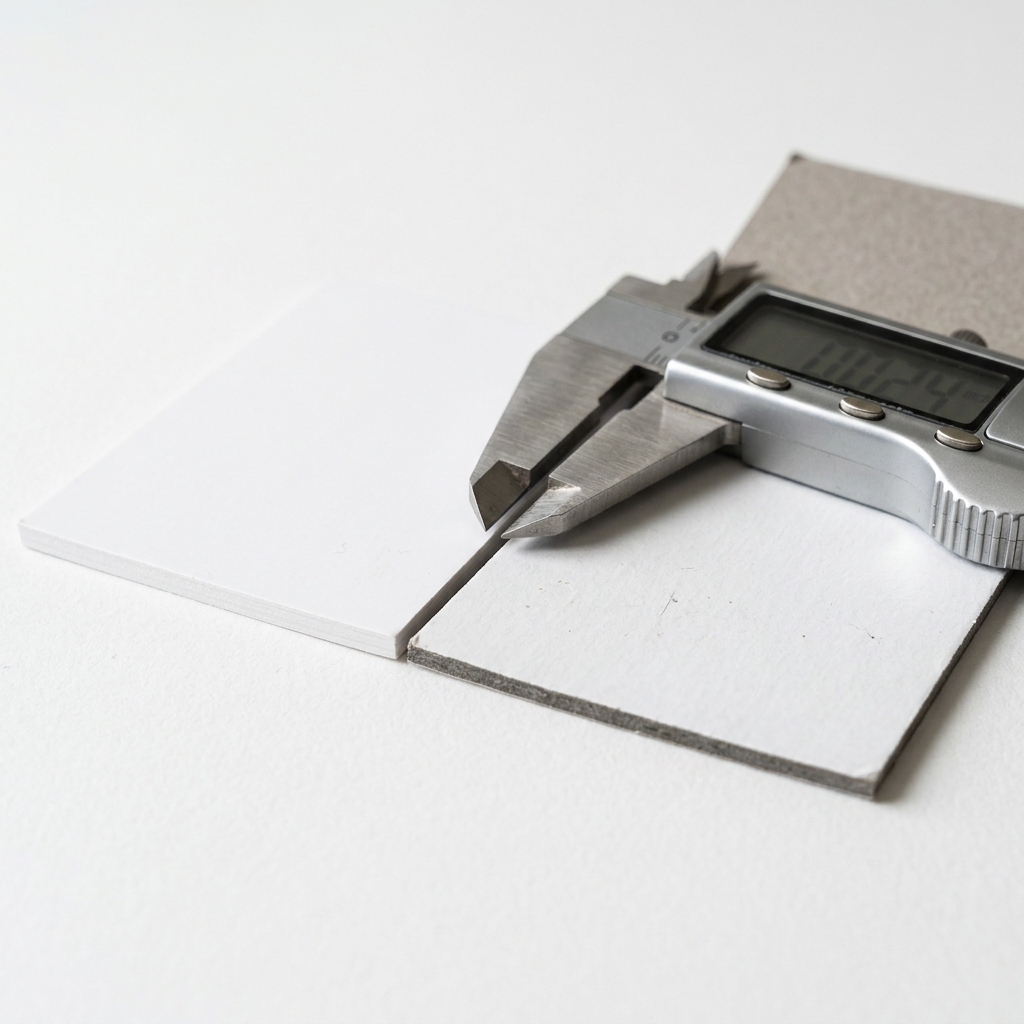
SBS vs CCNB Paperboard: Complete Comparison Guide
When ordering custom folding cartons, the first material decision is choosing between SBS (Solid Bleached Sulfate) and CCNB (Clay Coated News Back) paperboard. This choice affects print quality, cost, sustainability, and FDA compliance — here's everything you need to know.
Quick answer: SBS is premium white paperboard for luxury/food packaging ($0.55–$1.20/unit). CCNB is cost-effective with a white-coated front and grey recycled back ($0.35–$0.85/unit). Choose SBS for food contact, luxury brands, and premium print. Choose CCNB for general retail at 20–30% lower cost.
What Is SBS Paperboard?
SBS (Solid Bleached Sulfate) is premium paperboard made from 100% virgin wood pulp that is chemically bleached to achieve bright white fibers throughout. Both sides are white.
- Composition: Virgin wood pulp, multi-ply construction
- Appearance: Bright white on both sides
- Print quality: Excellent — highest color accuracy and vibrancy
- Thickness range: 12pt to 24pt
- FDA status: ✅ Approved for direct food contact
- Cost: Premium — 20–30% more than CCNB
Best Applications for SBS:
- Pharmaceutical packaging (FDA-required)
- Food packaging with direct contact (bakery, confectionery)
- Premium cosmetics and skincare
- Luxury retail (jewelry, electronics)
- Any application where interior appearance matters
What Is CCNB Paperboard?
CCNB (Clay Coated News Back) is a cost-effective paperboard with a clay-coated white front for printing and a grey recycled-fiber back. It uses up to 80% recycled content.
- Composition: Recycled fiber core with clay-coated front
- Appearance: White front (coated), grey back
- Print quality: Good — slightly less vibrant than SBS
- Thickness range: 16pt to 24pt
- FDA status: ⚠️ Not approved for direct food contact (indirect OK)
- Cost: Standard — 20–30% cheaper than SBS
Best Applications for CCNB:
- General retail packaging
- Health supplements (indirect food contact)
- Electronics accessories
- Household products
- Any application where the back is not visible
Side-by-Side Comparison
| Feature | SBS | CCNB |
|---|---|---|
| Front surface | Bright white, smooth | White, clay-coated |
| Back surface | White | Grey |
| Print quality | ★★★★★ | ★★★★☆ |
| Cost per unit | $0.55–$1.20 | $0.35–$0.85 |
| Recycled content | 0% (virgin pulp) | Up to 80% |
| FDA food contact | ✅ Direct contact | ⚠️ Indirect only |
| Structural strength | High | Moderate-High |
| Moisture resistance | Good | Moderate |
| Sustainability | FSC-certifiable | Higher recycled content |
| Interior printing | Excellent | Poor (grey back) |
When the Choice Matters Most
Choose SBS When:
- Your product has direct food contact (FDA requirement)
- You need interior printing (the inside is visible during unboxing)
- Color accuracy is critical (Pantone matching for luxury brands)
- The carton's back panel is visible on shelf
- You need moisture resistance (frozen food, beverages)
Choose CCNB When:
- Cost is a priority and grey back is hidden
- Product has no direct food contact (wrapped inside)
- You want higher recycled content for sustainability claims
- General retail shelf packaging where interior isn't seen
- Large volume orders where 20–30% savings are significant
Cost Impact at Scale
For a standard 4×3×2" RTE box with full-color offset printing:
| Quantity | SBS (16pt) | CCNB (16pt) | Savings with CCNB |
|---|---|---|---|
| 1,000 | $1.10/unit | $0.85/unit | $250 (23%) |
| 2,500 | $0.70/unit | $0.55/unit | $375 (21%) |
| 5,000 | $0.50/unit | $0.38/unit | $600 (24%) |
| 10,000 | $0.40/unit | $0.30/unit | $1,000 (25%) |
Cost optimization tip: Many brands use SBS for their flagship products and CCNB for secondary lines — getting premium quality where it matters most while saving 20%+ on the rest of their packaging.
Frequently Asked Questions
Can I print on the inside of CCNB cartons?
Technically yes, but the grey back makes interior printing look dull. If interior printing is important (unboxing reveal, promotional messaging), choose SBS.
Is CCNB recyclable?
Yes, CCNB is fully recyclable and often contains up to 80% recycled content. It's actually more sustainable than SBS from a recycled-content perspective.
Which board is better for frozen food?
SBS is better for frozen food because it has superior moisture resistance. The virgin fibers absorb less water than recycled fibers, preventing warping and structural failure in cold/moist environments.
Not sure which paperboard is right for your product? Get a free quote comparing both options or ask our AI consultant. Browse our full folding carton collection.
🛍️ Order Custom Folding Cartons in SBS or CCNB
Now you know which board to choose. Cubit offers custom folding cartons in both SBS and CCNB from $0.25/unit — with offset or digital printing, soft-touch, spot UV, and foil finishes. 500 unit MOQ.
Ready to order custom packaging? Custom Mailer Boxes → | Custom Folding Cartons → | Custom Mylar Bags → — full-color printing, free design support. From 500 units. Browse all products →