
Stand-Up Pouch Barrier Films Explained: PET/PE vs Foil vs Kraft (2026)
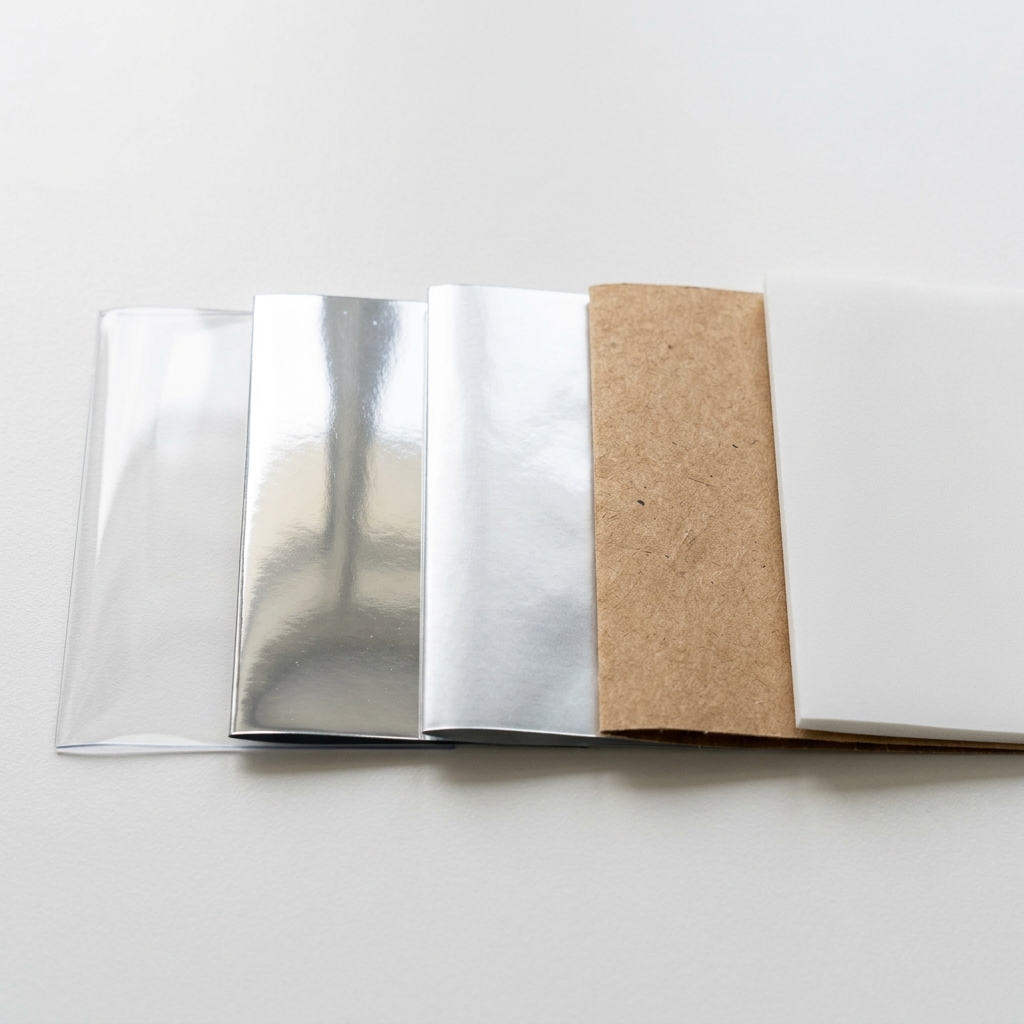
Stand-Up Pouch Barrier Films: How to Choose the Right Structure
The barrier film is the most important factor in stand-up pouch performance — it determines shelf life, product freshness, cost, and sustainability. This guide breaks down every film structure so you can choose the right barrier for your product.
Quick answer: Most food products need PET/AL/PE (foil laminate) for maximum protection. Dry snacks can use PET/PE to save 25%. Eco brands choose kraft/PE. Frozen products need nylon/PE for puncture resistance.
How Barrier Films Work
Stand-up pouches use multi-layer laminated films where each layer serves a specific function:
| Layer | Position | Function |
|---|---|---|
| Outer (print layer) | Outside | Printability, abrasion resistance, visual appearance |
| Barrier layer | Middle | Blocks oxygen, moisture, light, and aroma |
| Seal layer | Inside | FDA food-safe contact, heat-sealable for closure |
Film Structure Comparison
1. PET/PE — Basic Barrier
Structure: Polyester outer / Polyethylene inner (2 layers)
- OTR: 50–100 cc/m²/day
- MVTR: 5–10 g/m²/day
- Shelf life: 6–12 months
- Light barrier: None (transparent)
- Cost: Lowest — baseline pricing
- Best for: Dry snacks, candy, granola, trail mix, non-perishable items
Choose PET/PE when your product has low moisture content, doesn't contain oils (which oxidize), and will be consumed within 6 months.
2. PET/MPET/PE — Medium Barrier (Metalized)
Structure: Polyester outer / Metalized polyester barrier / Polyethylene inner (3 layers)
- OTR: 1–5 cc/m²/day
- MVTR: 0.5–2 g/m²/day
- Shelf life: 12–18 months
- Light barrier: Good (metalized layer reflects 95% of light)
- Cost: +15–20% vs PET/PE
- Best for: Dried fruits, protein bars, jerky, moderate-sensitivity supplements
Choose PET/MPET/PE when you need good barrier at a lower cost than full aluminum foil. The metalized layer provides ~90% of foil's barrier at 60% of the cost.
3. PET/AL/PE — High Barrier (Aluminum Foil)
Structure: Polyester outer / Aluminum foil barrier / Polyethylene inner (3 layers)
- OTR: <0.5 cc/m²/day
- MVTR: <0.5 g/m²/day
- Shelf life: 18–24+ months
- Light barrier: Complete (100% opaque)
- Cost: +25–35% vs PET/PE
- Best for: Coffee, pharmaceutical supplements, pet treats, powdered products
This is the gold standard for food packaging. Choose PET/AL/PE for any product that is sensitive to oxygen, moisture, or light — especially coffee, vitamins, and protein powders.
4. Nylon/PE — Puncture-Resistant
Structure: Nylon (PA) outer / Polyethylene inner (2 layers)
- OTR: 20–40 cc/m²/day
- MVTR: 10–20 g/m²/day
- Shelf life: 6–12 months
- Puncture resistance: Excellent (3x stronger than PET)
- Cost: +20–30% vs PET/PE
- Best for: Frozen foods, sharp products (bones, hardware), vacuum-sealed meats
5. Kraft/PE — Eco-Friendly Appearance
Structure: Kraft paper outer / Polyethylene inner (2 layers, sometimes with MPET middle)
- OTR: 100+ cc/m²/day (kraft only) or 5–10 (with MPET layer)
- MVTR: Variable — depends on PE thickness
- Shelf life: 3–12 months
- Visual: Natural, artisan, eco-friendly aesthetic
- Cost: Similar to PET/PE or +10% with MPET
- Best for: Coffee (with degassing valve), granola, natural/organic brands, artisan foods
Decision Matrix
| Product Type | Recommended Film | Why |
|---|---|---|
| Dry snacks, candy | PET/PE | Low moisture, consumed quickly |
| Coffee (whole bean) | PET/AL/PE + valve | Maximum barrier + CO₂ release |
| Coffee (ground) | Kraft/MPET/PE + valve | Artisan look + good barrier |
| Protein powder | PET/AL/PE | Hygroscopic — needs moisture barrier |
| Pet treats | PET/AL/PE + ziplock | Long shelf life + reclosable |
| Frozen food | Nylon/PE | Puncture resistance at low temps |
| CBD/cannabis | PET/AL/PE + CR zip | Child-resistant + opaque |
| Baby food (liquid) | PET/Nylon/PE + spout | Puncture-safe + pour control |
Frequently Asked Questions
Can I see through foil pouches?
No. Aluminum foil pouches are completely opaque. If you need product visibility, choose PET/PE with a clear window or PET/MPET/PE where only part of the pouch is metalized.
Are foil pouches microwavable?
No. Aluminum foil cannot be used in microwaves. For microwavable pouches, use PET/PE or nylon/PE structures.
Which film is most sustainable?
Mono-material PE pouches (PE/PE) are the most recyclable in existing streams. Kraft/PE pouches look eco-friendly but are technically difficult to recycle due to mixed materials.
Need help choosing the right barrier film? Get a free quote with film recommendations or ask our AI consultant. Browse our stand-up pouch collection.
Order custom stand-up pouches. Custom Stand-Up Pouches → — multi-layer barrier, ziplock, kraft & clear options. From $0.12/unit. Browse pouches →