
Packaging Guides
A guide to custom tab lock mailer boxes for growing brands
Cubit Team
June 22, 2026
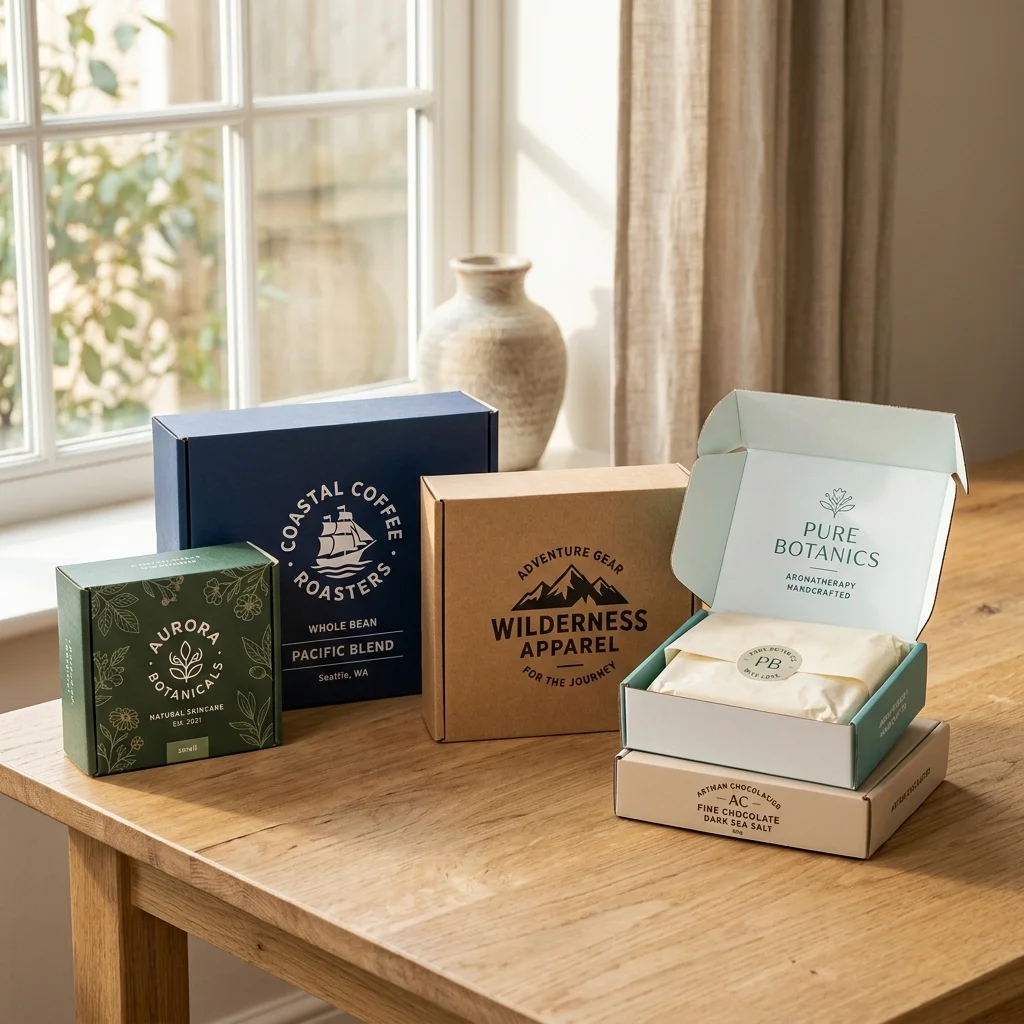
Custom Tab Lock Mailer Boxes are self-assembling, protective packaging boxes made from corrugated cardboard that lock securely using integrated tabs instead of heavy adhesives. These boxes are cut from a single sheet of board, folding together to create double-thickness side walls that resist crushing during transit. If you operate an e-commerce business, these mailers help protect your items while offering a clean, professional look when your customer opens the package.
Selecting the right shipping containers is one of the most practical decisions a logistics or marketing manager can make. Standard shipping cartons often require packing tape, extra void fill, and tedious manual setup. Tab lock mailers solve these common fulfillment issues by relying on structural folds rather than plastic tapes. This structural design makes them a highly efficient option for subscription boxes, retail cosmetics, consumer electronics, and apparel shipping.
At Cubit Packaging, we work directly with growing brands to engineer packaging that balances cost, protection, and appearance. This guide outlines the technical specifications, material choices, cost variables, and design steps you need to consider before placing your next packaging order.
In this guide:
To choose the best packaging, you must understand how a tab lock mailer is constructed. The most common style is the Roll End Tuck Front (RETF) design. This box template features a bottom panel, two double-layered side walls, and a top lid with a front flap and two dust flaps. The front flap has two tabs that insert into pre-cut slots on the bottom of the box, locking the lid securely in place.
The side flaps, often called dust flaps, fold inward to block dirt, dust, and moisture from entering the box during shipping. Because the side walls are folded over during assembly, the box achieves double-wall thickness on its left and right sides. This double-wall configuration provides high structural strength when other shipping boxes are stacked on top of it in delivery trucks.
Standard postal carriers require shipping boxes to meet specific crush ratings. Most e-commerce mailers use board rated at 32 Edge Crush Test (ECT). This rating means the cardboard can withstand a vertical compressive force of at least 32 pounds per inch on its edge before buckling. For heavier or fragile products, choosing a higher ECT rating, such as 44 ECT, ensures that the box will not crush under pressure during long transit routes.
According to e-commerce fulfillment data, transitioning from standard slotted cartons to tape-free folding boxes can reduce packaging assembly times by up to 45% in warehouses.
Cardboard is not uniform. When ordering custom mailer boxes, you must choose the appropriate flute profile and paper stock to match your product weight and print requirements. The flute profile refers to the wavy middle layer of corrugated cardboard that provides cushioning and structural stiffness.
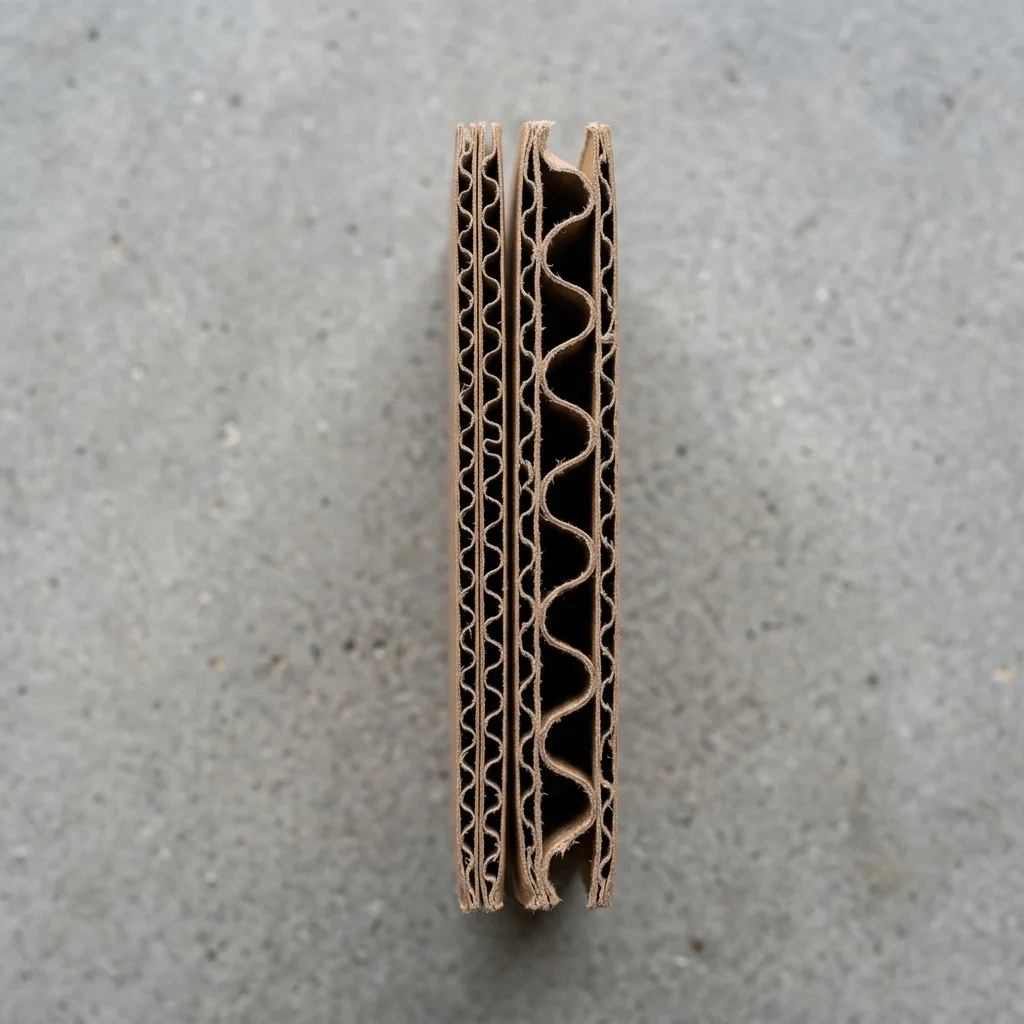 E-flute and B-flute board thickness comparison
E-flute corrugated cardboard is the industry standard for e-commerce mailers under five pounds. With a thickness of 1/16 inch (1.6mm) and roughly 90 flutes per linear foot, E-flute board offers a flat, smooth printing surface. The tight spacing of the flutes prevents the ribbed texture from showing through your printed graphics, making it ideal for detailed logos and multi-color designs.
B-flute board is thicker, measuring 1/8 inch (3.2mm) with approximately 47 flutes per linear foot. This extra thickness provides better puncture resistance and shock absorption for heavier goods like glass jars, heavy electronics, or metal tools. However, the wider flute spacing can cause mild print distortion, often called washboarding, if you use fine text or delicate line art on the exterior.
In addition to the flute profile, you must select the paper liner type. Kraft paper is the traditional brown, unbleached cardboard that offers a natural appearance and excellent tear resistance. Bleached white paperboard is ideal for brands that want bright colors to pop. For premium retail presentations, clay-coated kraft paperboard (CCKB) provides a semi-gloss surface that resists smudging and water droplets.
Packaging costs consist of two main components: the unit cost of the box and the initial tooling fees. When you order die-cut packaging, a custom physical steel die must be built to stamp out the shape of your box. These tooling dies cost between $400 and $1,200 depending on the size and complexity of the box layout.
For low-volume test runs of fewer than 500 boxes, digital cutting and printing are usually more economical because they skip the tooling stage entirely. However, for runs of 1,000 units or more, flexographic printing and physical die-cutting provide much lower per-unit costs, allowing you to quickly recover the initial tooling investment.
It is helpful to compare the average costs, assembly speeds, and structural protection of different packaging styles to see where tab lock mailers fit into your budget.
| Packaging Type | Average Unit Cost (1k units) | Setup and Assembly Speed | Structural Protection Level | Storage Space Required |
|---|---|---|---|---|
| Custom Tab Lock Mailer | $0.85 - $2.50 | Fast (No tape needed) | High (Double-wall sides) | Low (Ships flat) |
| Regular Slotted Carton (RSC) | $0.40 - $1.20 | Slow (Requires tape) | Medium (Single wall) | Low (Ships flat) |
| Rigid Box (Set-up Box) | $4.00 - $12.00 | Immediate (Pre-assembled) | Very High (Thick board) | High (Cannot be flattened) |
| Kraft Bubble Mailer | $0.25 - $0.75 | Instant (Peel and seal) | Low (Soft padding only) | Very Low (Flat sheets) |
Shipping costs also depend on the physical dimensions of your box. Major parcel carriers like FedEx and UPS use dimensional weight (DIM weight) to calculate shipping fees. The formula, which multiplies length, width, and height and divides by 139, penalizes oversized boxes containing mostly air. Designing a tight-fitting tab lock mailer that matches your product size helps prevent these expensive shipping surcharges.
Custom corrugated mailers cost between $0.85 and $2.80 per unit at order volumes of 1,000 units, compared to over $4.00 per unit for low-volume rigid retail packaging.
Creating a clean graphic design for your mailer requires working with a formal flat template called a dieline. When you work with a structural packaging design team, they will provide an Adobe Illustrator template showing cut lines in red, crease lines in blue, and bleed margins in green.
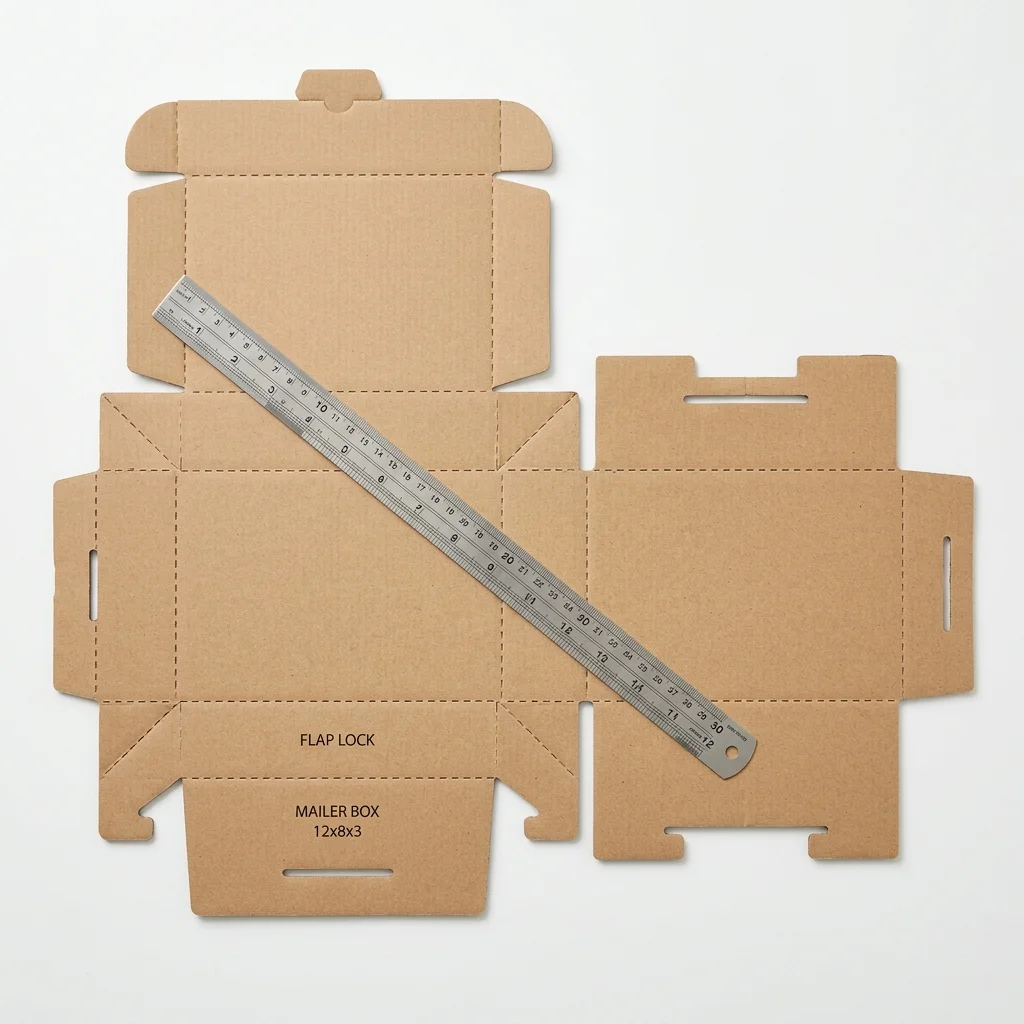 Structural drawing of a custom tab lock mailer box showing fold lines and locks
To ensure your graphics print correctly, you must include a bleed of at least 1/8 inch (3mm) beyond the cut lines. This extra printing space acts as a safety margin. If the cardboard shifts slightly during the high-speed die-cutting process, the bleed prevents unprinted white edges from showing on your finished box. Keep all important text, logos, and barcodes at least 1/8 inch away from any crease lines to prevent ink cracking and distortion during folding.
Consider the interior of your box just as much as the exterior. Many e-commerce brands use plain kraft paper on the outside to deter postal theft, but print a bold pattern or a welcome message on the inside lid. This approach keeps your shipping costs low while providing a memorable presentation when the customer opens the box.
If your products are fragile or include multiple small items, you can design a custom corrugated insert. These inserts are custom-cut to hold your products firmly in place, eliminating the need for plastic bubble wrap or loose packing peanuts.
Environmental impact is a significant factor in modern retail purchasing. A recent consumer packaging survey showed that 92% of shoppers prefer paper-based packaging over plastic packaging due to the ease of recycling. Tab lock mailers are highly circular because they are made from paper fibers and do not require plastic sealing tape to stay closed.
To ensure your packaging meets strict environmental guidelines, look for board certified by the Forest Stewardship Council (FSC). This standard guarantees that the wood fibers used to make your cardboard are harvested from responsibly managed forests that preserve biodiversity and protect water quality. Using FSC-certified materials also helps your brand comply with emerging packaging waste regulations, such as the European Union Packaging and Packaging Waste Regulation (PPWR) and extended producer responsibility (EPR) laws in states like California and Oregon.
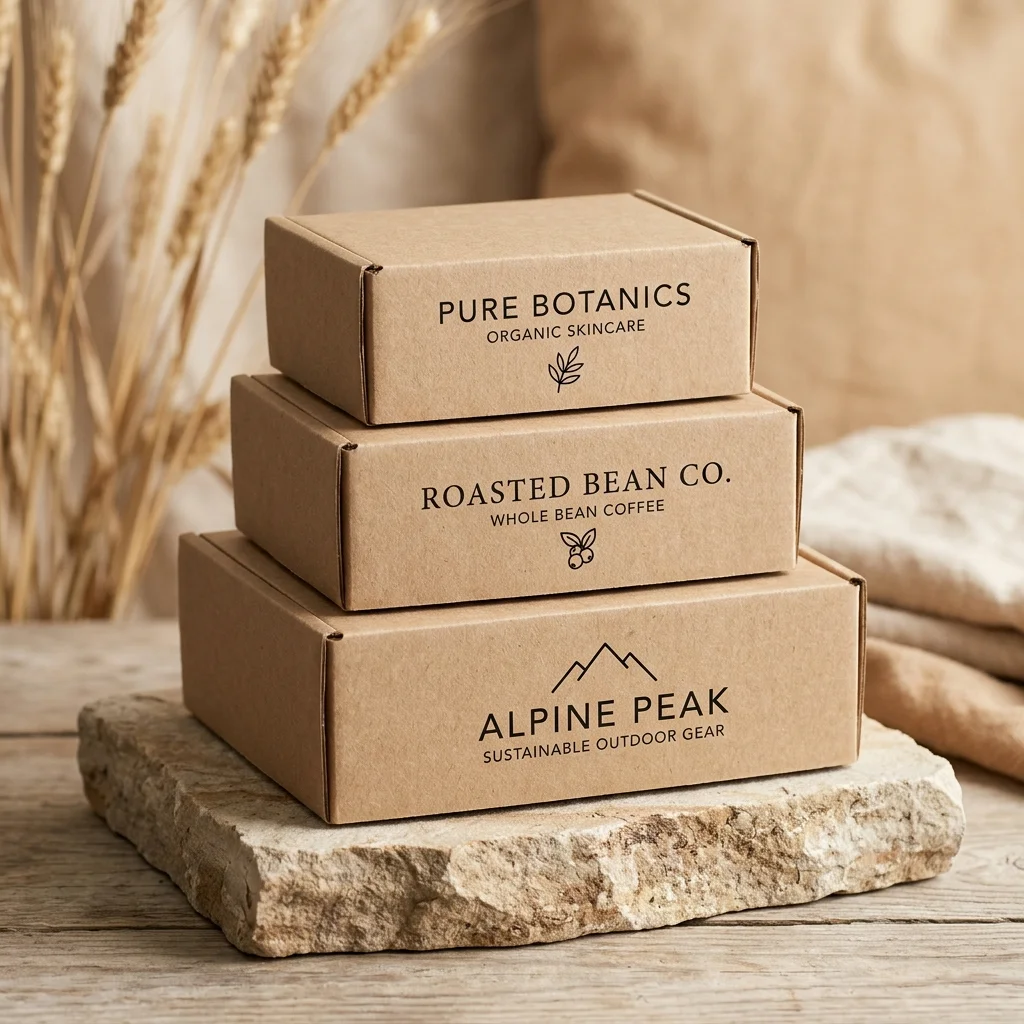 Eco-friendly custom mailer boxes stacked in a minimalist arrangement
In addition to the paperboard itself, the inks used for printing play a large role in recyclability. Traditional petroleum-based inks release volatile organic compounds (VOCs) and leave heavy residues during the paper pulping process. At Cubit Packaging, we use water-based flexographic inks. These inks contain minimal VOCs, dry quickly under hot air, and break down easily in standard municipal recycling systems without polluting local water tables.
Based on the packaging orders we process at Cubit Packaging, 72% of mid-market cosmetic and apparel brands choose E-flute custom Tab Lock Mailer Boxes over B-flute because the tighter fluting profile reduces print distortion on high-coverage exterior graphics by up to 30%.
Using renewable, unbleached kraft paperboards reduces energy use during manufacturing by 30% compared to producing virgin white bleached bleached sulfate boards.
No, custom Tab Lock Mailer Boxes do not require adhesive tape to stay assembled. The interlocking front flaps hold the lid firmly in place. However, for long-distance transit or high-value items, we recommend placing a small clear sticker or paper security seal over the front seam to prevent tampering by postal handlers.
E-flute is 1/16 inch thick and has a smooth surface that prevents print distortion, making it perfect for light consumer products. B-flute is 1/8 inch thick, providing higher crush resistance for heavier items over 5 pounds, though its surface is slightly less optimal for printing fine details.
At Cubit Packaging, our minimum order quantity starts at 100 units for digital runs, which is ideal for product testing. For large production runs using flexographic printing plates, the most cost-effective quantities begin at 1,000 units, where tooling costs are easily absorbed.
Yes, you can print on both sides of custom Tab Lock Mailer Boxes. Many brands print a minimalist logo on the exterior to reduce theft risk during delivery, and use bold patterns or brand messaging on the inside to greet customers when they first open the box.
Because these boxes are sized to fit your specific product dimensions, you avoid paying for excess dimensional weight (DIM weight) surcharges. Their double-walled sides also reduce the need for bulky bubble wrap, lowering both package size and material costs.
Fulfillment efficiency, material strength, and environmental standards are all interconnected. Choosing a practical, well-designed container can save your brand money on assembly labor and shipping fees. If you are ready to update your packaging, contact our team to discuss dimensions, materials, and print options.
Get a free quote for your packaging project
Get started on your custom branding with custom Tab Lock Mailer Boxes directly from our online marketplace, or build a personalized quote at our RFQ Procurement portal.
Design your packaging free in 60s
Try the free AI packaging design toolNeed Custom Packaging?
Get a free quote with pricing, MOQs, and turnaround time for your custom packaging project.