
Sustainability
Top Sustainable Packaging Trends Shaping 2026 and Beyond
Cubit Packaging Team
June 17, 2026
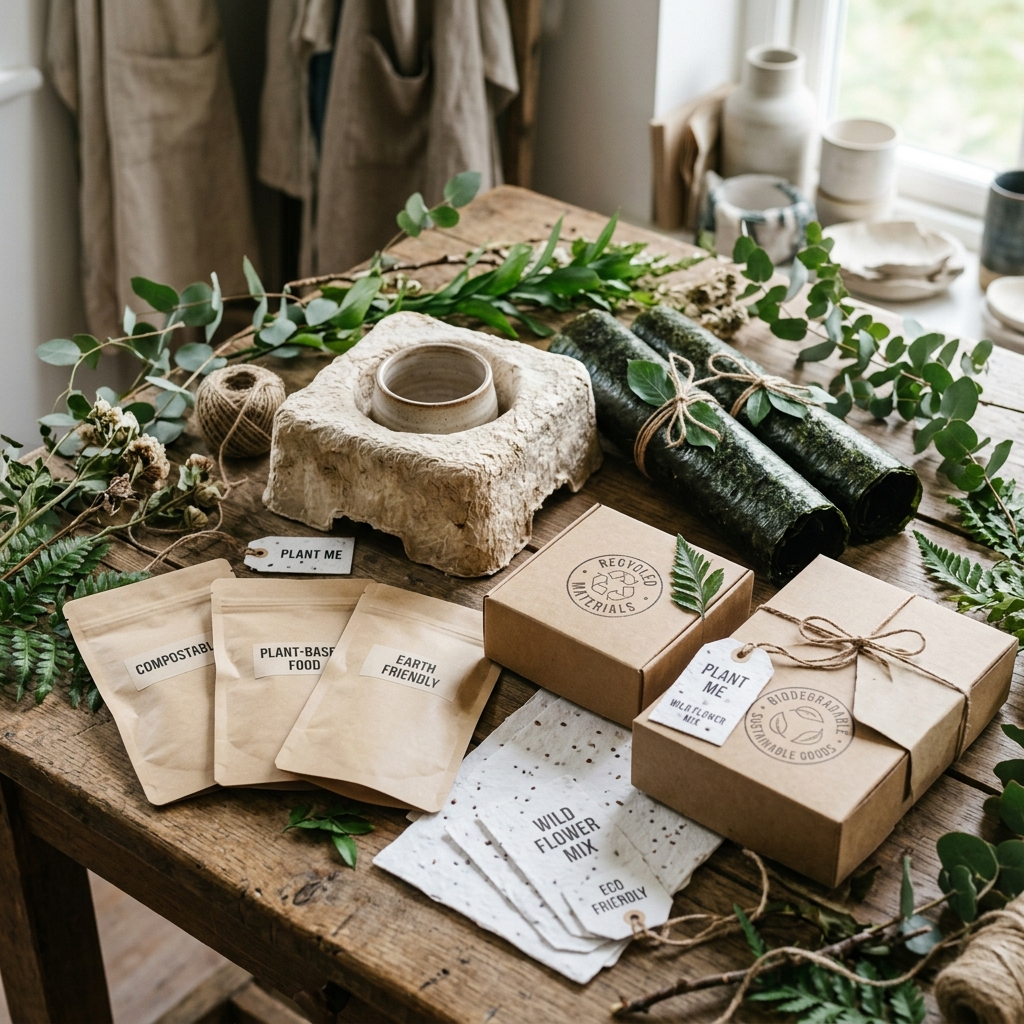
Sustainability is no longer a marketing differentiator — it is table stakes. Consumer expectations, regulatory requirements, and supply chain economics are converging to make sustainable packaging the default rather than the exception.
The brands that act now gain first-mover advantage: lower EPR fees, consumer loyalty, and operational efficiency. The brands that wait face rising compliance costs and consumer backlash.
Compostable packaging materials have crossed the cost-performance threshold. PLA (polylactic acid) from corn starch, bagasse from sugarcane, and mycelium (mushroom roots) from agricultural waste now offer comparable performance to traditional plastics at competitive prices.
| Material | Source | Compost Time | Cost vs Traditional | Best For |
|---|---|---|---|---|
| PLA | Corn starch | 90–180 days | +15–25% | Clear windows, containers |
| Bagasse | Sugarcane fiber | 60–90 days | +5–15% | Food containers, trays |
| Mycelium | Mushroom roots | 30–60 days | +20–40% | Protective inserts, cushioning |
| Seaweed film | Kelp/seaweed | 4–6 weeks | +30–50% | Sachets, wraps |
| Kraft paperboard | Wood fiber | 2–6 months | Baseline | Boxes, mailers |
HolyGrail 2.0 — a cross-industry initiative — embeds imperceptible digital watermarks across packaging surfaces. These codes contain material composition data that automated sorting facilities read at high speed.
The result: recycling accuracy jumps from 60% (visual sorting) to 98% (digital sorting), dramatically improving the economics of recycled material recovery.
Brands including Dove, Pantene, and Method now offer refill pouches that use 70–80% less plastic than their primary containers. The refill model is expanding beyond household products into beauty, food, and personal care.
Brands are pursuing carbon-neutral packaging through measured offsets and material switching. Certifications like CarbonTrust and Climate Neutral Certified signal commitment beyond recyclability.
Packaging designed from a single material type is dramatically easier to recycle than multi-material constructions. The industry is moving toward all-paper, all-aluminum, or all-single-polymer designs.
Expert insight from Cubit: "The most impactful sustainability decision most brands can make is also the simplest: switch to FSC-certified kraft corrugated and add clear recycling instructions. This single change costs 5–8% more per unit and positions your brand for EPR compliance in every state."
Recyclable packaging (kraft, mono-material) costs only 5–10% more than conventional options. Compostable materials add 15–40%. However, EPR fee savings, consumer willingness to pay, and waste disposal cost reductions often offset the premium entirely.
FSC-certified kraft paperboard is the most widely recyclable and sustainably sourced packaging material. It is renewable, biodegradable, curbside recyclable, and available at scale with minimal cost premium.
EPR fees range from $0.01–$0.15 per package depending on material type and recyclability. Easily recyclable materials (paper, aluminum) incur the lowest fees. Non-recyclable mixed materials incur the highest.
For most applications, yes. Modern compostable materials match the barrier properties, structural strength, and print quality of traditional alternatives. Exceptions include long-shelf-life products requiring multi-year stability.
Use recognized certifications (FSC, ASTM D6400 for compostability, How2Recycle for recycling instructions). Include specific claims rather than vague terms like "eco-friendly." Link to your sustainability page via QR code on packaging.
Ready to make your packaging sustainable? Get a free consultation on eco-friendly options.
Design your packaging free in 60s
Try the free AI packaging design toolNeed Custom Packaging?
Get a free quote with pricing, MOQs, and turnaround time for your custom packaging project.