
Sustainability
Eco-Friendly Packaging: Complete Sustainability Guide for 2026
Cubit Packaging Team
June 17, 2026
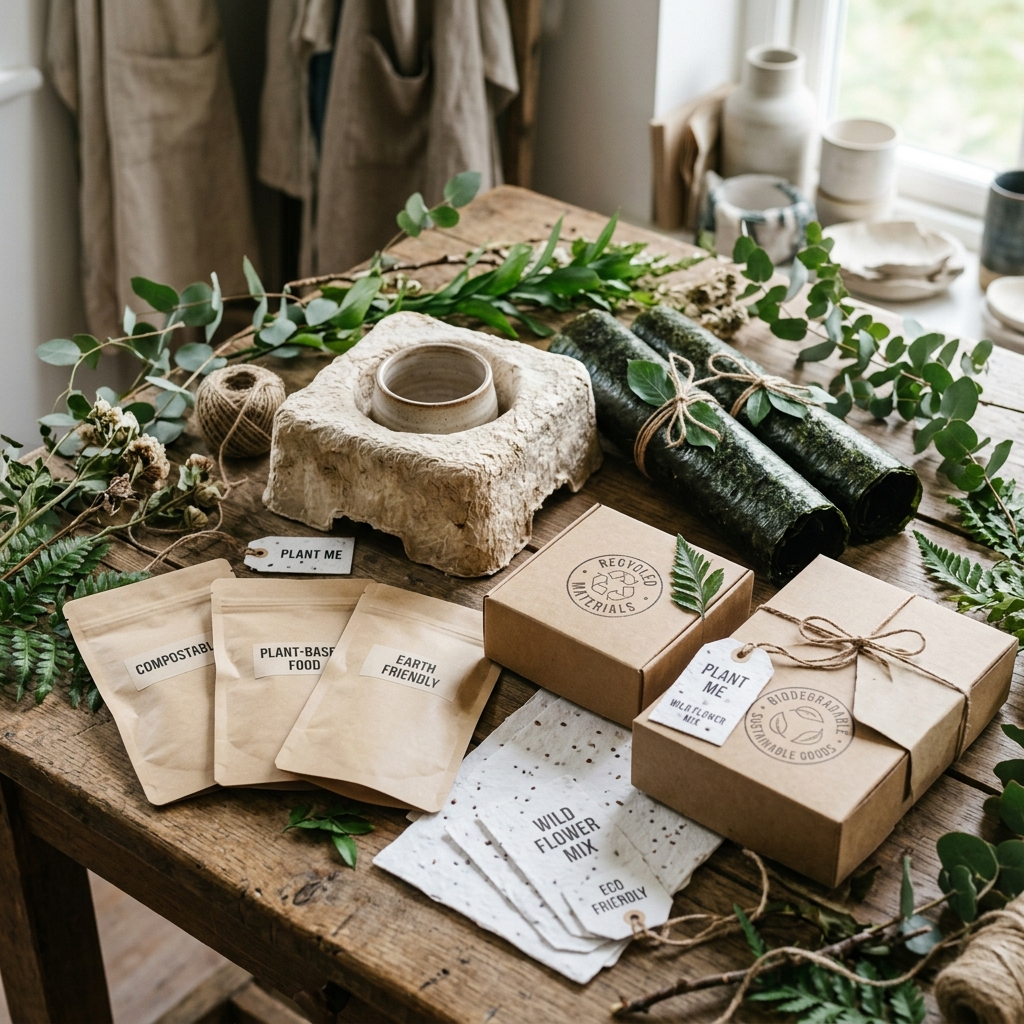
Eco-friendly packaging minimizes environmental impact through one or more of these approaches:
| Material | Recyclable | Compostable | Cost vs Standard | Carbon Reduction | Best For |
|---|---|---|---|---|---|
| FSC Kraft Paperboard | ★★★★★ | ★★★★☆ | +5–10% | 60–70% | Mailer boxes, cartons |
| Recycled Corrugated | ★★★★★ | ★★★★☆ | +0–5% | 40–50% | Shipping boxes |
| Compostable PLA | ★★☆☆☆ | ★★★★★ | +15–25% | 70–80% | Windows, containers |
| Bagasse (sugarcane) | ★★★☆☆ | ★★★★★ | +10–20% | 75–85% | Food containers |
| Mushroom packaging | ★★★★☆ | ★★★★★ | +25–40% | 80–90% | Inserts, cushioning |
| Post-consumer recycled paper | ★★★★★ | ★★★★☆ | +5–10% | 30–40% | Tissue paper |
| Soy-based inks | N/A | ★★★★★ | +0–3% | 20–30% | All printed packaging |
The gold standard for paper-based packaging. FSC certification ensures raw materials come from responsibly managed forests. Three certification levels:
Certifies that packaging will disintegrate within 84 days and biodegrade within 180 days in commercial composting conditions. Required for legitimate "compostable" claims.
Standardized recycling instructions developed by the Sustainable Packaging Coalition. Tells consumers exactly how to recycle each packaging component.
North American alternative to FSC with broader industry acceptance. Less stringent than FSC but widely recognized.
Sustainable packaging is not as expensive as most brands assume:
| Packaging Type | Standard Cost | Sustainable Cost | Premium |
|---|---|---|---|
| Mailer box (10×8×4) | $2.00/unit | $2.10–$2.20/unit | +5–10% |
| Tissue paper | $0.18/sheet | $0.20–$0.22/sheet | +10–15% |
| Stickers | $0.08/unit | $0.08–$0.10/unit | +0–15% |
| Mylar bags | $0.40/unit | $0.50–$0.65/unit | +25–50% |
| Shipping tape | $0.03/use | $0.04/use | +15–20% |
For most brands, the total sustainable packaging premium is $0.10–$0.50 per order. At a $50 AOV, that is 0.2–1.0% of revenue.
Consumers and regulators are increasingly sophisticated about sustainability claims. Avoid:
Instead, be specific: "This box is made from FSC-certified kraft paperboard and printed with soy-based inks. It is 100% curbside recyclable."
Expert insight from Cubit: "The most impactful sustainability switch for 90% of brands is the simplest: move from conventional paperboard to FSC-certified kraft. It costs 5–8% more, it is 100% curbside recyclable, and it communicates sustainability through its natural appearance without saying a word."
FSC-certified kraft paperboard is the most widely accessible, affordable, and genuinely sustainable packaging material. It is renewable, biodegradable, curbside recyclable, and available at scale with minimal cost premium.
Marginally. Recyclable paper-based packaging costs 5–10% more than conventional alternatives. Compostable materials add 15–40%. The premium is typically $0.10–$0.50 per package — often offset by consumer willingness to pay and lower EPR fees.
FSC (Forest Stewardship Council) for paper sourcing, ASTM D6400 for compostability claims, and How2Recycle for recycling instructions. These are the three most recognized and respected certifications.
Absolutely. Natural kraft has become a premium design aesthetic (see brands like Apple, Everlane, Aesop). Many consumers now perceive kraft and recycled materials as MORE premium than glossy conventional packaging.
Be specific and honest. State exactly what materials you use, what certifications you hold, and how customers should dispose of the packaging. Use recognized certification logos (FSC, How2Recycle) rather than self-created "eco" badges.
Ready to make your packaging sustainable? Explore Cubit's eco-friendly options or get a free quote on FSC-certified, recyclable packaging.
Design your packaging free in 60s
Try the free AI packaging design toolNeed Custom Packaging?
Get a free quote with pricing, MOQs, and turnaround time for your custom packaging project.