
Sustainability
Circular Packaging: The Future of Sustainable Branding
Cubit Packaging Team
June 17, 2026
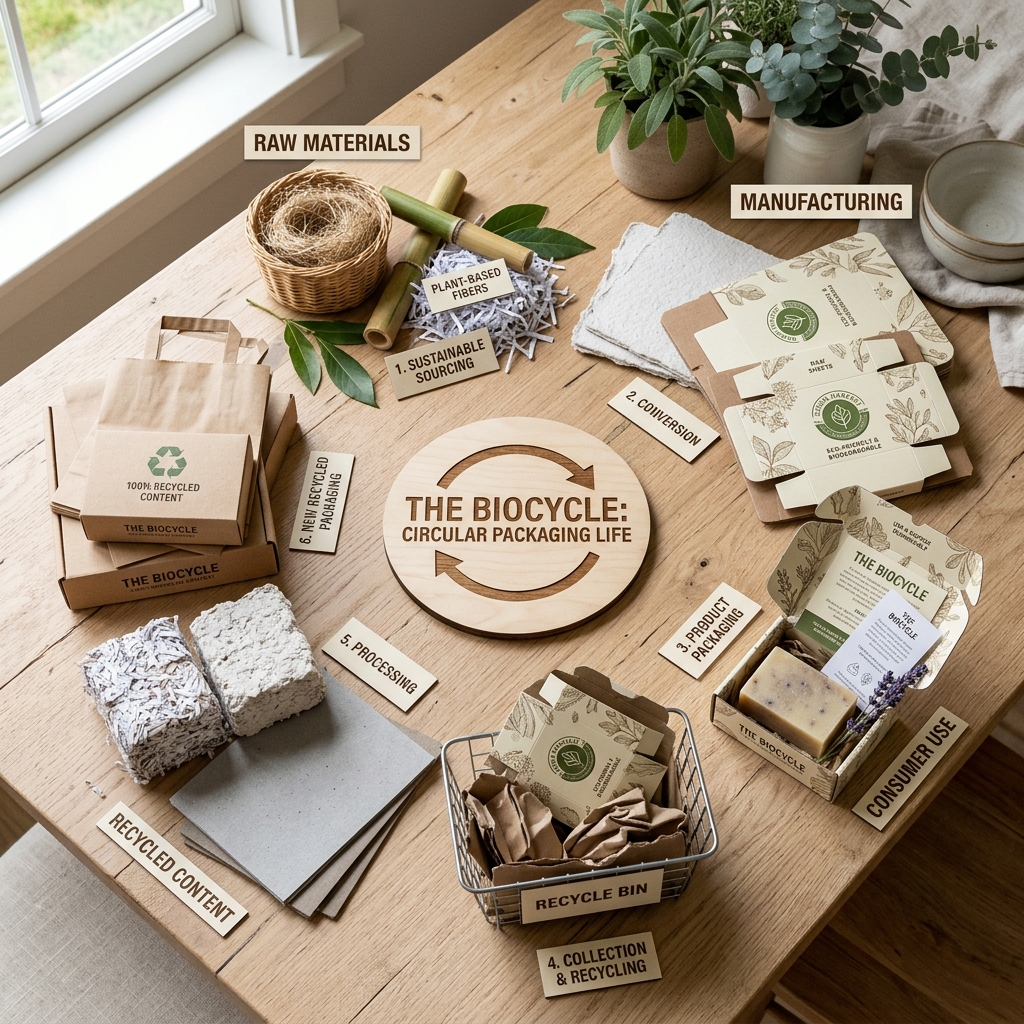
Circular packaging eliminates the concept of waste by designing packaging that flows back into the production cycle rather than ending up in a landfill.
Traditional (linear) packaging follows a straight line: extract raw materials → manufacture packaging → use once → dispose. Circular packaging bends that line into a loop: materials are recovered, regenerated, and reused continuously.
The Ellen MacArthur Foundation defines three principles of circular packaging:
Sustainability is no longer just ethics — it is economics.
| Factor | Linear Packaging | Circular Packaging |
|---|---|---|
| Material cost trend | Rising (commodity inflation) | Declining (reuse reduces virgin material) |
| Regulatory risk | Increasing (EPR fees, plastic taxes) | Minimal (designed for compliance) |
| Consumer preference | 34% consider sustainability | 73% prefer sustainable packaging |
| Brand differentiation | Standard | Significant competitive advantage |
| Long-term cost | Escalating | Stabilizing after initial investment |
What the data says: According to McKinsey's 2025 Packaging Sustainability Report, brands that transitioned to circular packaging models saw a 22% reduction in total packaging costs over a 3-year period, primarily from reduced material purchasing and avoided EPR fees.
Packaging designed for multiple use cycles. Examples include Loop's steel containers for consumer goods and Lush's return-and-reuse programs.
How it works: Customers receive products in durable packaging, use the product, return the empty container (often through prepaid shipping), and the container is cleaned, refilled, and shipped to the next customer.
Best for: Premium products where the container adds value — cosmetics, specialty food, household cleaners.
Customers keep the original container and purchase refill pouches or cartridges that use 70–90% less material than the original package.
How it works: First purchase includes a premium reusable container. Subsequent purchases are refill packets made from minimal, recyclable material.
Best for: Products with regular repurchase cycles — skincare, cleaning products, personal care, coffee.
Packaging designed specifically for efficient recycling. This means mono-material construction (no mixed materials), easy-to-separate components, and clear recycling instructions.
How it works: Instead of mixing paper, plastic, and metal in one package, each component uses a single material type that existing recycling infrastructure can process.
Best for: Any product where reuse or refill is impractical — e-commerce shipping, food packaging, single-use items.
Packaging made from plant-based materials that break down into soil nutrients in commercial composting facilities (ASTM D6400 certified) or home composting.
Best for: Food packaging, agricultural products, brands with strong sustainability positioning.
You do not need to overhaul your entire packaging system overnight. Here is a practical transition roadmap:
Map every packaging component in your supply chain. Identify which materials are recyclable, which are not, and where waste occurs. Cubit's sustainable packaging guide covers material options in detail.
Switch to mono-material construction where possible. Replace mixed-material packaging with recyclable alternatives. Eliminate unnecessary packaging layers.
Add clear recycling instructions to every package. Use recognized recycling symbols. Educate customers about your sustainability commitments.
Test refill or reuse programs with your most loyal customers. Launch a pilot compostable packaging line. Measure and report results.
Extended Producer Responsibility (EPR) laws make brands financially responsible for the end-of-life management of their packaging. As of 2026, EPR legislation is active or pending in:
EPR fees are calculated based on the recyclability and weight of your packaging. Brands using easily recyclable, lightweight packaging pay lower fees. Brands using mixed materials or non-recyclable packaging pay premium rates.
Expert insight from Cubit: "The smartest brands are not waiting for EPR legislation to reach their state. They are switching to recyclable packaging now while they have time to optimize, rather than scrambling to comply under deadline pressure." — Cubit Sustainability Team
Initially, yes — expect 10–20% higher costs during transition. However, circular packaging reduces long-term costs through material savings (30–50% for refill models), avoided EPR fees, and reduced waste disposal costs. Most brands break even within 12–18 months.
Absolutely. Start with recyclable-first design — switch to mono-material kraft mailer boxes and recyclable tissue paper. These are drop-in replacements that require zero operational changes.
FSC-certified kraft paperboard, recycled corrugated cardboard, and compostable materials (PLA, bagasse, mushroom-based) offer the best circular performance. Avoid mixed-material packaging that combines paper and plastic.
Include clear recycling instructions directly on the packaging. Add a brief sustainability statement. Use recognized certifications (FSC, ASTM D6400, How2Recycle). Avoid vague claims like "eco-friendly" — be specific about what makes your packaging sustainable.
Extended Producer Responsibility (EPR) requires brands to fund the recycling and disposal of their packaging. EPR fees range from $0.01–$0.15 per package depending on material type and recyclability. Using easily recyclable materials minimizes your EPR costs.
Ready to make your packaging circular? Explore Cubit's sustainable packaging options or get a free consultation on transitioning to eco-friendly materials.
Design your packaging free in 60s
Try the free AI packaging design toolNeed Custom Packaging?
Get a free quote with pricing, MOQs, and turnaround time for your custom packaging project.