
Packaging Guides
The Ultimate Guide to Custom Custom Packing Tape for Growing Brands
Cubit Team
June 24, 2026
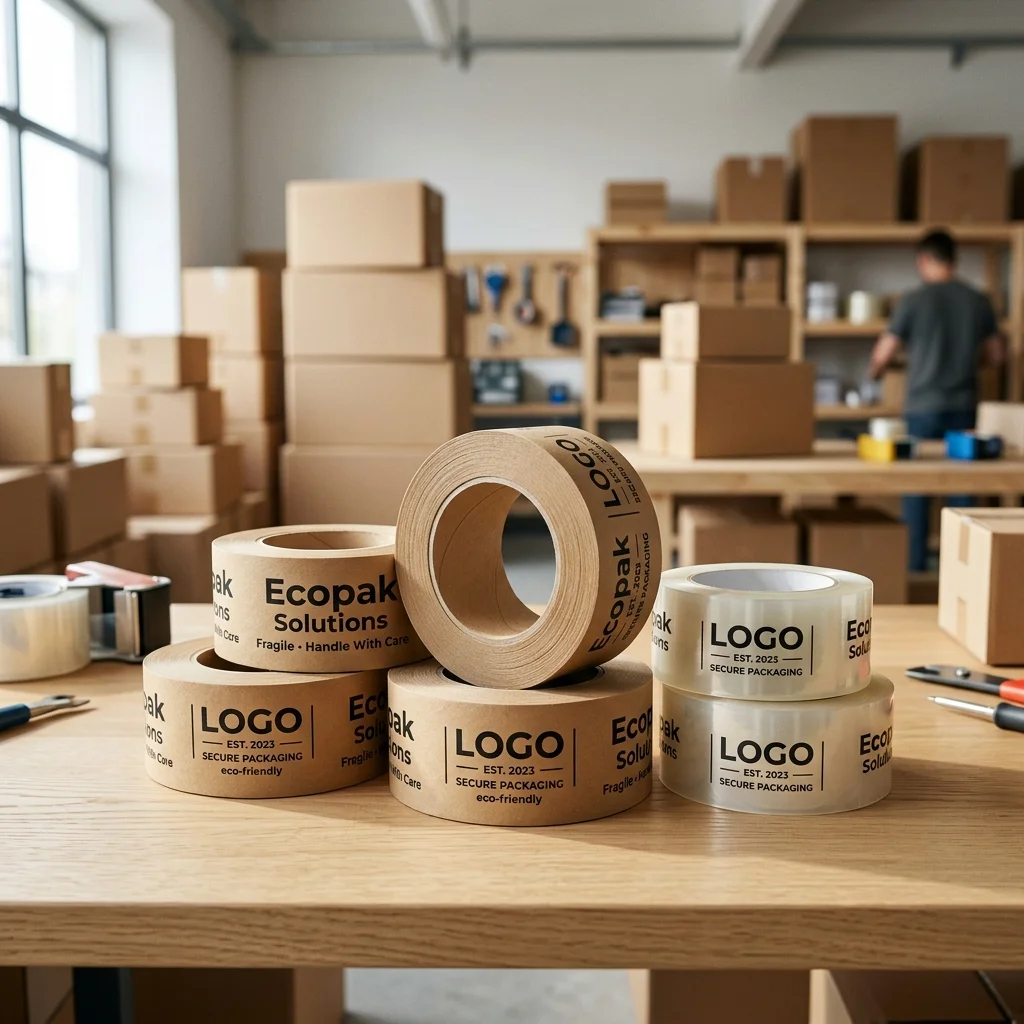
For e-commerce businesses, the unboxing experience begins before the box is opened. Choosing custom Custom Packing Tape is a highly effective way to secure shipments while displaying your brand identity on every package. This specialty adhesive tape features your custom logo, colors, and messaging printed directly onto a paper or plastic backing. It acts as both a security seal and a marketing tool, helping brands reduce shipping errors and prevent package tampering.
Using printed tape allows businesses to use plain, inexpensive corrugated boxes while maintaining a branded, professional look. This approach helps lower overhead expenses, especially for growing businesses that cannot yet justify the high minimum order quantities of custom-printed shipping boxes. Selecting the correct tape for your fulfillment workflow will improve both package security and customer satisfaction.
In this guide:
When sourcing custom Custom Packing Tape, you must first understand the three primary materials used in the industry: polypropylene, polyvinyl chloride (PVC), and water-activated paper. Each material has distinct physical characteristics, strengths, and ideal use cases. Choosing the wrong material can lead to peeling, splitting, or wasted spend during fulfillment.
Polypropylene is the most common and budget-friendly plastic shipping tape. It is typically 1.6 to 2.0 mils thick and has a glossy finish. This pressure-sensitive tape is highly elastic, which helps it resist tearing when stretched over box seams. However, it can be loud when unwound from a manual dispenser, which can cause operator fatigue in tight warehouse environments.
Polyvinyl chloride, or PVC, is a premium plastic alternative. At 2.2 to 2.4 mils thick, PVC is heavier and thicker than polypropylene. It has a matte finish and unwinds quietly, making it a favorite for smaller fulfillment spaces. PVC can also be torn by hand, eliminating the need for a dispenser with a cutting blade during manual packing.
Water-activated paper tape, often called gummed paper tape, is made from heavy kraft paper. Unlike pressure-sensitive plastic tapes, it uses a starch-based adhesive that requires water to activate. Once wet, the adhesive penetrates the cardboard fibers, creating a permanent, tamper-evident physical bond. It is available in standard non-reinforced paper or reinforced configurations containing fiberglass yarns for heavy shipments.
The choice between plastic and paper tape depends on your daily shipping volume, average package weight, and sustainability goals. The table below outlines the key performance metrics for each tape type based on standard packaging industry measurements.
| Tape Material | Standard Thickness | Adhesive Type | Best For | Average Cost per Roll (36 Rolls/Case) | Recyclability Status |
|---|---|---|---|---|---|
| Polypropylene (BOPP) | 1.9 mil | Acrylic or Hot Melt | Packages under 30 lbs, budget-focused brands | $8.50 - $12.00 | Non-recyclable, must be removed |
| Polyvinyl Chloride (PVC) | 2.2 mil | Natural Rubber | Heavy packages, quiet packaging lines | $14.00 - $18.00 | Non-recyclable, must be removed |
| Standard Kraft Paper (WAT) | 120 gsm | Water-Activated Starch | Light to medium weight boxes, eco-brands | $12.00 - $16.00 | Curbside recyclable with box |
| Reinforced Paper (WAT) | 150 gsm | Water-Activated Starch | Packages over 35 lbs, high-security shipping | $18.00 - $24.00 | Recyclable in some municipalities |
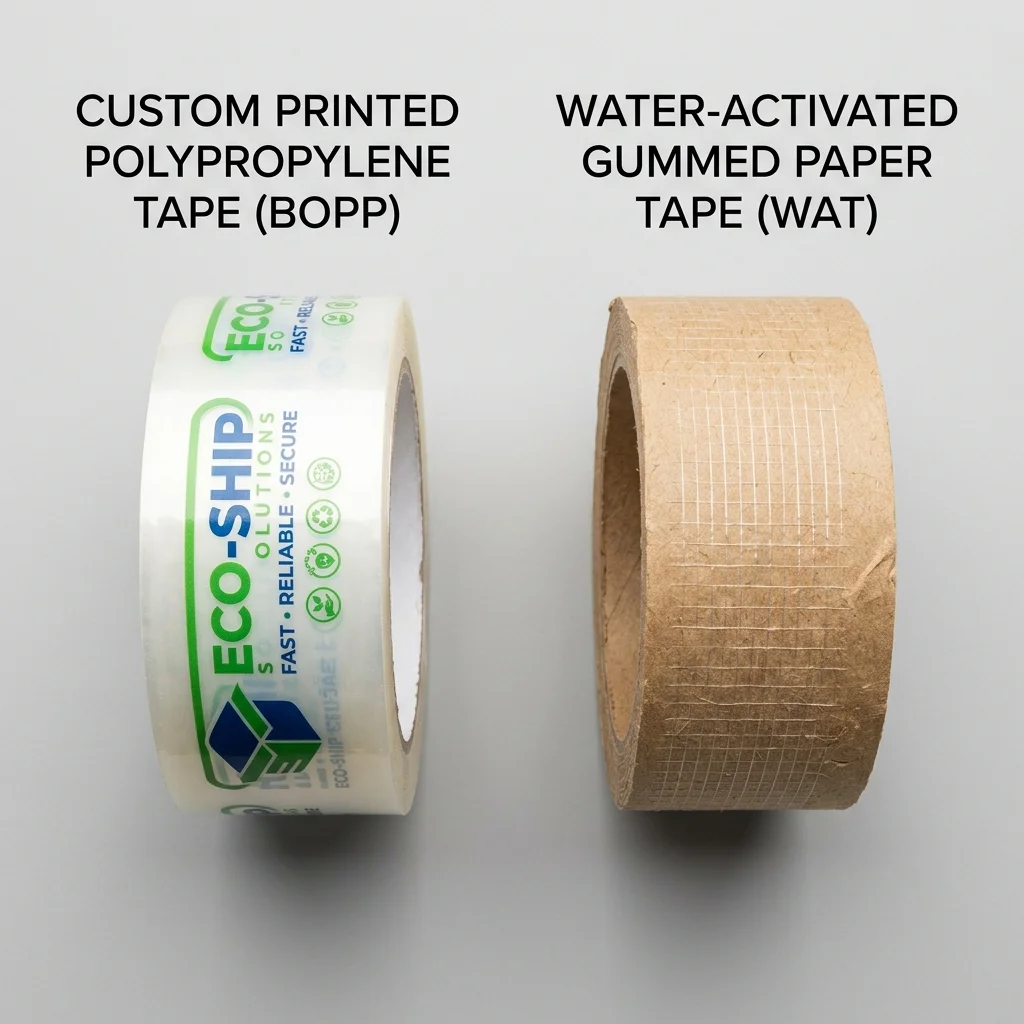 A comparison between plastic custom packaging tape and water-activated gummed paper tape
Plastic pressure-sensitive tapes are highly convenient for decentralized packing setups, as they require no water and can be applied with standard hand-held tape guns. However, paper-based gummed tape offers superior security because it cannot be peeled off without visibly tearing the outer kraft liner of the box. This prevents theft during shipping, which is critical for high-value retail goods.
The performance of your personalized packing tape is heavily determined by the chemistry of its adhesive. Pressure-sensitive plastic tapes typically use one of three adhesive formulas: acrylic, hot melt, or natural rubber.
Acrylic adhesives perform exceptionally well in extreme temperatures, maintaining their bond from 32 to 140 degrees Fahrenheit, making them ideal for long-term storage in unheated warehouses. They have high resistance to UV light, which prevents yellowing over time, though they require firm pressure during application to achieve a strong bond.
Hot melt adhesive is made from synthetic rubber and provides a quick, aggressive grab. It adheres instantly to recycled cardboard surfaces, which can sometimes be difficult for lighter adhesives to grip. However, hot melt degrades when exposed to UV light and can fail in cold environments below 40 degrees Fahrenheit.
For water-activated gummed paper tape, the adhesive is a dry starch compound derived from corn or potatoes. This adhesive complies with FDA regulations for indirect food contact under 21 CFR 175.105, making it a safe choice for subscription food boxes and meal kits. Reinforced gummed paper tape contains a fiberglass yarn grid that increases tensile strength to over 75 pounds per inch of width, ensuring heavy packages do not burst during transit.
Physical properties are tested and certified under global standards. The American Society for Testing and Materials publishes guidelines like ASTM D3330 for peel adhesion and ASTM D3654 for shear adhesion. When sourcing tape, verify that the material meets these benchmarks to avoid mid-transit failures.
How your team applies custom packaging tape directly affects your daily shipping throughput. Using pressure-sensitive tape requires a standard 2-inch or 3-inch hand-held tape gun with an adjustable friction brake. Operators must pull the tape, press it onto the box, and cut it using the serrated blade. While this setup has low startup costs, it can lead to inconsistent tape usage, with operators frequently using multiple overlapping strips to secure a single seam.
Applying water-activated paper tape requires a specialized dispenser. For low-volume operations shipping under 50 boxes per day, a manual pull-and-cut dispenser is sufficient. For high-volume fulfillment, electric tape dispensers like the Better Packages 555eS are the industry standard. These machines heat and wet the tape, then cut it to precise pre-programmed lengths at the push of a button.
An electronic dispenser allows operators to program exact lengths, which reduces tape waste by up to 20% compared to manual application. Because reinforced paper tape is so strong, a single strip across the top seam is all that is required to secure the box. This eliminates the need for the common H-tape sealing pattern, speeding up the packing process and lowering overall material consumption.
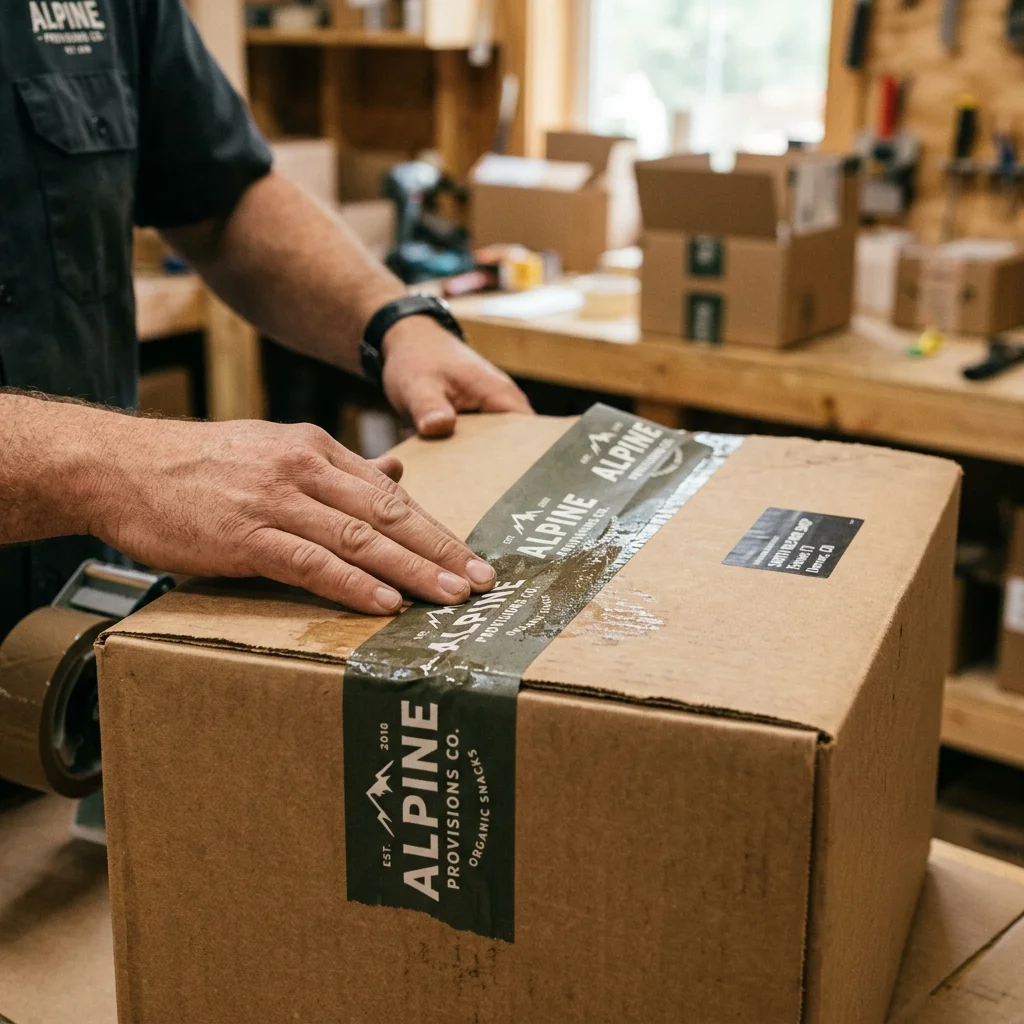 An operator applying custom custom packing tape to a shipping box
As consumers demand more eco-friendly fulfillment practices, the sustainability of your shipping materials matters more than most brands realize. Traditional plastic packaging tapes present a challenge for recycling systems. Polypropylene and PVC tapes are non-biodegradable and cannot be recycled. During the cardboard recycling process, these plastic tapes must be mechanically filtered out at the pulping mill, adding cost and waste to the municipal waste stream.
Paper tapes offer a much cleaner environmental profile. Standard kraft paper tape made with FSC-certified paper and vegetable starch adhesive is 100% curbside recyclable. It dissolves completely during the hydrapulping process, leaving no plastic residue in the recycled paper pulp.
Reinforced paper tape is also widely accepted in cardboard recycling programs. Although the fiberglass reinforcement yarns do not dissolve, they are easily caught by standard industry filtration screens during the pulping process. To ensure your brand meets high environmental standards, look for tapes printed with water-based, non-toxic inks that do not contaminate the recycling process.
Designing your custom custom packing tape requires attention to printing plates, repeat lengths, and ink behavior. Most branded tape is produced using flexographic printing, which uses flexible photopolymer plates mounted on rotating cylinders. Your design will repeat at a set interval, commonly referred to as the repeat length, which is determined by the circumference of the printing cylinder.
Common repeat lengths are 6 inches, 9 inches, and 12 inches. When preparing your artwork, you must create a seamless repeating pattern that fits perfectly into one of these increments. It is wise to place a small spacing gap between logo repetitions to ensure the layout looks balanced regardless of where the tape is cut by the dispenser.
To ensure clean legibility, follow these basic design rules:
If you want a modern, clean look, consider printing a positive design where your logo is printed directly on white or kraft tape. For a bold, premium aesthetic, a negative print (flood coat) covers the entire tape surface in ink, leaving your logo as the unprinted background color.
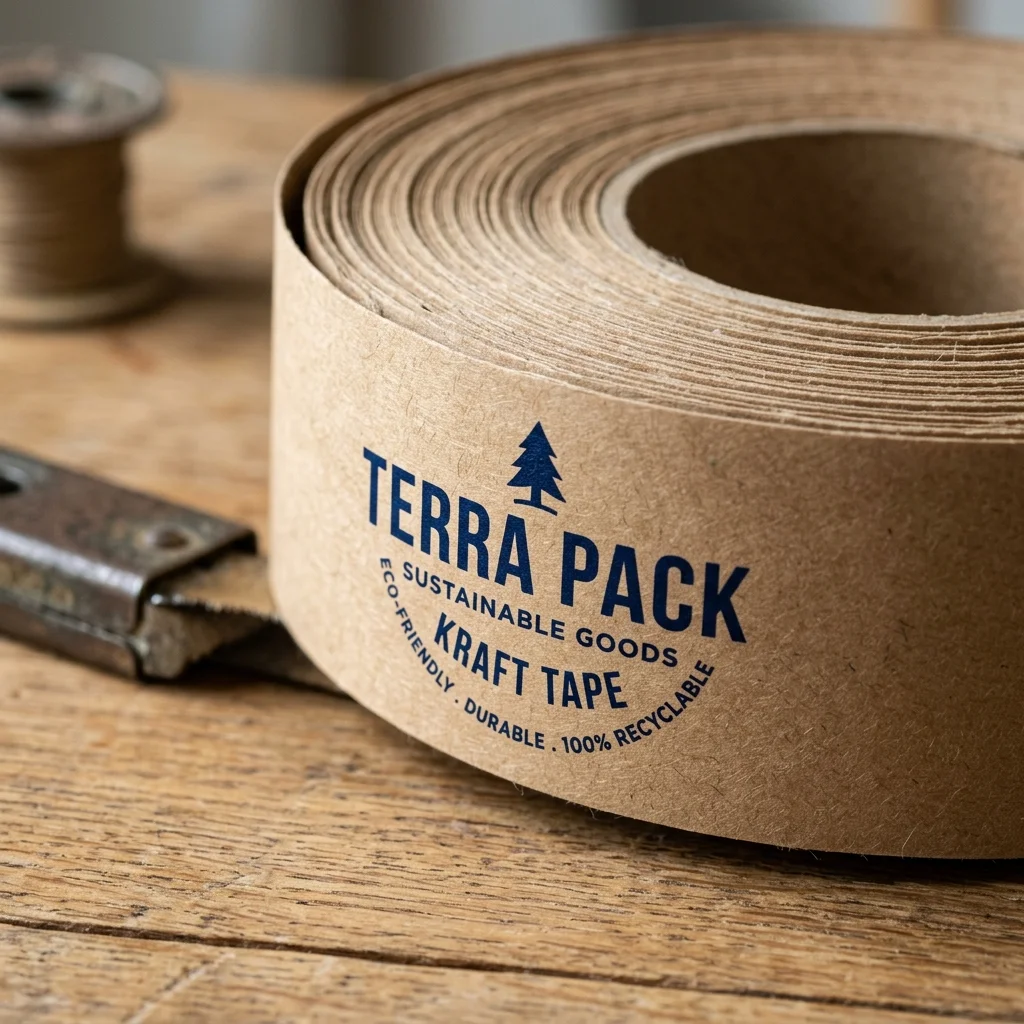 Close-up of a high-contrast printed logo on custom custom packing tape
Based on the packaging orders we process at Cubit, brands that switch from printed boxes to custom custom packing tape save an average of $1.12 per shipped package on material costs alone while maintaining a professional unboxing experience.
Using our online design tools can help you preview how your repeating design will look on both kraft and white backings before committing to a production run.
Even high-quality custom packaging tape can fail if stored or applied incorrectly. Recognizing the root causes of common tape issues will save your warehouse team time and prevent damaged shipments.
Flagging occurs when the ends of the tape pull away from the box surface after application. This is often caused by applying pressure-sensitive tape in cold conditions or on extremely dusty cardboard. To prevent flagging, store your tape in a climate-controlled area between 60 and 80 degrees Fahrenheit, and ensure operators rub the tape down firmly during application to activate the adhesive.
If your plastic tape splits or tears down the middle as it is unwound, the most common culprit is a damaged or dirty blade on the tape dispenser. A small nick in the dispenser blade can score the edge of the tape roll, causing it to tear prematurely. Regularly cleaning adhesive buildup off your dispenser blades with isopropyl alcohol will prevent this issue.
For water-activated tape, incomplete bonding usually stems from using too much or too little water in the dispenser. If the tape is too dry, the starch adhesive cannot penetrate the box fibers. If it is too wet, the adhesive washes away before it can set. Adjust the water level and brush wetness on your dispenser, and ensure you use warm water in cold climates to speed up tack times.
Yes, paper-based custom custom packing tape made from FSC-certified paper and starch adhesive is fully curbside recyclable with the box. However, plastic-based tapes like polypropylene or PVC must be peeled off and discarded before recycling the cardboard box, as plastic film cannot be processed by paper mills.
Polypropylene is a cost-effective, high-stretch plastic tape that makes a loud noise when unwound and requires a dispenser. PVC tape is thicker, matte-finished, unwinds silently, and can be torn easily by hand. PVC handles high-contrast custom custom packing tape printing exceptionally well for premium retail brands.
Yes, water-activated paper tape requires a specialized dispenser to apply water to the dry starch adhesive. Low-volume businesses can use manual pull dispensers, while high-volume fulfillment centers use electric tape dispensers to cut precise, pre-moistened lengths of tape rapidly.
Create a high-contrast vector design with a minimum text height of 8 points. Ensure your logo fits within the standard 2-inch or 3-inch tape width and layout the pattern to repeat seamlessly at 6, 9, or 12-inch intervals to match standard printing plates.
Minimum order quantities for custom custom packing tape typically start at 1 case, which holds 24 to 36 rolls depending on the width and roll length. This low minimum makes it highly accessible for growing e-commerce brands wanting to test custom branding.
Selecting custom custom packing tape is a practical, professional step for growing e-commerce brands looking to scale their operations. By choosing the right backing material and adhesive formula for your packages, you can ensure your goods arrive safely while presenting a cohesive brand image.
Ready to find the ideal custom shipping supplies for your warehouse? Get a free quote for your packaging project and let our team help you choose the best custom packaging tape for your business.
Get started on your custom branding with custom Custom Packing Tape directly from our online marketplace, or build a personalized quote at our RFQ Procurement portal.
Design your packaging free in 60s
Try the free AI packaging design toolNeed Custom Packaging?
Get a free quote with pricing, MOQs, and turnaround time for your custom packaging project.