
Lid and Base Elegance: Designing Custom Two-Piece Rigid Boxes for Luxury Retail & Unboxing (2026)
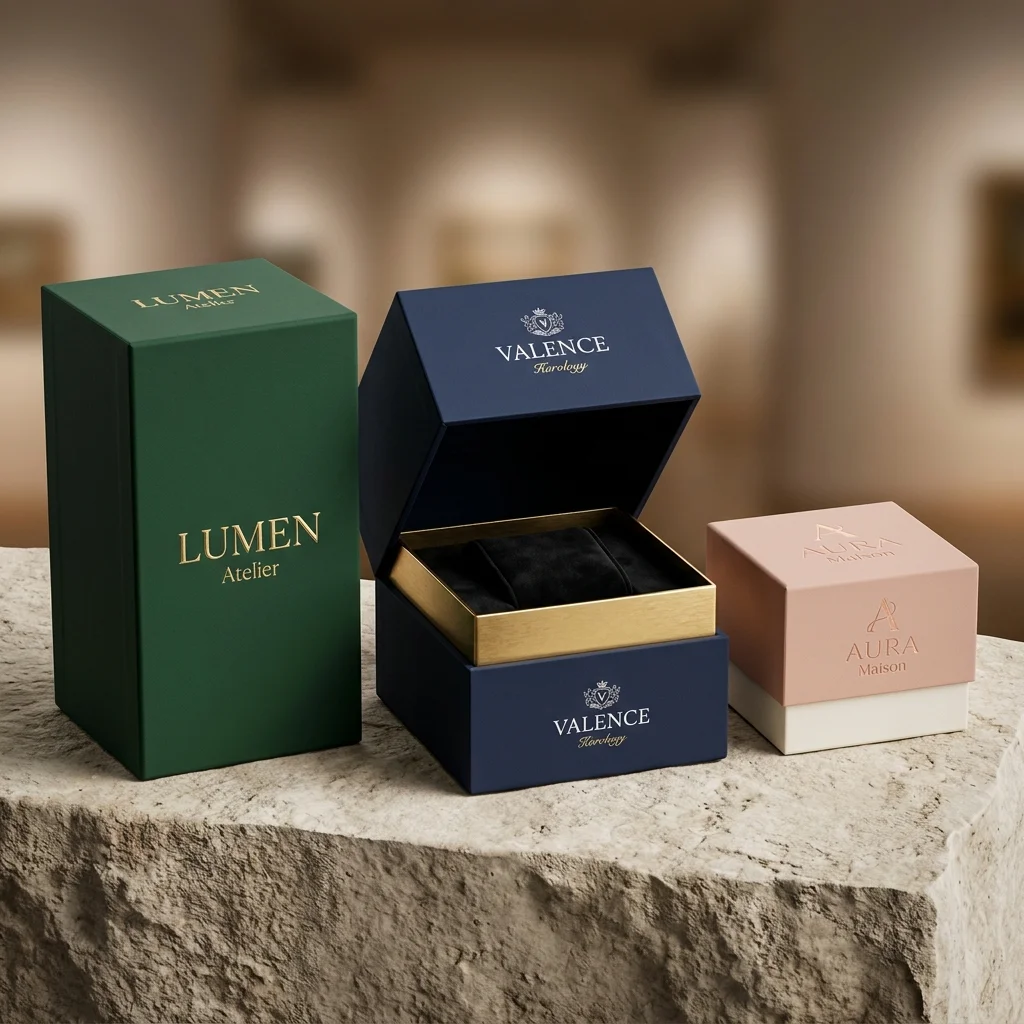
The Engineering Behind the World’s Most Coveted Unboxing Experience
When a customer receives a luxury product—whether a fine chronograph, an artisanal fragrance, or high-end audio hardware—the packaging creates the foundational baseline of perceived value. Among all packaging formats, the Two-Piece Rigid Box (commonly known in commercial packaging engineering as a lid-and-base set-up box) stands as the undisputed benchmark of prestige.
Unlike folding paperboard cartons that arrive flat and flex under hand pressure, a two-piece rigid box is built around an unyielding, solid core of high-density chipboard (1.8mm to 3.0mm thickness). It delivers substantial heft, structural deflection resistance exceeding 80 lbs, and that unforgettable tactile friction slide known as pneumatic air-release opening.
In this comprehensive manufacturing guide, packaging engineers and brand directors will discover the exact structural differences between telescope lid configurations, how to calibrate pneumatic descent tolerances, and how to combine bespoke foam inserts with artisan wraps for maximum retail impact.
Understanding the 3 Core Architectures of Two-Piece Rigid Boxes
Two-piece rigid set-up boxes are engineered in three distinct mechanical configurations, each tailored to specific product geometries, opening ergonomics, and visual aesthetics:
1. FULL TELESCOPE LID (FTL)
   +-----------------------------+
   | Lid Sidewalls Cover Base    |  <- Maximum crush protection
   | Completely Down to Floor    |  <- Double-wall perimeter thickness
   +-----------------------------+

2. PARTIAL TELESCOPE LID (PTL)
   +-----------------------------+
   | Lid Sidewalls Cover 50%-75% |  <- Base exposed at bottom
   +-----------------------------+
   | Exposed Colored Base Band   |  <- Easy finger grip for opening
   +-----------------------------+

3. SHOULDER & NECK (3-PIECE SETUP)
   +-----------------------------+
   | Lid Rests on Recessed Neck  |  <- Distinct flush exterior profile
   +=============================+  <- Exposed 5mm-15mm metallic collar
   | Base Sidewalls Align Flush  |  <- Internal glued neck tray structure
   +-----------------------------+
1. Full Telescope Lid (FTL)
The lid walls extend the entire height of the base tray, resting directly on the bottom lip. Because both the lid and base sidewalls overlap 100%, the box possesses double the vertical wall thickness around its entire perimeter. This makes FTL boxes the premier choice for heavy fragile items like luxury candles, ceramic cosmetics jars, and electronics. To ensure easy opening, full telescope boxes are frequently engineered with die-cut half-moon thumb notches on opposing sides.
2. Partial Telescope Lid (PTL)
The lid walls cover only a fraction (typically 50% to 75%) of the total base height. This leaves the lower portion of the base exposed, creating a high-contrast horizontal reveal stripe when the base is wrapped in a different paper color or texture. The exposed base rim also provides a natural gripping ledge, allowing users to lift the lid effortlessly without thumb notches.
3. Shoulder and Neck (3-Piece Construction)
While colloquially referred to as a two-piece box, this style incorporates an internal third component: a rigid inner neck tray glued inside the base that projects upward. The lid and base have identical outer dimensions; when closed, the lid slides down over the neck tray and rests flush against the base walls, separated only by a deliberate 5mm to 15mm reveal gap. Wrapping the exposed neck collar in gold foil, silver metallized paper, or a contrasting brand tone produces an unforgettable architectural look.
Packaging Format Comparison: Two-Piece Rigid vs Alternative Formats
Before specifying your packaging run, review how two-piece rigid boxes compare against alternative packaging architectures in durability, fulfillment labor, and perceived value:
| Packaging Style | Board Caliper / Strength | Unit Cost (5k units) | Fulfillment Assembly | Unboxing Experience | Best Commercial Application |
|---|---|---|---|---|---|
| Two-Piece Rigid Box | 1.8mm–3.0mm Solid Board | $$$ | Zero (Pre-Assembled) | Exceptional (Pneumatic Slide) | Luxury Jewelry, Fragrance, Tech |
| Rigid Sleeve & Tray Box | 1.8mm–2.5mm Solid Board | $$$ | Zero (Pre-Assembled) | High (Drawer Pull Reveal) | Slide-out Gift Sets, Confectionery |
| Magnetic Closure Rigid Box | 2.0mm–3.0mm Solid Board | $$$$ | Low (Fold-Flat or Rigid) | High (Magnetic Snap) | VIP Influencer Kits, Apparel |
| Folding Paperboard Carton | 16pt–24pt (0.4mm–0.6mm) | $ | Moderate (Carton Erection) | Standard (Tuck Flap) | Mass Retail Cosmetics, Pharmaceuticals |
| Corrugated Mailer Box (E-Flute) | 1.5mm Fluted Board | $$ | Moderate (Roll-End Folding) | Good (Retail DTC E-Commerce) | Subscription Drops, DTC Shipping |
The Physics of the "Pneumatic Air-Release" Effect
The hallmark of a world-class luxury rigid box is the controlled pneumatic lid descent. When you pick up the closed box by its lid, the base should slowly slide out over 2 to 3 seconds under the weight of the product, guided by a smooth cushion of escaping air.
Engineering this sensation requires sub-millimeter precision across three variables:
- Internal Clearance Tolerance: Standard rigid boxes require a clearance gap of 0.8mm to 1.2mm between the inner lid dimension and outer base dimension. If the gap is less than 0.5mm, trapped air creates a vacuum lock that makes the lid difficult to pull off. If the gap exceeds 1.5mm, the lid wobbles and drops abruptly without tactile resistance.
- Substrate Thickness Accounting: Wrapping paper thickness (typically 128gsm coated art paper at 0.14mm or 120gsm buckram at 0.18mm) must be factored into the CAD dieline calculation twice for each wall (outer wrap plus inside turn-in).
- Corner V-Grooving vs Die-Cutting: High-end boxes utilize 90° V-grooving machinery that cuts triangular channels into the greyboard rather than simply creasing it. This allows the sidewalls to fold at a crisp right angle with razor-sharp edges, avoiding rounded outer bulges that ruin pneumatic tolerances.
Custom Interior Inserts: Engineering Protection and Presentation
A luxury outer shell demands an equally refined interior to stabilize and showcase the enclosed merchandise. At Cubit Packaging, we engineer four primary insert architectures:
- Precision Laser-Routed Closed-Cell EVA Foam: Cut with high-pressure waterjets or multi-axis CNC routers, high-density EVA foam cushions fragile glass bottles and electronics with millimeter precision. Available with top-layer velvet flocking or satin fabric lamination for a plush, non-abrasive touch.
- Thermoformed Velvet-Flocked Trays: Thin-gauge recycled PET or bio-based pulp trays vacuum-formed around product molds and coated with electrostatically deposited velvet micro-fibers. Ideal for complex multi-product beauty sets.
- Wrapped Chipboard Partitions & Collars: Interlocking solid greyboard dividers wrapped in coordinating paper stock, perfect for compartmentalized chocolate boxes, watch straps, or cosmetics vials.
- Eco-Friendly Folded Paperboard Bridges: Engineered from 100% recycled 24pt paperboard with die-cut retention tabs, offering a single-material recyclable interior that holds lightweight items securely.
Ready to Elevate Your Brand with Custom Two-Piece Rigid Boxes?
Whether you are launching an exclusive fragrance line, presenting fine jewelry, or delivering flagship consumer electronics, Cubit Packaging engineers custom Two-Piece Rigid Boxes with solid recycled greyboard, precision V-grooved corners, and bespoke interior inserts tailored to your brand's exacting standards.
Explore our full line of Rigid Packaging Solutions or configure your bespoke project today.
👉 Configure Custom Two-Piece Rigid Boxes & Request an Instant Quote Today