
Sustainability
Eco-Friendly Packaging: The Complete Guide to Sustainable Materials, Certifications & Costs (2026)
Cubit Packaging Team
May 4, 2026
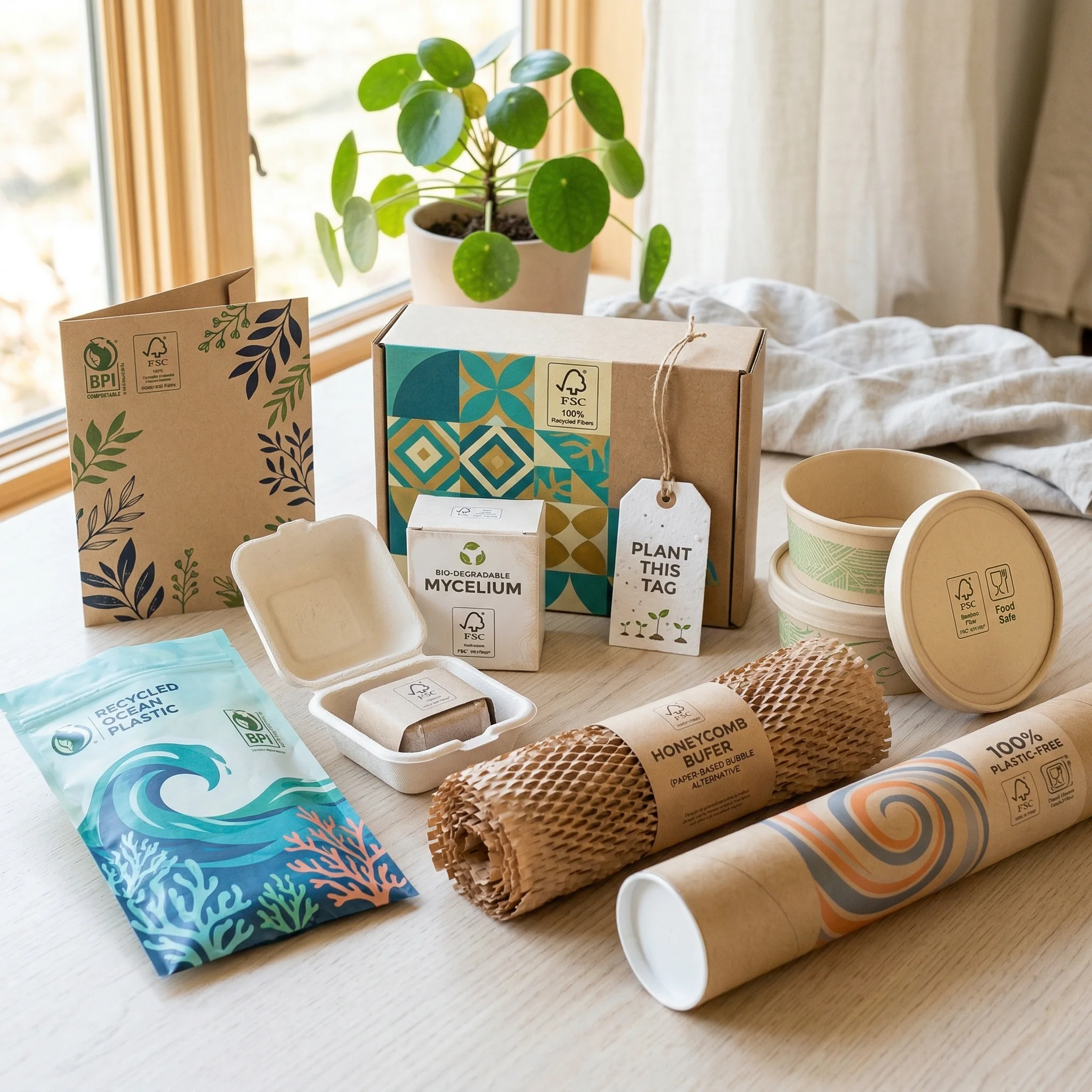
Eco-friendly packaging uses renewable, recycled, or compostable materials to minimize environmental impact throughout the packaging lifecycle — from raw material sourcing through disposal. Unlike conventional petroleum-based packaging, sustainable alternatives are designed to be recycled, composted, or biodegraded, reducing landfill waste and carbon emissions.
The Sustainable Packaging Coalition (SPC) defines sustainable packaging as packaging that: (1) is sourced responsibly, (2) is designed to be effective and safe throughout its lifecycle, (3) meets market criteria for performance and cost, and (4) is recovered and recycled at end of life.
Forest Stewardship Council (FSC) certified kraft paper is sourced from responsibly managed forests. It provides excellent structural strength, natural aesthetics, and full recyclability.
Carbon footprint: 30–50% lower than virgin bleached paperboard Recyclability: 100% curbside recyclable Best for: Mailer boxes, folding cartons, retail bags, tissue paper Price vs conventional: +5–10%
Made from 70–100% post-consumer recycled (PCR) content, recycled corrugated maintains the same structural performance as virgin material for most applications.
PCR content: 70–100% post-consumer recycled fiber Recyclability: Infinitely recyclable (fiber degrades after 5–7 cycles) Best for: Shipping boxes, mailer boxes, display packaging Price vs conventional: +0–5% (often cost-neutral)
PLA is derived from corn starch or sugarcane and provides a clear, rigid alternative to petroleum-based plastics. ASTM D6400 certified PLA composts in commercial facilities within 90–180 days.
Source: Corn starch, sugarcane Certification: ASTM D6400, EN 13432 Best for: Clear windows, food containers, pouches Price vs conventional: +15–25%
Molded pulp is made from recycled newspaper, cardboard, or agricultural fiber (bamboo, sugarcane bagasse). It provides cushioning protection comparable to EPS foam while being fully compostable.
Source: Recycled paper or agricultural waste Compostability: Home compostable within 45–90 days Best for: Product inserts, protective packaging, food trays Price vs conventional: +10–20%
Traditional printing inks contain petroleum-based solvents. Soy-based and water-based inks reduce VOC emissions by 75–90% while delivering comparable print quality and color vibrancy.
VOC reduction: 75–90% fewer volatile organic compounds Print quality: Comparable to conventional inks Best for: All printed packaging — boxes, labels, bags, tissue paper
| Certification | What It Means | Verified By |
|---|---|---|
| FSC | Wood/paper from responsibly managed forests | Forest Stewardship Council |
| ASTM D6400 | Compostable in commercial facilities (180 days) | ASTM International |
| EN 13432 | European compostability standard | European Committee for Standardization |
| SFI | Sustainable forestry practices | Sustainable Forestry Initiative |
| OK Compost | Industrial and home compostability certification | TÜV Austria |
| How2Recycle | Clear consumer recycling instructions | Sustainable Packaging Coalition |
| Packaging Type | Conventional Cost | Eco-Friendly Cost | Premium |
|---|---|---|---|
| Mailer Box (10x8x4) | $1.20 | $1.35 | +12.5% |
| Folding Carton | $0.45 | $0.50 | +11.1% |
| Stand-Up Pouch | $0.18 | $0.22 | +22.2% |
| Tissue Paper (20x30) | $0.04 | $0.05 | +25.0% |
| Product Labels (roll) | $0.05 | $0.06 | +20.0% |
| Corrugated Shipping Box | $0.90 | $0.92 | +2.2% |
Catalog every packaging component (primary, secondary, tertiary) and identify the highest-volume items. These offer the greatest impact per change.
Define specific targets: "Achieve 80% recyclable materials by Q4 2026" is actionable. "Be more sustainable" is not.
Match sustainable materials to your product requirements. Not every item needs to be compostable — recycled content is often the most cost-effective and impactful first step.
Communicate your sustainability journey on packaging, social media, and product pages. Consumers want transparency about what you're doing and why.
Sustainable packaging typically costs 5–15% more than conventional alternatives, but the gap is closing. Recycled corrugated is now virtually cost-neutral with virgin material. The ROI often comes through higher customer satisfaction — 73% of consumers say they'd pay more for sustainable packaging (McKinsey, 2025).
ASTM D6400 is the American standard for compostable plastics. It certifies that a material will biodegrade in a commercial composting facility within 180 days, leaving no toxic residue. It is the benchmark certification for brands claiming their packaging is "compostable."
Yes. Modern recycled corrugated achieves 90–95% of the burst strength and edge crush resistance of virgin material. For most e-commerce and retail applications, recycled corrugated performs identically. Only extreme conditions (high humidity, heavy loads over 30 lbs) may require virgin fiber.
Cubit offers FSC-certified paper and board options across our full product range — mailer boxes, folding cartons, paper bags, tissue paper, and labels. Our FSC chain-of-custody ensures traceability from forest to finished product.
Recycled corrugated cardboard is the most cost-effective entry point. With 70–100% post-consumer content and virtually no price premium over virgin material, it's the easiest sustainability win for any brand. We recommend starting here and expanding to other materials as volume grows.
We include official certification logos (FSC, ASTM D6400, How2Recycle) directly in your packaging artwork at no extra charge. Our design team ensures proper logo placement and sizing according to each certification body's guidelines.
Cubit offers eco-friendly packaging from $0.15/unit — FSC kraft, recycled corrugated, compostable PLA, molded pulp. ASTM D6400 & FSC certified. 500 MOQ.
Order custom packaging for your brand. Custom Mailer Boxes → | Custom Folding Cartons → | Custom Labels → — full-color printing, premium materials. From 500 units. Get a free quote →
Design your packaging free in 60s
Try the free AI packaging design toolNeed Custom Packaging?
Get a free quote with pricing, MOQs, and turnaround time for your custom packaging project.