
Technology & Innovation
Smart Packaging Technology: The Complete 2026 Guide
Cubit Packaging Editorial Team
June 8, 2026
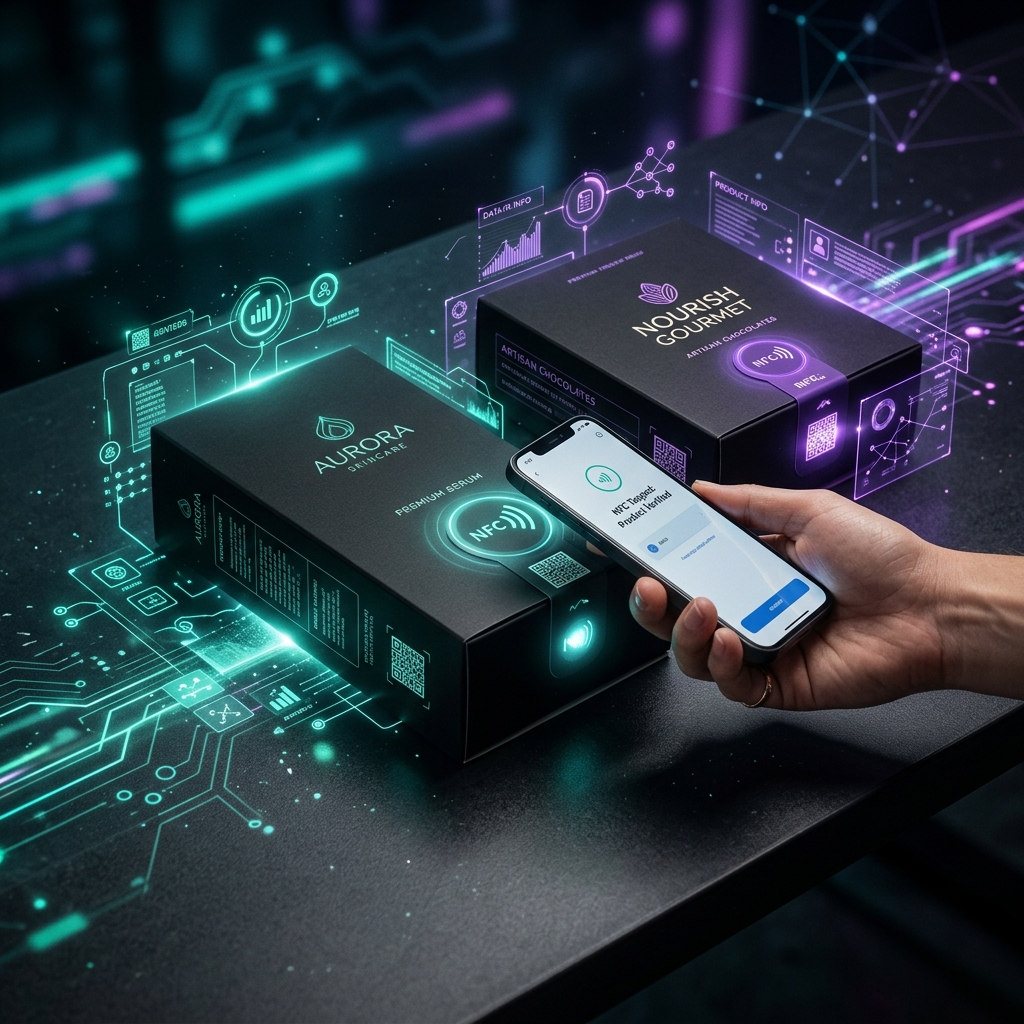
Smart packaging is packaging embedded with digital technology — such as QR codes, NFC tags, RFID chips, temperature sensors, or freshness indicators — that communicates information to consumers, brands, and supply chain partners. The global smart packaging market reached $28.2 billion in 2026, growing at 5.5% CAGR, and is fundamentally changing how products interact with the people who buy, sell, and regulate them.
Key Takeaway: Smart packaging transforms every product into a data-rich digital touchpoint. The technology ranges from $0.002/unit (QR codes) to $0.50/unit (NFC tags) and delivers measurable ROI through authentication, engagement, compliance, and supply chain visibility.
Smart packaging is any packaging system that goes beyond the traditional functions of containment, protection, and marketing to provide active functionality or intelligent communication. It bridges the gap between physical products and the digital ecosystem.
The International Organization for Standardization (ISO) defines smart packaging broadly as packaging that incorporates technology to extend functionality beyond traditional roles. In practical terms, this means packaging that can:
This article focuses on the intelligent/connected category — packaging that communicates with digital systems — as this represents the fastest-growing and most commercially accessible segment of smart packaging.
Two-dimensional barcodes printed directly on packaging that link to digital content when scanned with a smartphone camera.
Small electronic chips embedded in packaging that transfer data when tapped with a smartphone (within 1–4cm).
Electronic tags that can be read at greater distances (up to 10 meters) without line-of-sight, primarily used for supply chain tracking.
Conductive inks and flexible sensors printed directly onto packaging that detect environmental conditions.
Packaging designs that trigger immersive AR experiences when scanned with a smartphone app or WebAR browser.
| Feature | Active Packaging | Intelligent Packaging |
|---|---|---|
| What it does | Interacts with the product to extend shelf life | Communicates information about the product |
| Examples | Oxygen scavengers, antimicrobial films, moisture absorbers | QR codes, NFC tags, TTIs, freshness indicators |
| Cost range | $0.05–$1.00/unit | $0.002–$2.00/unit |
| Primary industries | Food, pharmaceuticals | All consumer goods |
| Cubit relevance | Materials selection via Cubit AI Consultant | Cubit One (QR/NFC), Cubit Secure (authentication) |
| Factor | QR Code | NFC Tag | RFID Tag |
|---|---|---|---|
| Cost/unit | $0.002–$0.05 | $0.10–$0.50 | $0.05–$0.15 |
| Read distance | 5–30cm (camera) | 1–4cm (tap) | 1–10m (reader) |
| Smartphone compatible | ✅ All phones | ✅ Most phones | ❌ Requires reader |
| Security level | Medium | High (unique chip) | Medium-High |
| Data capacity | 4,296 chars | 8KB typical | 96–512 bits |
| Read speed | 1–3 seconds | Instant (tap) | Instant (bulk) |
| Consumer experience | Scan (active) | Tap (intuitive) | N/A (B2B) |
| Durability | Can scratch | Survives moisture | Survives harsh |
| Best use case | Mass engagement | Premium auth | Inventory/logistics |
| Technology | Hardware Cost | Platform Cost | Implementation | Total/Unit |
|---|---|---|---|---|
| QR code (static) | $0.00 | $0.00 | $0.002 | $0.002 |
| QR code (dynamic) | $0.00 | $0.001–$0.01 | $0.002 | $0.003–$0.012 |
| NFC tag (basic) | $0.10–$0.25 | $0.01–$0.05 | $0.02 | $0.13–$0.32 |
| NFC tag (tamper-detect) | $0.25–$0.50 | $0.02–$0.05 | $0.03 | $0.30–$0.58 |
| RFID (passive UHF) | $0.05–$0.15 | $0.01 | $0.01 | $0.07–$0.17 |
| TTI sensor | $0.20–$1.00 | N/A | $0.05 | $0.25–$1.05 |
The European Union's Digital Product Passport (DPP) regulation, part of the Ecodesign for Sustainable Products Regulation (ESPR), requires products sold in the EU to carry a digital passport containing:
Timeline: Batteries (2027), textiles (2028), electronics (2030)
Implementation method: QR codes are the designated primary access point for DPPs. Every product will need a scannable code linking to standardized digital product information.
Brands selling into the EU market should start implementing QR-based product data systems now to be compliant ahead of deadlines.
| Platform | Focus | QR | NFC | Analytics | Pricing |
|---|---|---|---|---|---|
| Cubit One | Full packaging + tech integration | ✅ | ✅ | ✅ | Included with orders |
| QR Tiger | QR code generation | ✅ | ❌ | ✅ | $7–$37/mo |
| Uniqode (Beaconstac) | QR + NFC | ✅ | ✅ | ✅ | $5–$49/mo |
| Scantrust | Supply chain QR | ✅ | ❌ | ✅ | Enterprise pricing |
| Thinfilm/NXP | NFC authentication | ❌ | ✅ | ✅ | Per-tag + platform |
Cubit One is unique in that it integrates smart packaging technology directly into the packaging ordering and design process — so your QR codes, NFC tags, and digital landing pages are created alongside your physical packaging, not as a separate system.
Smart packaging communicates information (QR codes, NFC, sensors) while active packaging interacts with the product to extend its shelf life (oxygen scavengers, antimicrobial films). Many modern solutions combine both — for example, a freshness sensor (active) that displays results via a QR code scan (smart).
Smart packaging costs range from $0.002/unit for basic QR codes to $0.50+/unit for NFC tags. The total cost depends on technology choice, volume, and platform fees. Most brands start with QR codes (essentially free) and add NFC for premium lines.
In some industries, yes. Pharmaceutical serialization (DSCSA in the US, FMD in the EU) requires unique identifiers on drug packaging. The EU Digital Product Passport will require QR-accessible product data starting 2027. Food safety regulations increasingly favor digital traceability.
QR codes are simply printed ink and do not affect recyclability. NFC and RFID tags contain small amounts of metal and electronics that should ideally be separated before recycling. Some NFC manufacturers now offer biodegradable tag substrates.
Pharmaceuticals (compliance + authentication), food & beverage (freshness + traceability), luxury goods (authentication + storytelling), cosmetics (engagement + tutorials), and cannabis (mandatory compliance) see the highest ROI from smart packaging.
Smart packaging technology is no longer experimental — it's a competitive necessity. With QR codes costing as little as $0.002 per unit, the barrier to entry is essentially zero.
Explore Cubit One to integrate smart packaging directly into your next order, or talk to our AI Consultant for a personalized recommendation.
Published by Cubit Packaging Editorial Team. Last updated June 2026.
Design your packaging free in 60s
Try the free AI packaging design toolNeed Custom Packaging?
Get a free quote with pricing, MOQs, and turnaround time for your custom packaging project.