
Smart Packaging
Smart Packaging: How QR Codes, NFC, and Bluetooth Are Transforming Brand Engagement
Cubit Packaging
March 26, 2026
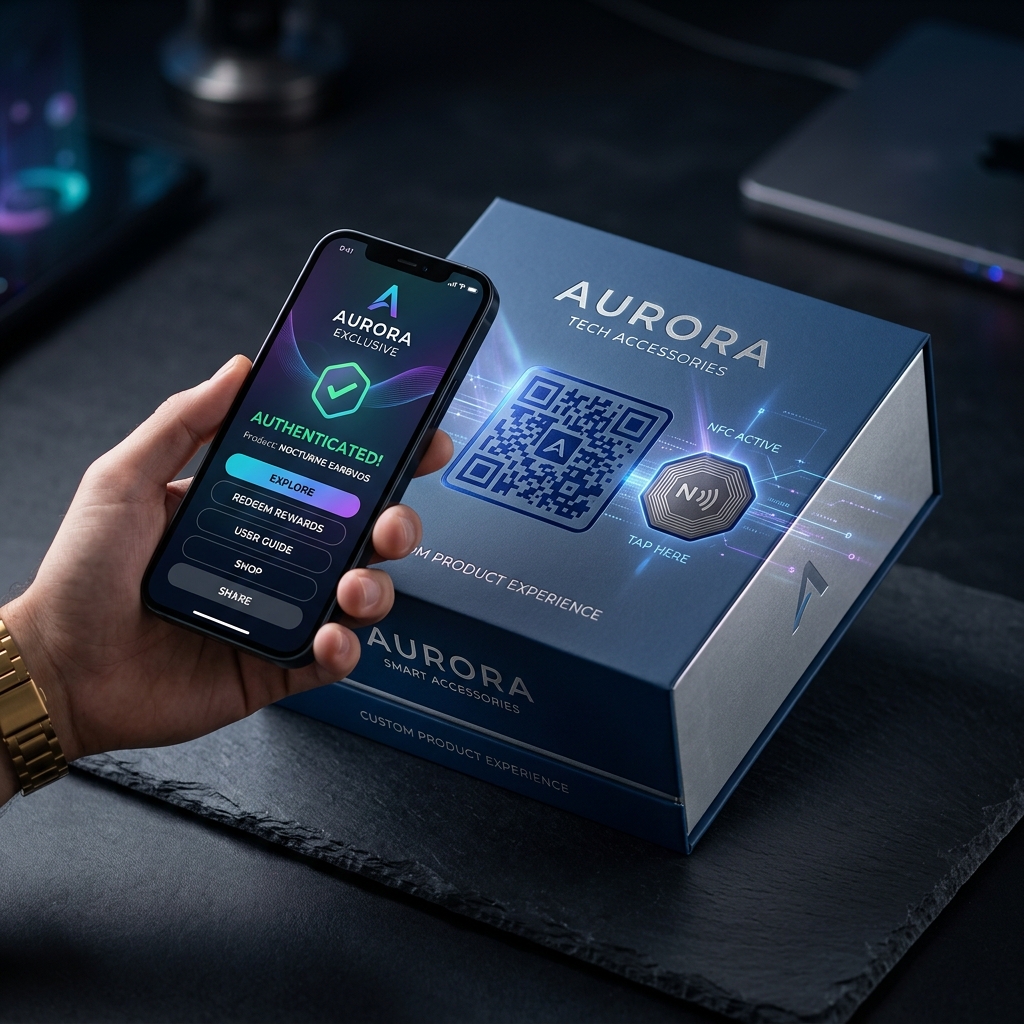
Definition: Smart packaging is packaging that incorporates digital technology — such as QR codes, NFC chips, Bluetooth beacons, or sensors — to communicate information, interact with consumers, monitor product conditions, or verify product authenticity beyond the capabilities of traditional printed packaging.
What if every package your brand ships could start a conversation with your customer? What if scanning a box of coffee could show exactly which farm the beans came from, or tapping a cosmetics box with your phone could launch a personalized skincare routine?
This is smart packaging — and it is already transforming how brands connect with consumers in 2026. This guide explains the three main smart packaging technologies, real-world use cases, implementation costs, and step-by-step instructions for adding smart labels to your own packaging.
Quotable Fact: According to MarketsandMarkets (2024), the global smart packaging market is projected to reach $38.8 billion by 2028, driven by growing demand for product authentication, supply chain visibility, and consumer engagement through connected packaging.
| Technology | How It Works | Range | Cost Per Label | App Required? | Best For |
|---|---|---|---|---|---|
| QR Codes | Printed code scanned by phone camera | Visual line-of-sight | $0.05–$0.15 | No | Product info, marketing, loyalty |
| NFC | Embedded chip activated by phone tap | 1–4 cm | $0.50–$2.00 | No | Authentication, luxury experiences |
| BLE | Battery-powered beacon broadcasting signal | Up to 100 meters | $2.00–$10.00 | Sometimes | Asset tracking, supply chain, retail analytics |
Definition: A QR code (Quick Response code) is a two-dimensional barcode that stores a URL or data payload. When scanned by a smartphone camera, it opens a specific web page, app action, or digital experience. QR codes can be printed directly onto packaging at virtually zero additional cost.
QR codes are the most accessible and cost-effective smart packaging technology. They can be printed directly onto any packaging surface as part of the artwork — meaning the code adds no manufacturing cost beyond the initial design.
| Best Practice | Specification | Why It Matters |
|---|---|---|
| Minimum size | 2cm × 2cm (0.8 × 0.8 inches) | Smaller codes have unreliable scan rates |
| Color contrast | Dark code on light background | Low contrast causes scan failures |
| Call-to-action | Text near QR code explaining what happens | Without CTA, scan rates drop by 40–60% |
| Dynamic QR codes | URL redirect that can be updated | Change destination without reprinting |
| Error correction | Level M or H (15–30% redundancy) | Works even if code is partially obscured |
Definition: NFC (Near Field Communication) is a wireless communication technology that enables data exchange between an embedded chip and a smartphone at distances of 1–4 centimeters. NFC requires no app download, no camera — the user simply taps their phone against the NFC-enabled area of the packaging.
| Industry | NFC Use Case | Consumer Benefit |
|---|---|---|
| Wine and spirits | Tap to view tasting notes, food pairings, vineyard story | Enhanced product knowledge and experience |
| Cosmetics | Tap to watch application tutorial for specific shade | Personalized how-to content |
| Pharmaceuticals | Tap to verify authenticity and access dosage info | Safety and trust assurance |
| Fashion and luxury goods | Tap to register product, access warranty, verify origin | Ownership verification and after-sales |
| Limited editions | Tap to prove authenticity for resale or collecting | Certified provenance for collectibles |
Definition: BLE (Bluetooth Low Energy) tags are small, battery-powered transmitters that broadcast Bluetooth signals continuously at ranges up to 100 meters. Unlike QR and NFC which require active consumer interaction, BLE tags communicate passively and are detected by nearby Bluetooth receivers — making them ideal for logistics, asset tracking, and environmental monitoring.
Quotable Insight: For most brands, QR code smart labels deliver the highest ROI at the lowest cost — each $0.05–$0.15 label can drive 10–25% more website traffic from physical products and enable first-party data collection worth $0.50–$2.00+ per engaged customer in marketing value.
| Use Case | Technology | Additional Cost | Expected Return |
|---|---|---|---|
| Product info and marketing links | QR Code | $0.05–$0.15/unit | 10–25% increase in web traffic from packages |
| Loyalty and rewards program | QR Code | $0.05–$0.15/unit | 15–30% higher repeat purchase rate |
| Product authentication | NFC | $0.50–$2.00/unit | Reduced counterfeiting losses; premium brand trust |
| Supply chain tracking | BLE | $2.00–$10.00/unit | 5–15% reduction in shrinkage and logistics costs |
The technology is only as valuable as the content it connects to. Create mobile-optimized landing pages, set up analytics to track scans by product/location/time, and design a clear post-scan user journey.
Smart labels can be added to any existing packaging — mailer boxes, pouches, labels, rigid boxes, or cartons. QR codes integrate into your artwork files. NFC and BLE tags are applied as small stickers or integrated during manufacturing. No full packaging redesign is required.
No. Both QR codes and NFC work with the built-in camera and NFC reader on modern smartphones. iPhones since iPhone 7 (2016) and most Android devices since 2018 support NFC natively. No app download is required for either technology.
QR codes are printed directly on packaging and have zero recyclability impact. NFC chips are approximately the size of a grain of rice and are typically recycled with paper and cardboard without issue. BLE tags contain small batteries and should be removed before recycling.
Each scan or tap can capture: timestamp, geographic location (city/country level), device type (iOS/Android), number of scans per unique package, and any data customers voluntarily provide through forms. This first-party data is cookie-free and fully GDPR/CCPA compliant when proper consent mechanisms are implemented.
NFC labels are designed to withstand standard shipping and handling conditions, including moisture exposure, moderate temperature variations (−25°C to +70°C), and physical impact from normal transit. For extreme conditions, industrial-grade NFC tags with enhanced encapsulation are available.
Yes. Smart labels can be applied as adhesive stickers to any existing packaging surface. For QR codes, simply incorporate the code into your next artwork revision. For NFC, apply NFC sticker labels directly onto current packaging. No full redesign or new tooling is required.
Smart packaging is the bridge between your physical products and your digital brand. Whether you start with a simple QR code linking to product content or implement NFC authentication for luxury goods, every smart label turns a one-time shipping transaction into an ongoing digital conversation with your customer.
Cubit One provides a unified smart packaging platform integrating QR, NFC, and BLE technologies with analytics, authentication, and customer engagement — all managed from a single dashboard.
Looking for the right packaging format? Browse Cubit's full catalog:
Corrugated Boxes · Mailer Boxes · Packaging Inserts · Tote Bags · Tissue & Wrapping · Tape & Sealing · Get a Free Quote
Ready to order custom packaging? Custom Mailer Boxes → | Custom Folding Cartons → | Custom Mylar Bags → — full-color printing, free design support. From 500 units. Browse all products →
Design your packaging free in 60s
Try the free AI packaging design toolNeed Custom Packaging?
Get a free quote with pricing, MOQs, and turnaround time for your custom packaging project.