
Technology & Innovation
Dynamic vs Static QR Codes: Which Is Right for Your Packaging?
Cubit Packaging Editorial Team
June 9, 2026
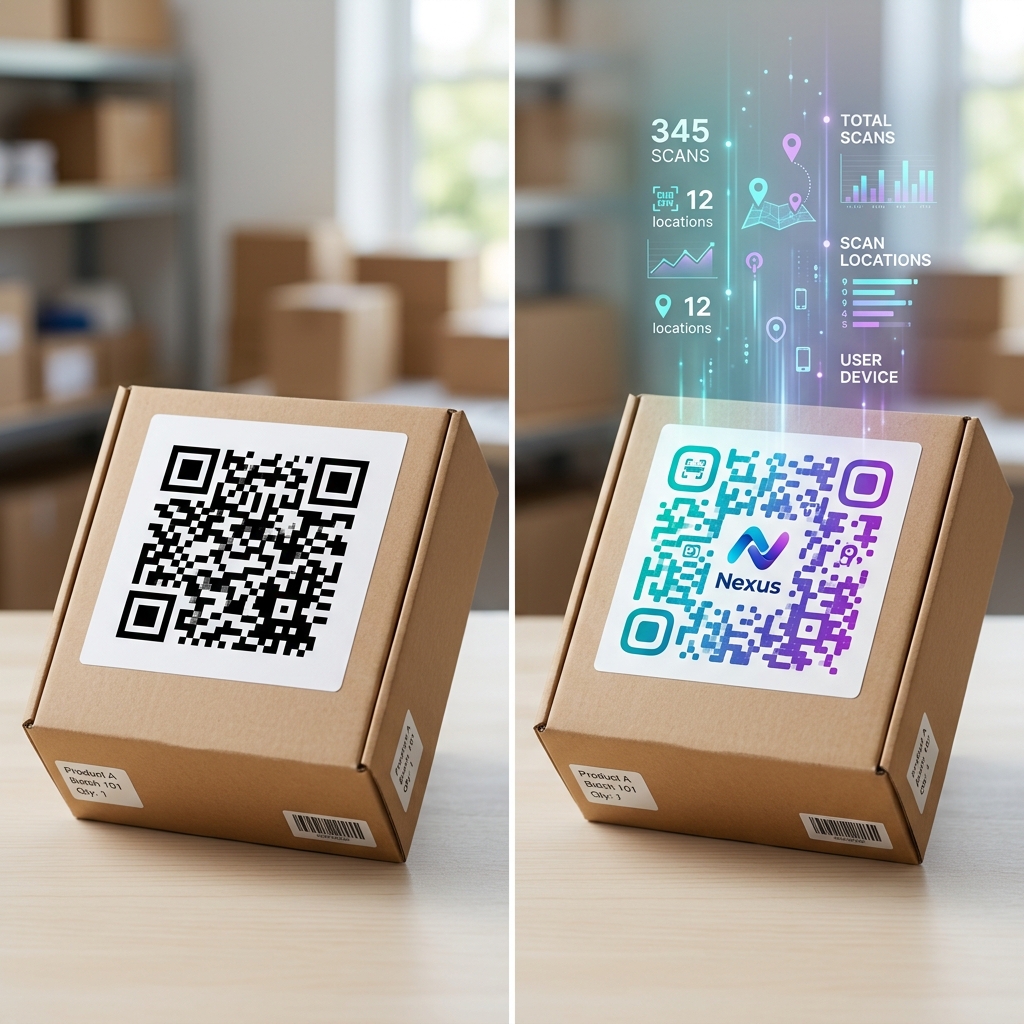
A dynamic QR code is a QR code whose destination URL can be changed after it has been printed, while a static QR code permanently encodes a fixed URL or data that can never be modified. For product packaging, dynamic QR codes are recommended in 90% of cases because they allow content updates without reprinting, provide scan analytics (location, device, time), and generate shorter URLs that produce smaller, more scannable codes. Dynamic QR codes cost $5–$49/month through platforms like Cubit One, QR Tiger, or Bitly, while static QR codes are free to generate.
Key Takeaway: Always use dynamic QR codes on product packaging. The ability to update content after printing, track every scan, and A/B test landing pages makes the $5–$49/month platform cost negligible compared to the $2,000–$15,000 cost of reprinting packaging.
| Feature | Static QR Code | Dynamic QR Code |
|---|---|---|
| Content editable after print | ❌ No | ✅ Yes |
| Scan analytics | ❌ No tracking | ✅ Full analytics |
| URL length encoded | Full URL (longer) | Short redirect URL |
| Physical size needed | Larger (more data) | Smaller (less data) |
| Cost | Free forever | $5–$49/month |
| A/B testing | ❌ Not possible | ✅ Supported |
| Expiration control | ❌ No | ✅ Set start/end dates |
| Password protection | ❌ No | ✅ Available |
| Retargeting pixels | ❌ No | ✅ Supported |
| Bulk generation | ✅ Easy | ✅ Easy |
| Best for | Permanent info, WiFi | Marketing, packaging |
A static QR code directly encodes data — such as a URL, text, phone number, or WiFi credentials — into the pattern of black and white modules. The information is literally baked into the physical pattern of the code itself.
A dynamic QR code encodes a short redirect URL (e.g., qr.cubit.one/a1b2c3) instead of your actual destination URL. When scanned, the redirect server forwards the user to whatever destination you have configured — and this destination can be changed at any time without modifying the printed QR code.
qr.example.com/abc123)This is why dynamic QR codes matter for packaging: you cannot reprint packaging to fix a broken link. With a static QR code, if your URL changes, breaks, or you want to run a different campaign, you must reprint all packaging — costing $2,000–$15,000+ depending on volume. With a dynamic QR code, you simply update the redirect in your dashboard in 30 seconds.
Real-world scenario: A food brand prints 50,000 boxes with a QR code linking to a recipe page. Six months later, they redesign their website and all URLs change. With static QR codes, 50,000 boxes now link to 404 error pages. With dynamic QR codes, they update the redirect in 30 seconds — zero waste, zero reprinting.
Dynamic QR codes provide scan-level analytics that are impossible with static codes:
| Analytics Data Point | Static | Dynamic |
|---|---|---|
| Total scan count | ❌ | ✅ |
| Unique vs repeat scans | ❌ | ✅ |
| Geographic location (city-level) | ❌ | ✅ |
| Device type (iOS/Android) | ❌ | ✅ |
| Time and day of scan | ❌ | ✅ |
| Referring source | ❌ | ✅ |
| Browser/OS version | ❌ | ✅ |
This data is invaluable for understanding how customers interact with your physical products. For example, discovering that 60% of scans happen between 6–9 PM tells you your product is being used at dinner time — informing your content strategy.
Because static QR codes encode the full destination URL, a long URL like https://cubitpackaging.com/blog/dynamic-vs-static-qr-codes-packaging creates a dense, complex QR pattern that requires a larger print size for reliable scanning.
Dynamic QR codes encode only a short redirect URL like qr.cubit.one/x7k, resulting in a simpler pattern that can be printed 30–40% smaller while maintaining perfect scannability.
| URL Length | Static QR Modules | Dynamic QR Modules | Size Reduction |
|---|---|---|---|
| 20 chars | 25×25 (v2) | 21×21 (v1) | 16% smaller |
| 50 chars | 33×33 (v4) | 21×21 (v1) | 36% smaller |
| 100 chars | 41×41 (v6) | 21×21 (v1) | 48% smaller |
| 200 chars | 57×57 (v10) | 21×21 (v1) | 63% smaller |
Dynamic QR codes offer security features unavailable with static codes:
| Platform | Free Tier | Starter | Professional | Enterprise |
|---|---|---|---|---|
| Cubit One | Included with orders | Included | Included | Included |
| QR Tiger | 3 dynamic QRs | $7/mo | $16/mo | $37/mo |
| Bitly | 5 QR codes | $8/mo | $29/mo | $199/mo |
| Uniqode | 3 QR codes | $5/mo | $15/mo | $49/mo |
A dynamic QR platform costs $60–$588/year. A single packaging reprint costs $2,000–$15,000. You need to avoid just ONE reprint to achieve 3–25× ROI on your dynamic QR investment. According to industry data, 34% of brands need to update their QR code destination within the first year — making dynamic QR codes the clear financial winner for packaging applications.
Scan Dashboard Example:
| Metric | Example Data | Business Insight |
|---|---|---|
| Total scans (30 days) | 12,450 | Product engagement rate |
| Unique scanners | 8,200 | Individual customer reach |
| Top city | New York (18%) | Geographic demand signal |
| Peak scan time | 7–9 PM | Usage timing insight |
| iOS vs Android | 62% / 38% | Platform optimization |
| Average session | 2.4 minutes | Content engagement depth |
Static QR codes are the right choice when:
Dynamic QR codes are essential when:
Rule of thumb: If you are printing more than 1,000 units of anything, use dynamic QR codes. The cost of reprinting will always exceed the platform subscription.
Customer scans QR → Phone reads short URL → HTTP 301/302 redirect → Destination page
                                    ↓
                           Analytics server logs:
                           - Timestamp
                           - IP → City/Country
                           - User-Agent → Device/OS
                           - Unique ID (cookie/fingerprint)
| Platform | Best For | QR Limit | Analytics | Custom Domains | Pricing |
|---|---|---|---|---|---|
| Cubit One | Packaging orders | Unlimited | ✅ Full | ✅ Yes | Included |
| QR Tiger | Marketing teams | 500/plan | ✅ Full | ✅ Yes | $7–37/mo |
| Bitly | Link management | Per plan | ✅ Basic | ✅ Yes | $8–199/mo |
| Uniqode | Enterprise | Per plan | ✅ Full | ✅ Yes | $5–49/mo |
| Beaconstac | Retail/events | Per plan | ✅ Full | ✅ Yes | $5–49/mo |
Most QR code platforms are standalone tools — you create QR codes separately from your packaging. Cubit One integrates QR code generation directly into your packaging order process. When you design and order packaging through Cubit, your QR codes are automatically:
No separate platform subscription, no manual coordination between QR tool and printer.
No. A static QR code permanently encodes its data into the physical pattern. You cannot add redirect or tracking capabilities to an existing static code. You must generate a new dynamic QR code and reprint the material.
Dynamic QR codes work as long as the hosting platform is active and your subscription is current. If you cancel your subscription, most platforms disable the redirect after a grace period (typically 30–90 days). Choose a reputable platform and maintain your subscription.
No. The scanning speed is identical — the phone decodes the QR pattern in the same way regardless of type. The redirect adds 50–200ms to the page load, which is imperceptible to users.
Yes. Most professional plans allow custom short domains (e.g., qr.yourbrand.com instead of qr.platform.com). This improves brand trust and looks more professional when the URL is visible.
There is no inherent scan limit for QR codes. Platform limits depend on your plan — most offer 10,000 to unlimited scans per month. Cubit One includes unlimited scans with all packaging orders.
Dynamic QR codes are more secure for packaging because you can monitor scan patterns to detect counterfeiting (e.g., a single QR code being scanned 10,000 times suggests it has been photocopied onto counterfeit products). Static codes offer no such visibility.
For product packaging, the choice is clear: use dynamic QR codes. The $5–$49/month platform cost is trivial compared to the value of updateable content, scan analytics, and reprint avoidance.
The only exception is safety/regulatory information that must work without any server dependency — use static codes for those specific elements.
Ready to add dynamic QR codes to your packaging? Explore Cubit One for integrated smart packaging, or browse our store to start your next packaging order with built-in QR codes.
Published by Cubit Packaging Editorial Team. Last updated June 2026.
Design your packaging free in 60s
Try the free AI packaging design toolNeed Custom Packaging?
Get a free quote with pricing, MOQs, and turnaround time for your custom packaging project.