
Technology & Innovation
Smart Packaging: QR Codes, NFC, and the Future of Interactive Boxes
Cubit Packaging Team
June 17, 2026
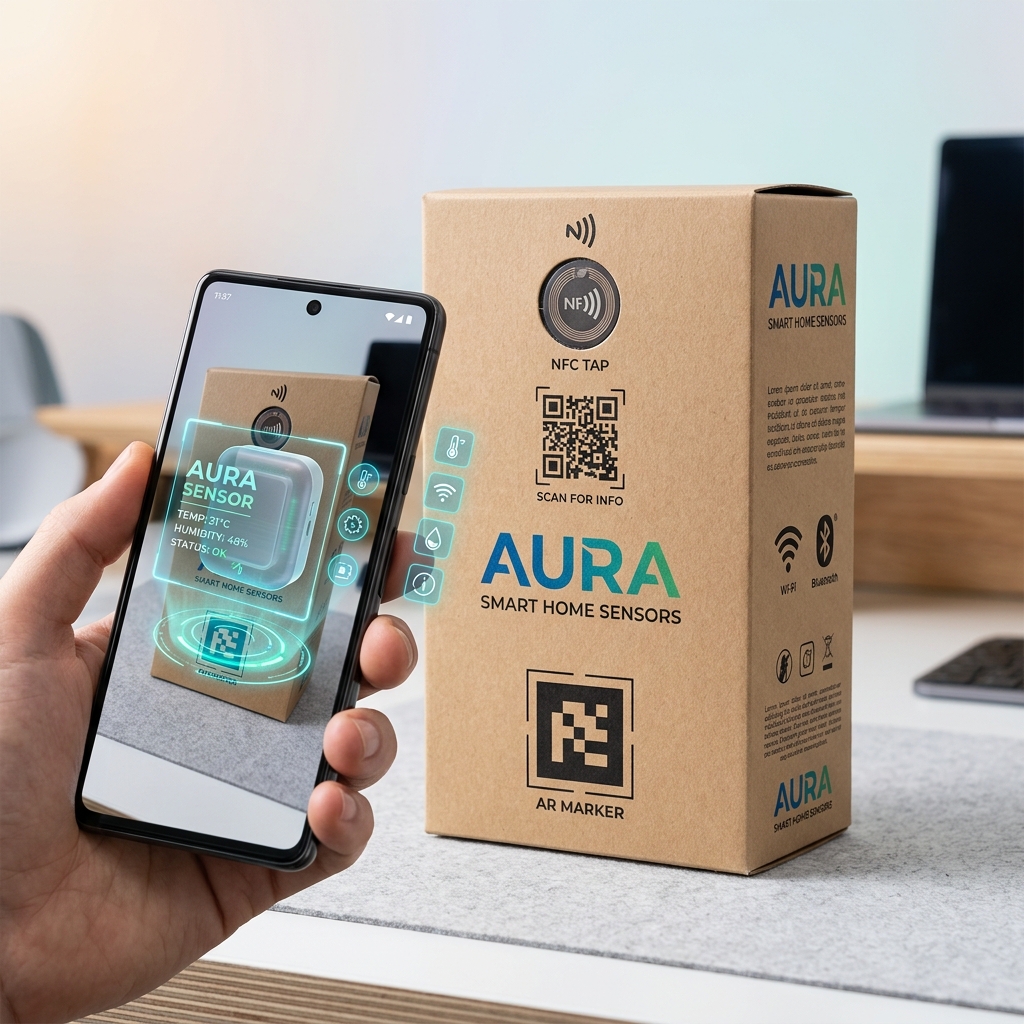
Smart packaging is any packaging that does more than hold a product. It communicates, interacts, and connects the physical product to digital experiences.
At its simplest, smart packaging is a QR code printed on a box that links to a product page. At its most advanced, it is an NFC chip embedded in a label that triggers an augmented reality experience when tapped with a smartphone.
The key insight: your packaging is the one marketing channel customers are guaranteed to interact with. Every customer touches the box. Smart packaging turns that mandatory touchpoint into an engagement opportunity.
The most accessible smart packaging technology. Printed directly on packaging at no additional manufacturing cost.
| Type | How It Works | Cost | Best For |
|---|---|---|---|
| Static QR | Fixed URL, never changes | $0 (printed) | Product pages, social links |
| Dynamic QR | URL can be changed after printing | $5–$50/month (service) | Campaigns, seasonal content |
| Serialized QR | Unique code per unit | $0.01–$0.05/unit | Authentication, tracking |
Best applications:
Thin chips embedded in labels or packaging that activate when a smartphone is held within 4cm.
Cost: $0.08–$0.25 per NFC tag at 1,000+ units Best applications:
Digital experiences overlaid on physical packaging viewed through a smartphone camera.
Cost: $2,000–$15,000 for AR experience development (one-time) Best applications:
Indicators that change color based on temperature exposure or time since activation.
Cost: $0.15–$0.50 per indicator Best applications:
For most brands, the practical starting point is QR codes. They cost nothing to print and provide immediate measurable value.
What should happen when a customer scans or taps your packaging?
Place interactive elements where customers naturally look:
Use dynamic QR codes or UTM-tagged URLs to track:
| Technology | Per-Unit Cost | Setup Cost | Expected Engagement | ROI Timeline |
|---|---|---|---|---|
| Static QR code | $0 (printed) | $0 | 5–15% scan rate | Immediate |
| Dynamic QR code | $0 (printed) | $5–50/month | 10–20% scan rate | 1–2 months |
| NFC tag | $0.08–$0.25 | $500–$2,000 | 3–8% tap rate | 3–6 months |
| AR experience | $0 (marker printed) | $2,000–$15,000 | 15–30% activation | 6–12 months |
| Temperature sensor | $0.15–$0.50 | $0 | N/A (functional) | Immediate |
Expert insight from Cubit: "Start with a dynamic QR code on your packaging lid linking to a post-purchase landing page. This single addition — which costs zero in additional printing — gives you a direct communication channel with every customer who opens your box."
QR codes are printed as part of your packaging artwork at no additional manufacturing cost. The only cost is the dynamic QR service if you want changeable URLs ($5–$50/month). Static QR codes are completely free.
Yes. Average scan rates range from 5–20% depending on placement, incentive, and call-to-action clarity. Codes placed inside the lid with a clear instruction ("Scan for 15% off your next order") achieve the highest engagement.
The highest-performing QR code destinations are: reorder pages with discount codes (highest conversion), product tutorial videos (highest engagement), review solicitation pages (highest business value), and loyalty program enrollment.
NFC makes sense for brands selling products above $30 where authentication or premium experience adds value. At $0.08–$0.25 per unit, the cost is minimal for luxury, beauty, or specialty food brands.
Yes. QR codes can be added to your next packaging reorder at no additional cost — simply update your artwork file. NFC tags can be applied as add-on labels to existing packaging without redesigning.
Want to add smart features to your packaging? Get a free quote — we will help you integrate QR codes, NFC, or other interactive elements into your custom design.
Design your packaging free in 60s
Try the free AI packaging design toolNeed Custom Packaging?
Get a free quote with pricing, MOQs, and turnaround time for your custom packaging project.