
The Ultimate Guide to Custom Product Labels: Materials, Finishes, and Adhesive Selection for Modern Brands
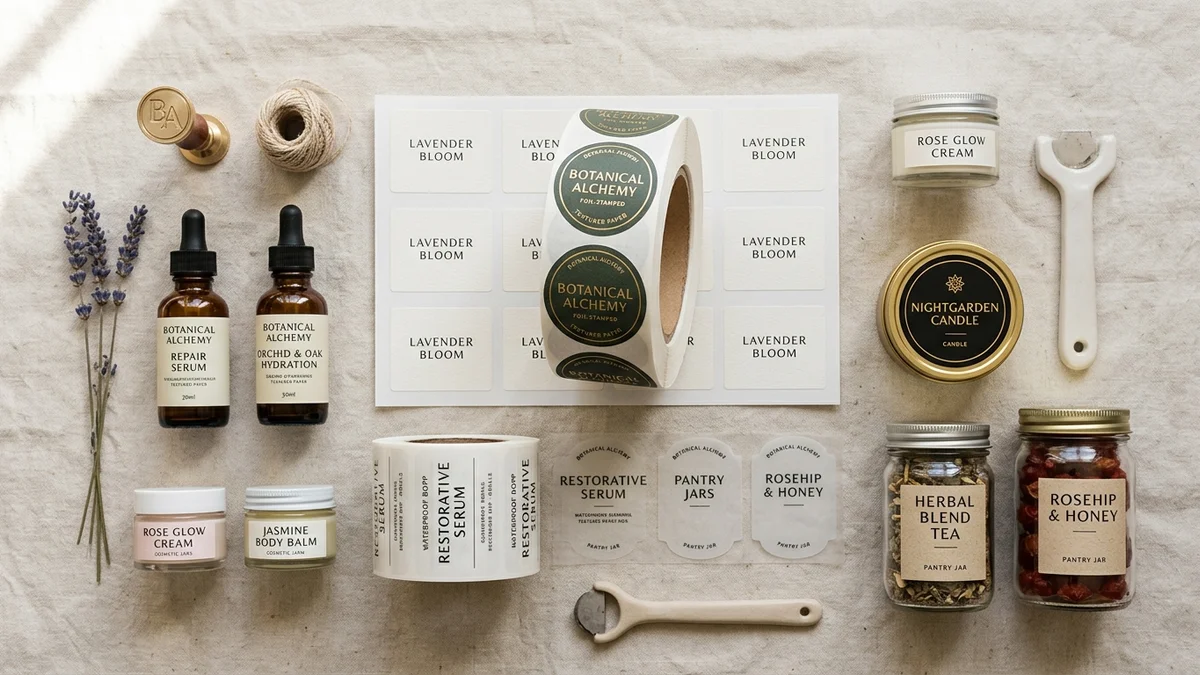
The Ultimate Guide to Custom Product Labels: Materials, Finishes, and Adhesive Engineering
Your product label is the single most critical touchpoint on the retail shelf. Studies show that 72% of consumers say packaging design influences their purchasing decisions, and they form that evaluation in less than seven seconds. A blistered, peeling, or faded label immediately signals inferior product quality, regardless of how exceptional your formulation or craftsmanship is inside the container.
Choosing the right custom product labels requires balancing visual aesthetics with functional engineering. A craft beer label sitting in an icy cooler faces completely different physical stresses than an organic face oil in a humid shower or a dry supplement bottle in a pantry.
In this comprehensive guide, our packaging engineering team breaks down label substrates, adhesive chemistry, surface finishes, and printing technologies so you can specify the exact label build your brand requires.
1. Substrate Selection: The Foundation of Every Label
The base material (or face stock) dictates your label's tactile texture, opacity, durability, and moisture tolerance. Here are the six primary substrates used in commercial packaging:
White BOPP (Biaxially Oriented Polypropylene)
- Thickness: 2.3–2.6 mil
- Key Characteristics: Tear-proof, 100% waterproof, resistant to oils, chemicals, and UV exposure.
- Best For: Cosmetics, beverage bottles, salad dressings, cleaning products, and refrigerated goods.
- Why Brands Choose It: White BOPP provides a pure white canvas with superior ink holdout. Whether you print vibrant CMYK photographs or solid Pantone spot colors, colors stay vivid without fading or bleeding.
Clear BOPP ("No-Label" Look)
- Thickness: 2.0 mil
- Key Characteristics: Optically clear film that creates the illusion that your artwork was printed directly onto the glass or plastic container.
- Best For: Luxury perfume bottles, cold-pressed juices, craft spirits, and clear cosmetic jars.
- Engineering Tip: When printing on clear BOPP, always specify a white ink understrike behind colored elements. Without white backing ink, process colors remain semi-translucent against dark liquids or bottles.
Textured Linen & Estate Papers
- Basis Weight: 60# to 70# uncoated paper stock
- Key Characteristics: Subtle woven or laid tactile texture reminiscent of vintage parchment and European heritage printmaking.
- Best For: Premium wine bottles, artisanal spirits, gourmet olive oils, and luxury candle vessels.
- Water Resistance: Naturally absorbent. For wine buckets and condensation, always specify wet-strength additives and an emulsion acrylic adhesive to prevent bubbling and wrinkling.
Kraft Paper
- Basis Weight: 50# to 60# unbleached natural wood pulp
- Key Characteristics: Earthy brown tone with visible organic fiber flecks.
- Best For: Organic foods, artisanal coffee bags, herbal teas, and sustainable skincare lines.
- Eco Impact: 100% recyclable, biodegradable, and pairs naturally with compostable packaging formats like our stand-up pouches.
Metallic Foil & Holographic Polypropylene
- Thickness: 2.0 mil metallized film
- Key Characteristics: Mirror-reflective silver, gold, or iridescent rainbow diffraction effects.
- Best For: Premium energy drinks, cannabis concentrates, beauty serums, and security tamper-evident seals.
- Design Advantage: By printing transparent inks over silver metallic film, you can create custom metallic shades (metallic ruby, emerald, bronze) without the expense of multiple hot foil stamping dies.
Substrate Comparison Matrix
| Material | Water Resistance | Oil / Chemical Resistance | Tear Resistance | Outdoor UV Life | Relative Cost |
|---|---|---|---|---|---|
| White BOPP | Outstanding | High | Extreme | 12–24 Months | Moderate |
| Clear BOPP | Outstanding | High | Extreme | 12–24 Months | Moderate |
| Textured Linen | Moderate (Wet-Strength) | Low | Low | 3–6 Months | Premium |
| Kraft Paper | Low | Low | Moderate | 2–4 Months | Economical |
| Vinyl Film | Maximum | Extreme | Maximum | 3–5 Years | Premium |
| Metallic Silver | High | High | High | 12–18 Months | Moderate-High |
2. Adhesive Engineering: Chemistry That Sticks
An exceptional label design is useless if the adhesive fails. Label adhesives are complex chemical polymers engineered for specific surface energies, temperatures, and environmental exposures:
Permanent Emulsion Acrylic
- Peel Adhesion: 30–45 oz/in on stainless steel.
- Application Temperature: +32°F to +150°F (+0°C to +65°C).
- Service Temperature Range: -65°F to +200°F (-54°C to +93°C).
- Overview: The universal workhorse for retail packaging. Forms an aggressive chemical bond to smooth glass, rigid plastics (PET, HDPE, PP), cardboard, and tin. Once cured (usually 24 hours), removal causes the label face stock to tear.
Removable & Repositionable Adhesives
- Peel Adhesion: 8–16 oz/in.
- Key Benefit: Leaves zero sticky residue or adhesive ghosting when peeled away from smooth surfaces.
- Common Applications: Retail price tags, promotional window stickers, reusable food storage containers, and candle safety warnings.
Freezer-Grade & All-Temperature Adhesives
- Application Temperature: Down to -20°F (-29°C).
- Service Temperature: Down to -65°F (-54°C).
- Crucial Consideration: Standard adhesives crystallize and lose tack below freezing. If your labels must be applied directly onto frozen meats, ice cream tubs, or flash-frozen meal pouches, freezer-grade hot-melt or specialty rubber adhesive is mandatory.
3. Protective Finishes: Lamination vs. Varnish
Every printed label requires surface protection against friction, scuffing, fingertip oils, and moisture:
- Gloss Lamination: Adds a 0.5–1.0 mil clear polypropylene film over the printed surface. Accentuates color saturation and provides heavy-duty barrier protection against alcohol, oils, and friction during shipping.
- Matte Lamination: Provides an ultra-smooth, glare-free, satin finish. Eliminates harsh reflections under grocery store fluorescent lighting and gives minimalist packaging a sophisticated, muted aesthetic.
- Soft-Touch Lamination: Imparts an unmistakable velvet, suede-like tactile sensation when handled. Highly popular for prestige cosmetic dropper bottles and high-end fragrance lines.
- Spot UV Varnish: A clear high-gloss liquid polymer cured instantly under ultraviolet lamps. Applied selectively over logos, geometric patterns, or text on top of a matte base, creating dramatic visual contrast and tactile relief.
4. Roll Labels vs. Sheet Labels: Choosing Your Delivery Format
How you apply your labels determines the format you should order:
- Roll Labels (Machine or Hand Application):
- Wound continuously around a standard 3-inch or 1-inch cardboard core.
- Essential for automated labeling machinery, bottle labelers, and high-speed packaging lines.
- When ordering roll labels for automated applicators, always specify your machine's required unwind direction (Top Off, Bottom Off, Right Off, or Left Off).
- Sheet Labels & Cut-to-Size:
- Delivered on flat kiss-cut backing sheets or individually trimmed to exact perimeter dimensions.
- Ideal for small artisan batches, hand application under 1,000 units, promotional swag handouts, and testing prototype packaging.
5. Industry-Specific Label Compliance & Best Practices
Food & Beverage Packaging
- FDA Compliance: Adhesives must comply with 21 CFR 175.105 for indirect food contact.
- Condensation Resilience: Bottles placed in refrigerators or coolers must use waterproof BOPP with wet-strength adhesive to prevent flag ends or edge curling.
- Nutritional Panels: Ensure minimum 6 pt font size for Nutrition Facts panels as required by FDA food labeling regulations.
Cosmetics & Personal Care
- Oil & Alcohol Resistance: Serums, essential oils, and lotions dissolve weak inks. Always specify laminated BOPP or vinyl to prevent formula drips from bleeding ink down the bottle.
- Squeeze Bottle Flexibility: If labeling flexible LDPE squeeze tubes or shampoo bottles, specify a flexible film substrate that flexes with the container without wrinkling.
Wine, Spirits & Craft Beer
- Ice Bucket Immersion: Wine labels must endure up to 4 hours submerged in ice water without detaching or bubbling.
- Luxury Embellishments: Cold foil stamping combined with multi-level embossing elevates perceived bottle value by up to 300% on the retail shelf.
6. Prepress Design Checklist for Perfect Print Runs
Before submitting artwork files to our prepress team, verify these technical specifications:
- Bleed Area: Extend all background colors and graphics at least 1/16" (0.0625" or 1.5mm) beyond the die-cut line.
- Safety Margin: Keep all critical text, barcodes, and logos at least 1/16" inside the cut line to prevent accidental trimming.
- Color Space: Build artwork in CMYK mode rather than RGB. RGB files will undergo color shifts during 4-color process conversion.
- Resolution: All photographic imagery must be supplied at 300 DPI or higher at final 100% scale.
- Barcodes: Supply UPC-A or EAN-13 barcodes in 100% vector black (K: 100%, C:0%, M:0%, Y:0%) with clean white background quiet zones for instant scanner readability.
Ready to Elevate Your Product Packaging?
Whether you need 500 waterproof labels for an artisanal hot sauce launch or 250,000 roll labels for nationwide retail distribution, Cubit Packaging delivers precision die-cutting, vibrant spot colors, and industrial-grade adhesives tailored to your exact container specifications.
Explore our full line of custom product labels or browse our complete labels and stickers collection to request free material samples and get an instant custom quote today.