
Industry Insights
Why Retail Packaging Is as Important as the Product Itself
Cubit Packaging Team
June 17, 2026
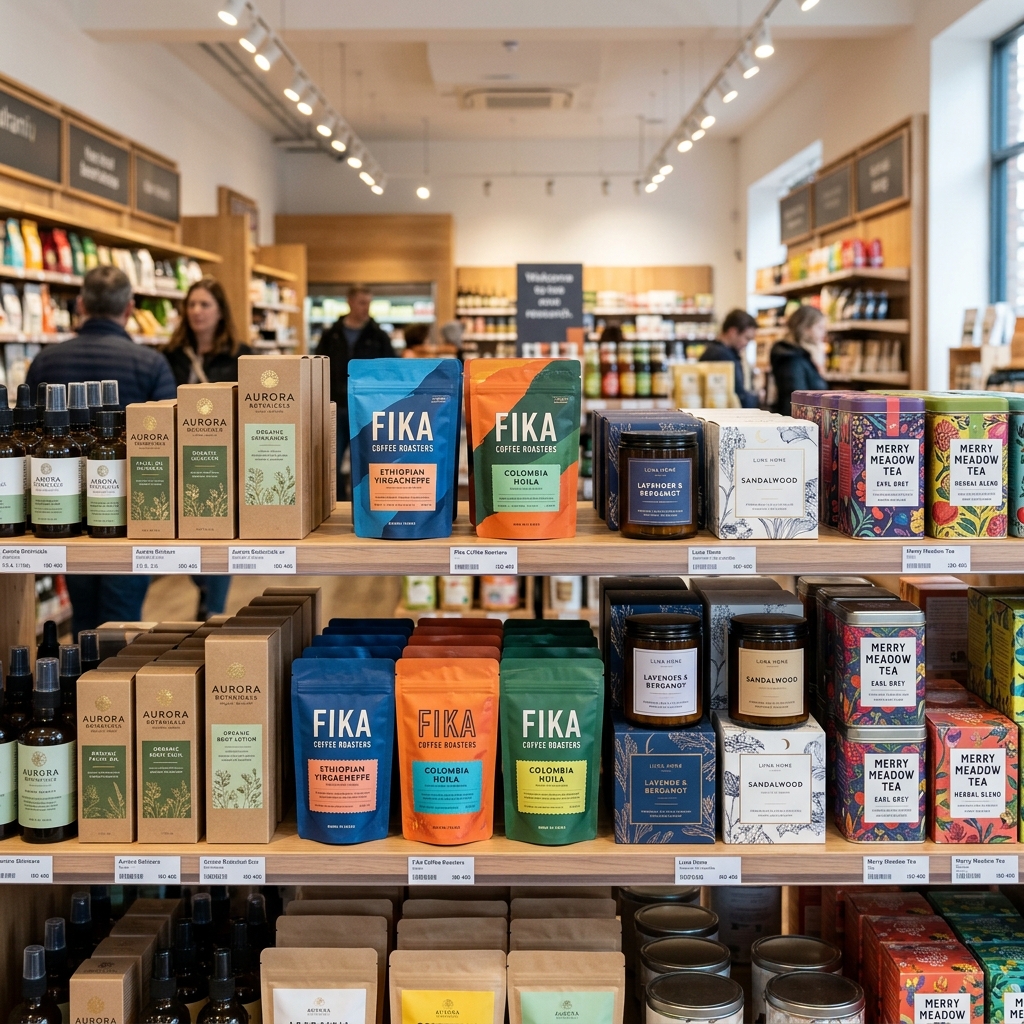
Your customer approaches a shelf with dozens of options. Their eyes scan left to right, top to bottom. In approximately 7 seconds, they make a preliminary judgment: this product looks worth examining, or it does not.
In those 7 seconds, your packaging is your ONLY salesperson. It must communicate quality, differentiation, and relevance faster than any human pitch.
This is not opinion — it is neuroscience. Studies from the Journal of Consumer Psychology show that visual packaging cues activate purchase-decision neural pathways before conscious evaluation begins. By the time a consumer picks up your product to read the label, their brain has already made a preliminary buy/skip decision based purely on packaging appearance.
Packaging is the most tangible expression of brand quality. A consumer cannot evaluate your ingredient quality, manufacturing process, or company values from the shelf. But they CAN evaluate your packaging. Premium packaging signals premium product. Cheap packaging signals cheap product.
Research from the Packaging Innovation Conference (2025) found that identical products in different packaging quality tiers received dramatically different value assessments:
| Packaging Quality | Perceived Product Value | Purchase Likelihood | Willingness to Pay Premium |
|---|---|---|---|
| Basic (unprinted) | Baseline | 12% | 0% |
| Standard (printed) | +35% | 34% | +15% |
| Premium (finishes) | +75% | 56% | +35% |
| Luxury (rigid) | +120% | 48% | +55% |
Notice that luxury packaging has slightly lower purchase likelihood than premium — because it signals a price point that some consumers self-select out of. But those who DO purchase pay 55% more.
In the age of Instagram and TikTok, packaging IS content. 52% of online shoppers share unboxing experiences on social media (Dotcom Distribution, 2025). Each share reaches an average of 150 followers. Your packaging generates organic impressions you cannot buy.
Let us do the math for a brand selling 1,000 units/month at $40:
Even at conservative estimates (10% repeat increase, 15% AOV increase), the ROI exceeds 500%.
Packaging is not just marketing — it is insurance. A product that arrives damaged destroys brand trust in a way that no amount of marketing can repair.
Effective packaging:
82% of consumers factor sustainability into their purchase decisions (PwC, 2025). Brands using sustainable packaging are not just being responsible — they are capturing market share from competitors who are not.
Sustainable packaging options include:
Consider two identical products on the same shelf:
Brand A: Glossy, colorful packaging with busy design, stock imagery, and overwhelming text. Product information is cluttered and hard to find.
Brand B: Clean, minimalist packaging with premium material, bold typography, and intentional whitespace. Key information is immediately visible.
Consumers consistently choose Brand B. Not because the product is better — they do not know that yet. But because the packaging tells them Brand B is a company that cares about quality, attention to detail, and their customer experience.
Expert insight from Cubit: "The brands that understand packaging as a product investment rather than a packaging expense consistently outperform their competitors. When packaging is your primary physical brand touchpoint, it deserves the same strategic attention as your product formulation."
72% of consumers say packaging influences purchase decisions. Brands that upgrade from generic to custom packaging report 20–40% increases in both conversion rates and repeat purchase rates.
Almost always. Premium packaging (finishes, quality materials, intentional design) typically adds $0.50–$2.00 per unit. The resulting increase in perceived value, purchase likelihood, and repeat purchases generates 500–1,000%+ ROI.
Three factors: material quality (thickness, finish), print quality (sharp text, consistent colors, precise registration), and design quality (intentional whitespace, typography hierarchy, restraint). One premium finish (foil, embossing, soft-touch) signals quality more effectively than multiple busy design elements.
82% of consumers consider sustainability in purchases, and 73% prefer products in sustainable packaging. In categories where sustainability aligns with brand values (beauty, food, wellness), eco-friendly packaging measurably increases purchase intent.
Track three metrics before and after: sell-through rate (retail), repeat purchase rate (DTC), and average order value. Also monitor social media mentions and unboxing content volume. Most brands see measurable improvement within 30–60 days.
Ready to elevate your retail packaging? Start with a free design or get an instant quote — see how premium packaging transforms your brand perception.
Design your packaging free in 60s
Try the free AI packaging design toolNeed Custom Packaging?
Get a free quote with pricing, MOQs, and turnaround time for your custom packaging project.