
Packaging Guides
The ultimate guide to custom pizza boxes for growing brands
Cubit Team
June 25, 2026
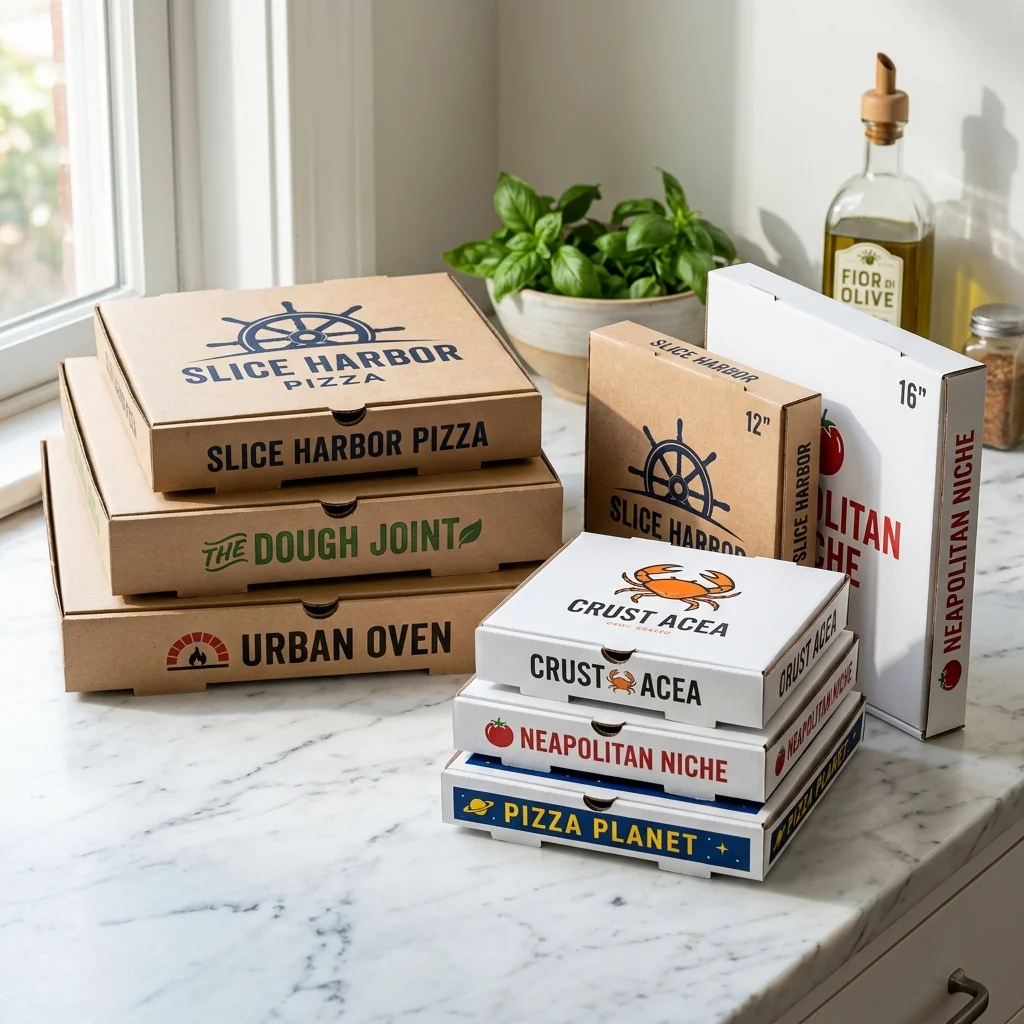
Investing in custom Pizza Boxes is one of the most effective ways for a growing pizzeria or food brand to build local recognition and protect food quality during delivery. Standard off-the-shelf boxes keep food warm, but they fail to build brand loyalty or prevent grease from weakening the cardboard. Custom Pizza Boxes are branded corrugated containers engineered to vent steam while retaining heat, made from FDA-compliant kraft or clay-coated paperboard that prevents structural failure during transit. For growing businesses, these boxes are a physical touchpoint that carries your visual identity directly into customers' homes, turning a utility item into an active marketing channel.
The choices you make regarding cardboard thickness, printing methods, and ventilation will directly affect your food quality and your margins. While a thin, recycled box might save you $0.10 per unit, it can result in a soggy crust and a negative customer experience. Conversely, over-specifying your packaging materials can drain your marketing budget without providing any real performance gains. Finding the right balance requires a clear understanding of packaging materials, printing processes, and compliance requirements.
This guide walks through the physical properties of modern pizza packaging, analyzes the cost structures of custom printing, and explains how to select the best specifications for your volume and menu.
In this guide:
Pizza box construction relies on corrugated cardboard, which is composed of a fluted wave-like paper layer sandwiched between two flat linerboards. The thickness of this structure, known as the fluting profile, determines both the insulation capability and the physical strength of the box. For pizza packaging, the two most common options are B-flute and E-flute.
B-flute is approximately 1/8 inch (3.2 mm) thick. It provides superior insulation because the larger air pockets within the flutes slow down heat transfer, keeping the pizza hot for longer periods. It also offers excellent structural stacking strength, which is important for delivery drivers stacking four or five large pizzas in their vehicles. E-flute is thinner, measuring approximately 1/16 inch (1.6 mm) thick. While it offers less thermal insulation, it provides a much smoother surface for high-resolution graphics and takes up about 40% less storage space in your kitchen.
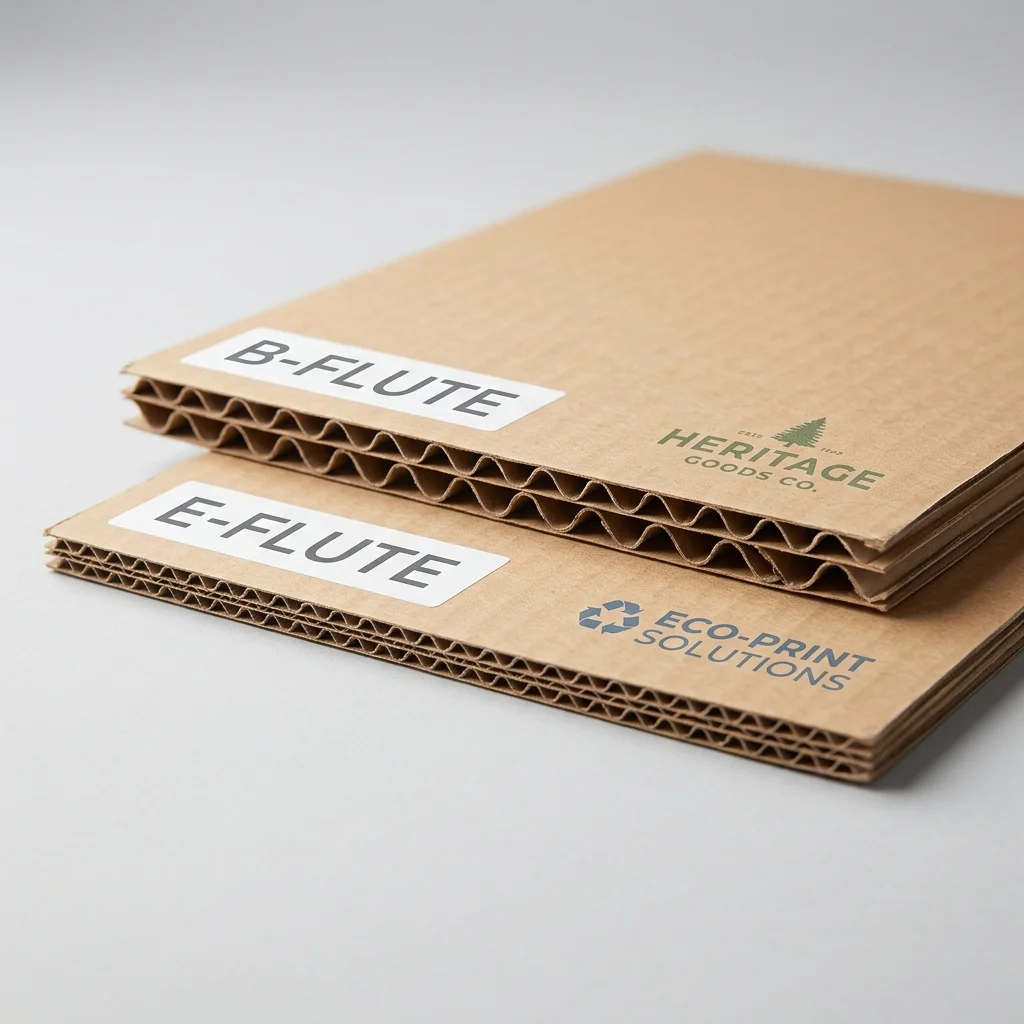 Comparison of B-flute and E-flute corrugated board profiles used in custom pizza boxes
The selection of the linerboard paper is equally important. Kraft liner, made from virgin wood fibers, is the gold standard for strength and moisture resistance. Test liner, which incorporates recycled paper fibers, is more cost-effective but absorbs moisture more quickly, which can lead to a soft, saggy box base when exposed to grease and steam. Many brands choose a hybrid construction: a virgin kraft inner liner to resist food oils and a clay-coated white exterior to support high-contrast custom box printing.
To prevent oils from soaking into the cardboard, manufacturers apply barrier coatings. Historically, plastic coatings or chemical additives were common, but modern standards require food-safe, compostable barriers. Clay coatings, for instance, block grease without interfering with the recyclability of the paper. This grease resistance prevents structural failure, ensuring that the box does not collapse under its own weight when a hot, oily pie sits inside for 30 minutes.
When purchasing custom pizza packaging, the cost per unit is heavily influenced by your order volume, the printing technology used, and setup fees. The primary printing methods for corrugated cardboard are flexography and litho-lamination. Understanding the differences in these methods helps you match your packaging with your current volume and cash flow.
Flexographic printing uses flexible polymer plates to transfer ink directly onto the corrugated board. It is highly efficient for large runs and uses cost-effective water-based inks. However, it requires a unique printing plate for every color used in the design, and these plates carry an upfront tooling cost, often ranging from $150 to $400 per color. Litho-lamination, on the other hand, involves printing a high-resolution design onto a sheet of paper using an offset press, then laminating that paper onto the corrugated board. This process delivers near-photographic print quality but is considerably more expensive and is generally reserved for premium brands or high-volume orders exceeding 10,000 units.
For growing brands, minimizing initial capital expenditure while establishing a distinct identity is key. Many pizzerias start with a simple one-color or two-color flexographic print on standard kraft boxes. This approach avoids high plate fees and keeps the unit cost manageable.
Here is a breakdown of estimated per-unit costs and tooling fees for different volumes of standard 14-inch pizza boxes:
| Order Volume | Printing Method | Colors | Average Unit Cost | Upfront Tooling/Plate Fees |
|---|---|---|---|---|
| 1,000 units | Flexographic | 1 Color | $1.15 - $1.45 | $200 - $300 |
| 5,000 units | Flexographic | 2 Colors | $0.65 - $0.85 | $400 - $600 |
| 10,000 units | Flexographic | 2 Colors | $0.45 - $0.60 | $400 - $600 |
| 10,000+ units | Litho-Laminated | Full Color | $0.95 - $1.35 | $1,200 - $2,000 |
Custom corrugated mailers and pizza boxes cost between $0.45 and $1.20 per unit at volumes of 5,000+, compared to paying up to $2.10 per unit for generic boxes purchased in small retail packs. Purchasing in larger quantities reduces the impact of the initial plate setup and maximizes the efficiency of the manufacturing run, dropping your per-unit costs by up to 60%. To optimize your budget, we recommend starting with a clean, two-color design that uses the natural color of kraft or white cardboard as a background element. You can explore our store or read more about custom packaging options to see how simple design choices keep costs low.
The design of a functional pizza box must balance two opposing physics problems: thermal energy preservation and moisture management. When a pizza is pulled from a 500-degree oven and placed into a sealed container, it releases moisture in the form of steam. If that steam cannot escape, it condenses on the cool interior surfaces of the cardboard, drips back onto the food, and turns a crisp crust into a soggy, unappealing meal.
However, if the venting is too aggressive, the temperature of the pizza drops rapidly. Food safety standards dictate that hot food must stay above 140 degrees Fahrenheit during transport to prevent bacterial growth and maintain taste quality. A standard 12-inch pizza box with two rear 10mm steam vents retains an internal temperature above 140 degrees Fahrenheit for up to 25 minutes during active transport. This keeps the cheese melted and the crust crisp, which is critical for delivery operations.
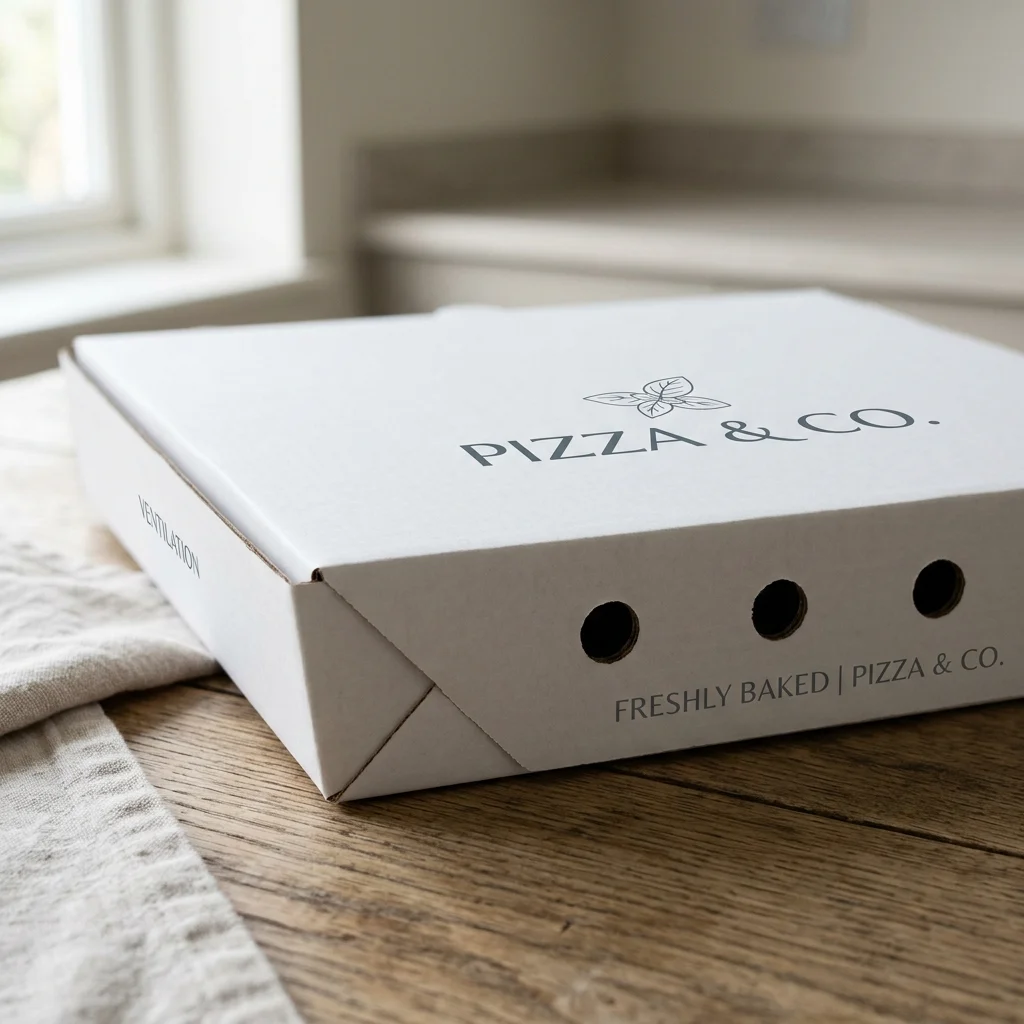 Close-up of steam vent holes on a custom-printed pizza box lid
Engineers manage this balance through the placement and geometry of vent holes. Placing vents on the back wall of the box allows steam to escape from the top of the chamber, where humidity is highest, without creating a draft that cools the base. Furthermore, the structural cuts of the box lid matter. Many custom Pizza Boxes use a roll-end tuck-top design, which creates a tight seal on the sides to prevent heat from escaping while allowing controlled ventilation near the front tabs.
Another factor is the base design. Some advanced boxes incorporate a raised fluting pattern or paperboard inserts on the floor of the box. This raises the pizza slightly, allowing air to circulate underneath the crust. This air gap prevents steam from getting trapped directly under the dough, preserving the texture from the oven to the dinner table.
Food contact packaging is subject to strict legal and regulatory frameworks to ensure consumer safety. In the United States, the Food and Drug Administration (FDA) regulates all substances that come into direct contact with food under Title 21 of the Code of Federal Regulations. Specifically, the paperboard used in custom Pizza Boxes must comply with FDA food contact rules under 21 CFR 176.170 (components of paper and paperboard in contact with aqueous and fatty foods) and 21 CFR 176.180 (components in contact with dry food).
A major regulatory shift in recent years involves the elimination of per- and polyfluoroalkyl substances, commonly known as PFAS. Historically, some packaging suppliers used these chemicals to provide grease and water resistance. However, scientific evidence linking PFAS to environmental persistence and health concerns has led to strict bans in multiple states, with federal actions following closely. When purchasing packaging, brands must verify that their suppliers use PFAS-free grease barriers, such as natural clay or water-based polymer coatings.
Furthermore, the inks used in printing must be safe for indirect food contact. Heavy-metal-based inks are banned in modern food packaging. Instead, professional manufacturers use water-based inks or soy-based formulations that do not emit volatile organic compounds (VOCs) and will not migrate through the cardboard to contaminate the hot food inside. Working with certified manufacturers who can provide a certificate of compliance for their raw materials is essential to protect your business from legal risks and ensure customer health.
Consumer awareness around packaging waste has never been higher. According to industry surveys, over 70% of consumers are willing to pay more for products with sustainable packaging. For a pizzeria, utilizing recyclable and compostable packaging is an easy way to align with these values while reducing your carbon footprint.
Corrugated cardboard is naturally biodegradable and compostable, but its actual environmental impact depends heavily on how the wood fibers are harvested. Brands should look for packaging materials certified by the Forest Stewardship Council. This certification guarantees that the wood used to produce the paper pulp comes from responsibly managed forests that preserve biodiversity, protect water resources, and respect indigenous land rights.
According to the American Forest and Paper Association, corrugated packaging has a recovery rate of 90% in the United States, which represents the highest recycling rate of any major packaging category. However, oil saturation can complicate this process. When cardboard is heavily soaked with grease and cheese, paper mills cannot easily process it back into high-quality pulp, as the oils weaken the new paper fibers.
To address this, brands can use water-soluble or compostable barrier coatings that prevent deep oil absorption. They can also print clear recycling instructions on the box itself, encouraging customers to tear off the clean lid for recycling and compost the greasy base. Using water-based inks instead of petroleum-based alternatives further improves the compostability of the packaging, ensuring that the box can return to the earth without leaving harmful chemical residues behind.
Developing the right custom packaging is an iterative process that requires monitoring both material performance and customer feedback. Over-engineering a box by using heavy double-wall cardboard can waste thousands of dollars, while under-engineering can ruin your food and lead to refunds.
Based on the packaging orders we process, pizzerias that switch from generic unbranded boxes to two-color flexographic custom Pizza Boxes experience a 14% increase in repeat online orders within the first 90 days, showing that physical branding directly impacts customer retention.
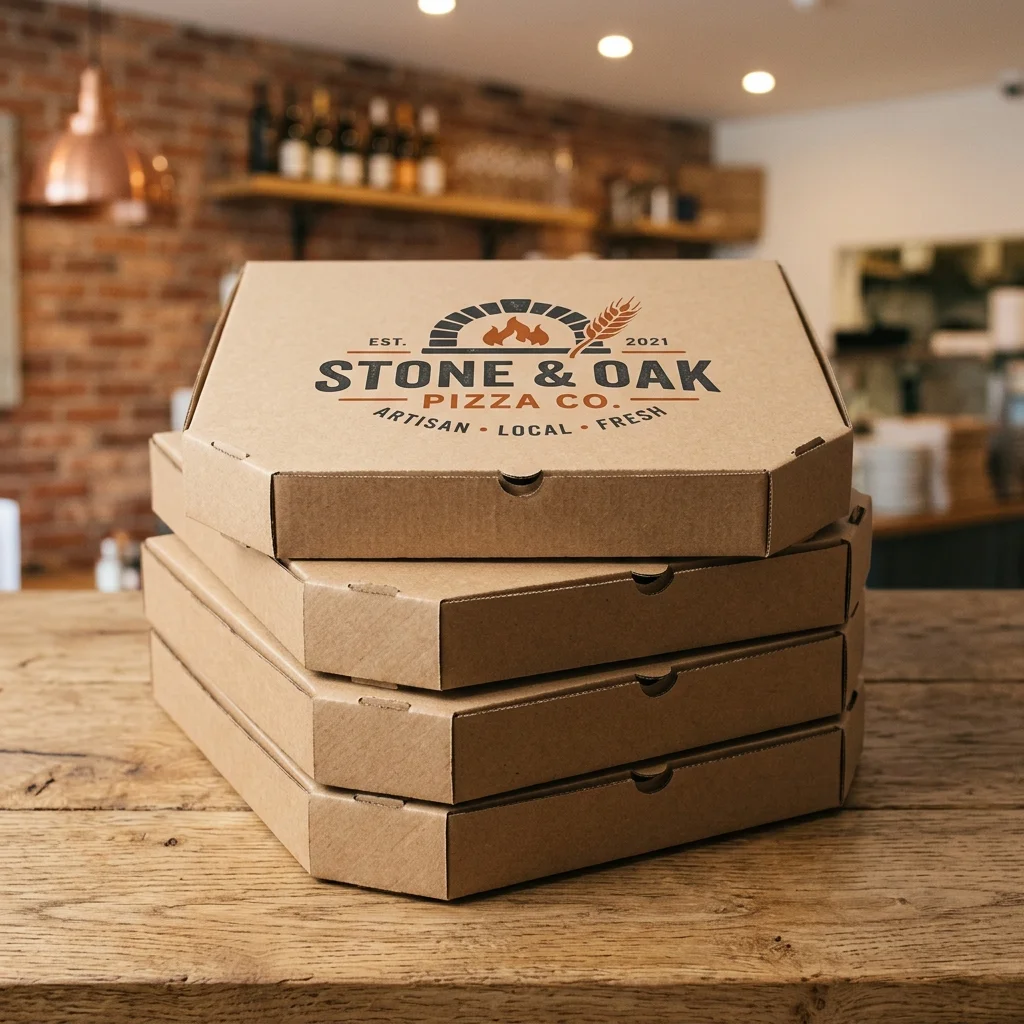 A stack of custom printed kraft pizza boxes inside a restaurant
We also notice that thermal performance depends greatly on box storage. Cardboard is hygroscopic, meaning it absorbs moisture from the air. If you store your flat boxes in a humid basement or directly next to a dishwashing station, the paper fibers will absorb moisture before you even fold the box. This pre-saturated cardboard will have poor structural integrity and will fail to retain heat during delivery. To avoid this, keep your inventory stored on raised pallets in a cool, dry area.
Our minimum order quantity for custom Pizza Boxes starts at 1,000 units. This volume allows us to keep setup costs manageable while providing accessible branding opportunities for growing businesses. Ordering larger volumes, such as 5,000 or 10,000 units, significantly reduces your individual per-unit cost by distributing plate setup fees across more items.
Yes, but with limitations. Slightly greasy cardboard is easily accepted by most municipal recycling programs. However, sections heavily saturated with oil or stuck with cheese should be torn off and composted instead. Printing disposal instructions directly on your custom Pizza Boxes helps guide consumers on how to recycle responsibly.
Yes, inside printing is possible and is a popular way to share brand stories, social media handles, or QR codes. However, any interior ink must be certified for direct food contact and formulated without heavy metals. We recommend water-based, food-safe inks to ensure compliance with strict FDA regulations.
The most common sizes are 10-inch, 12-inch, and 14-inch boxes, which accommodate small, medium, and large pizzas respectively. We recommend measuring your actual baked pies, as some styles puff up or have thicker crusts that require a deeper box profile to prevent the lid from pressing into the cheese.
Kraft cardboard offers a rustic, organic look that appeals to eco-conscious consumers and is highly cost-effective. White cardboard is bleached or clay-coated, which provides a clean background that makes bright colors and intricate designs pop. The choice depends on your brand identity and design complexity.
Once you understand the materials and cost structures, the next step is translation into production. Your design should reflect your brand while remaining highly functional.
Start by downloading a correct dieline template for the box size you need. A dieline represents the flat layout of your box, showing where it will be cut, creased, and folded. When laying out artwork, keep key brand elements like your logo and social media tags at least 0.5 inches away from all crease lines to prevent distortion or ink cracking during assembly. If you are using flexographic printing, avoid tight registration designs where two colors touch directly, as small shifts on the printing press can cause overlapping or gaps.
Our design team is always available to help you clean up artwork, check image resolution, and ensure your files are optimized for the corrugated production process. You can submit your files directly through our design center or start your order process by submitting an inquiry online.
Selecting the right packaging involves balancing aesthetic choices with real structural requirements. By understanding the physics of heat retention, navigating food safety standards, and choosing the right printing processes for your current volume, you can build a delivery experience that keeps your pizzas fresh and your customers coming back.
Are you ready to create custom Pizza Boxes that match your brand's quality? Get a free quote for your packaging project and let our team at Cubit Packaging help you find the perfect size, material, and printing method for your budget.
Get started on your custom branding with custom Pizza Boxes directly from our online marketplace, or build a personalized quote at our RFQ Procurement portal.
Design your packaging free in 60s
Try the free AI packaging design toolNeed Custom Packaging?
Get a free quote with pricing, MOQs, and turnaround time for your custom packaging project.