
Sustainability
Sustainable Packaging: Materials, Certifications & 2026 Guide
Cubit Packaging Editorial Team
June 9, 2026
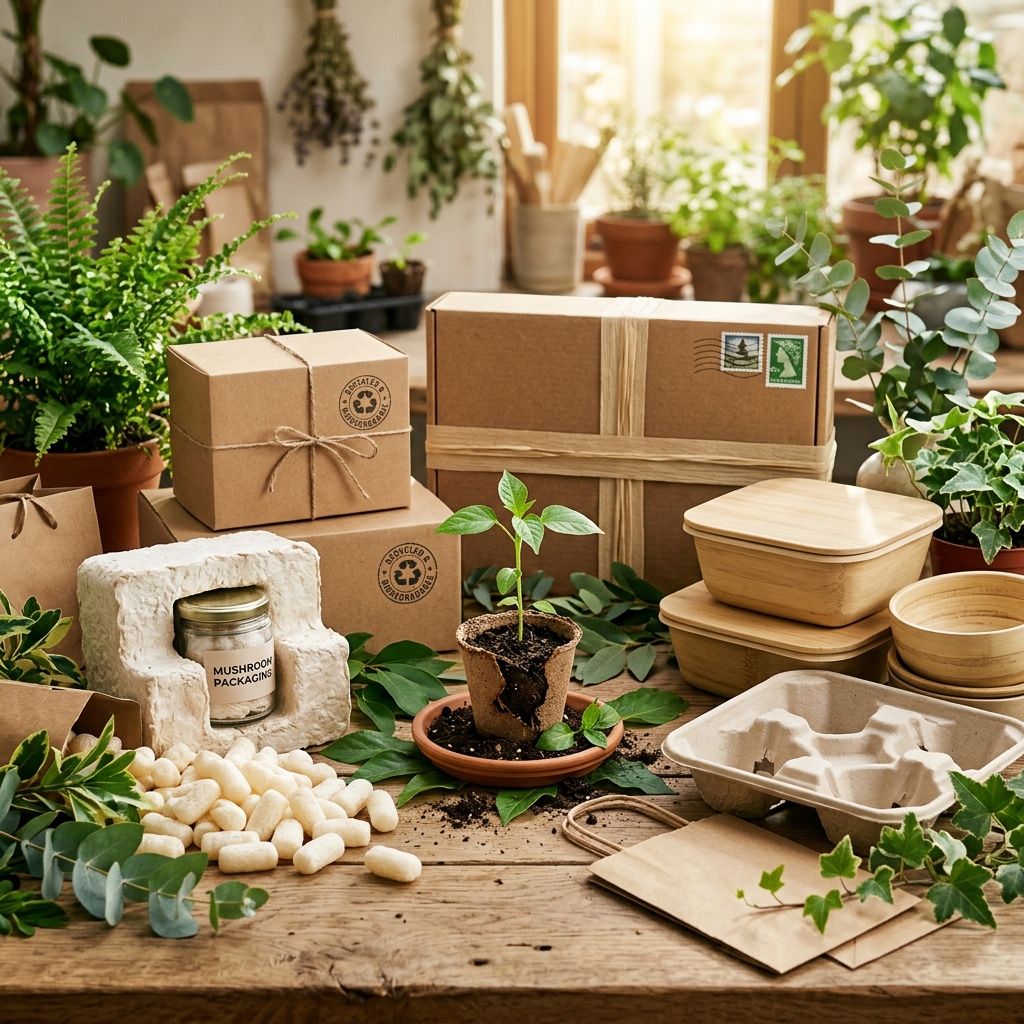
Sustainable packaging is packaging designed to minimize environmental impact through the use of renewable, recyclable, biodegradable, or compostable materials combined with manufacturing processes that reduce energy consumption, waste, and carbon emissions. According to McKinsey's 2026 State of Packaging report, 73% of consumers say they would change their purchasing habits to reduce environmental impact, and 67% consider sustainable packaging "important" or "very important" when choosing between competing products. The global sustainable packaging market reached $312 billion in 2026, growing at 7.2% CAGR, driven by consumer demand, retailer mandates, and regulatory pressure including the EU Packaging and Packaging Waste Regulation (PPWR).
Key Takeaway: Sustainable packaging is no longer optional — it is a competitive requirement. Kraft corrugated boxes, FSC-certified paperboard, and compostable mailers cost just 5–15% more than conventional alternatives. Starting with recyclable materials (which 85% of consumers can process curbside) is the fastest, lowest-cost path to sustainable packaging.
Packaging sustainability is measured across four dimensions:
| Dimension | Question | Example |
|---|---|---|
| Material sourcing | Where does the material come from? | FSC-certified forests vs old-growth |
| Manufacturing impact | How much energy/water/waste in production? | Recycled content vs virgin fiber |
| End-of-life | What happens after use? | Recyclable, compostable, or landfill |
| Lifecycle carbon | What is the total CO₂ footprint? | Cradle-to-grave emissions |
A truly sustainable package optimizes all four dimensions, not just one. A compostable package made from materials shipped 10,000 miles may have a higher total carbon footprint than a recyclable package made locally from recycled content.
From most to least impactful, the packaging sustainability hierarchy is:
Use less material. The most sustainable package is the smallest one that still protects the product.
Design packaging for multiple uses.
Use materials that integrate into existing recycling infrastructure.
Use materials that biodegrade in commercial or home composting.
As a last resort, materials that can be converted to energy via incineration.
| Material | Recycled Content | Recyclable | Compostable | Cost vs Conv. | Best For |
|---|---|---|---|---|---|
| Kraft corrugated | 25–100% | ✅ Curbside | ✅ Home/commercial | +0–5% | Shipping, e-commerce |
| FSC-certified SBS | 0–30% | ✅ Curbside | ✅ Commercial | +5–10% | Retail cartons |
| 100% recycled paperboard | 100% | ✅ Curbside | ✅ Commercial | +0–3% | Budget eco packaging |
| Molded pulp | 80–100% | ✅ Curbside | ✅ Home | +10–20% | Inserts, trays, egg cartons |
| Seed paper | Varies | N/A (plant it) | ✅ Home | +200–400% | Premium tags, inserts |
| Material | Source | Compostable | Timeline | Cost vs Conv. | Best For |
|---|---|---|---|---|---|
| PLA | Corn starch | ✅ Commercial only | 2–6 months (commercial) | +20–40% | Food containers, cups |
| Bagasse | Sugarcane waste | ✅ Commercial/home | 1–3 months | +15–25% | Food trays, clamshells |
| Mushroom (mycelium) | Agricultural waste | ✅ Home | 30–90 days | +50–100% | Protective packaging, inserts |
| Seaweed-based | Farmed seaweed | ✅ Home/ocean | 4–6 weeks | +100–300% | Single-use sachets, wraps |
| Bamboo fiber | Bamboo | ✅ Commercial | 3–6 months | +30–50% | Premium containers |
| Material | Source | Recyclable | Cost vs Conv. | Best For |
|---|---|---|---|---|
| PCR plastic (post-consumer recycled) | Recycled plastic | ✅ | +10–25% | Bottles, containers |
| Ocean-bound plastic | Intercepted waste | ✅ | +20–40% | Premium eco branding |
| Upcycled agricultural waste | Coffee grounds, cotton | Varies | +30–60% | Premium eco packaging |
| Recycled cotton fiber | Textile waste | ✅ | +25–45% | Bags, pouches |
| Certification | What It Certifies | Cost to Obtain | Consumer Recognition |
|---|---|---|---|
| FSC (Forest Stewardship Council) | Responsible forest management | $5K–$20K/year | ⭐⭐⭐⭐⭐ (most recognized) |
| SFI (Sustainable Forestry Initiative) | Sustainable fiber sourcing | $3K–$15K/year | ⭐⭐⭐⭐ |
| PEFC | Sustainable forest management | $3K–$12K/year | ⭐⭐⭐ (strong in Europe) |
| BPI Compostable | Commercial compostability (US) | $5K–$15K | ⭐⭐⭐⭐ |
| TUV OK Compost HOME | Home compostability (EU) | $8K–$20K | ⭐⭐⭐⭐ |
| How2Recycle | Clear recycling instructions | $5K–$10K/year | ⭐⭐⭐⭐ (growing fast) |
| Cradle to Cradle | Circular economy design | $15K–$50K | ⭐⭐⭐⭐⭐ (premium) |
| Carbon Neutral | Net-zero carbon packaging | Varies (offsets) | ⭐⭐⭐ |
| Expectation | % of Consumers | Source |
|---|---|---|
| Packaging should be recyclable | 82% | McKinsey 2026 |
| Willing to pay more for sustainable packaging | 67% | Trivium 2026 |
| Maximum premium willing to pay | 5–10% | Deloitte |
| Switched brands due to sustainability | 45% | IBM/NRF |
| Notice and read eco-labels on packaging | 61% | Euromonitor |
| Prefer minimal/reduced packaging | 78% | Ipsos |
| Frustrated by non-recyclable packaging | 74% | Trivium |
| Generation | Sustainability Priority | Willingness to Pay More |
|---|---|---|
| Gen Z (18–28) | 83% consider important | Up to 15% more |
| Millennials (29–43) | 75% consider important | Up to 10% more |
| Gen X (44–58) | 65% consider important | Up to 5–8% more |
| Boomers (59–77) | 55% consider important | Up to 3–5% more |
| Regulation | Region | Effective | Impact on Packaging |
|---|---|---|---|
| EU PPWR | European Union | 2025–2030 | Mandatory recycled content, reuse targets |
| EPR laws | 5 US states | 2025–2027 | Producers fund recycling infrastructure |
| Plastic Packaging Tax | UK | 2022+ | £210/tonne on packaging with <30% recycled plastic |
| California SB 54 | California | 2032 target | All packaging recyclable or compostable by 2032 |
| Canada plastics ban | Canada | 2023+ | Single-use plastics banned |
| India plastic ban | India | 2022+ | Single-use plastics banned |
| Packaging Type | Conventional | Sustainable Alternative | Premium | Notes |
|---|---|---|---|---|
| Mailer box (10×8×4) | $2.10 | $2.25 (FSC kraft) | +7% | Negligible difference |
| Folding carton (6×4×2) | $1.20 | $1.35 (FSC SBS) | +12% | FSC premium declining |
| Poly mailer | $0.25 | $0.40 (compostable) | +60% | Largest premium |
| Void fill (packing peanuts) | $0.05 | $0.08 (cornstarch) | +60% | But far better brand perception |
| Tissue paper | $0.08 | $0.10 (recycled) | +25% | Minimal difference |
| Tape | $0.03 | $0.05 (paper tape) | +67% | But paper tape is better UX |
| Stickers/labels | $0.10 | $0.12 (recyclable) | +20% | Minor premium |
| Total package | $3.81 | $4.35 | +14% | $0.54 more per unit |
For a product with a $30 average order value, sustainable packaging adds $0.54/order — less than 2% of revenue.
| Material | kg CO₂e per kg of material | Recyclable | End-of-Life |
|---|---|---|---|
| Recycled corrugated | 0.6–1.1 | ✅ 93%+ rate | Recycled into new board |
| Virgin corrugated | 1.0–1.5 | ✅ 93%+ rate | Recycled into new board |
| FSC paperboard | 0.8–1.3 | ✅ 80%+ rate | Recycled or composted |
| PLA bioplastic | 1.8–2.5 | ❌ (contaminant) | Commercial compost only |
| Virgin PET plastic | 2.5–3.5 | ✅ (where collected) | Recycled into rPET |
| PCR PET plastic | 1.0–1.5 | ✅ | Recycled again |
| Mushroom packaging | 0.3–0.8 | N/A | Home compostable |
| Aluminum | 8.0–11.0 (virgin) | ✅ 75%+ rate | Infinitely recyclable |
| Recycled aluminum | 0.5–1.0 | ✅ | Infinitely recyclable |
Phase 1: Quick Wins (Week 1–2)
Phase 2: Material Upgrades (Month 1–2)
Phase 3: Certification (Month 3–6)
Phase 4: Innovation (Month 6+)
| Claim | Why It's Problematic | Better Alternative |
|---|---|---|
| "Eco-friendly packaging" | Vague, unverifiable | "Made from 80% recycled corrugated, FSC-certified" |
| "Biodegradable" | Everything biodegrades eventually | "Compostable in home compost within 90 days (TUV certified)" |
| "Made from plants" | PLA requires commercial composting | "Made from sugarcane waste, commercially compostable (BPI certified)" |
| "Recyclable" (for mixed materials) | Multi-material packaging may not be recyclable | "Mono-material design, curbside recyclable in 95% of US municipalities" |
| Green color palette with no substance | Aesthetic signaling without real sustainability | Provide specific certifications, data, and third-party verification |
The FTC's Green Guides (updated 2023) require that environmental marketing claims be:
Recycled corrugated cardboard is the most sustainable mainstream packaging material. It has a recycling rate of 93.6% in the US (the highest of any packaging material), uses 70–80% less energy to produce than virgin board, and is widely collected in curbside recycling programs. For specific applications, mushroom-based packaging (mycelium) has the lowest lifecycle carbon footprint but is currently limited in availability and higher in cost.
Sustainable packaging costs 5–15% more than conventional alternatives for most product categories. The biggest savings opportunity is corrugated boxes, where FSC-certified and recycled-content options cost 0–5% more than conventional. The largest premium is for compostable poly mailer replacements (40–60% more) and bioplastic containers (20–40% more). At scale (10,000+ units), premiums decrease further.
Not necessarily. Recyclable packaging that integrates into existing curbside infrastructure (like corrugated cardboard with a 93% recycling rate) often has a lower environmental impact than compostable packaging that requires commercial composting facilities (available to only 27% of US households). The best choice depends on your customers' access to composting infrastructure.
Most major retailers (Walmart, Target, Amazon) require or prefer FSC or SFI certification for paper-based packaging. Walmart's Project Gigaton targets require suppliers to report packaging sustainability metrics. Amazon's Frustration-Free Packaging program requires 100% curbside recyclable packaging. Whole Foods requires compostable or recyclable packaging for all private-label products.
Start with the material weight multiplied by the carbon intensity factor (kg CO₂e per kg of material — see the Carbon Footprint table above). Add transportation emissions based on shipping distance. Many packaging suppliers (including Cubit) provide carbon footprint estimates for each order. For formal reporting, use the GHG Protocol Product Standard methodology.
Sustainability isn't a destination — it's a journey. Start with the easy wins and progress from there.
Published by Cubit Packaging Editorial Team. Last updated June 2026.
Design your packaging free in 60s
Try the free AI packaging design toolNeed Custom Packaging?
Get a free quote with pricing, MOQs, and turnaround time for your custom packaging project.