
Technology & Innovation
Product Authentication with QR Codes: Stop Counterfeiting
Cubit Packaging Editorial Team
June 9, 2026
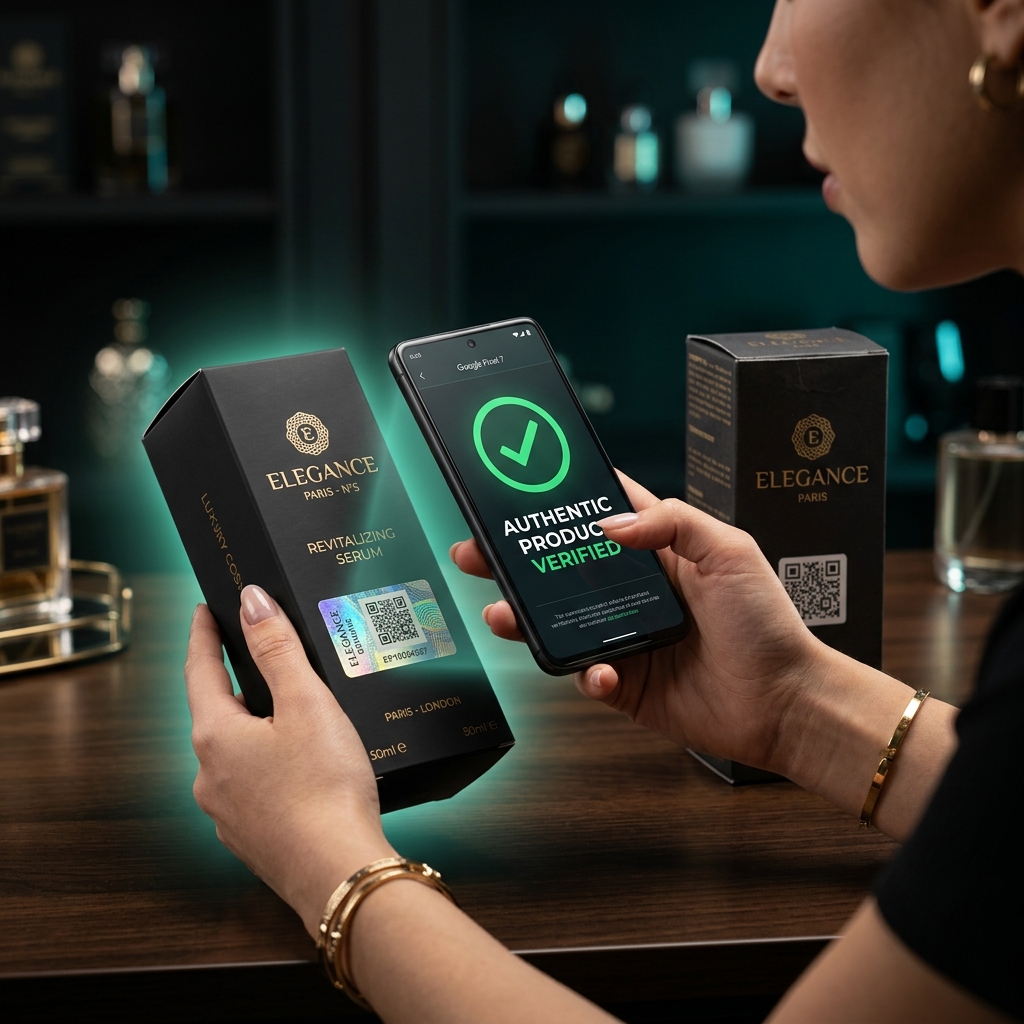
Product authentication using QR codes is a technology that assigns each individual product unit a unique, serialized QR code linked to a cloud-based verification database. When a consumer scans the code with their smartphone, the system confirms whether the product is genuine, has been tampered with, or is a suspected counterfeit. Global counterfeiting costs brands an estimated $2.2 trillion annually (OECD/EUIPO 2026 Illicit Trade Report), and QR-based authentication reduces counterfeit incidents by 60–70% within the first year of implementation at a cost of just $0.003–$0.05 per unit.
Key Takeaway: QR code product authentication is the most cost-effective anti-counterfeiting technology available. At $0.003–$0.05 per unit, it provides consumer-facing verification, supply chain visibility, and regulatory compliance (DSCSA, EU FMD) — and reduces counterfeit reports by 60–70% based on luxury and pharmaceutical industry data.
QR code authentication uses three layers to verify product genuineness:
Each product unit receives a unique serial number encoded into a QR code. This serial is registered in a cloud database at the time of manufacturing. Unlike generic QR codes that share the same URL across all units, serialized codes are unique-per-item — just like a fingerprint.
When scanned, the QR code connects to a verification server that:
The consumer sees an instant result on their smartphone:
Manufacturing: Generate unique serial → Print QR on packaging → Register in cloud DB
                                                                        ↓
Consumer:      Scan QR code → Phone sends serial to API → Server checks DB → Returns result
                                                                        ↓
Brand:         Dashboard shows scan analytics → Alerts on suspicious patterns
verify.brand.com/SN12345)| Industry | Counterfeit Rate | Annual Loss | Regulatory Requirement |
|---|---|---|---|
| Pharmaceuticals | 10–30% in developing markets | $200B+ globally | DSCSA (US), EU FMD |
| Luxury Fashion | 8–12% of global trade | $98B annually | None (voluntary) |
| Electronics | 5–7% of imports | $75B+ annually | None (voluntary) |
| Automotive Parts | 2–5% of aftermarket | $45B annually | None (varies by country) |
| Cosmetics | 7–10% of market | $25B annually | FDA labeling |
| Spirits & Wine | 3–6% of premium market | $12B annually | TTB compliance |
| Cannabis | Growing concern | $5B+ annually | Seed-to-sale tracking |
| Factor | QR Code | NFC Tag | Holographic Label |
|---|---|---|---|
| Cost/unit | $0.003–$0.05 | $0.10–$0.50 | $0.05–$0.15 |
| Consumer can verify | ✅ (scan) | ✅ (tap) | ⚠️ (visual only) |
| Digital verification | ✅ | ✅ | ❌ (unless combined with QR) |
| Clone resistance | ⚠️ Low (can photocopy) | ✅ High (unique chip) | ⚠️ Medium (can be reproduced) |
| Tamper evidence | ❌ | ⚠️ (with special tags) | ✅ (self-destructing) |
| Analytics | ✅ Full | ✅ Full | ❌ None |
| Internet required | ✅ | ⚠️ (for cloud verify) | ❌ |
| Best standalone | Good for mass-market | Best for premium | Weak alone (combine) |
| Best combined | QR + hologram | NFC + QR | Hologram + QR |
The most effective anti-counterfeiting strategies use multiple layers:
Cubit Secure provides all three layers integrated into a single packaging order.
Serialization is the process of assigning a unique identifier to each individual product unit, not just each SKU or batch. This means every single box, bottle, or package has its own unique code — like a social security number for products.
| Level | Identifies | Example | Use Case |
|---|---|---|---|
| Item-level | Each individual unit | SN-2026-0001-A | Consumer authentication |
| Case-level | Each case (10–50 units) | CS-2026-001 | Warehouse management |
| Pallet-level | Each pallet (100+ cases) | PL-2026-01 | Shipping/logistics |
| Aggregation | Parent-child relationships | Item → Case → Pallet | Full chain of custody |
Serialized QR codes require variable data printing (VDP) — a digital printing process that changes the printed content for each unit. This is handled through:
The Drug Supply Chain Security Act (DSCSA) is a US federal law that requires:
| Requirement | Standard | Implementation |
|---|---|---|
| Unique identifier | NDC + serial + lot + expiry | 2D barcode (DataMatrix or QR) |
| Electronic data | Transaction information (TI) | Structured data exchange |
| Verification | Trading partner verification | Cloud-based checking |
| Tracing | Full chain of custody | Aggregation hierarchy |
The EU equivalent requires similar serialization with added tamper-evident features on the packaging. QR codes with serialization are the standard implementation method.
Cubit Secure integrates serialized QR code generation directly into pharmaceutical packaging orders, with:
| Component | One-Time | Per Unit | Annual |
|---|---|---|---|
| Platform setup | $500–$2,000 | — | — |
| Serial generation | — | $0.001 | $100 |
| Variable data printing | — | $0.002–$0.02 | $200–$2,000 |
| QR code platform | — | $0.001 | $100 |
| Cloud verification hosting | — | — | $600–$2,400 |
| Landing page design | $1,000–$3,000 | — | — |
| Total Year 1 | $1,500–$5,000 | $0.004–$0.022 | $1,000–$4,500 |
| Total per unit | $0.029–$0.117 |
| Metric | Without Authentication | With Authentication |
|---|---|---|
| Counterfeit incidents (annual) | 500 | 150 (−70%) |
| Revenue lost to counterfeits | $2.5M | $750K |
| Revenue protected | — | $1.75M |
| Authentication cost (100K units) | $0 | $11,700 |
| Net ROI | — | 149× |
QR code authentication assigns each product a unique serial number verified against a cloud database. While counterfeiters can copy the QR pattern, the first legitimate scan flags the serial as "used." Subsequent scans of copied codes are flagged as suspicious, alerting both the consumer and the brand. Combined with scan analytics (detecting hundreds of scans from unauthorized locations), this creates an effective detection and deterrent system.
Authentication verifies that a specific product is genuine at the point of consumer interaction. Track-and-trace monitors the movement of products through the supply chain (manufacturer → distributor → retailer). QR code systems can provide both functions: the same serialized code used for consumer authentication also creates a scan trail that traces product movement.
A genuine product is typically scanned 1–3 times (consumer verification, possible return verification). More than 10 scans of the same serial number, especially from different geographic locations, is a strong counterfeit indicator. Most platforms let you set custom thresholds and automatic alerts.
Basic QR authentication requires an internet connection for cloud verification. However, some advanced systems use encrypted QR codes where the phone can verify a cryptographic signature locally without connecting to a server. This is less common and provides limited verification compared to cloud-based checking.
For mass-market consumer goods, QR authentication alone reduces counterfeiting by 60–70% and is sufficient for most brands. For pharmaceuticals, luxury goods, and high-value products, combine QR codes with NFC tags and holographic labels for maximum protection.
Product counterfeiting is a $2.2 trillion problem, but the solution starts at $0.003 per unit.
Explore Cubit Secure for integrated anti-counterfeiting packaging, or contact our AI Consultant for a personalized authentication strategy.
Published by Cubit Packaging Editorial Team. Last updated June 2026.
Design your packaging free in 60s
Try the free AI packaging design toolNeed Custom Packaging?
Get a free quote with pricing, MOQs, and turnaround time for your custom packaging project.