
Packaging Guides
The ultimate guide to custom spouted pouches for growing brands
Cubit Team
June 24, 2026
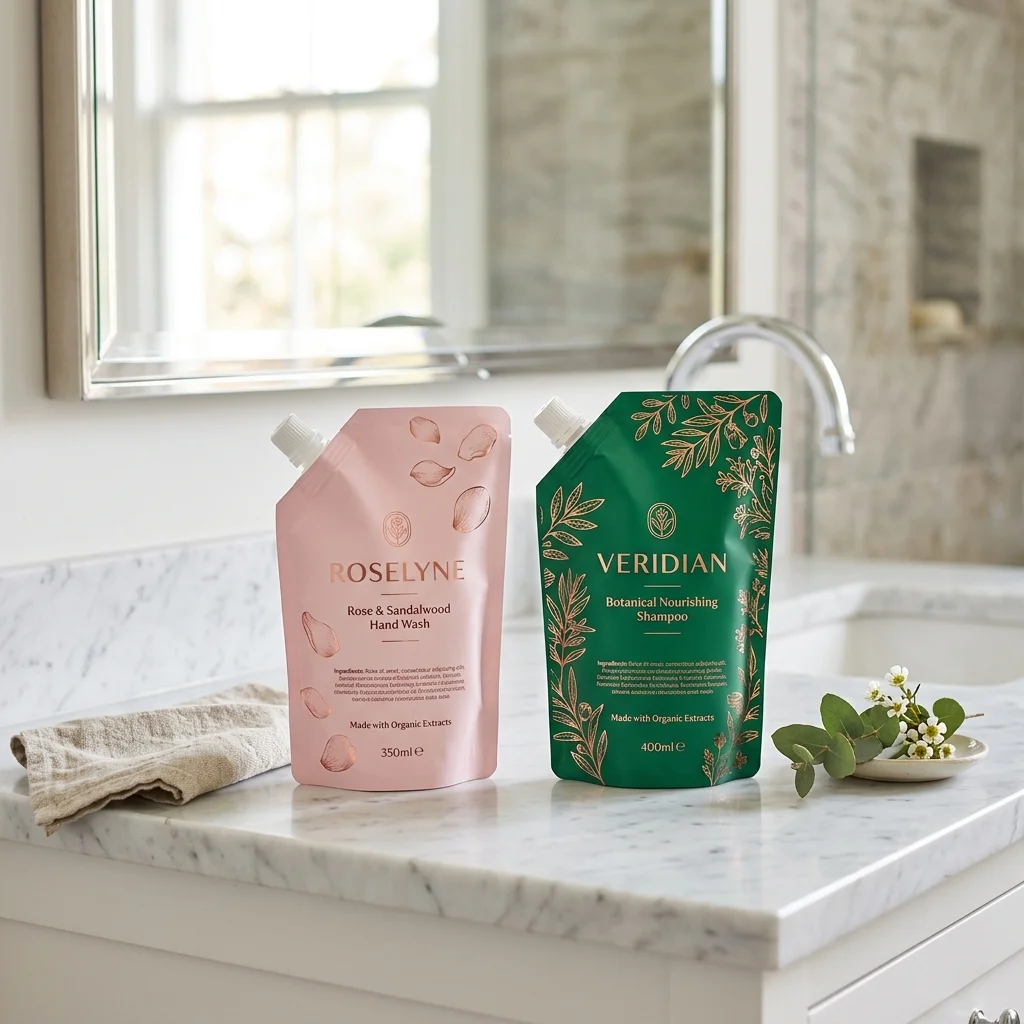
Custom spouted pouches are flexible packaging containers made from laminated film layers with a built-in plastic spout and reclosable cap. They package liquids, gels, pastes, and semi-solids across the food, beverage, personal care, and industrial sectors. For growing brands, custom Spouted Pouches are an efficient alternative to rigid bottles and glass jars, reducing empty packaging weight by up to 60-80% and cutting outbound shipping costs.
Selecting the right flexible packaging depends on your product chemistry, processing temperature, and shelf-life requirements. Unlike standard stand-up pouches, spouted structures must withstand the hydraulic pressure of liquids during shipping and retail handling. This guide explains how to select materials, plan for high-speed filling, and choose closure options that match your production capabilities and brand budget.
In this guide:
To understand why a custom spouted pouch behaves differently from a rigid bottle, you must look at its multi-layer construction. These containers are not made from a single sheet of plastic. Instead, manufacturers laminate multiple specialized layers together to create a high-performance barrier.
Each layer serves a specific purpose in protecting the product inside:
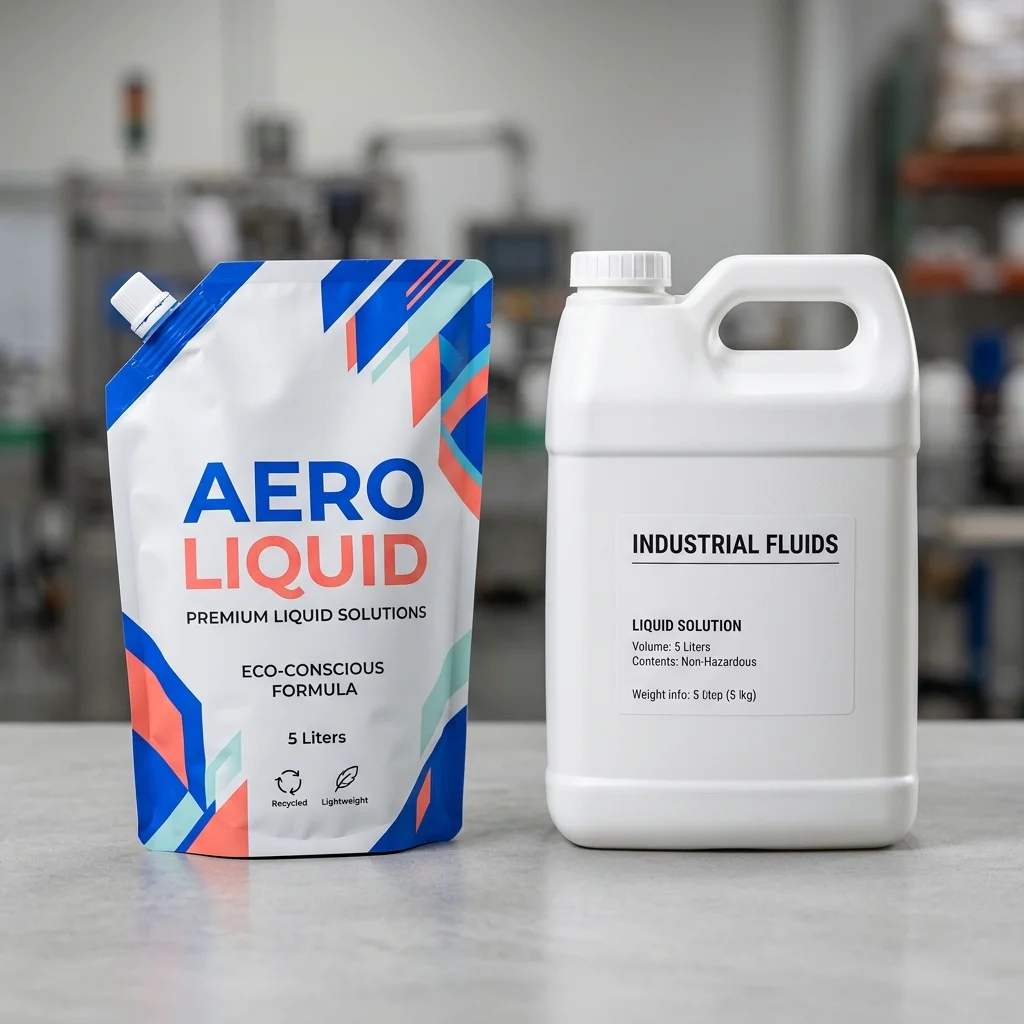 Various custom spouted pouch design styles showing different cap options and spout placements
The plastic spout itself is molded from food-grade polyethylene (PE) or polypropylene (PP). It is inserted into either the top center or the shoulder corner of the pouch and fused to the inner sealant web using ultrasonic or thermal sealing bars.
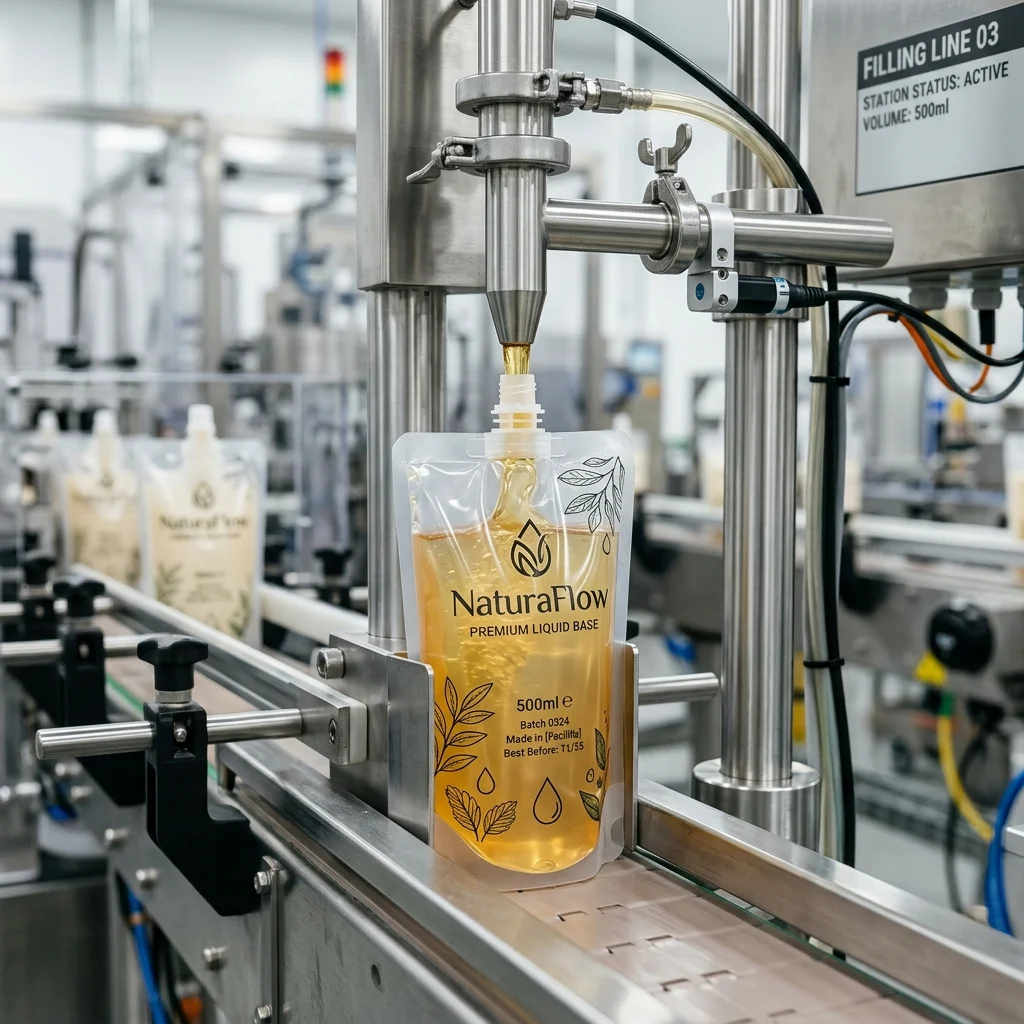 Close-up of a high-barrier spouted pouch heat-seal seam and welded plastic spout
When evaluating packaging materials, cost-benefit analysis usually comes down to weight, volume, and storage logistics. Glass jars and high-density polyethylene (HDPE) bottles require significant warehouse space before they are even filled. Flat flexible packaging pouches arrive compressed, allowing you to store up to ten times more empty packaging in the same footprint.
From a financial perspective, a single truckload of empty spouted pouches holds approximately 500,000 units. To transport the same number of empty 250ml glass bottles, you would need roughly eight to ten freight trucks. This difference dramatically lowers incoming shipping costs and reduces greenhouse gas emissions before your production run even starts.
Here is a direct comparison of spouted pouches against traditional packaging formats:
| Packaging Metric | Custom Spouted Pouches | HDPE Plastic Bottles | Glass Jars |
|---|---|---|---|
| Empty Container Weight (250ml) | 8 to 12 grams | 25 to 35 grams | 150 to 200 grams |
| Warehouse Storage Space (10k units) | 1 pallet | 4 to 5 pallets | 8 to 10 pallets |
| Average Cost per Unit (at 10k runs) | $0.25 to $0.65 | $0.45 to $0.90 | $0.70 to $1.35 |
| Impact Resistance | High (flexible, will not shatter) | Moderate (dents, can crack) | Low (shatters easily) |
| Product Evacuation Rate | Up to 99% (easy to squeeze) | 85 to 90% (product gets trapped) | 80 to 85% (high product waste) |
| Recyclability | Multi-material requires specialty streams | High (curbside) | High (curbside) |
While glass and HDPE have simpler curbside recycling processes, the upstream environmental benefits of flexible structures often offset this limitation. The raw raw material reduction, lowered carbon footprint during transit, and high product evacuation rate make pouches highly efficient.
Successful spouted pouch design balances shelf appeal with product chemistry. Liquid products behave differently depending on their viscosity, acidity, and sensitivity to light or oxygen.
For example, cold-pressed juices and dairy-based beverages are highly sensitive to oxygen. If oxygen penetrates the packaging, the product will discolor, lose nutritional value, and spoil quickly. For these items, you must use high-barrier packaging films that incorporate aluminum foil or ethylene vinyl alcohol (EVOH). These materials keep the oxygen transmission rate (OTR) close to zero.
On the other hand, soapy personal care products like body wash or hand sanitizers do not require oxygen barriers but do need chemical resistance. If the inner sealant layer is incompatible with the product ingredients, the liquid can degrade the adhesive bonds. This causes the layers to separate, a failure known as delamination.
Based on the packaging orders we process at Cubit, brands that switch from rigid PET bottles to flexible packaging pouches reduce their overall shipping-related carbon emissions by an average of 34% because empty pouches pack flat and require fewer freight trucks.
When planning your artwork, think about where the spout will be placed. A top-center spout works well for balanced pouring, like baby food or purées. A side-spout at a 45-degree angle is better for larger refill pouches or beverages because it mimics a traditional bottle neck.
Liquid pouch packaging must comply with rigorous safety regulations, especially when used for consumables. In the United States, the Food and Drug Administration (FDA) regulates all food-contact substances under 21 CFR parts 175 through 178. Any plastic, adhesive, or ink layer used in your pouch must meet these requirements.
Beyond chemical safety, physical durability is critical. Liquid packages undergo physical stress during distribution, and a burst seam can ruin an entire shipment. Quality assurance teams use several testing standards from organizations like ASTM International to verify pouch integrity:
If your brand is selling products in the European Union, you also need to ensure compliance with Regulation (EC) No 1935/2004 regarding materials intended to come into contact with food. Working with a verified supplier ensures your materials have the necessary certificates of compliance before you go to market.
How you intend to fill your packaging affects your initial purchase decisions. Spouted pouches can be filled in two primary ways: through the spout or through a temporary opening in the pouch body. Each method requires different equipment and affects the structure of the empty pouch you buy.
With this method, the pouch is supplied to your co-packer with the spout already welded in place but without the cap attached. The filling machine grips the spout neck, injects the liquid product directly through the narrow spout hole, and then immediately screws the cap on.
This method is highly sanitary and minimizes spills. However, because the filling opening is narrow, it is best suited for low-to-medium viscosity liquids, like water, oils, or thin lotions. It is not ideal for chunky purées or thick pastes.
With this method, the pouch is supplied with the cap already screwed onto the spout. However, one side of the pouch—usually the top or the bottom—is left unsealed. The filling machine opens the unsealed side, inserts a wide nozzle to fill the pouch, and then uses a thermal seal bar to close the opening.
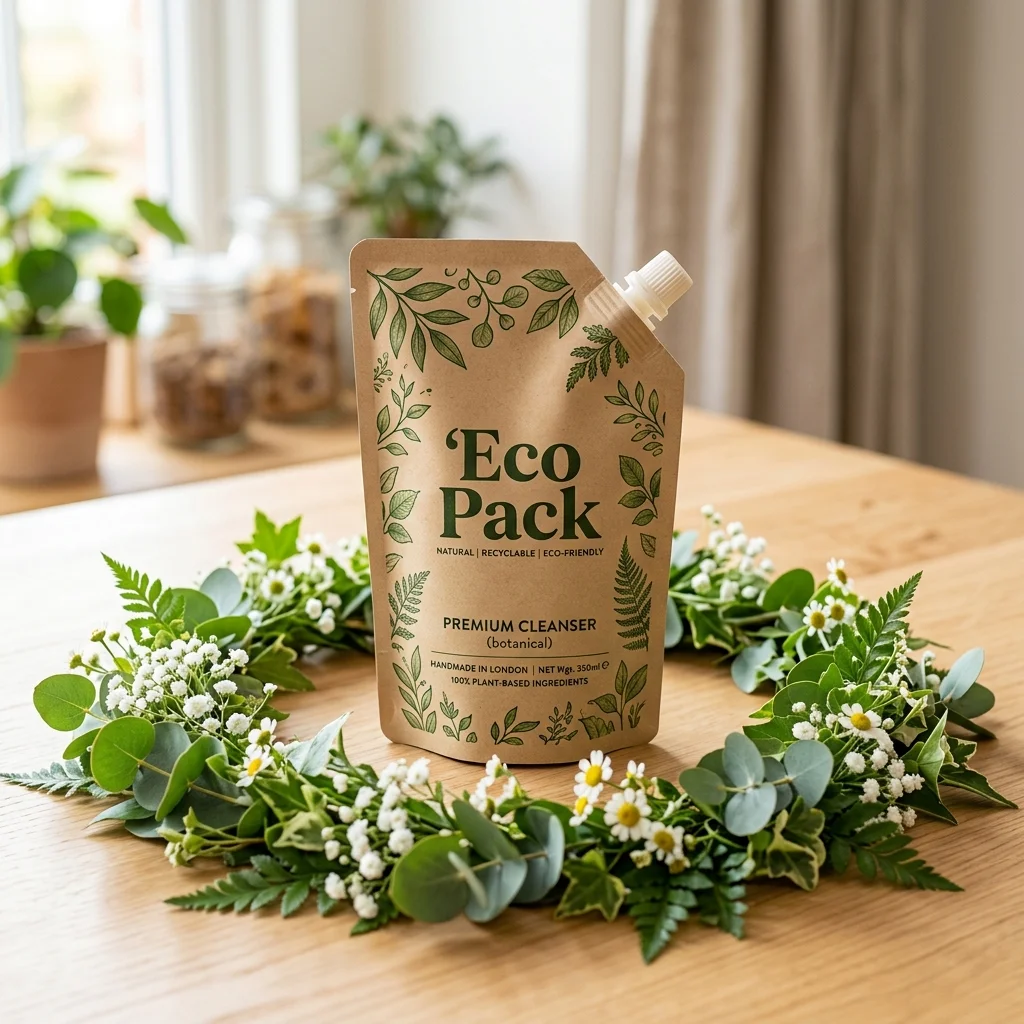 A person pouring a liquid product from a spouted pouch in a clean kitchen setting
This method allows for much faster filling speeds and easily handles thick or chunky products like sauces and gravies. The downside is that the heat-sealing step occurs in the presence of product residue, which means your co-packer must keep the sealing area perfectly clean to avoid weak seams.
To ensure your filling process runs smoothly, communicate early with your co-packer. You need to know their equipment capabilities, maximum viscosity limits, and nozzle sizes before finalizing your custom spouted pouches order.
Custom spouted pouches are highly effective for liquid, gel, paste, and semi-solid products. Common applications include food and beverage items like baby food, fruit purées, energy gels, and sauces. They are also widely used in the personal care industry for hand soaps, shampoo refills, lotions, and home cleaning concentrates.
Most custom spouted pouches are made from multi-layer plastic films, which require specialty recycling programs. However, mono-material PE pouches are becoming widely available and can be recycled at standard plastic film drop-off locations. Always check with your packaging manufacturer to confirm the specific recycling options for your film structure.
Minimum order quantities generally start at 5,000 units for digitally printed pouches, which is ideal for growing brands testing new products. For larger production runs, rotogravure printing becomes more cost-effective, though it typically requires minimum orders of 20,000 to 50,000 units due to tooling and setup costs.
Pouches are filled either through the pre-welded spout or through a temporary opening left unsealed at the top or bottom of the bag. Filling through the spout requires a specialized nozzle and capping machine, while body-filling uses standard liquid-filling lines and a heat sealer to close the pouch.
Yes, but you must specify this requirement during the design phase. Hot-fill packaging requires heat-resistant films like cast polypropylene (CPP) or nylon that can withstand filling temperatures between 85 and 90 degrees Celsius without melting, shrinking, or imparting off-flavors to your product.
Choosing the right flexible packaging requires balancing barrier properties, filling logistics, and retail presentation. Whether you are launching a new liquid soap refill or scaling a specialty sauce brand, we can help you design a pouch that protects your formula and fits your production line.
Ready to find the ideal flexible structure for your product? Get a free custom packaging quote today, and our team will help you choose the right materials and dimensions for your project.
Get started on your custom branding with custom Spouted Pouches directly from our online marketplace, or build a personalized quote at our RFQ Procurement portal.
Design your packaging free in 60s
Try the free AI packaging design toolNeed Custom Stand-Up Pouches?
Custom printed stand-up pouches from 500 units. Coffee, food, snack, and pet food packaging. Barrier films, resealable zippers, and degassing valves.