
Packaging Guides
A brand owner guide to custom Kraft labels for growing businesses
Cubit Team
July 8, 2026
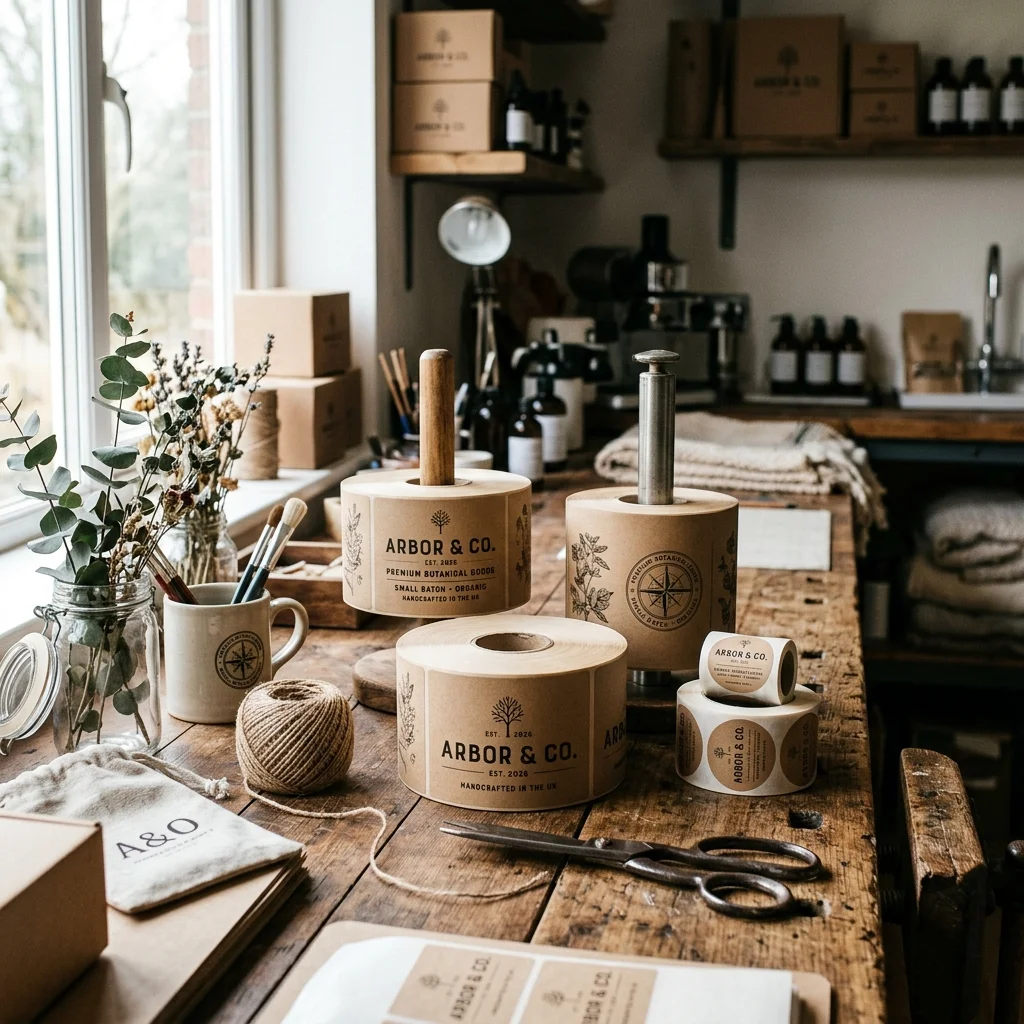
Custom Kraft labels are self-adhesive packaging labels made from natural, unbleached wood pulp that retain a distinct brown, textured appearance. For growing brands, custom Kraft labels offer a cost-effective, durable, and sustainable labeling solution that works across glass jars, paper boxes, and metal tins while communicating an eco-friendly brand identity. At order volumes of 5,000 units or more, switching from synthetic materials to paper-based Kraft alternatives can reduce labeling material costs by 12% to 18% per unit.
Selecting the right label material involves balancing visual appeal with technical performance. Kraft paper is naturally porous, meaning it absorbs inks differently than standard white plastic films. This guide covers how to design for this material, choose the right adhesive for your product, and manage the technical constraints of printing on unbleached fibers.
In this guide:
Kraft paper gets its name and strength from the Kraft chemical wood pulping process. Unlike traditional paper production, this method retains most of the original wood structure and does not use heavy bleaching agents. This preserves the natural brown color and long cellulose fibers, which give the paper its high tensile strength and tear resistance.
When purchasing labels for your packaging, you will encounter two main options: laid Kraft and smooth Kraft. Laid Kraft has a distinct ribbed texture that you can feel, which works well for specialty food, wine, and luxury bath products. Smooth Kraft is calendered during manufacturing to create a flatter surface, making it better for fine text and barcode readability.
Kraft paper is naturally uncoated, which gives it a flat, matte appearance. While some manufacturers apply a thin varnish to protect the print, this can alter the organic texture of the paper. For products exposed to moisture, like bath oils or cold-stored beverages, an unprotected Kraft paper label will absorb liquid and degrade. Knowing your product's lifecycle and storage conditions is necessary before choosing this material.
Printing on a dark, porous substrate requires different design considerations than printing on white paper or plastic. Because standard printing inks are translucent, the brown background of the Kraft paper will show through your design, shifting your color palette. Yellows may turn brown, blues can take on a greenish tint, and light pastels can disappear completely.
To prevent muddy colors, commercial printers use a technique called white ink underprinting. By applying a solid layer of opaque white ink beneath your colored design, the printer creates a white base that preserves your exact brand colors. This technique allows you to use bright colors or crisp white text on a natural brown background.
[Your Design Layer (CMYK Ink)]
        |   (Ensures vibrant, accurate colors)
[Opaque White Underprint Layer]
        |   (Blocks the brown background from showing through)
[Natural Brown Kraft Paper Substrate]
If you prefer to work without white underprinting, stick to dark, high-contrast colors. Deep charcoal, forest green, navy blue, and rich black print beautifully directly onto Kraft paper. Thin, delicate fonts below 8-point size can bleed and lose definition on textured paper, so we recommend bold typography and clean vector artwork.
An attractive label design is useless if the adhesive fails. The adhesive must match the material of your container and the environment where your product will be shipped, stored, and used. Standard acrylic emulsion adhesives work well on dry, flat surfaces like cardboard shipping boxes and smooth glass jars.
For textured surfaces, recycled cardboard, or metal containers, you may need a high-tack rubber adhesive. Rubber-based adhesives have higher initial grab, which prevents the edges of the label from lifting or flagging over time. This is especially important for small-diameter containers like lip balm tubes, where the tight curve forces the paper to pull against the adhesive.
| Container Material | Surface Texture | Recommended Adhesive Type | Best Performance Environment |
|---|---|---|---|
| Glass Jars & Bottles | Smooth, non-porous | Permanent Acrylic | Ambient dry storage, light condensation |
| Corrugated Cardboard | Porous, fibrous | High-Tack Hot Melt | Shipping, warehouse handling, dust exposure |
| Aluminum & Tin | Smooth, low-energy | Solvent-Based Acrylic | Variable temperatures, oily cosmetics |
| PET & HDPE Plastics | Flexible, smooth | Modified Acrylic | Squeeze bottles, bathroom use, high moisture |
| Small Diameter Tubes | High-curve | High-Tack Rubber | Constant tension, small radius application |
Temperature is another key factor in adhesive success. Application temperature is the temperature of the room when the label is first applied to the container, while service temperature is the range the label can withstand after the adhesive has cured. If you apply labels in a cold room or onto damp containers, you will need a specialized freezer-grade adhesive to prevent peeling.
Many brands choose Kraft paper to match their environmental values. However, not all Kraft papers are created equal. To ensure your packaging materials are responsibly sourced, look for labels certified by the Forest Stewardship Council (FSC). An FSC certification guarantees that the wood pulp used to make the paper comes from responsibly managed forests that preserve biodiversity and protect water quality.
Additionally, you must consider the label's life after the customer uses the product. While Kraft paper is biodegradable and compostable on its own, the adhesives and inks used during printing can affect its recyclability. Using water-based inks and emulsion adhesives makes it easier for recycling facilities to process the packaging.
Based on the packaging orders we process at Cubit, we have found that brands using FSC-certified Kraft labels on recycled paperboard boxes see a 22% increase in consumer-reported satisfaction regarding packaging sustainability compared to those using standard polyester laminates.
Using bio-based materials also helps brands comply with changing packaging laws, such as the European Union's Packaging and Packaging Waste Regulation (PPWR) and similar state-level legislation in the United States. These rules are putting more pressure on companies to reduce plastic packaging and use easily recyclable paper alternatives.
For growing businesses, packaging costs directly impact profit margins. Kraft labels are generally more economical than custom-shaped plastic films or metal foils. However, the total cost per unit depends on your printing method, order size, and ink setup.
Digital printing is the most cost-effective option for short runs under 2,000 labels because it does not require expensive printing plates. For larger runs over 5,000 units, flexographic printing offers a lower per-unit cost despite the initial setup fees. Adding a white underprint layer requires an extra print station and ink, which typically adds 8% to 15% to your total printing costs.
Custom Kraft labels cost between $0.08 and $0.45 per unit at volumes of 5,000+, depending on the number of ink colors and the size of the label. When planning your packaging budget, ordering your labels on rolls rather than individual sheets can save you 15-20% on application labor if you use automatic or semi-automatic labeling machines. Roll labels also fit standard industrial dispensers, which speeds up your assembly line.
If you want to coordinate your entire product presentation, consider matching your labels with custom paper mailer boxes or printed shipping boxes. Using the same natural Kraft aesthetic across your primary and secondary packaging creates a unified look that builds trust with your customers. You can easily start designing your next packaging project by visiting our online design studio.
No, standard custom Kraft labels are made of paper and are not waterproof. They will absorb water, oils, and grease, which can cause the paper to soften, stain, or tear. For products exposed to water or oil, you should protect the label with a matte film laminate or choose a synthetic alternative.
Yes, you can print white ink on custom Kraft labels using digital or flexographic printing presses. This process is called white ink underprinting, and it creates a solid white base under your colored designs so your brand colors stay bright and readable on the brown paper.
Laid Kraft paper has a raised, textured pattern of parallel lines that gives it a premium, hand-crafted feel. Smooth Kraft paper is flattened during manufacturing to create an even surface, making it the better choice for printing fine text, detailed graphics, and scannable barcodes.
Yes, Kraft paper labels can generally be recycled along with cardboard boxes and paper bags. During the recycling process, the adhesive is separated from the paper fibers. Using water-based acrylic adhesives and non-toxic inks makes the recycling process cleaner and more efficient.
Yes, custom Kraft labels stick well to plastic bottles if you use the right adhesive. Since plastic surfaces can resist sticking, we recommend using a permanent acrylic adhesive with high initial grab to prevent the edges of the label from curling or peeling off over time.
Choosing the right label material involves balancing style, utility, and budget. For growing brands, Kraft labels offer a practical way to create clean, attractive packaging without high synthetic plastic costs. Ready to update your product packaging? Get a free quote for your packaging project and see how our team can help you design custom Kraft labels that fit your brand perfectly.
Get started on your custom branding with custom Kraft Labels directly from our online marketplace, or build a personalized quote at our RFQ Procurement portal.
Design your packaging free in 60s
Try the free AI packaging design toolNeed Custom Packaging?
Get a free quote with pricing, MOQs, and turnaround time for your custom packaging project.