
Packaging Guides
The Ultimate Guide to Custom Embossed Labels for Growing Brands
Cubit Team
July 8, 2026
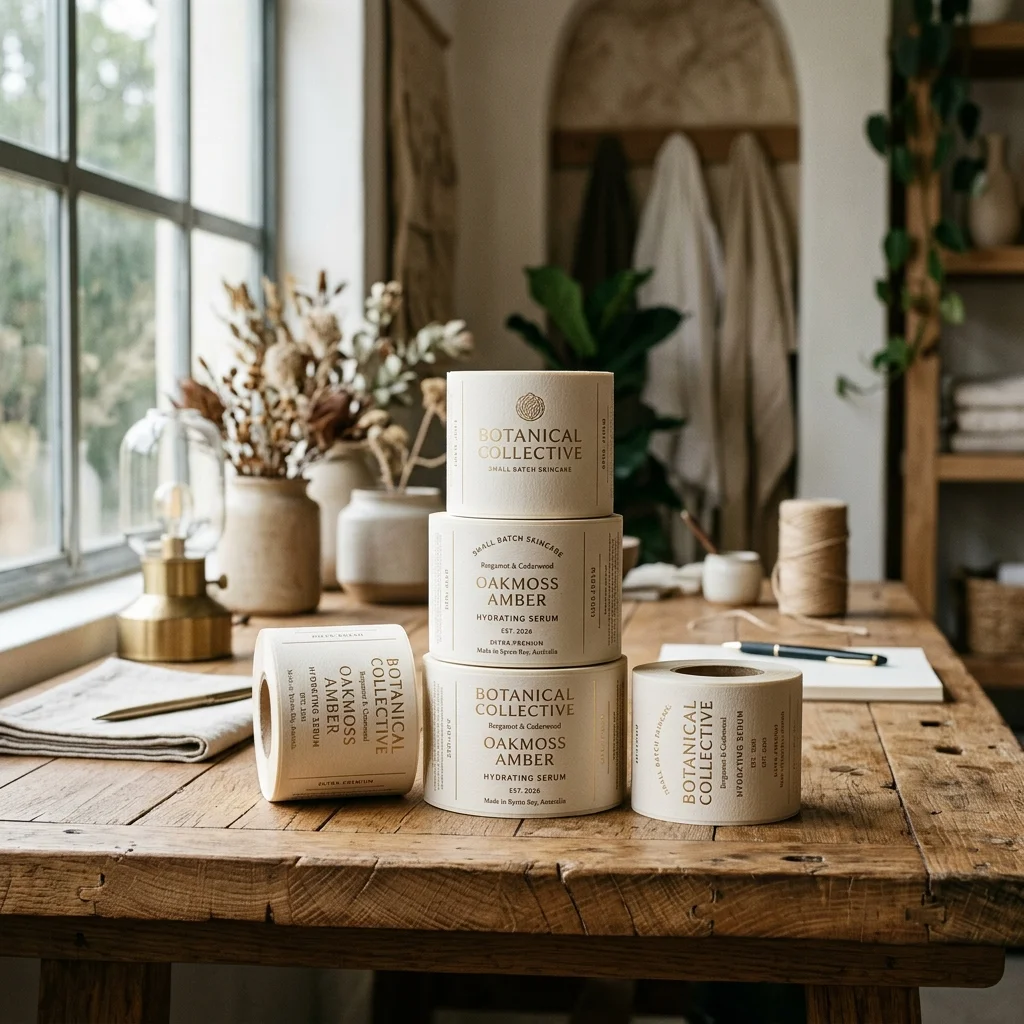
Custom embossed labels are specialized packaging seals that feature raised, three-dimensional designs pressed directly into the label material. Brands use these textured labels to add physical depth, premium tactile appeal, and visual interest to their product packaging without relying solely on printed colors or graphics. By pressing a paper or synthetic stock between a male and female metal die under high pressure, packaging manufacturers create a permanent, raised pattern that physically stands out from the flat surface of the container.
According to industry production data, adding a tactile element like embossing to a product label increases consumer engagement by up to 34% compared to standard flat labels. This physical interaction is a powerful tool for growing brands looking to establish shelf presence in crowded retail spaces. The raised texture not only catches light from different angles but also encourages shoppers to pick up and touch the product, which is often the final step before a purchasing decision is made.
This guide explains how custom embossed labels work, the material options available, the cost structures you can expect, and how to successfully prepare your artwork for production. Whether you are packaging premium cosmetics, specialty food items, or high-end beverages, understanding these technical details will help you make informed packaging decisions.
In this guide:
To understand how custom embossed labels are made, it helps to look at the mechanical tooling involved. The process relies on two custom-engraved metal plates, usually made of brass, magnesium, or copper, called dies. One die has the design raised (the male die) and the other has the matching design recessed (the female die). When the label material passes between these two dies, the machinery applies several tons of pressure, permanently stretching the fibers of the paper or synthetic stock to mirror the metal mold.
The physical height of the raised area, known as the relief, typically ranges from 0.005 to 0.015 inches, depending on the thickness of the material and the depth of the engraving. The quality of the finished label depends heavily on the toolmaker's precision and the press operator's setup. A slight misalignment can cause the paper to tear or result in a weak, soft impression that flattens out over time.
There are two primary methods for creating these dies: chemical etching and mechanical CNC engraving. CNC engraving is the preferred method for complex, multi-level designs because it allows for varied depths within a single image. Chemical etching is more cost-effective for single-level, simple flat-top designs. For brands trying to decide between these options, the choice usually comes down to the complexity of the brand logo and the allocated tooling budget.
The material you choose for your custom embossed labels determines how well the raised design holds its shape over time. Not all papers and plastics react to pressure in the same way. Uncoated, textured papers with long fibers are the gold standard for embossing because the fibers stretch easily without tearing, resulting in a deep, sharp impression.
Below is a comparison of how different common label materials perform under standard embossing pressure:
| Material Type | Emboss Definition | Moisture Resistance | Best Used For |
|---|---|---|---|
| Uncoated Estate Paper | Excellent (Crisp, high relief) | Moderate (Requires wet-strength additive) | Wine bottles, luxury spirits, dry gourmet foods |
| Matte Litho Paper | Good (Clean, distinct edges) | Low | Specialty jar labels, box seals, outer packaging |
| Clear or White BOPP | Moderate (Softer, rounded edges) | High (Waterproof and oil-resistant) | Shampoos, oils, cosmetics, squeeze bottles |
| Metallic Foil Paper | Excellent (Highly reflective edges) | Moderate | Premium honey, chocolate wraps, limited editions |
Selecting the right material requires balancing visual goals with practical storage needs. For instance, a wine label needs a wet-strength paper that won't fall apart in an ice bucket, while a cosmetic cream requires an oil-resistant synthetic film.
When planning your custom embossed labels, you can choose from several different finishing techniques to achieve different visual effects. The three most common styles are blind embossing, registered embossing, and debossing. Each requires different press setups and design considerations.
Blind embossing is a technique where the design is raised from the paper without any ink, foil, or printing applied to the raised area. The visual effect relies entirely on light and shadow hitting the raised paper fibers. This is a subtle, elegant choice often used for background patterns, authenticity seals, or minimalist branding on high-end cosmetics. For blind embossing to work well, we recommend using a colored or textured paper stock rather than a flat, bright white paper, as the texture contrast makes the design easier to read.
Registered embossing, also known as combo embossing, is when the raised effect aligns perfectly with a printed element, such as a colored ink or a hot foil stamp. This is the most popular style for retail packaging because it makes brand names and logos jump off the label. When combining embossing with hot foil stamping, a single combination die can often apply both the foil and the raised texture in a single pass of the press, ensuring perfect alignment.
Debossing is the exact opposite of embossing. Instead of raising the design above the label surface, debossing presses the image down into the material, creating an indented or sunken effect. While less common than embossing for small labels, debossing is highly effective on thick, pulpy cotton papers or heavy paperboards where the depth of the indentation can be physically felt.
Based on the packaging orders we process at Cubit, approximately 68% of brands choosing embossed finishes pair them with hot metallic gold or silver foil to maximize shelf visibility in retail environments. This combination consistently yields the highest engagement rates on retail shelves.
Designing artwork for custom embossed labels requires a different approach than designing for standard flat printing. Because paper fibers have physical limits, very fine lines, tiny text, and complex gradients cannot be embossed successfully. If a design is too detailed, the paper will either tear or the details will merge into a single, blurry bump.
To ensure a clean, sharp finish, your design files must be prepared with production limitations in mind. We recommend keeping these specific technical tolerances in your vector design files:
When submitting files, you must provide your artwork in a vector format, such as an Adobe Illustrator (AI) or PDF file. The embossed elements must be placed on a separate, dedicated layer named "Emboss" and colored with a 100% solid spot color. This allows the toolmaker to isolate the exact shapes needed to engrave the brass or magnesium dies.
The primary barrier for growing brands considering custom embossed labels is the upfront cost of tooling. Unlike digital printing, which requires no physical plates, embossing requires custom-machined metal dies. A set of brass dies for a standard-sized logo typically costs between $150 and $400, depending on the complexity and size of the artwork. This is a one-time setup fee, but it must be factored into your initial product launch budget.
Because of these fixed setup costs, embossed finishes are rarely cost-effective for very small orders. For a run of 250 labels, the die fee alone can add over $1.00 to the cost of each individual label. However, as your order volume increases, the impact of the tooling fee drops dramatically. At volumes of 5,000 units or more, the per-unit cost of adding an emboss is often as low as $0.05 to $0.15 per label.
If you want to test the market before committing to custom dies, consider using a high-build spot UV varnish as an alternative. This digital printing technique applies a thick layer of glossy polymer over the design, creating a raised, tactile feel without requiring metal dies. While it lacks the sharp, structural look of true paper embossing, it is a highly effective, low-cost option for test runs of 100 to 1,000 units. Once your sales volume stabilizes, you can transition to traditional metal-die embossing to achieve a sharper, more premium look.
To find the most cost-effective solution for your specific packaging needs, you can easily browse our product categories to compare different finishes, or directly request a custom packaging design quote based on your target order volume.
Embossing uses metal dies to press the material upward, creating a raised design that stands out from the surface. Debossing presses the design downward into the material, creating an indented or sunken pattern. Both techniques add a distinct tactile feel to your custom embossed labels.
Yes, you can emboss on biaxially-oriented polypropylene (BOPP) films, but the results are different than on paper. Plastic has physical memory and springs back slightly after being pressed, which creates a softer, more rounded raised effect. This is still a great choice for shower products and cosmetics.
Custom embossing dies usually cost between $150 and $400 per design. The final price depends on the size of the design, the complexity of the artwork, and the metal used. Brass dies are more expensive but highly durable, while magnesium dies are cheaper and ideal for shorter runs.
For a clean, visible finish, all embossed lines must be at least 1.0 point (0.013 inches) thick. You must also leave at least 2.0 points of space between elements. Keeping to these dimensions ensures the paper fibers stretch correctly without tearing or loses its shape on the press.
Yes, custom embossed labels are supplied on rolls and can be used with automated labeling machinery. However, you must inform your packaging partner of your machine specifications. The physical height of the raised areas can occasionally affect how backing paper winds through high-speed application systems.
If you are ready to plan your next product launch and want to see how these finishes look in person, you can explore our online store to view material options, download a template to start your custom labeling design, or get in touch with our team directly. We can help you navigate material selections, tooling options, and file preparation to ensure your brand stands out clearly on the shelf. Let us help you create packaging that your customers want to reach out and touch. Get a free quote for your packaging project and take the first step toward creating high-quality custom embossed labels that elevate your physical brand presentation.
Get started on your custom branding with custom Embossed Labels directly from our online marketplace, or build a personalized quote at our RFQ Procurement portal.
Design your packaging free in 60s
Try the free AI packaging design toolNeed Custom Packaging?
Get a free quote with pricing, MOQs, and turnaround time for your custom packaging project.