
Packaging Guides
The Ultimate Guide to Custom Auto-Bottom Boxes for Growing Brands
Cubit Team
July 8, 2026
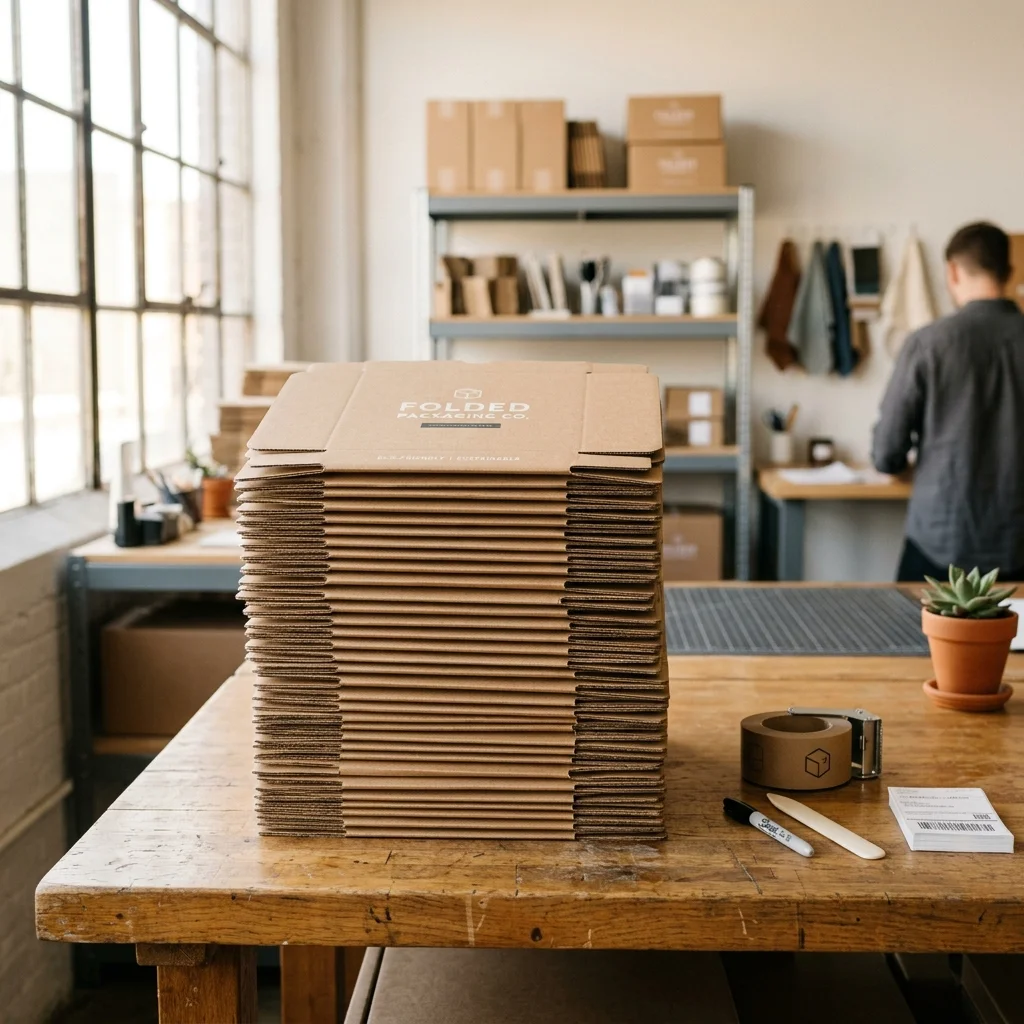
Custom auto-bottom boxes, also known as crash-lock boxes, are specialized paperboard or corrugated packaging solutions featuring a pre-glued bottom structure that folds flat for shipping and pops into a fully formed, rigid base with a single downward push on the opposing corners. This automatic-locking mechanism eliminates the need for manual taping, folding, or gluing during the product fulfillment stage, which reduces your fulfillment assembly time by 150 percent compared to standard tuck-end cartons. For growing brands shifting from low-volume test runs to high-speed fulfillment, these packaging structures offer a cost-effective way to lower per-unit labor costs while keeping your goods secure during transit.
At Cubit Packaging, we see hundreds of brands struggle with the hidden bottleneck of manual packaging assembly. When your daily order volume crosses 50 units, the time spent folding flaps and applying adhesive tape starts to drain your profitability. Switching to a pre-assembled structure solves this operational hurdle. This comprehensive guide covers how these structural designs work, their material options, and how to implement them to improve your logistics pipeline.
In this guide:
The magic of a custom auto-bottom box lies in its pre-glued base. When you receive these boxes from our manufacturing facility, they arrive flat, packed in neat bundles of 50 to 100 units depending on the thickness of the paperboard. To assemble one, your fulfillment worker grips the two folded edges and squeezes them together.
As the box sides square up, the base flaps automatically lock together. One bottom flap slides over another, while the pre-applied adhesive on the remaining flaps holds the entire bottom plane in a flat, rigid state. The tension in the cardboard structure keeps the bottom closed under the weight of your product, meaning you do not need to apply any packing tape or hot-melt glue to the base.
This physical mechanism relies on accurate die-cutting and folding on high-speed folder-gluer machines during the manufacturing process. A variation of 1 millimeter in the glue-line application can cause the box to jam during setup or fail to lock flat. This is why we hold our manufacturing tolerance to within 0.5 millimeters, ensuring every box opens smoothly without manual adjustment.
Choosing the right structural design for your product requires balancing assembly speed, physical durability, and unit cost. While tuck-end boxes are common for lightweight items, they fail under heavy loads and require manual tucking. Custom auto-bottom boxes offer a vastly different structural profile.
Here is how they compare across key operational metrics:
| Box Style | Average Assembly Time per Unit | Maximum Weight Capacity | Relative Material Cost | Adhesive Required during Assembly | Best Use Case |
|---|---|---|---|---|---|
| Auto-Bottom Box | 2 - 3 seconds | 10 - 12 lbs | Medium-High | No | Retail, cosmetics, heavy jars, liquids |
| Snap-Lock (1-2-3) Box | 8 - 10 seconds | 8 - 10 lbs | Medium | No | Medium-weight items, electronics |
| Reverse Tuck-End | 12 - 15 seconds | 2 - 3 lbs | Low | No | Lightweight cosmetics, pharmaceutical dropper bottles |
| Regular Slotted Carton (RSC) | 20 - 30 seconds | 40 - 50 lbs | Low | Yes (Packing tape) | Heavy master shipping boxes, bulk wholesale orders |
For a deeper look at alternative folding carton designs, you can explore our custom folding cartons section to compare dimensions and lock styles.
Snap-lock boxes, also known as 1-2-3 bottoms, represent a common middle ground. However, they require your assembly staff to fold four distinct flaps manually in a specific numbered order. This process takes roughly four times longer than opening a pre-glued auto-bottom box, making snap-lock boxes less efficient for operations handling over 1,000 units per week.
The material you choose depends on the weight and physical vulnerability of your product. If you are packaging premium cosmetics in glass bottles, or shipping organic honey jars, your requirements differ from a brand packaging light apparel. We offer custom auto-bottom boxes in three primary material classes.
Solid Bleached Sulfate (SBS) is the standard for retail. It is bright white on both sides, yielding excellent print reproduction for high-end graphic designs. We recommend 16pt to 24pt SBS paperboard for items like skincare lines, candles, and gourmet tea tins. The smooth surface accepts tactile spot UV coatings and matte lamination finishes perfectly.
For brands pursuing a natural, rustic aesthetic, unbleached kraft paperboard is the ideal fit. It is made from at least 80 percent virgin wood fibers, giving it excellent tear resistance. It is strong, recyclable, and aligns with Forest Stewardship Council (FSC) certification criteria. To learn more about our sustainable sourcing, see our overview of custom eco-friendly boxes.
If your product weighs more than 4 pounds, paperboard will buckle. For these heavier products, we construct auto-bottom boxes using thin corrugated materials, specifically E-flute or F-flute cardboard. This adds structured fluting between the liner boards, providing crush resistance while retaining the ability to print detailed designs on the outer surface.
Many brands only look at the cost of the raw packaging material when sourcing boxes, which is a major mistake. An auto-bottom box costs slightly more than a standard tuck-end box because it requires a secondary step in our manufacturing facility where the base is folded and glued on our specialized folder-gluer equipment. This step adds roughly 10% to 15% to the initial unit price.
However, you will claw back this small upfront investment in labor savings during fulfillment. Let us look at a real-world scenario:
Based on the packaging orders we process at Cubit Packaging, brands shifting 10,000 orders from standard reverse-tuck cartons to custom auto-bottom structures save an average of 25 hours of fulfillment labor. At a standard warehouse wage of $18 per hour, this operational change translates directly to $450 in labor savings per batch.
If you are packaging high-turnover goods like nutritional supplements, personal care items, or coffee beans, this hourly savings compounds rapidly. Your staff can pack more orders per hour without needing extra seasonal hires to meet peak demand.
Transitioning to a new packaging structure requires careful planning. If you are ready to switch, follow these direct operational steps to ensure a smooth transition.
To learn more about setting up your artwork files correctly, read our detailed packaging design guide for step-by-step instructions on layers, bleeds, and dielines.
The weight capacity depends entirely on the material thickness. A standard 18pt SBS paperboard auto-bottom box safely carries up to 3 pounds, while a reinforced E-flute corrugated custom auto-bottom box can hold up to 12 pounds without risk of the bottom locking mechanism failing.
No, custom auto-bottom boxes do not require tape or hot-melt adhesive during assembly. The base is pre-glued in our factory and features an interlocking structural design that locks shut automatically when you open the box, using gravity and the product's weight to stay secure.
Yes, you can print on the bottom of the box, but we recommend placing barcodes, regulatory text, and recycling symbols there instead of complex graphic designs. Since the folding flaps overlap to lock, intricate graphic patterns will not align perfectly across the seam lines.
Because of the complex setup required for the industrial folder-gluer machinery, the minimum order quantity for a custom auto-bottom box run is typically 1,000 units. Ordering below this threshold significantly increases the per-unit cost due to the mechanical run-time preparation.
An auto-bottom box has a pre-glued base that pops into shape instantly when opened, taking about 2 seconds to assemble. A snap-lock box, or 1-2-3 bottom, requires the fulfillment worker to fold four unglued flaps manually in order, taking around 10 seconds to assemble.
If you want to speed up your fulfillment process, lower your warehouse labor costs, and improve your product presentation, custom auto-bottom boxes are an excellent upgrade for your brand. Our design and structural engineering team is here to help you draft the perfect dieline for your product dimensions.
Get a free quote for your packaging project today and receive structural design support from our expert advisors.
Get started on your custom branding with custom Auto-Bottom Boxes directly from our online marketplace, or build a personalized quote at our RFQ Procurement portal.
Design your packaging free in 60s
Try the free AI packaging design toolNeed Custom Packaging?
Get a free quote with pricing, MOQs, and turnaround time for your custom packaging project.