
Product Guides
Custom Cookie Boxes: Food-Safe Bakery Packaging Guide (2026)
Cubit Packaging
June 8, 2026
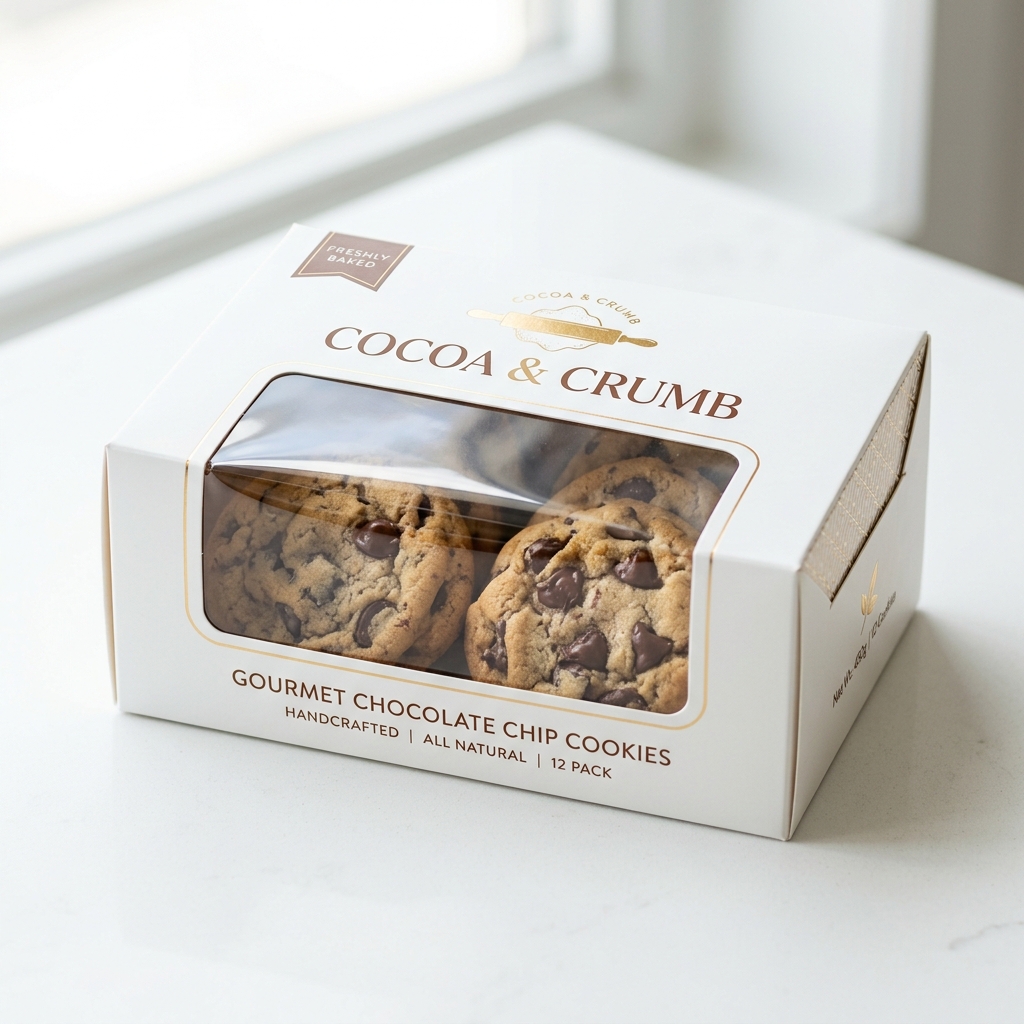
The US artisan cookie market hit $6.8 billion in 2025, and 73% of bakery customers say packaging directly influences their purchase decision. That means your custom cookie box isn't just a container — it's the first thing customers see, touch, and judge before they ever taste your product.
A plain white bakery box tells customers nothing about your brand. A custom-printed cookie box with your logo, a die-cut window showing those golden chocolate chip cookies, and a grease-resistant interior? That tells them you're serious about quality. We've seen bakeries increase repeat orders by 30-40% after switching from generic boxes to branded packaging — the box becomes part of the experience customers remember.
Key fact: Bakeries using branded cookie packaging report 35% higher average order values compared to those using generic white boxes, according to packaging industry surveys.
Not all paperboard is created equal — especially when butter, oil, and moisture are involved. Here's what actually matters when picking materials for cookie packaging:
Solid Bleached Sulfate board is what most professional bakeries use. The clay-coated surface prints beautifully in full color, and 18pt thickness (roughly 0.018 inches or 350+ GSM) gives enough rigidity to protect a dozen cookies without flexing. FDA-compliant right out of the gate. Expect to pay $0.35–$0.90/unit depending on size and printing complexity.
If your bakery brand leans natural, organic, or farm-to-table, kraft is your material. The unbleached brown fiber look instantly communicates "handmade" and "eco-friendly." FSC-certified kraft is 100% recyclable and appeals to the 64% of consumers who say they prefer sustainable packaging. Works beautifully with single-color or two-color printing.
Need to ship cookies by mail? Standard 18pt flexes too much for transit. The 24pt variant handles the weight of a full dozen plus padding, and resists corner crushing during shipping. Essential for subscription cookie clubs and e-commerce orders.
For large bulk orders or cookie gift boxes that ship nationwide, micro-flute corrugated provides maximum crush protection. The 1.5mm flute height adds structural strength without excessive bulk. If your cookies travel more than 500 miles, this is the safest choice.
The newest option combines plant-based paperboard with PLA (polylactic acid) windows instead of petroleum-based PET film. Fully biodegradable in 90 days in commercial composting facilities. If you're targeting zero-waste bakery customers, this is where the industry is heading in 2026. Pair these with custom product labels printed with soy-based inks for a fully eco-friendly presentation.
Every ink, coating, and adhesive touching your cookie box must comply with FDA 21 CFR (Code of Federal Regulations) for indirect food contact. Here's the practical breakdown:
Key fact: Low-migration UV inks contain photoinitiator levels below 10 ppb (parts per billion), meeting the strictest EU and FDA safety thresholds for food packaging.
Raw paperboard and butter-laden cookies don't mix well. These finishes solve specific functional problems:
Aqueous grease-resistant coating creates an invisible barrier on the interior surface. Without it, butter from shortbread or oil from chocolate chip cookies seeps through, creating dark stains on the exterior within hours. This coating maintains a clean presentation for 48-72 hours at room temperature.
Die-cut windows with food-grade PET film let customers see the cookies without opening the box. For eco-conscious brands, PLA film offers the same crystal clarity while being commercially compostable. Window sizes typically range from 2×2 inches (single cookie peek) to 6×4 inches (full display).
Matte lamination gives a soft, modern feel — popular with artisan bakeries going for a rustic-premium look. Gloss lamination makes colors pop and photographs better for Instagram-worthy unboxing moments. Both add moisture resistance and scuff protection during handling.
Apply a glossy clear coat to specific areas — your logo, a cookie illustration, or decorative elements — while the rest stays matte. Creates a tactile contrast that customers notice immediately. Adds roughly $0.05–$0.08/unit but significantly elevates perceived value.
Getting the size wrong means crushed cookies or wasted material. These are the standard sizes that fit 95% of bakery needs:
| Size Name | Dimensions (L×W×H) | Fits | Price Range |
|---|---|---|---|
| Single Cookie | 4 × 4 × 1.5 in | 1–2 large cookies or 3–4 small | $0.25–$0.45 |
| Half Dozen | 6 × 4 × 2 in | 6 standard cookies | $0.40–$0.65 |
| Full Dozen | 10 × 7 × 2.5 in | 12 cookies in a single layer | $0.55–$0.85 |
| Gift Assortment | 12 × 9 × 3 in | 18–24 cookies or stacked layers | $0.75–$1.20 |
Custom dimensions are available for non-standard products like oversized cookies (6-inch diameter), cookie cakes, or stacked gift towers. For unusually shaped items, consider custom bakery boxes with foam or corrugated inserts to prevent shifting during transport.
Walk-in bakeries need boxes that work fast. Tuck-end boxes with pre-folded bottoms and quick-lock tabs let staff box an order in under 10 seconds. Window die-cuts eliminate the need to open and show the product — customers can see what they're buying through the clear panel.
Shipping cookies requires different engineering than counter service. E-flute corrugated with internal cushioning (tissue paper dividers or molded inserts) prevents breakage during 3-5 day transit. Insulated liners maintain freshness for temperature-sensitive items like frosted cookies.
Christmas, Valentine's Day, Easter, and Thanksgiving drive 40% of annual cookie sales for most bakeries. Seasonal cookie boxes with holiday-themed artwork, ribbon closures, and gift-ready presentation turn a $12 box of cookies into a $25+ gift. Plan your seasonal designs at least 8 weeks before the holiday.
Mini cookie boxes (3×3×1.5 in) as wedding favors are a growing trend. Customized with the couple's names, date, and monogram. Typically ordered in quantities of 100–300 with matching ribbon or sticker seals.
Monthly cookie subscriptions need boxes that survive repeated shipping, look great on Instagram unboxing videos, and maintain brand consistency across 12+ monthly designs. Interior printing adds a seasonal surprise each month.
Supplying coffee shops, hotels, or corporate catering? Bulk cookie boxes (24–48 count) with simple kraft exteriors and food-safe liners keep costs under $0.15/unit at 10,000+ volumes. For more shipping-heavy operations, consider pairing these with custom shipping boxes for outer protection.
After producing thousands of cookie box orders, our design team has identified patterns that consistently drive higher sales for bakeries:
Warm tones — golden amber, chocolate brown, cream, deep berry — trigger appetite more than blues or greens. A box with a warm-toned color palette sells 20-25% better than identical cookies in cool-toned packaging. Gold foil accents amplify this effect by signaling premium quality.
Top-center windows outperform side windows for retail display because customers look down at bakery counters. For shipped cookies, side windows work better since boxes stack upright in delivery bags. Match your window position to your primary sales channel.
Your bakery name should be readable from 4 feet away — that's the typical distance when a customer is browsing a bakery case or farmer's market table. This means a minimum 24pt font for your brand name on a standard half-dozen box. Ingredient lists and allergen info can go smaller (8–10pt) on the bottom panel.
The most successful cookie brands we work with maintain a core box design year-round, then add seasonal sleeves or stickers for holidays. This approach costs 60-70% less than printing entirely new boxes each season, while still giving customers fresh seasonal excitement. Your core box handles branding; your seasonal sleeve handles the holiday theme.
18pt SBS C1S (Solid Bleached Sulfate) is the bakery industry standard — FDA food-grade, prints in full color, and supports grease-resistant coatings. For artisan brands wanting a natural look, 18pt kraft board is 100% recyclable and FSC-certified. Both options start at 350+ GSM for adequate rigidity with a dozen cookies.
Yes, when manufactured with FDA 21 CFR-compliant materials. All food-contact surfaces (interior board, inks, coatings, adhesives, window films) must meet indirect food contact regulations. Ask your supplier for a Declaration of Compliance — any reputable manufacturer will provide this documentation on request.
500 units is the standard MOQ for fully custom cookie boxes with CMYK printing. Some suppliers offer 100-unit minimums for digital printing at a higher per-unit cost ($0.80–$1.50/unit vs. $0.25–$0.45/unit at volume). Setup costs for custom die-lines typically run $150–$300 one-time.
Pricing ranges from $0.25/unit for simple kraft boxes at 5,000+ quantity to $1.50/unit for premium rigid gift boxes with foil stamping at low quantities. The biggest cost drivers are: material thickness, number of print colors, finish complexity (spot UV adds ~$0.05–$0.08), and window die-cuts (add ~$0.03–$0.05).
Yes — die-cut windows with food-grade PET or compostable PLA film are standard options. PET provides crystal-clear visibility and costs about $0.02–$0.04 extra per unit. PLA film costs $0.01–$0.03 more than PET but is commercially compostable within 90 days, making it the preferred choice for eco-focused bakeries.
8–12 business days for standard orders after design approval. Rush production (5–7 days) is available for an additional 15–20% surcharge. First-time orders include 2–3 days for die-line creation and pre-production proofing. Reorders using existing dies ship 2–3 days faster.
Your cookies deserve packaging that matches their quality. Whether you're a home baker filling your first wholesale order or an established bakery refreshing your brand, the right cookie box protects your product, showcases your brand, and turns first-time buyers into regulars.
Ready to design your perfect cookie box? Browse our full custom cookie box collection with instant pricing, or request a free sample kit to see and feel the materials before you commit.
Design your packaging free in 60s
Try the free AI packaging design toolNeed Custom Packaging?
Get a free quote with pricing, MOQs, and turnaround time for your custom packaging project.