
Product Guides
Waterproof Labels: Materials, Printing & Durability Guide
Cubit Packaging Editorial Team
June 9, 2026
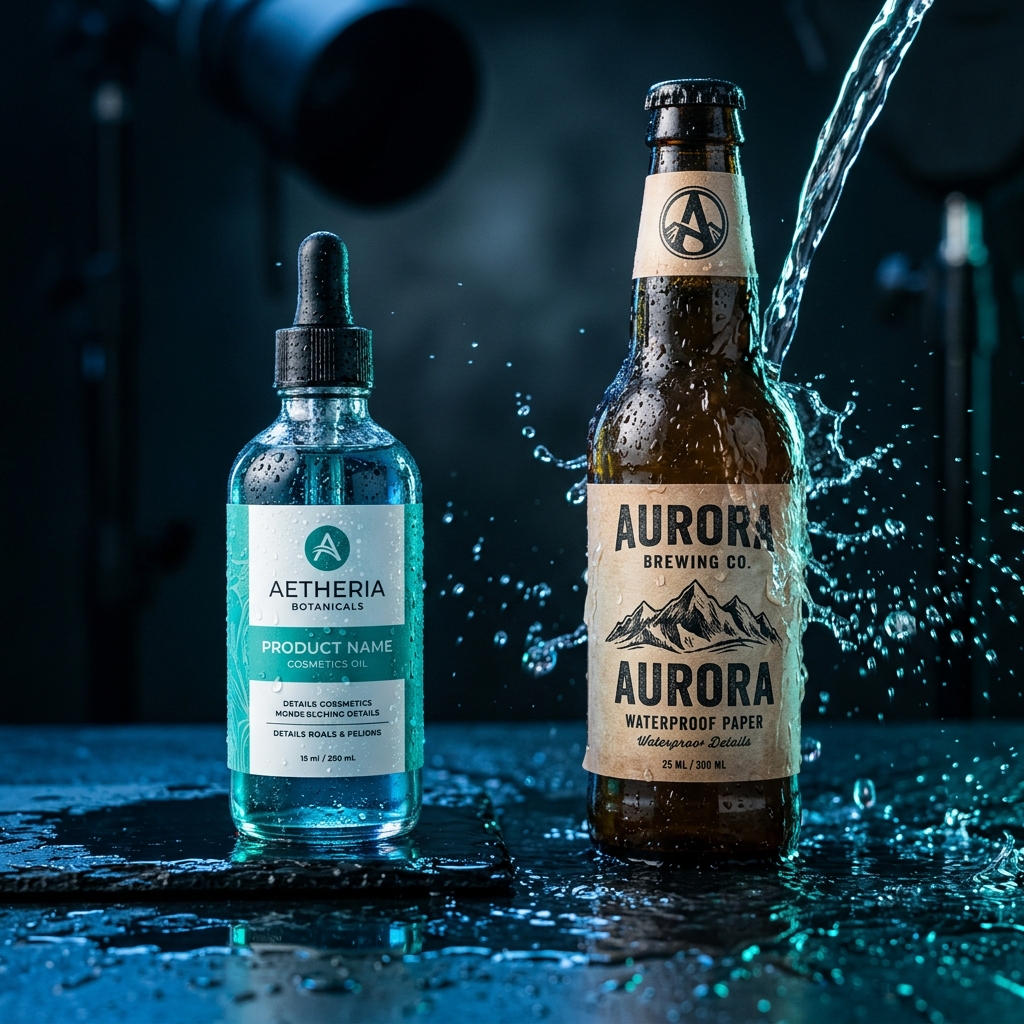
Waterproof labels are adhesive labels made from moisture-resistant materials — vinyl, BOPP (biaxially oriented polypropylene), or polyester — paired with waterproof adhesive and protected by lamination, designed to withstand water exposure, condensation, ice buckets, and even full submersion without peeling, smudging, or deteriorating. They are essential for any product that encounters moisture during use, storage, or shipping. Truly waterproof labels maintain print quality and adhesion after 72+ hours of water exposure, compared to paper labels that begin deteriorating within 30 seconds of contact with water.
Key Takeaway: For genuinely waterproof labels, choose white BOPP or vinyl material with permanent waterproof adhesive and gloss or matte lamination. This combination withstands condensation, ice buckets, refrigeration, and even brief submersion. Cost: $0.08–$0.25/label at 1,000+ units. Paper labels with "water-resistant" coatings are NOT waterproof and will fail in wet conditions.
A truly waterproof label requires three components working together:
| Component | Role | If Missing |
|---|---|---|
| Waterproof facestock (vinyl, BOPP, polyester) | Prevents water from reaching the ink | Ink smudges and bleeds |
| Waterproof adhesive (acrylic or rubber-based) | Maintains bond when wet | Label peels off |
| Waterproof printing (UV-cured or laminated) | Protects ink from moisture | Colors run and fade |
All three must be waterproof. A vinyl label with water-soluble ink, or a waterproof-printed paper label with standard adhesive, will fail in wet conditions.
| Feature | Waterproof | Water-Resistant |
|---|---|---|
| Material | Vinyl, BOPP, polyester | Coated paper, treated paper |
| Ink protection | Laminated or UV-cured | Coating (may degrade) |
| Submersion test | Survives 72+ hours | Fails within 10–30 minutes |
| Condensation | ✅ No effect | ⚠️ May wrinkle edges |
| Ice bucket test | ✅ Passes | ❌ Fails within 1 hour |
| Dishwasher safe | ✅ With proper adhesive | ❌ No |
| Outdoor durability | 3–7 years | 3–6 months |
| Cost | $0.08–$0.30/label | $0.04–$0.12/label |
| Best for | Beverage, bath, outdoor products | Light moisture, indoor use |
Critical distinction: "Water-resistant" paper labels use a coating that repels light splashes but degrades with prolonged moisture exposure. "Waterproof" labels use inherently moisture-proof synthetic materials that do not absorb water at all. If your product will be refrigerated, submerged, or used in a bathroom/kitchen, you need truly waterproof labels.
| Material | Waterproof Level | Durability | Feel | Best For | Cost |
|---|---|---|---|---|---|
| White BOPP | ⭐⭐⭐⭐ | 2–3 years | Smooth, slightly flexible | Food, beverage, cosmetics | $$ |
| Clear BOPP | ⭐⭐⭐⭐ | 2–3 years | Transparent | "No-label" look, glass bottles | $$$ |
| White vinyl | ⭐⭐⭐⭐⭐ | 5–7 years | Smooth, very flexible | Outdoor, industrial, bath | $$ |
| Clear vinyl | ⭐⭐⭐⭐⭐ | 5–7 years | Transparent, flexible | Premium transparent labels | $$$ |
| White polyester (PET) | ⭐⭐⭐⭐⭐ | 7–10 years | Rigid, tear-resistant | Chemical, industrial, GHS | $$$ |
| Metallic polyester | ⭐⭐⭐⭐⭐ | 7–10 years | Silver/gold metallic | Premium spirits, luxury | $$$$ |
| Coated paper | ⭐ (water-resistant only) | 6–12 months | Natural paper texture | Light moisture only | $ |
| Adhesive Type | Wet Adhesion | Removable | Temperature Range | Best For |
|---|---|---|---|---|
| Permanent acrylic | ⭐⭐⭐⭐⭐ | ❌ | -40°F to 300°F | Standard waterproof labels |
| All-temperature acrylic | ⭐⭐⭐⭐⭐ | ❌ | -65°F to 300°F | Frozen food, cold storage |
| Removable acrylic | ⭐⭐⭐ | ✅ | 32°F to 200°F | Temporary labels, reusable bottles |
| Ultra-aggressive | ⭐⭐⭐⭐⭐ | ❌ | -40°F to 350°F | Textured/rough surfaces |
| Rubber-based hot melt | ⭐⭐⭐⭐ | ❌ | 40°F to 250°F | HDPE/PP containers |
| Surface | Recommended Adhesive |
|---|---|
| Glass (smooth) | Standard permanent acrylic |
| PET plastic | Standard permanent acrylic |
| HDPE plastic | High-tack or rubber-based |
| PP plastic | High-tack or rubber-based |
| Metal/aluminum | Standard permanent acrylic |
| Corrugated cardboard | Ultra-aggressive |
| Textured/matte surfaces | Ultra-aggressive |
| Method | Waterproof Ink | Color Quality | Cost at 1K | Cost at 10K | Best For |
|---|---|---|---|---|---|
| Digital UV-cured | ✅ Inherently | ⭐⭐⭐⭐ | $0.15–$0.25 | $0.08–$0.15 | Short runs, variable data |
| Digital + lamination | ✅ With laminate | ⭐⭐⭐⭐ | $0.18–$0.30 | $0.10–$0.18 | General purpose |
| Flexographic | ✅ With UV inks | ⭐⭐⭐ | $0.12–$0.20 | $0.04–$0.08 | High-volume rolls |
| Screen printing | ✅ With UV inks | ⭐⭐⭐ | $0.20–$0.40 | $0.08–$0.15 | Specialty (metallic, thick ink) |
Even with waterproof material and ink, adding lamination provides:
Cost of lamination: Adds $0.01–$0.03 per label — a negligible cost for significant durability improvement.
Requirement: FDA-compliant materials and inks (21 CFR 175.105)
Requirement: FDA-compliant for cosmetics labeling
Requirement: TTB/COLA compliance for alcoholic beverages
Requirement: GHS compliance for chemical products, EPA registration numbers
Requirement: State-specific labeling compliance
Waterproof labels for food and beverage products must comply with:
| Quantity | Per Label | Total | Notes |
|---|---|---|---|
| 250 | $0.28 | $70 | Digital printing |
| 500 | $0.20 | $100 | Digital printing |
| 1,000 | $0.14 | $140 | Digital printing |
| 2,500 | $0.10 | $250 | Flexo or digital |
| 5,000 | $0.07 | $350 | Flexography |
| 10,000 | $0.05 | $500 | Flexography |
| 25,000 | $0.04 | $1,000 | Flexography |
| Label Type | Cost at 1,000 | Cost at 10,000 | Premium |
|---|---|---|---|
| Paper (matte) | $0.06 | $0.02 | Baseline |
| BOPP waterproof | $0.14 | $0.05 | +130% |
| Vinyl waterproof | $0.18 | $0.07 | +200% |
| Polyester waterproof | $0.22 | $0.09 | +267% |
Waterproof labels cost 2–3× more than paper labels, but the cost difference at scale (10,000+) is just $0.03–$0.07 per label — negligible compared to the cost of ruined labels, wasted products, or customer complaints.
| Spec | Requirement |
|---|---|
| Resolution | 300 DPI minimum |
| Color mode | CMYK (+ spot colors for Pantone matching) |
| Bleed | 1/16" (1.5mm) |
| Safe zone | 1/8" (3mm) from trim |
| File format | PDF/X-1a preferred |
| White ink | Separate layer for clear labels |
White polyester (PET) is the most waterproof and durable label material, withstanding full submersion, chemicals, extreme temperatures (-65°F to 300°F), and outdoor UV exposure for 7–10 years. For most food and beverage applications, BOPP (polypropylene) provides excellent waterproofing at a lower cost and is the industry standard.
Yes, you can print waterproof labels on an inkjet or laser printer using waterproof label sheets (vinyl or BOPP). However, home-printed labels typically use non-waterproof inks that will smudge when wet, even on waterproof material. For truly waterproof results, use a laser printer (toner is inherently waterproof) or have labels professionally printed with UV-cured inks and lamination.
Yes, BOPP (biaxially oriented polypropylene) labels are waterproof. The material itself does not absorb water. When combined with waterproof inks (UV-cured or laminated) and permanent acrylic adhesive, BOPP labels withstand refrigeration, condensation, ice buckets, and brief submersion. They are the standard material for beverage, food, and bath product labels.
Vinyl and polyester labels with permanent adhesive and lamination can survive multiple dishwasher cycles. BOPP labels may begin to peel after 5–10 dishwasher cycles due to the combination of high heat, water jets, and detergent. For guaranteed dishwasher durability, use vinyl with ultra-aggressive adhesive and gloss lamination.
All label components (facestock, ink, adhesive, lamination) must be FDA-compliant for food contact under 21 CFR 175.105. Ask your label supplier for an FDA compliance certificate. Cubit provides FDA-compliant waterproof labels for all food and beverage applications — compliance documentation is included with every order.
Don't let moisture ruin your branding. Waterproof labels protect your brand image from condensation, refrigeration, showers, and outdoor exposure — starting at $0.04 per label at scale.
Published by Cubit Packaging Editorial Team. Last updated June 2026.
Design your packaging free in 60s
Try the free AI packaging design toolNeed Custom Packaging?
Get a free quote with pricing, MOQs, and turnaround time for your custom packaging project.