
Packaging Guides
The Ultimate Guide to Custom Metallic Labels for Growing Brands
Cubit Team
July 8, 2026
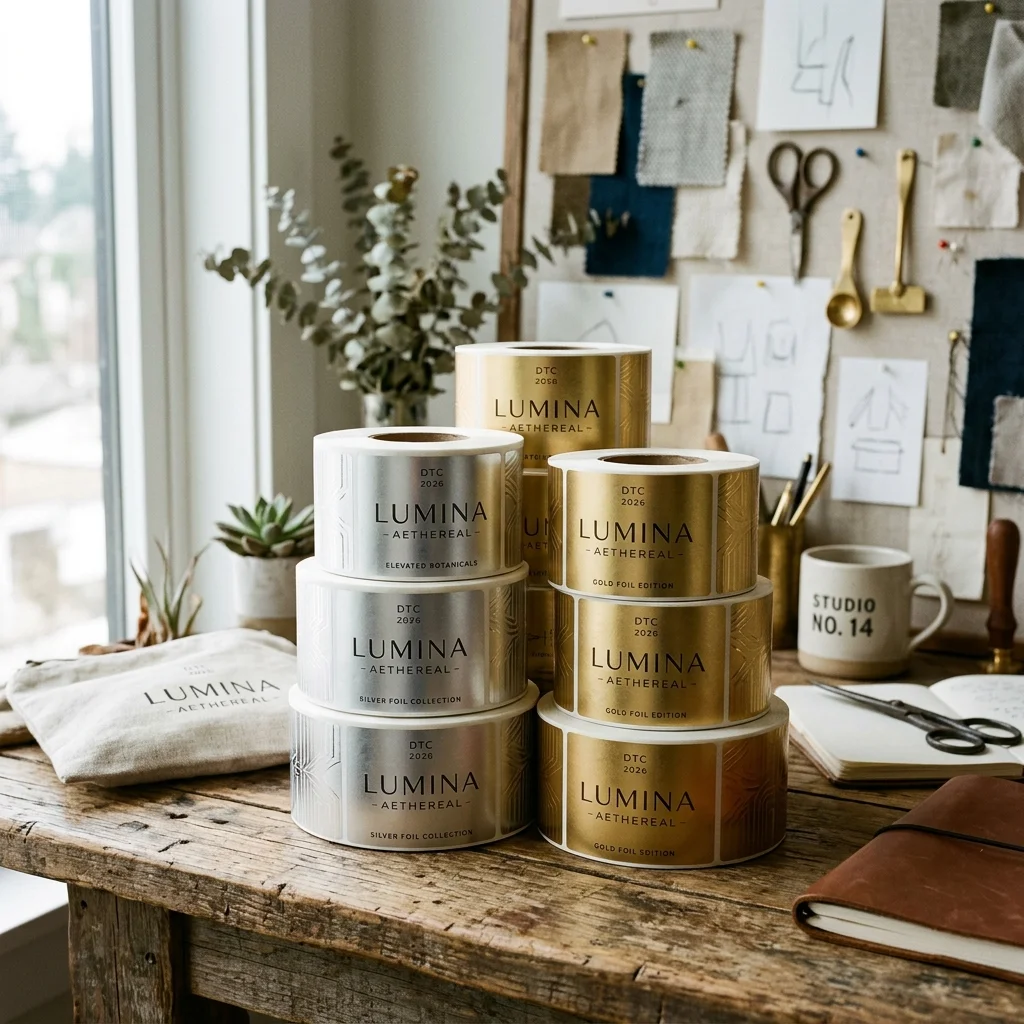
Custom metallic labels are premium packaging stickers designed with a reflective metal-like finish to catch light and improve product shelf presence. These labels use materials like metallized polypropylene, aluminum foil, or metallic hot stamping foil to create a mirror-like or brushed metal look that elevates product presentation. At production volumes of 5,000 units, custom metallic labels typically cost between $0.12 and $0.35 per label, depending on the chosen material, printing method, and finish options. By choosing the right combination of substrates and protective laminates, growing brands can achieve a high-end look that is both durable and cost-effective.
Adding a metallic sheen to your packaging is one of the most reliable ways to capture customer attention in a crowded retail environment. According to retail placement studies, products with reflective elements on their packaging are noticed up to 40% faster than those with matte-only designs. This visual pull is especially important for brands in competitive spaces like cosmetics, specialty foods, craft beverages, and health supplements.
But navigating the technical side of metallic label printing can be tricky. You need to understand the differences between metallized film, hot foil stamping, and cold foil printing to get the look you want without overspending. This guide breaks down the materials, costs, and design considerations you need to know to create the perfect metallic label for your product line.
In this guide:
When planning your custom metallic labels, the first decision is choosing the base material. The material you select affects the label's durability, flexibility, and overall look. The most common substrates are metallized paper, metallized polypropylene film, and real aluminum foil laminate.
Metallized polypropylene (BOPP) is the workhorse of the modern packaging industry. It is a plastic film that has been coated with a microscopic layer of aluminum. This material offers excellent water resistance, oil resistance, and tear strength, making it ideal for bath and body products, beverages, and items that undergo refrigeration. BOPP labels conform well to curved surfaces without wrinkling or lifting at the edges.
For products that require a more classic, paper-like texture, metallized paper is a great alternative. It offers a slightly softer shine compared to BOPP and works beautifully for wine bottles, gourmet food jars, and dry goods packaging. While it is less resistant to moisture, it tears easily when needed, which can be useful for tamper-evident seals.
Here is a quick look at how these common metallic substrates compare:
| Material | Best For | Moisture Resistance | Flexibility | Relative Cost |
|---|---|---|---|---|
| Silver BOPP (Polypropylene) | Cosmetics, craft beer, household items | Excellent (100% waterproof) | High | Moderate |
| Gold/Silver Paper | Wine bottles, dry gourmet foods, candles | Low (not recommended for wet areas) | Medium | Lower |
| Real Foil Laminate | Luxury spirits, high-end cosmetics, health products | High | Low (can crease easily) | Higher |
| Holographic BOPP | Trendy health drinks, youth-oriented products | Excellent | High | Premium |
There are three main ways to get a metallic finish on your label: printing on a pre-metallized material, using hot foil stamping, or using cold foil printing. Each method has a different cost structure and visual impact.
Using a pre-metallized material like silver BOPP is often the most cost-effective approach for growing brands. Instead of applying metal to specific areas, we print your design on a silver sheet. To make certain parts of the label look normal (non-metallic), we lay down a layer of opaque white ink first, then print CMYK colors on top of it. The areas left without white ink will show through as shiny, colored metallic. This technique allows for unlimited metallic colors on a single label without the need for expensive custom dies.
Based on the packaging orders we process at Cubit, approximately 74% of brands choosing metallic elements select silver BOPP with white ink backing. It offers the best balance of visual appeal, durability, and low setup costs for runs under 10,000 units.
Hot foil stamping uses a heated metal die to press a thin sheet of metallic foil directly onto the label substrate. This process creates a highly reflective, raised effect with crisp edges. It is a premium technique that looks incredible, but it carries higher setup costs because of the custom dies required. It is best suited for high-volume orders where the die cost can be spread over tens of thousands of units.
Cold foil printing is an inline process that uses a UV-curable adhesive to bond metallic foil to the label material as it runs through the printing press. It is faster than hot stamping and does not require expensive metal dies, making it a viable option for medium-run orders on flexographic presses. However, it does not offer the same deep dimensional stamp or extreme high-gloss look as traditional hot stamping.
Designing for metallic labels requires a different approach than designing for standard white paper or clear film. The biggest mistake brands make is using too much metallic space, which can make the label hard to read and visually overwhelming.
To make your brand name and product details stand out, you need contrast. Use opaque white ink under your text and small barcode graphics to ensure high readability. The white ink blocks the metallic background, creating a solid, highly legible surface. If you print text directly onto the metallic substrate without a white underprint, the reflective background can make the words disappear under certain lighting conditions.
Another highly effective technique is combining matte and glossy finishes. For example, you can apply a matte laminate over the entire label, then use a spot gloss varnish over the metallic elements. This mutes the background while making the metallic accents pop, creating an expensive, premium look. When designing your artwork files, remember to create a separate spot color layer labeled "White Ink" or "Foil" to show the printer exactly where the metallic effects should be preserved or blocked.
To create a successful file for metallic printing, follow these steps:
To help you set up your files correctly, you can visit our custom label design resource page for templates and file preparation guides.
Metallic labels are often used on products that face harsh environments. Shower gels, craft beers, kitchen oils, and hand creams are constantly exposed to water, friction, and oils. Without the right protection, the thin metallic layer can scratch off, turn grey, or oxidize over time.
To prevent this, you should always apply a protective laminate or varnish over the printed label. A clear polypropylene laminate provides a physical barrier that protects the ink and metallic surface from scuffs and moisture. This is especially important for squeeze bottles, where the label must flex repeatedly without cracking.
For products that do not face moisture or heavy handling, a liquid UV varnish can be used instead. This is a thin protective coating applied on the press and cured under UV lights. It is thinner than a film laminate and costs slightly less, but it offers lower scratch resistance. For premium items like wine bottles or luxury candles, a matte laminate is often preferred because it diffuses light beautifully while keeping the metallic details crisp.
All of our materials meet industry standards, including those certified by the Forest Stewardship Council (FSC) for sustainably sourced liners, and comply with FDA regulations for indirect food contact. This ensures your labels are safe for use on food jars, supplement bottles, and cosmetics.
Understanding how custom metallic labels are priced will help you plan your packaging budget and avoid unexpected fees. The total cost of your order is shaped by the material choice, label size, order quantity, and tooling requirements.
For brands looking to minimize upfront costs, digital printing on silver BOPP with white ink backing is almost always the best choice. This method bypasses plate charges and die-cutting fees, which can easily add $150 to $300 to a traditional flexographic printing order. Digital printing also allows you to print multiple product variations (like different scents or flavors) in a single run, provided the label size and shape remain the same.
To give you a clear idea of what to expect, let us look at some typical pricing scenarios for a standard 3-inch by 3-inch rectangular label on silver BOPP with a matte laminate finish:
As you can see, unit costs drop sharply as your volume increases. Moving from 1,000 to 5,000 units slashes your cost per label by over 50%. If you are ready to get pricing for your specific project dimensions and quantities, you can use our simple tool to get a free quote for your packaging project.
We always recommend starting with a small run if you are launching a new product line. This lets you test the label fit and adhesion on your physical containers before investing in tens of thousands of units. Once your sales volume stabilizes, you can scale up to larger runs to achieve those highly competitive sub-five-cent unit costs.
Metallic paper uses a thin metal layer on a paper backing, making it ideal for dry environments like wine bottles or candles. Metallic film (BOPP) uses a plastic base, making it 100% waterproof and highly resistant to oils and tearing. This makes film the better choice for cosmetics and beverages.
Yes, we can print full-color CMYK designs directly onto custom metallic labels. By applying a semi-transparent layer of ink over the metallic background, we can create custom metallic shades of any color. We use white ink backings to keep specific elements matte and solid.
Without protection, metallic inks and foils can scratch during shipping. To prevent this, we apply a clear protective laminate or UV varnish over every metallic label we print. This keeps your labels looking flawless even after transiting in cardboard boxes.
At Cubit Packaging, our minimum order quantity for digitally printed metallic labels is 250 units per design. This low minimum makes it easy for growing brands to test new products or run seasonal designs without committing to thousands of dollars in inventory.
Yes, but you must choose a flexible film substrate like silver BOPP. Standard foil laminates will crease and wrinkle when the bottle is squeezed. Combining silver BOPP with a flexible gloss or matte laminate ensures the label flexes naturally with the container without peeling.
Choosing the right label material and printing process can seem complicated, but it does not have to be. By matching your product's environment with the correct substrate and laminate, you can create a durable, striking package that looks premium on the shelf. If you are planning your next product run and want to see how metallic elements can work for your brand, get a free quote for your packaging project today and our team will help you find the best solution for your budget.
Get started on your custom branding with custom Metallic Labels directly from our online marketplace, or build a personalized quote at our RFQ Procurement portal.
Design your packaging free in 60s
Try the free AI packaging design toolNeed Custom Packaging?
Get a free quote with pricing, MOQs, and turnaround time for your custom packaging project.