
Packaging Guides
The Ultimate Guide to Custom Logo Stickers for Growing Brands
Cubit Team
July 8, 2026
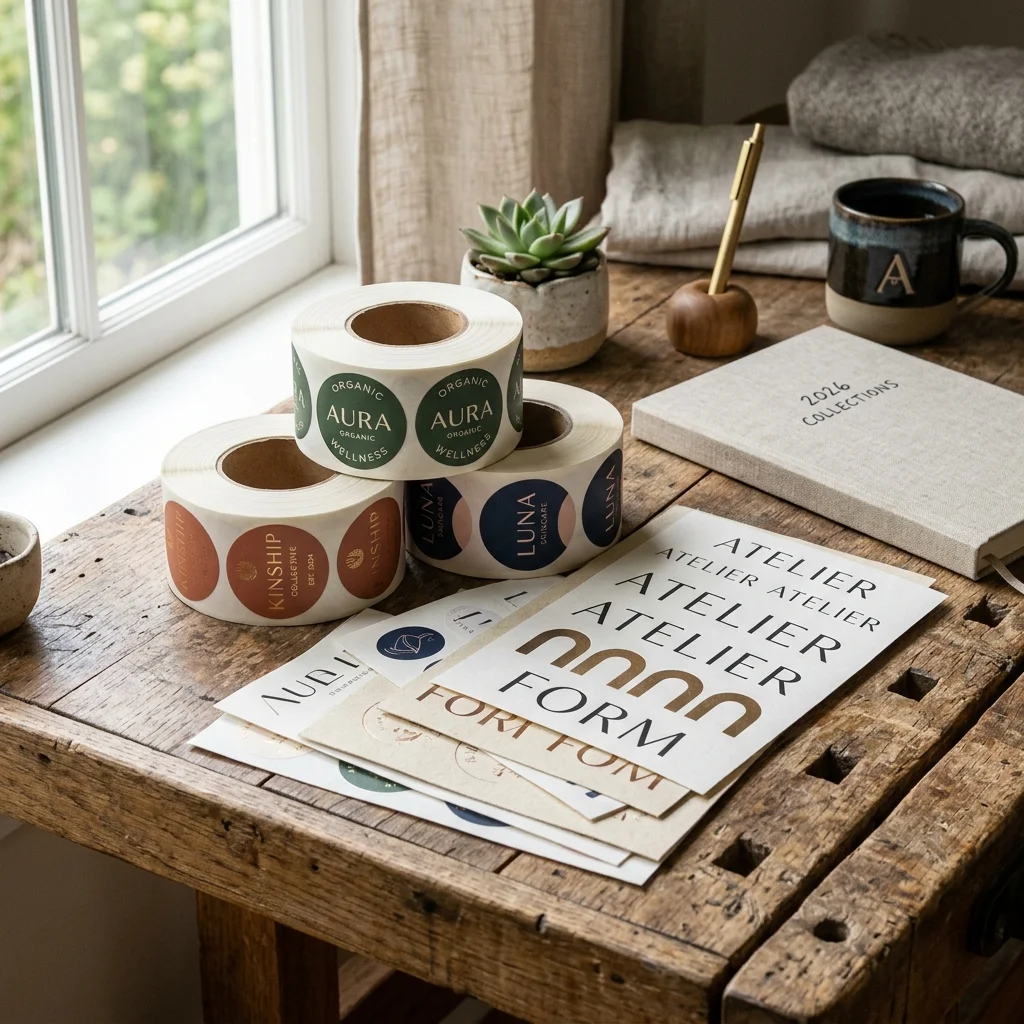
Custom logo stickers are adhesive-backed brand assets used by businesses to seal boxes, label products, and secure tissue paper during the unboxing process. These versatile packaging elements serve as a highly cost-effective marketing tool, allowing growing businesses to add professional branding to generic shipping materials without the high minimum order volumes of custom-printed boxes. When applied correctly, a high-quality logo sticker reinforces brand recognition, secures packaging, and creates a polished, cohesive presentation for e-commerce deliveries and retail products.
For businesses operating on tight margins, custom logo stickers bridge the gap between plain brown mailers and fully customized packaging. Instead of spending thousands of dollars on custom-printed corrugated boxes before establishing a steady order volume, brands can purchase bulk rolls of stickers for pennies per unit. This simple addition transforms a standard shipping box into a branded experience, helping to build customer trust from the moment the package arrives on the doorstep.
But choosing the right sticker is not just about uploading a logo and hitting print. The success of your packaging relies on selecting the appropriate material, finish, and adhesive for your specific application. A sticker that peels off in transit or smudges when wet can make your brand look unprofessional. This guide covers everything you need to know about selecting, designing, and ordering stickers that protect your products and showcase your brand.
In this guide:
First impressions are critical in e-commerce, where the physical package is the first tangible touchpoint between your brand and your customer. According to industry surveys, 52% of online consumers say they are likely to make repeat purchases from a merchant that delivers orders in premium packaging. While custom-printed boxes are the gold standard, they require significant upfront capital and storage space. Custom logo stickers offer an affordable, flexible alternative that delivers similar branding benefits.
We see many emerging businesses struggle with cash flow when scaling their physical operations. Ordering 1,000 custom-printed shipping boxes can easily cost $3,000 to $5,000, not including the freight shipping to get those empty boxes to your warehouse. In contrast, 1,000 high-quality roll labels typically cost between $150 and $300, depending on the size and material. This allows you to use standard, off-the-shelf shipping boxes while still presenting a professional, branded exterior to your customers.
Beyond cost savings, stickers provide incredible operational flexibility. If your brand changes its color palette, updates its social media handles, or launches a seasonal promotion, you can easily update your stickers without wasting expensive box inventory. You can use the same generic boxes for your entire product catalog and use different stickers to differentiate between product lines, scent profiles, or limited-edition collaborations.
Stickers also serve a structural purpose. A well-placed sticker acts as a security seal on mailer boxes, assuring customers that their package has not been tampered with during shipping. When used inside the box, a small sticker secures the folds of custom tissue paper, keeping the contents neatly arranged and building anticipation during the unboxing process.
The material you choose for your custom logo stickers dictates how they look, how they feel, and how well they withstand the rigors of shipping. The primary choice is between paper-based stocks and synthetic plastic-based films. Paper is excellent for dry, indoor applications and offers a tactile, organic feel. Plastic films, such as vinyl or biaxially oriented polypropylene (BOPP), offer superior durability and resistance to moisture, oils, and tearing.
To help you make the right choice for your specific product line, we have outlined the most common packaging sticker materials below.
| Material Type | Best Use Case | Key Benefit | Moisture Resistance | Price Point |
|---|---|---|---|---|
| White Kraft Paper | Eco-friendly packaging, dry goods | Rustic, organic aesthetic | Low | Budget-friendly |
| White Gloss BOPP | Cosmetics, bath & body, food items | Oil and water-resistant | High | Moderate |
| Matte Vinyl | Outer shipping boxes, outdoor gear | Scuff-resistant, premium feel | High | Premium |
| Kraft Paper | Natural product packaging, subscription boxes | Earthy texture, recycled look | Low | Budget-friendly |
| Clear BOPP | Glass jars, window decals, sleek boxes | "No-label" look, transparent | High | Moderate |
| Silver Metallic | Luxury goods, limited editions | High-end, eye-catching shine | High | Premium |
For outer shipping boxes, we generally recommend matte vinyl or a heavy-duty paper with a protective varnish. Shipping carriers route packages through automated sorting facilities where boxes rub against conveyor belts and other parcels. A non-laminated paper sticker can easily scuff or tear during this process, leaving your logo looking worn out by the time it reaches the customer. A matte or gloss laminate layer protects the printed ink from friction and moisture.
If you are labeling products that will be stored in a bathroom or refrigerator, such as skincare serums or craft beverages, White BOPP is the industry standard. This material does not absorb liquids, meaning your brand assets will remain fully legible and securely attached even when exposed to water, condensation, or oils.
An beautiful sticker is useless if it falls off the box before it arrives at your customer's door. Adhesives are formulated for specific surfaces and environmental conditions. When ordering custom logo stickers, you must match the adhesive type to the substrate you are sticking it to.
Most packaging stickers use one of three adhesive categories:
Based on the packaging orders we process at Cubit, approximately 85% of brands packaging physical goods utilize permanent acrylic adhesives. This formulation ensures the label remains flat against recycled cardboard fibers, which naturally resist adhesion more than virgin wood papers.
Recycled cardboard mailers present a unique challenge for adhesives. The short fibers in recycled paper create a slightly textured, dusty surface that can prevent standard adhesives from making full contact. If you use high-content recycled boxes, specify that you need a high-tack permanent adhesive to ensure a secure bond.
Designing a sticker for print is different than designing graphics for a website. Digital screens display colors using light (RGB), while commercial printing presses use ink (CMYK or Pantone Matching System). To avoid dull, muddy, or unexpected colors on your finished stickers, always design your artwork files in the CMYK color space from the very beginning.
Another common issue we see is low-resolution artwork. For crisp, professional results, your design files must have a minimum resolution of 300 dots per inch (DPI) at the final print size. If you scale up a small web logo, the printed sticker will look pixelated and blurry. Whenever possible, submit your designs as vector files (such as PDF, EPS, or AI formats). Vector files use mathematical formulas instead of pixels, ensuring your logo lines up perfectly and prints razor-sharp at any size.
When preparing your artwork, you must also account for bleed and safe zones. The bleed zone is an extra 0.125 inches of background color or pattern that extends past the final cut line of the sticker. This tiny buffer ensures that if the cutting blade shifts slightly during production, you won't end up with an awkward white sliver of paper along the edge of your finished stickers. Keep all essential text and logo elements within the safe zone, which is at least 0.125 inches inside the cut line.
How your stickers are cut affects how quickly your fulfillment team can apply them to your packaging. The three main options include:
As your business grows, your packaging expenses should scale efficiently. The unit cost of custom logo stickers drops dramatically as order volumes increase. While ordering 100 stickers might cost $1.50 per unit, ordering 5,000 of the exact same sticker can bring that cost down to less than $0.05 per unit on a roll.
If you want to keep costs low during the early stages of your brand, consider ordering a single, versatile sticker design that can be used across multiple packaging touchpoints. A simple, well-designed 2-inch circular sticker with your primary logo can seal a shipping box, secure custom tissue paper, label a paper shopping bag, and be slipped inside the box as a free gift for the customer.
Another practical way to save money is to use standardized shapes. Custom die-cut shapes require unique digital cutting paths or physical dies, which can increase setup times and costs. Selecting a standard circle, square, or rectangle allows manufacturers to use existing tooling, passing those savings directly on to you.
Finally, think about your application workflow. If your team is hand-applying stickers to hundreds of boxes a day, the time spent peeling individual stickers can add up to significant labor costs. Opting for rolls rather than individual die-cut pieces saves seconds per box, which translates to hours of saved labor over the course of a busy shipping month.
For standard shipping boxes and mailers, a circular sticker with a diameter of 2 to 3 inches is generally ideal. This size is large enough to showcase your custom logo clearly from a distance while providing enough surface area to securely seal the box flaps.
We do not recommend standard paper stickers for products exposed to moisture, oils, or frequent handling. For bath, beauty, beverage, or food products, use water-resistant materials like White BOPP or vinyl to prevent smudging, peeling, and tearing over time.
Die-cut stickers are cut through both the sticker and the backing paper to the exact shape of your design. Kiss-cut stickers are cut only through the top vinyl layer, leaving the backing intact, which makes them much easier and faster to peel.
Create your artwork in the CMYK color space with a resolution of at least 300 DPI. Include a 0.125-inch bleed margin around your design, and keep all important text and logo elements within the safe zone to avoid being cut off.
Yes, custom stickers are significantly more affordable than custom-printed boxes, especially for low to medium volumes. They allow you to brand plain boxes for pennies per unit, avoiding high manufacturing minimums and expensive freight shipping costs for empty boxes.
Adding custom logo stickers to your packaging setup is one of the easiest ways to improve your customer experience without stretching your budget. By choosing the right materials, designing for commercial printing, and organizing your fulfillment workflow, you can create a memorable unboxing experience that keeps customers coming back.
When you are ready to explore your options or need help matching the right adhesive to your boxes, our team is here to help. You can easily upload your logo, select your materials, and get a free quote for your packaging project directly through our platform.
Get started on your custom branding with custom Logo Stickers directly from our online marketplace, or build a personalized quote at our RFQ Procurement portal.
Design your packaging free in 60s
Try the free AI packaging design toolNeed Custom Packaging?
Get a free quote with pricing, MOQs, and turnaround time for your custom packaging project.