
Brand Protection
Tamper Evident Packaging: Types, Regulations & Selection Guide
Cubit Packaging Editorial Team
June 9, 2026
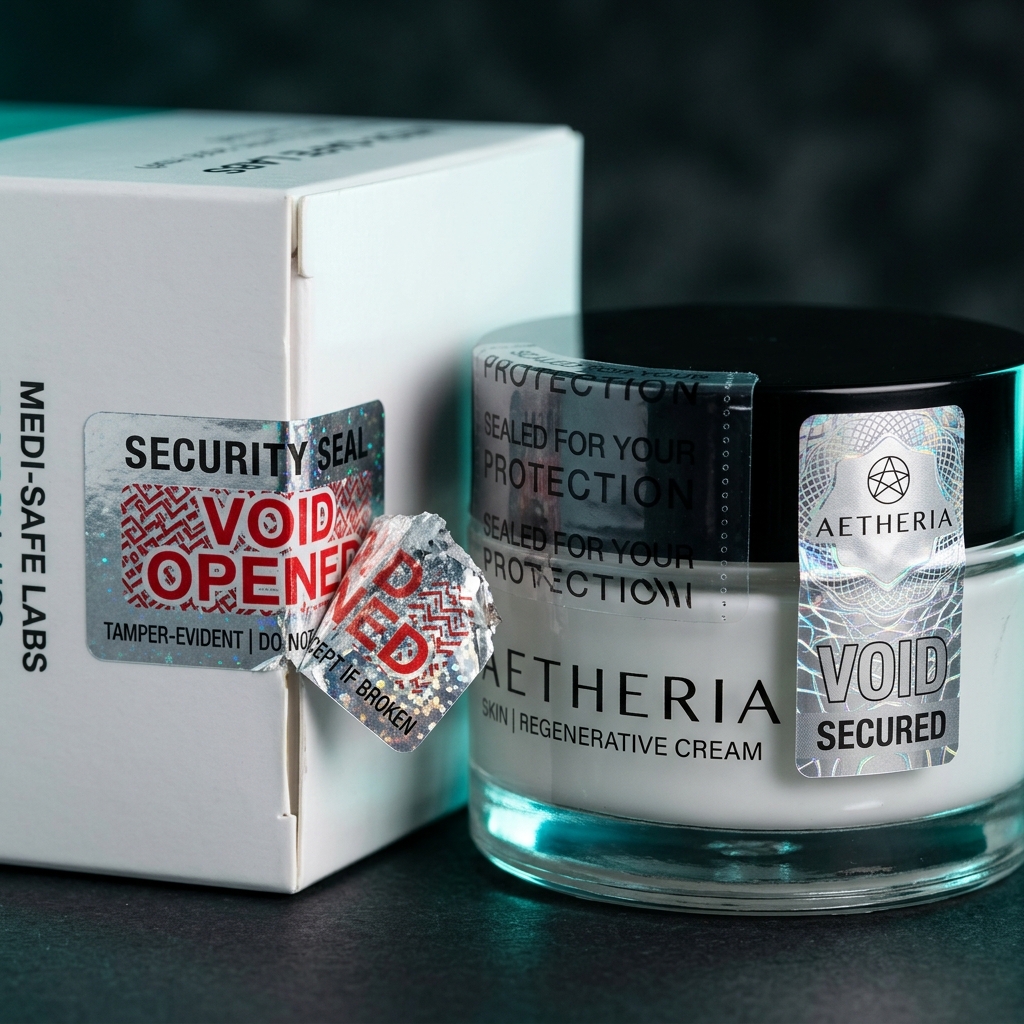
Tamper evident packaging is any packaging system that provides visible evidence of unauthorized opening, removal, or tampering. Unlike tamper-resistant packaging (which makes opening difficult), tamper-evident packaging makes tampering detectable — giving consumers clear visual proof that a product has not been compromised since leaving the manufacturer. The FDA requires tamper-evident packaging on all over-the-counter (OTC) drugs, cosmetics, and contact lens solutions under 21 CFR 211.132, while the EU mandates it on all prescription pharmaceuticals under the Falsified Medicines Directive (FMD).
Key Takeaway: Tamper evident packaging costs $0.01–$0.15 per unit depending on the technology. It is legally required for pharmaceuticals and cosmetics, and strongly recommended for food, supplements, and any product where consumer safety is at stake. Shrink bands and induction seals are the most cost-effective options for most products.
Tamper evident packaging is designed so that any attempt to open, remove, or tamper with the packaging leaves irreversible visible evidence that the product has been accessed. The key principle is that tampering cannot be concealed — once the evidence is triggered, it cannot be restored to its original state.
Examples you encounter daily include:
These features serve three critical functions:
These terms are often confused but have distinct meanings:
| Term | Definition | Example | Regulatory Status |
|---|---|---|---|
| Tamper Evident | Shows visible signs AFTER tampering occurs | Shrink band, VOID label, breakable seal | FDA-regulated term |
| Tamper Resistant | Makes tampering DIFFICULT but not impossible | Child-resistant caps, blister packs | CPSC-regulated term |
| Tamper Proof | Claims tampering is IMPOSSIBLE | ❌ This term is misleading and not used in regulations | Not recognized by FDA |
Important: The FDA and EU regulatory bodies do not use the term "tamper proof" because no packaging can be made truly impossible to tamper with. The legally and technically correct term is tamper evident — packaging that reveals evidence of tampering.
A heat-shrunk plastic sleeve applied over the cap-to-body junction. Must be torn or cut to open the product.
Aluminum foil liner bonded to the container opening using electromagnetic induction heating. Must be peeled or punctured to access the product.
Caps with a perforated lower ring that detaches from the main cap upon first opening. The separated ring remains on the container neck.
Adhesive labels that reveal a hidden "VOID" or "OPENED" message when removal is attempted. The message is permanently visible on both the label and the surface.
Individual product units sealed in a pre-formed plastic cavity backed by foil or paper. Accessing the product requires pushing through or peeling the backing.
A narrow tape or perforated strip embedded in the packaging that must be torn to open. Common on cigarette packs, food packaging, and shipping containers.
A button or indicator that changes state when the vacuum seal is broken. The most common example is the pop-up button on jar lids.
Security labels combining holographic optical effects with tamper-evident adhesive. Attempting removal destroys both the hologram and reveals a VOID pattern.
The FDA requires tamper-evident packaging for:
Requirements:
All prescription pharmaceuticals sold in the EU must have:
While FSMA does not specifically mandate tamper-evident packaging for all foods, it requires:
| Industry | Requirement Level | Recommended Features | Regulation |
|---|---|---|---|
| OTC Pharmaceuticals | ✅ Mandatory | Shrink band + induction seal | FDA 21 CFR 211.132 |
| Prescription Drugs | ✅ Mandatory | ATD + serialization | EU FMD, DSCSA |
| Dietary Supplements | ✅ Mandatory | Shrink band or induction seal | FDA DSHEA |
| Cosmetics | ⚠️ Partially mandatory | Shrink band or seal | FDA (specific products) |
| Food & Beverage | ⚠️ Recommended | Vacuum seal, shrink band | FSMA guidelines |
| Cannabis | ✅ Mandatory (varies) | Child-resistant + tamper evident | State regulations |
| Luxury Goods | 🟢 Voluntary | Holographic + VOID labels | Brand protection |
| Electronics | 🟢 Voluntary | VOID labels, warranty seals | Warranty terms |
| Feature Type | Cost/Unit | Equipment Needed | Application Speed | Security Level |
|---|---|---|---|---|
| Shrink band | $0.01–$0.03 | Heat tunnel ($3K–$10K) | 200+ units/min | ⭐⭐⭐ |
| Induction seal | $0.02–$0.05 | Induction sealer ($2K–$15K) | 100+ units/min | ⭐⭐⭐⭐ |
| Breakable cap | $0.02–$0.06 | None (integrated) | N/A | ⭐⭐⭐⭐ |
| VOID label | $0.03–$0.10 | Manual or auto applicator | 50–200 units/min | ⭐⭐⭐ |
| Blister pack | $0.03–$0.08 | Blister machine ($20K+) | 100+ units/min | ⭐⭐⭐⭐⭐ |
| Tear tape | $0.01–$0.03 | Integrated into wrapping | 200+ units/min | ⭐⭐ |
| Vacuum button | $0.01–$0.04 | Vacuum sealer | Process-dependent | ⭐⭐⭐⭐ |
| Holographic seal | $0.05–$0.15 | Manual or auto applicator | 50–150 units/min | ⭐⭐⭐⭐⭐ |
| If your product is... | Use... | Why |
|---|---|---|
| Liquid in a bottle | Induction seal + breakable cap | Leak prevention + tamper evidence |
| Tablets/capsules | Blister pack or induction seal | Individual dose protection |
| A jar (food/cosmetics) | Shrink band + vacuum button | Low cost + dual evidence |
| A box (electronics/luxury) | VOID label + holographic seal | Visual deterrent + brand protection |
| Flexible pouch | Tear notch + heat seal | Integrated into existing packaging |
| Premium/luxury product | Holographic tamper-evident label | Anti-counterfeit + premium appearance |
The most advanced packaging strategies combine physical tamper evidence with digital verification:
Holographic tamper-evident seal (physical barrier) + NFC tag underneath (digital verification)
Shrink band (physical barrier) + QR code on band (digital tracking)
VOID label (physical evidence) + QR on the label (digital layer)
Cubit Secure integrates these physical + digital combinations into standard packaging orders, so you get tamper evidence, authentication, and consumer engagement in a single solution.
Tamper evident packaging reveals visible evidence that tampering has occurred (e.g., a broken seal or VOID pattern). The term "tamper proof" implies that tampering is impossible, which is misleading — no packaging is truly impossible to tamper with. The FDA and EU regulators do not use the term "tamper proof" and instead require "tamper evident" features.
Yes, for certain product categories. The FDA requires tamper-evident packaging for all OTC drugs, certain cosmetics, contact lens solutions, and dietary supplements under 21 CFR 211.132. The EU requires it for all prescription pharmaceuticals under the Falsified Medicines Directive. Food and general consumer goods are not currently required to have tamper-evident features in the US, though many adopt them voluntarily.
Tamper evident features range from $0.01/unit (shrink bands and tear tapes) to $0.15/unit (holographic security seals). For most consumer products, a shrink band ($0.01–$0.03) or induction seal ($0.02–$0.05) provides adequate tamper evidence at minimal cost.
By design, no. Tamper evident features are specifically engineered to be irreversible — once triggered, they cannot be restored to their original state. However, no system is 100% immune to sophisticated attack. The goal is to make tampering obvious to the average consumer, not to prevent it entirely.
For e-commerce/DTC products, tamper-evident shipping seals (VOID labels on box seams), shrink-wrapped inner products, and security tape on outer boxes provide layered protection during transit. QR code verification adds a digital layer that lets the customer confirm authenticity upon delivery.
Tamper evident packaging is not optional — it is a regulatory requirement for many product categories and a best practice for all. Starting at $0.01 per unit, there is no excuse for shipping products without visible tamper protection.
Explore Cubit Secure for integrated tamper-evident packaging, or browse packaging options to add security features to your next order.
Published by Cubit Packaging Editorial Team. Last updated June 2026.
Design your packaging free in 60s
Try the free AI packaging design toolNeed Custom Packaging?
Get a free quote with pricing, MOQs, and turnaround time for your custom packaging project.