
Packaging Guides
Custom Pillow Boxes: The Complete Material, Printing & Sizing Guide (2026)
Cubit Team
June 10, 2026
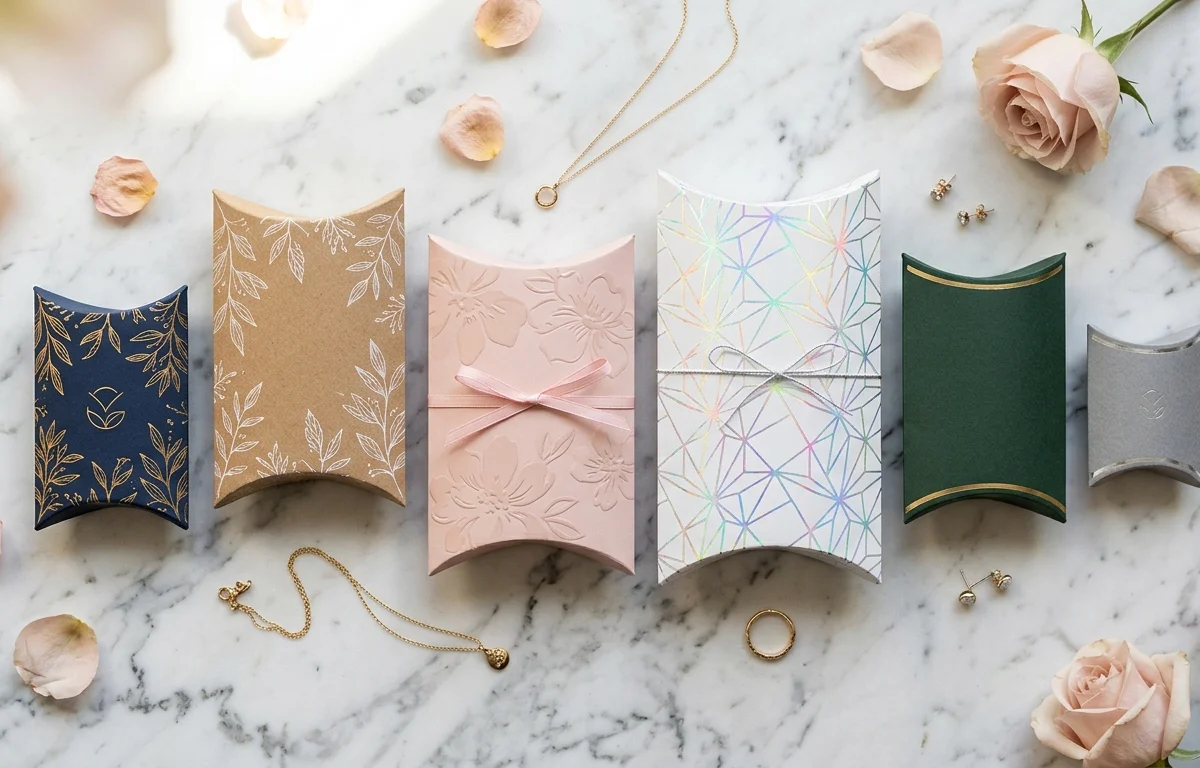
Pillow boxes solve a problem most packaging creates: they look expensive but cost a fraction of rigid boxes. The curved silhouette, glueless assembly, and flat-shipping construction make them one of the most efficient premium packaging formats available in 2026.
According to Cubit Packaging's production data, pillow boxes account for roughly 18%% of all gift packaging orders — second only to custom gift boxes in popularity. The reason is straightforward: pillow boxes deliver a luxury presentation at folding carton pricing, starting from $0.35 per unit at a 500-piece MOQ.
This guide breaks down everything from material selection to finishing options, with specific pricing, lead times, and industry applications from Cubit's custom pillow box program.
In this guide:
A pillow box is a curved, die-cut folding carton with interlocking tuck flaps on both ends. Unlike rectangular packaging, the die-cut template creates two convex faces that curve outward when assembled, producing the distinctive 'pillow' or 'cushion' silhouette.
The key structural advantage: no glue, no tape, no heat sealing. Each box ships completely flat at 2mm thickness and pops into its finished shape with a single fold in under 2 seconds. That flat-shipping profile cuts freight costs by up to 85%% compared to pre-assembled rigid packaging, according to Cubit's logistics team.
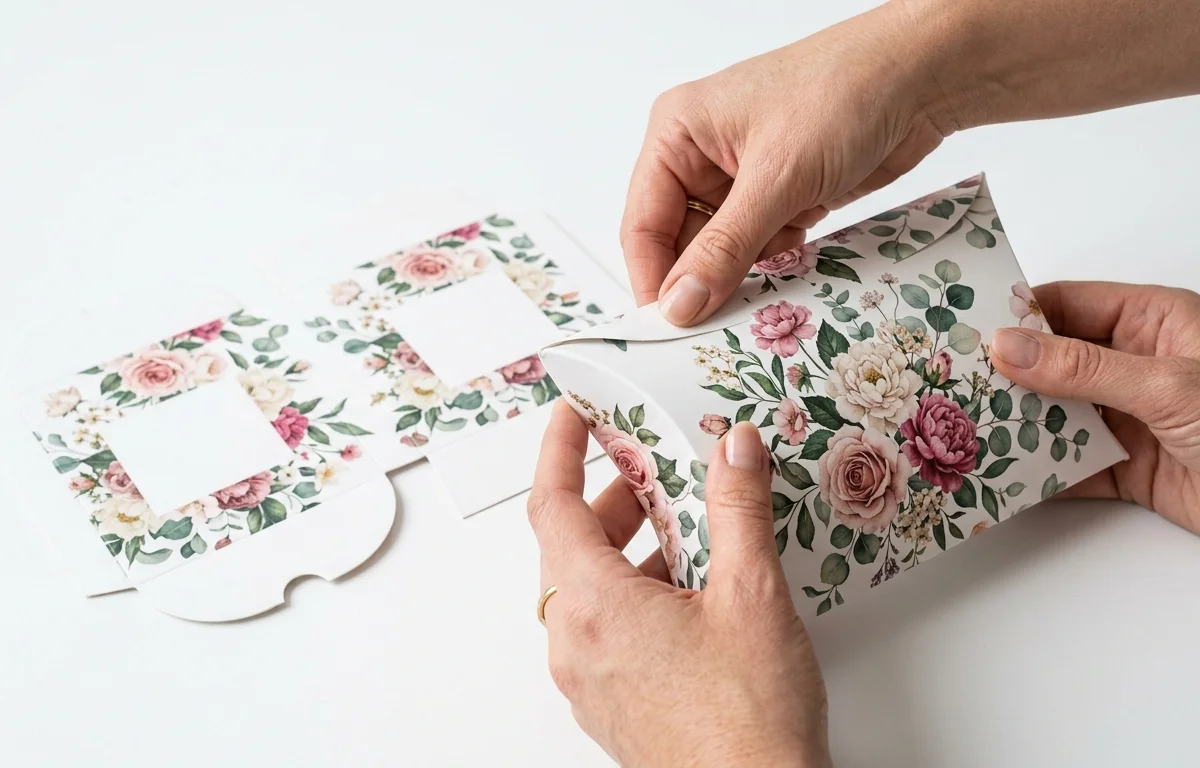 Pillow box assembly - flat die-cut template folding into curved pillow shape
The curved interior isn't just aesthetic — it functions as a natural cradle. Earrings, pendants, chocolates, and sample sachets all sit snugly inside the curve without foam inserts or void fill. This eliminates the cost and waste of secondary packaging materials.
Pillow box construction starts with the paperboard substrate. The material you choose determines printability, structural rigidity, texture, and the overall brand impression. Here are the eight most common options:
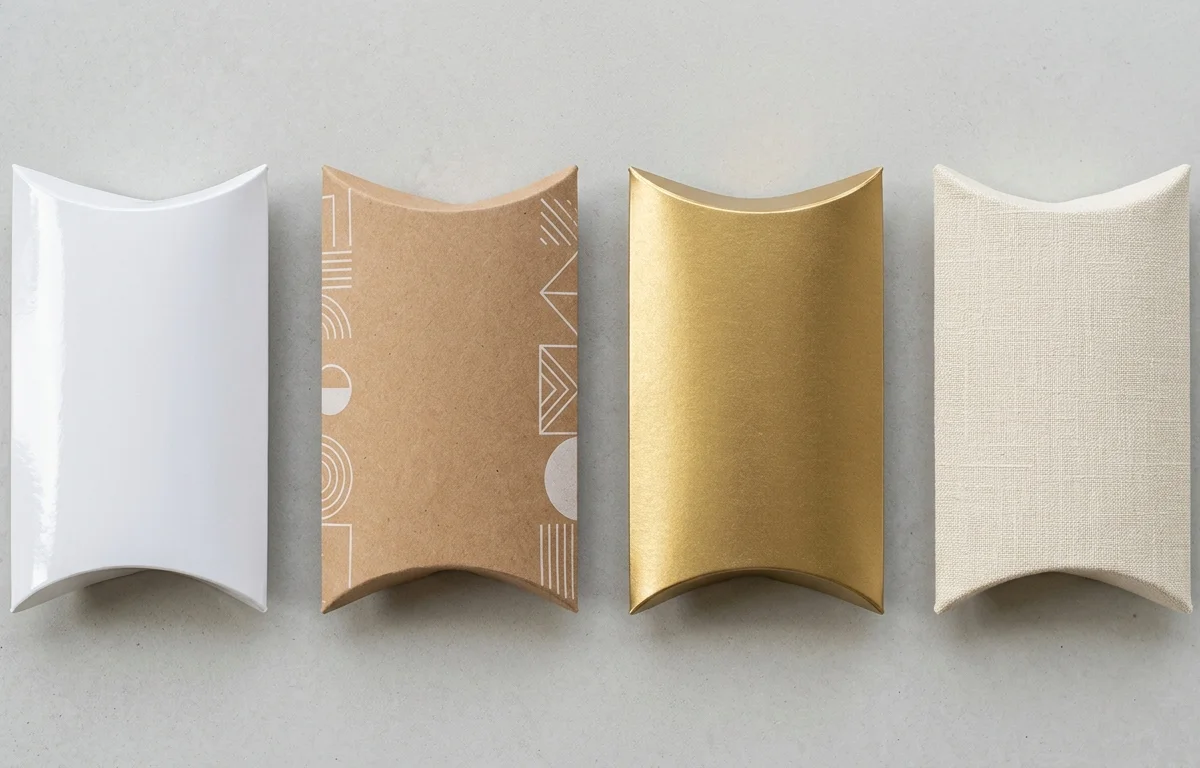 Four pillow box material types side by side - SBS, kraft, metallic, and textured
Solid Bleached Sulfate (SBS) is the industry standard for printed pillow boxes. C1S (coated one side) offers a bright white, smooth print surface on the exterior with an uncoated interior — ideal for full-color CMYK and photographic designs. C2S (coated both sides) provides a premium feel inside and out, which matters for pillow boxes where customers see both surfaces when they open the flaps.
At 350 GSM, SBS handles products up to 2 lbs with no structural compromise. For lighter items like jewelry and samples, 300 GSM SBS reduces material cost by approximately 12%% while maintaining a rigid feel.
Unbleached brown kraft board is the go-to for artisan, organic, and handmade brands. The natural texture pairs with white ink printing and minimalist typography for an earth-tone, eco-conscious aesthetic. Kraft pillow boxes are popular at farmers' markets, craft shows, and wedding fairs where the natural look reinforces brand authenticity.
Pre-laminated metallic paperboard (gold, silver, rose gold) or pearl/shimmer board provides luxury presentation without the cost of foil stamping. The reflective surface catches light naturally and creates visual impact at a per-unit cost roughly 30%% lower than applying foil stamping to SBS.
Linen, felt, or leather-grain textures laminated to a paperboard core add a tactile dimension. These pillow boxes feel premium in-hand and photograph well for e-commerce product shots. Common for high-end jewelry packaging and luxury sample programs.
Made from 100%% post-consumer recycled fiber with FSC certification. Recycled board has a slightly rougher texture and a warm gray-white tone compared to virgin SBS. Increasingly specified by brands with sustainability commitments, particularly in the cosmetics and food industries.
Pillow box sizing follows the product: allow 0.25 to 0.5 inches of clearance on each side for a secure fit without excess movement. Cubit manufactures pillow boxes in four standard size ranges, plus fully custom dimensions:
| Size | Dimensions | Best For | Price Range (500 MOQ) |
|---|---|---|---|
| Mini | 3" × 2" × 1" | Rings, stud earrings, individual truffles | $0.35 – $0.55 |
| Small | 5" × 3" × 1.5" | Pendant necklaces, lip balms, gift cards | $0.45 – $0.70 |
| Medium | 7" × 4" × 2" | Cosmetic sets, candle votives, chocolate bars | $0.55 – $0.90 |
| Large | 10" × 6" × 3" | T-shirts, gift sets, subscription items | $0.85 – $1.50 |
Custom dimensions are available at no additional tooling charge for orders of 1,000+ units. Cubit's structural engineering team can adjust length, width, depth, and flap style to match any product profile.
Pillow boxes accept every standard printing and finishing method available in commercial packaging. Here's what each option delivers:
Most popular combination for gift packaging: matte lamination + gold foil stamped logo + spot UV accent. This creates maximum visual and tactile contrast at $0.60–$0.90 per box at 500 MOQ.
For event favors, blind embossing on kraft delivers an elegant, understated look at $0.35–$0.50 per box — no ink, no lamination, just a raised impression pressed into the natural board.
The curved interior naturally holds earrings, rings, and pendants without foam inserts. Add a cotton pad for extra cushioning and a satin ribbon tie for ceremony. Pillow boxes in metallic or pearl board create a luxurious unboxing at a fraction of rigid jewelry box costs.
Small pillow boxes with foil-stamped monograms hold Jordan almonds, mini candles, or small chocolates. Most wedding planners order 150–300 units, well within the 100-unit MOQ. Digital printing enables personalization (guest names, dates) at no extra per-unit cost.
Cosmetics and skincare brands use pillow boxes for sample distribution at events, in retail stores, and in subscription boxes. The flat-shipping profile makes them ideal for mailing samples to influencers. A matte-laminated pillow box with spot UV branding creates a premium sample experience at $0.45–$0.65 per unit.
Gift cards, scarves, socks, and small accessories. Retail-ready pillow boxes with hang tabs work for peg displays and counter merchandising. The distinctive curved shape stands out on retail shelves dominated by rectangular packaging.
Artisan chocolates, truffles, macarons, and candy bars. Food-safe coated pillow boxes with clear PET windows showcase the product while protecting it. FDA food-contact certification available with aqueous grease-resistant coating and soy-based inks.
Hair accessories, false lashes, and small beauty tools. Compact pillow boxes with window die-cuts let customers see the product before purchase — particularly effective for impulse-buy items near point-of-sale displays.
Pillow box pricing depends on three variables: size, material, and finishing complexity.
| Configuration | Per Unit (500 MOQ) | Per Unit (1,000 MOQ) | Per Unit (5,000 MOQ) |
|---|---|---|---|
| Standard SBS + CMYK | $0.45 | $0.35 | $0.22 |
| Kraft + White Ink | $0.40 | $0.32 | $0.20 |
| SBS + Matte Lam + Foil | $0.75 | $0.60 | $0.42 |
| Metallic Board + Spot UV | $0.90 | $0.72 | $0.55 |
| SBS + Window Die-Cut | $0.55 | $0.44 | $0.30 |
MOQ: 100 units per design. Volume pricing breaks at 500, 1,000, and 5,000 units. Standard turnaround is 10 business days after artwork approval. Rush orders (5 business days) available at 15%% surcharge.
Pillow boxes and folding cartons both fall under the folding carton category, but they serve different purposes:
| Feature | Pillow Box | Standard Folding Carton |
|---|---|---|
| Shape | Curved, cushion silhouette | Rectangular, flat-sided |
| Assembly | No glue — tuck flaps only | Usually requires glue tabs |
| Weight Capacity | Up to 2 lbs | Up to 5+ lbs |
| Shelf Presence | High — stands out from rectangular competitors | Standard |
| Best For | Gifts, samples, jewelry, favors | Retail products, cosmetics, food |
| Storage | Ships flat at 2mm | Ships flat at 1-3mm |
Choose pillow boxes when: visual distinction matters more than maximum product weight capacity, glueless assembly is preferred, or the curved silhouette matches your brand aesthetic. Choose folding cartons when you need rigid sides, heavy product support, or specific retail shelf dimensions.
No. Pillow boxes use interlocking tuck flaps that fold into shape without any adhesive, tape, or tools. Assembly takes under 2 seconds per box. They ship 100%% flat and pop into shape with a single fold.
$0.35 to $1.50 per unit depending on size, material, and finishing. A standard 5×3×1.5 inch box with full-color printing and matte lamination runs approximately $0.55/unit at 500 MOQ. Volume discounts available at 1,000 and 5,000 units.
Yes. With an aqueous grease-resistant coating and soy-based inks, pillow boxes meet FDA food-contact standards for chocolates, cookies, and confectionery. Cubit provides FDA compliance documentation with all food-safe pillow box orders.
100 units per size and design. Volume pricing breaks at 500, 1,000, and 5,000 units. Standard turnaround is 10 business days after artwork approval.
Pillow boxes support products up to 2 lbs on 350 GSM board. For heavier items, Cubit recommends rigid boxes or mailer boxes instead. The curved construction works best for lightweight products like jewelry, samples, and chocolates.
Yes. Clear PET window die-cuts are available in oval, round, or custom shapes. The window lets customers see the product inside, which increases retail conversion. Additional cost: $0.05 to $0.10 per box.
Pillow boxes are made from paperboard that is recyclable, biodegradable, and available in FSC-certified recycled options. The glueless construction means no non-recyclable adhesive residue. Soy-based inks and aqueous coatings keep the packaging fully compostable in industrial facilities.
Ready to design your custom pillow boxes? Browse pillow box options or explore our folding carton collection for more packaging formats.
Design your packaging free in 60s
Try the free AI packaging design toolNeed Custom Packaging?
Get a free quote with pricing, MOQs, and turnaround time for your custom packaging project.