
A Practical Guide to Custom Shipping Labels for Growing Brands
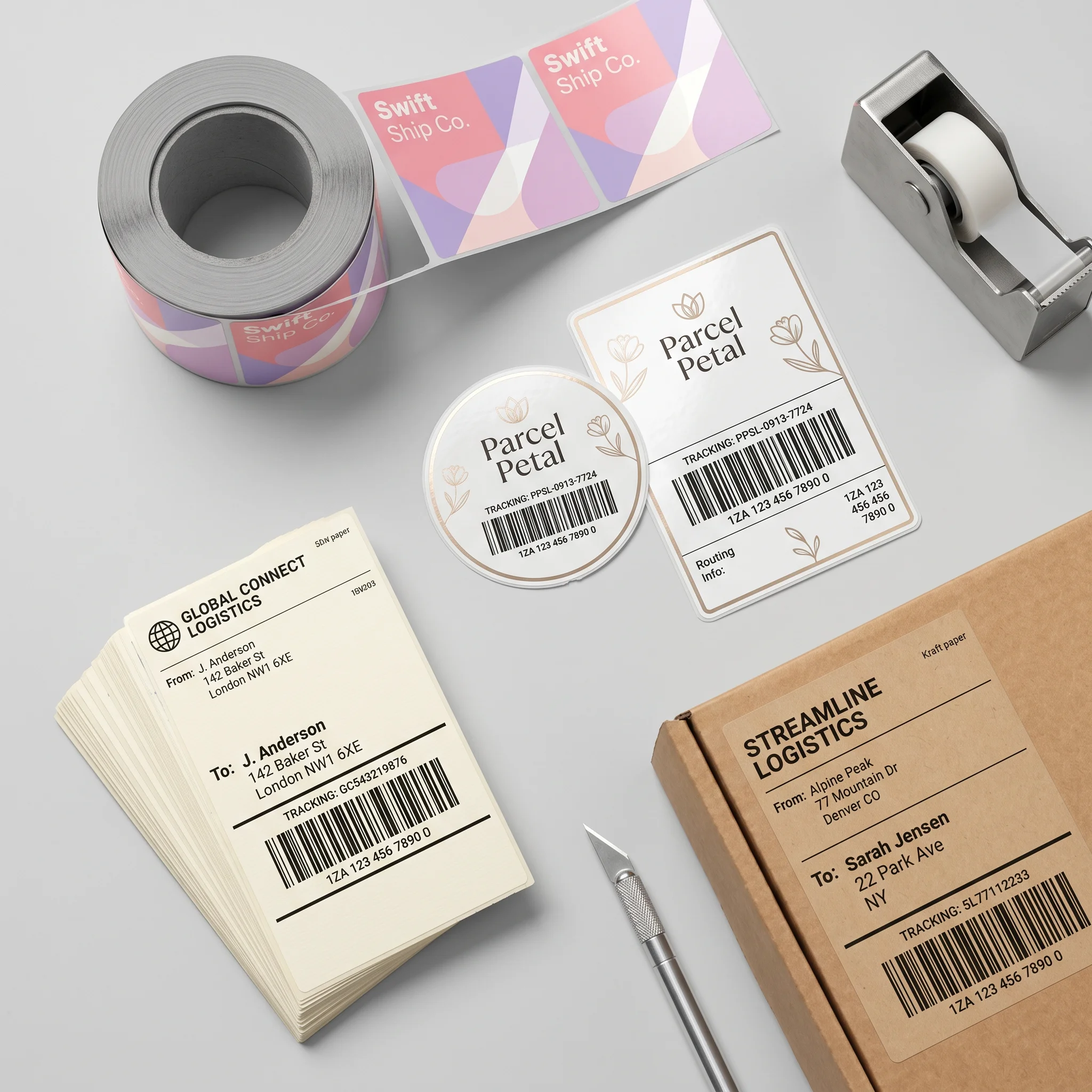
In the fast-paced world of e-commerce unboxing, first impressions start long before the box is opened. Branded shipping packaging, capped off with clean, readable custom shipping labels, is what differentiates high-end DTC brands from standard retail shipments.
However, selecting and printing a shipping label involves deep considerations of durability, printer compatibility, and postage scan rates. A single blurred barcode or peeling adhesive can result in misrouted packages, warehouse sorting delays, and lost inventory.
In this guide, we walk you through standard shipping label materials, printing methods, size configurations, and adhesive types.
1. Direct Thermal vs. Thermal Transfer Printing
When printing address details and postage barcodes in high volumes, traditional office inkjet printers are slow and expensive. E-commerce brands utilize industrial thermal printers:
Direct Thermal Printing (Standard)
Direct thermal printers use heat-sensitive paper labels. The printer head applies heat directly to the label surface, activating a chemical layer that turns black.
- Advantage: Requires zero ink, toner, or ribbon. Extremely cost-effective and simple to operate.
- Best For: Shipping labels with a short lifecycle (e.g. 1-2 weeks in transit). Direct thermal prints will fade if exposed to extreme heat or sunlight.
Thermal Transfer Printing
Thermal transfer printing uses a heated ribbon to transfer resin or wax ink onto the label surface.
- Advantage: Creates a highly durable, scratch-proof, heat-resistant print that does not fade over time.
- Best For: International shipping, long-term inventory storage, and packages exposed to moisture or cold temperatures.
2. Choosing the Right Substrate Material
The environment your shipping box travels through defines the material you need:
Matte & Glossy BOPP (Polypropylene)
For luxury products, liquids, and cold-storage goods, synthetic BOPP labels are highly recommended.
- Key Benefit: 100% waterproof and tear-resistant. They will not peel or smear if exposed to rain on a customer's doorstep.
Recycled Natural Kraft
If your brand focuses on eco-friendly, zero-waste packaging, unbleached kraft paper shipping labels are the perfect match.
- Key Benefit: Fully biodegradable and matches kraft corrugated box styles.
3. Adhesive and Temperature Guidelines
A shipping label must stay flat. Standard permanent acrylic adhesive works well on clean cardboard boxes. However, if you are shipping in cold climates, you must use all-temperature freezer-grade adhesives, which prevent the glue from crystallizing and losing its grip down to -20°F.
Frequently Asked Questions
What is the standard shipping label size?
The industry standard size for e-commerce postage (USPS, FedEx, UPS, DHL) is 4" x 6". We also offer 4" x 4" and smaller sizes for small bubble mailers.
Are these labels supplied on rolls or sheets?
We supply custom shipping labels on rolls with standard 3-inch cores (compatible with industrial zebra thermal printers) or as fan-folded stacks.
Ready to Streamline Your Shipping?
Elevate your shipping boxes. Explore our full catalog of labels & stickers, or get a custom quote on custom product labels to match your brand style.