
Packaging Guides
The ultimate guide to custom child-resistant pouches for growing brands
Cubit Team
June 24, 2026
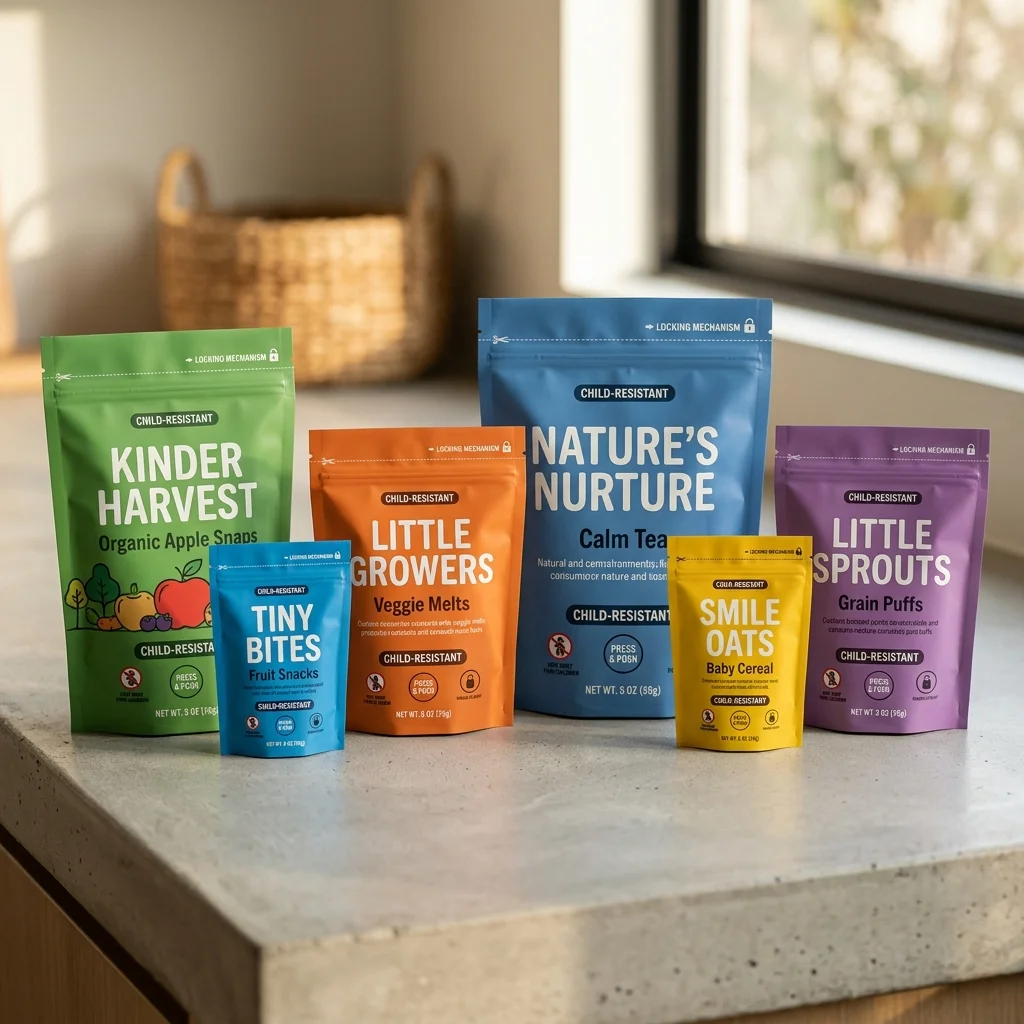
Custom child-resistant pouches are flexible packaging bags designed with specialized locking zippers that prevent children under five years old from opening them, while remaining easy for adults to open and use. These pouches meet federal poison prevention packaging standards, meaning they undergo strict testing protocols to verify their safety. For growing brands in sectors like pharmaceuticals, nutraceuticals, cannabis, and household chemicals, custom child-resistant pouches offer a secure, lightweight, and legally compliant method to store and transport sensitive products.
Choosing the right package requires balancing safety requirements, material barrier properties, and production costs. The wrong choice can lead to shipping delays, rejected batches, or even legal penalties. This guide explains how to navigate these technical decisions to find the best protective solution for your product lines.
In this guide:
Before purchasing any safety packaging, you must understand the rules that govern it. In the United States, the primary standard is defined by the Poison Prevention Packaging Act of 1970, which is administered by the U.S. Consumer Product Safety Commission (CPSC). Specifically, packaging must meet the requirements of 16 CFR Part 1700.20 to be considered legally child-resistant.
To pass this certification, packaging designs must be tested with actual human panels. According to CPSC guidelines, child-resistant packaging must be designed so that 80% of children under 5 years old cannot open it within a 10-minute test, while 90% of adults can open and re-close it within 5 minutes. The children in these panels are given a visual demonstration halfway through the test to ensure they cannot easily copy adult behavior.
Another important benchmark is set by ASTM International, specifically the ASTM D3475 classification. This system categorizes child-resistant packaging based on the type of action required to open it. Flexible packaging designs usually fall into categories that require two simultaneous or sequential actions, such as pinching and pulling, or squeezing while sliding.
State regulations often add another layer of complexity. For instance, medicinal products or cannabis consumables must use opaque packaging in almost every regulated state. This means you cannot have clear windows that show the product inside, or you must limit the window to a small portion of the back panel. Knowing these rules before you design your packaging will save your brand from expensive reprints and compliance issues.
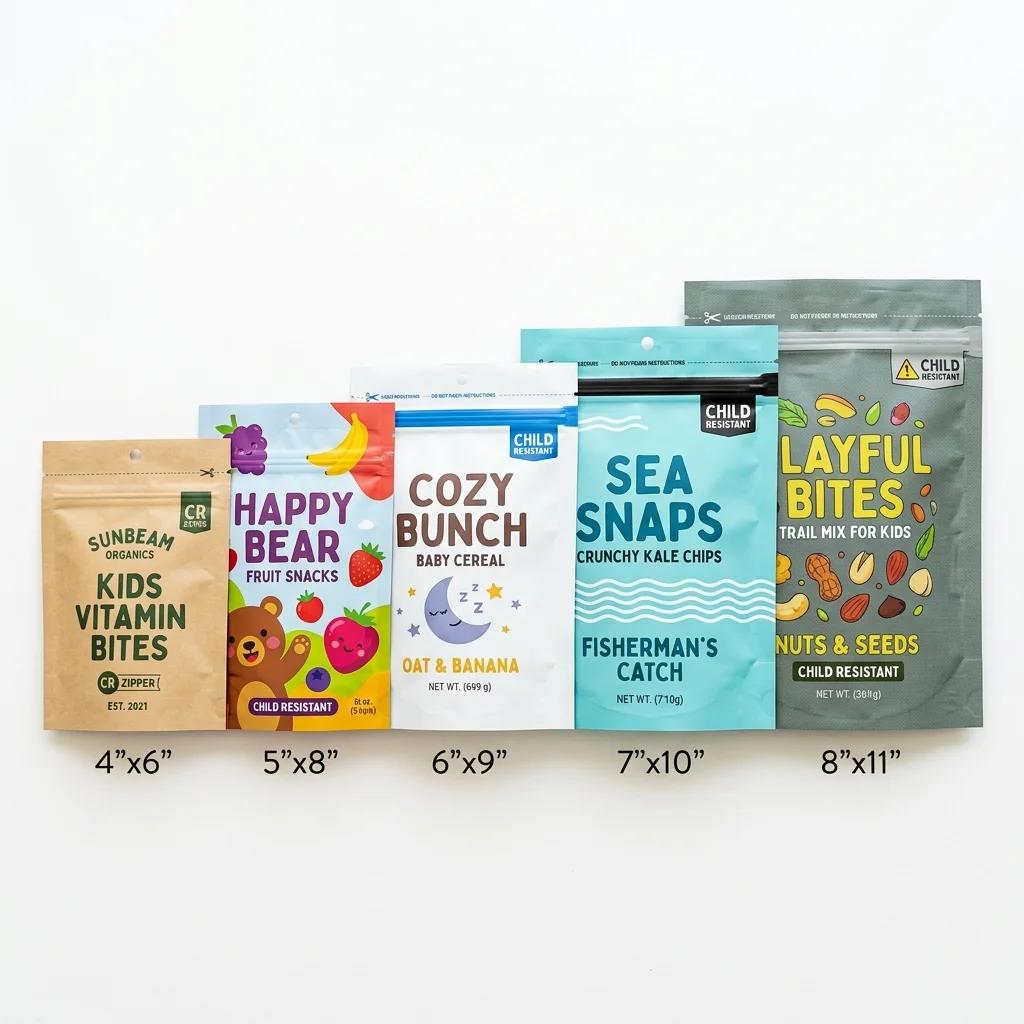 A comparative layout of various custom child-resistant pouch sizes and styles
Flexible packaging materials are rarely made from a single plastic layer. To provide protection against moisture, light, oxygen, and physical punctures, manufacturers use multi-layer laminated films. For child-resistant packaging, these layers are also engineered to resist tearing by children who might try to bite or rip through the bag.
A typical high-barrier pouch uses a three-layer or four-layer structure. The outer layer is usually polyethylene terephthalate (PET), which provides a stable surface for high-quality printing. The middle layer is often a metalized polyester (VMPET) or aluminum foil, which acts as a barrier to block oxygen, light, and moisture. The inner sealant layer is linear low-density polyethylene (LLDPE), which melts under heat bars to create strong, airtight side seals.
At Cubit, we have found that a total thickness of at least 4.5-mil to 5.0-mil is necessary to ensure the structural integrity of a child-resistant bag. Thin, single-layer plastics are too easily punctured and fail to protect the locking zipper during shipping.
To help you evaluate your choices, the table below compares the most common material structures used for these pouches:
| Material structure | Total thickness | Oxygen barrier | Moisture barrier | Common use case |
|---|---|---|---|---|
| PET / LLDPE | 4.0 mil to 4.5 mil | Moderate | Moderate | Dry goods, powders, non-degradable items |
| PET / VMPET / LLDPE | 4.5 mil to 5.0 mil | High | High | Edibles, herbal products, vitamins |
| PET / Foil / LLDPE | 5.0 mil to 5.5 mil | Maximum | Maximum | Pharmaceuticals, high-potency oils, moisture-sensitive tablets |
| Kraft Paper / VMPET / LLDPE | 5.5 mil to 6.0 mil | High | High | Specialty retail items requiring an organic aesthetic |
A typical three-layer barrier laminate consists of a 48-gauge PET outer layer, a 0.28-mil aluminum foil middle barrier, and a 3-mil LLDPE sealant layer. This combination is highly effective at keeping dry products fresh for up to two years under normal storage conditions.
The locking mechanism is the most critical safety feature of any protective pouch. If the zipper is too difficult to operate, adult consumers will become frustrated and may transfer the contents to an unsafe container. If it is too simple, the package will fail CPSC testing.
Three main closure types dominate the market:
Pinch-and-pull zippers: These require the user to pinch a specific area on the outer face of the pouch while pulling the top layers apart. This requires a level of manual dexterity and pressure that young children do not possess.
Push-and-slide zippers: Similar to a standard slider bag, this style has a small plastic clip on the zipper track. The user must push down on a small tab on the slider while pulling it across the opening. Without depressing the tab, the slider remains locked in place.
Thumb-press zippers: These have hidden zip tracks inside the bag. To open, the user must insert a finger into a small pocket, press a specific release button, and pull. This is highly secure but can be tricky for elderly users or those with arthritis.
In our experience, pinch-and-pull zippers are the most popular choice for smaller packages, costing approximately 15% to 25% less per unit than slide-lock alternatives. They also lay flatter, which helps reduce shipping volumes and cardboard master carton sizes.
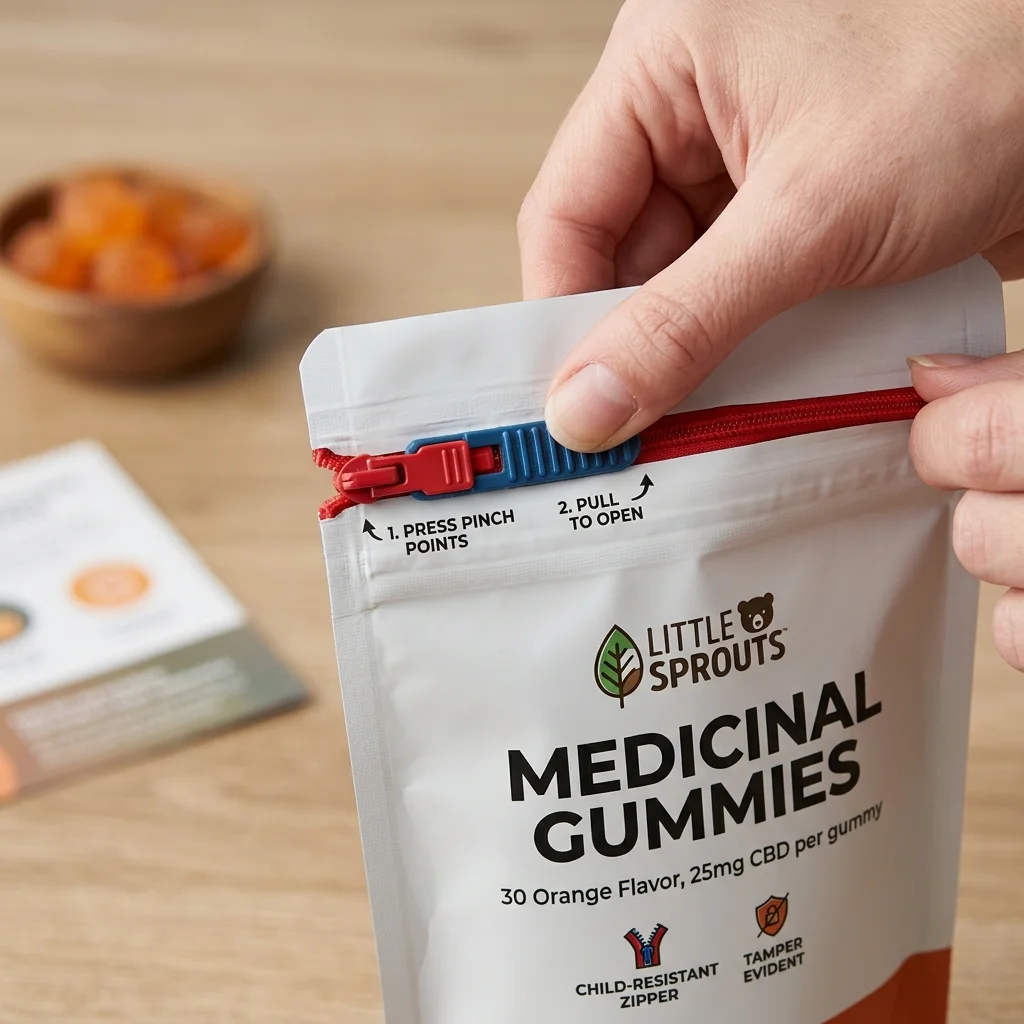 Close-up of a pinch-and-pull closure mechanism on a custom child-resistant pouch
Designing compliant packaging involves more than just picking brand colors and placing a logo. You must dedicate specific areas of the bag to legal warnings and instructions. For child-resistant bags, the most critical layout consideration is the zipper header area.
Because child-resistant zippers require mechanical space to function, the top 1.25 to 1.75 inches of the pouch are typically unusable for product storage. This top section, known as the header, must house the zipper tracks and the opening instructions. If you design graphics for this area, they will be cut through by the tear notches or obscured by the zipper alignment. You must keep your primary branding below this line.
Most state and federal laws also require specific warn-text sizes. For instance, warning icons must be easily visible, often requiring a minimum height of 0.5 inches on retail shelves. If you sell products in multiple jurisdictions, you must review the local packaging guidelines for each region to ensure compliance.
To ensure your graphics fit correctly around the zipper profile, you can work with our design team on custom packaging design layout templates. Preparing your digital files with the correct bleed lines and safety zones prevents alignment errors during high-speed printing.
For a professional retail presence, we recommend applying a matte varnish over your printed design. This finish reduces glare under retail lights and hides fingerprints, keeping the packaging looking clean even after repeated handling.
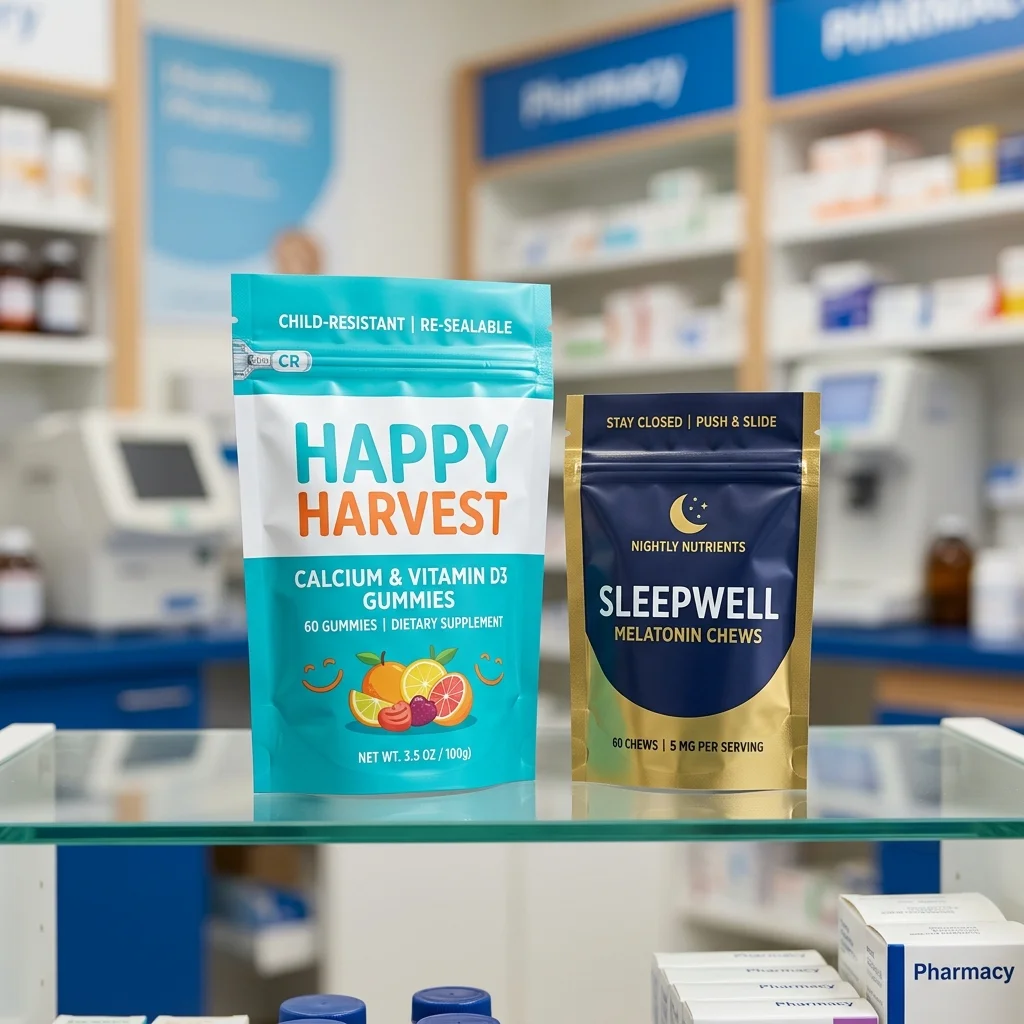 High-barrier custom child-resistant pouches standing upright in a clean storage environment
When budgeting for your custom packaging project, the two primary printing methods to consider are digital printing and flexographic printing. The choice between these methods depends heavily on your production volume and the number of product variations you offer.
Digital printing does not require print plates. This makes it ideal for short runs or brands that carry multiple product variations. If you need 2,000 units of five different flavors, digital printing allows you to run all 10,000 bags together without plate setup fees. The per-unit cost is higher, but the upfront investment is much lower.
Flexographic printing utilizes rubber or polymer plates to transfer ink onto the plastic film. This method requires a significant initial investment, often ranging from $250 to $400 per color plate. However, for large production runs, flexographic printing offers the lowest possible per-unit cost.
To help you visualize the relationship between run sizes and pricing, here is a cost breakdown based on average industry rates:
The per-unit price for a standard 4" x 6" printed pouch drops from $0.85 at a 1,000-unit run down to $0.22 at a 50,000-unit volume. This demonstrates why scaling your order sizes can dramatically improve your product margins.
If you are ready to evaluate pricing for your specific dimensions and volumes, you can request a quick quote directly from our team. We can provide pricing options for both digital and flexographic runs to help you find the most economical path forward.
Based on the packaging orders we process at Cubit, nearly 65% of brands transitioning from stock bags to custom child-resistant pouches see an immediate decrease in fulfillment transit damage, thanks to the puncture resistance of multi-layer laminates like 4.5-mil PET/LLDPE.
A pouch is child-resistant because it requires two distinct, simultaneous physical movements to open, such as pinching a specific spot while pulling the zipper. This mechanical lock prevents young children from accessing the contents while allowing adults to open the bag easily.
Yes, manufacturers must test these packaging designs using human panels according to CPSC rules. When you purchase custom child-resistant pouches, your supplier should provide a certificate of compliance confirming that the specific closure and bag structure passed 16 CFR Part 1700.20 testing.
This packaging is required for products that could harm children if consumed accidentally. Common examples include prescription medications, concentrated cleaning chemicals, laundry pods, liquid nicotine, pesticides, and cannabis products.
At Cubit, our minimum order quantity for digitally printed custom child-resistant pouches is 1,000 units per artwork design. For high-volume flexographic printing, the minimum order quantity usually starts at 10,000 units per run.
Standard high-barrier pouches contain multiple layers of different plastics, which makes them difficult to recycle in curbside programs. However, new mono-material polyethylene structures are now entering the market, allowing some child-resistant designs to be recycled at specialized grocery store drop-off locations.
Selecting the right flexible packaging does not have to be a complicated process. By focusing on your barrier needs, compliance standards, and order volumes, you can find a solution that keeps your products fresh and your customers safe.
If you want to review sample materials or discuss the best zipper options for your product lines, visit our flexible packaging materials page to learn more about our manufacturing capabilities. Ready to get started? You can request a quick quote online today, and our packaging specialists will help you build a compliant, high-quality container for your brand.
Get started on your custom branding with custom Child-Resistant Pouches directly from our online marketplace, or build a personalized quote at our RFQ Procurement portal.
Design your packaging free in 60s
Try the free AI packaging design toolNeed Custom Stand-Up Pouches?
Custom printed stand-up pouches from 500 units. Coffee, food, snack, and pet food packaging. Barrier films, resealable zippers, and degassing valves.