
Compliance
Food Packaging Requirements: FDA Compliance Guide for 2026
Cubit Packaging Team
June 17, 2026
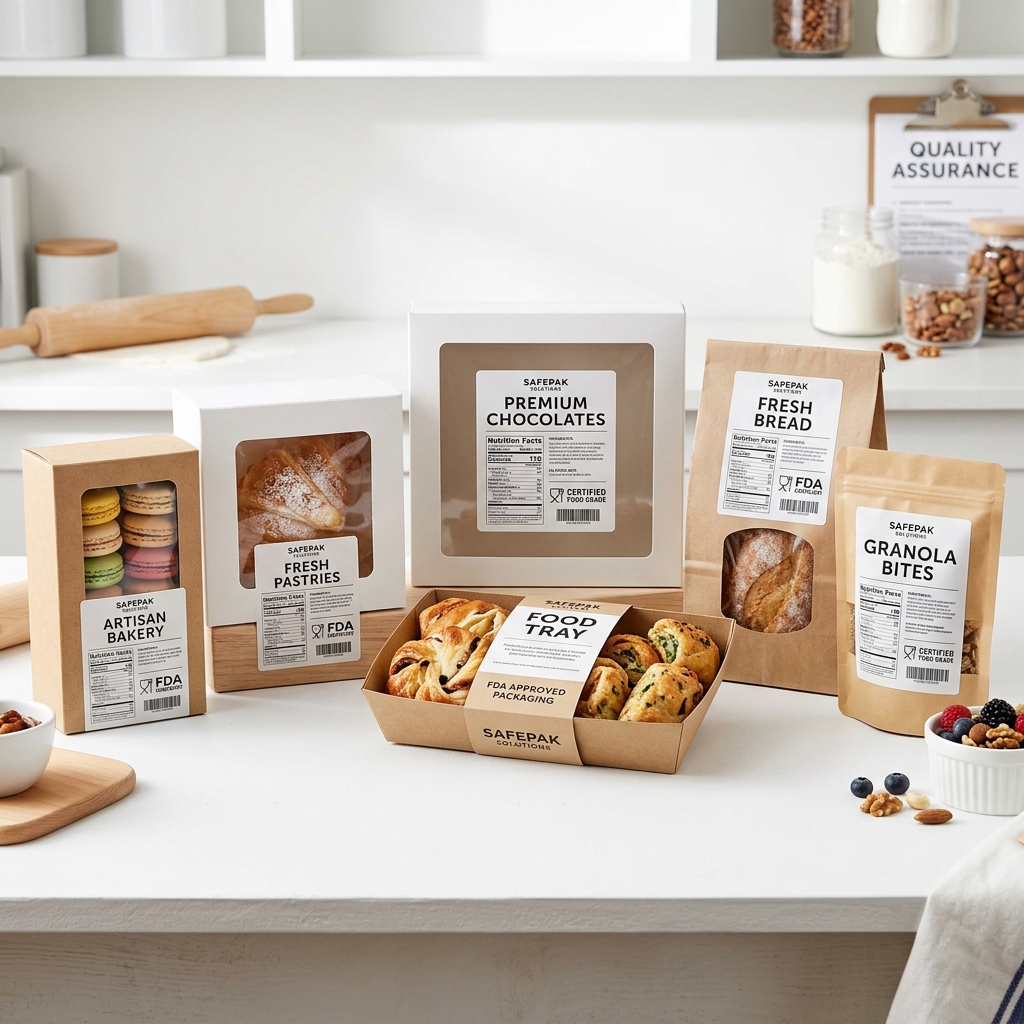
Selling food in non-compliant packaging is not just risky — it is illegal. The FDA can issue warning letters, force product recalls, and levy fines up to $500,000 for serious violations. Beyond legal consequences, non-compliant packaging puts consumers at genuine health risk through chemical migration, allergen cross-contamination, and inadequate preservation.
The good news? FDA food packaging compliance is not complicated once you understand the framework. This guide breaks it down into the specific rules you need to follow.
Any material that touches food — or that food vapors contact — is classified as a food contact substance. This includes:
| Pathway | What It Means | Timeline | Common Examples |
|---|---|---|---|
| Pre-market approval (21 CFR Parts 170–199) | FDA has explicitly approved the substance | Already approved | LDPE, PP, PET, wax coatings |
| GRAS (Generally Recognized as Safe) | Scientific consensus that substance is safe | Self-determined or FDA-notified | Salt, sugar, cellulose, starch-based materials |
| Food Contact Notification (FCN) | Manufacturer files a safety notification | 120-day FDA review | New polymers, novel coatings |
| Prior Sanction | FDA approved the substance before 1958 | Historical | Certain waxes, paper treatments |
FDA-compliant food labels must include these elements:
| Material | FDA Status | Best For | Temperature Range | Grease Resistance |
|---|---|---|---|---|
| Food-grade kraft paperboard | Approved (21 CFR 176) | Bakery, dry goods | Up to 400°F | Low (needs coating) |
| SBS with PE coating | Approved | Refrigerated items | -20°F to 200°F | High |
| PET plastic | Approved (21 CFR 177.1630) | Clear containers | -40°F to 160°F | Excellent |
| Aluminum foil laminate | Approved | Shelf-stable foods | -40°F to 400°F | Excellent |
| Food-grade mylar (BoPET) | Approved | Long-term storage | -80°F to 300°F | Excellent |
| Compostable PLA | GRAS | Short-shelf items | Up to 110°F | Moderate |
Bakery packaging must use food-safe paperboard with grease-resistant coatings. Window patches must use FDA-approved PET film. Moisture barriers are critical for items shipped overnight.
Packaging must withstand temperatures to -20°F without cracking or delaminating. Moisture-barrier coatings prevent freezer burn. All inks and adhesives must remain stable through freeze-thaw cycles.
Barrier packaging prevents moisture ingress and maintains crispness. Stand-up pouches with multi-layer barrier films are the industry standard.
Leak-proof construction is non-negotiable. Materials must resist acidic content (pH below 4.6). Hot-fill products require materials rated for filling temperatures above 185°F.
When evaluating food packaging suppliers, verify these credentials:
Expert tip from Cubit: "Always request a Certificate of Compliance (COC) from your packaging supplier. This document certifies that specific materials meet FDA food contact requirements. A reputable supplier provides this automatically. If they hesitate, find a different supplier."
The FDA does not approve individual packages. Instead, it approves food contact substances — the materials used to make packaging. If your packaging uses only FDA-approved materials (listed in 21 CFR Parts 170–199), your packaging is compliant.
Food-grade packaging is made exclusively from FDA-approved food contact substances, manufactured in GMP-compliant facilities, and free from contaminants that could migrate into food. The packaging must also be suitable for the specific food type and storage conditions.
You need FDA facility registration (not approval) if you manufacture, process, pack, or hold food for sale. Your packaging materials must use FDA-approved substances. Certain product claims (like health claims) require separate FDA authorization.
Ask for three documents: FDA facility registration number, Certificate of Compliance (COC) for materials, and GMP certification. Reputable suppliers like Cubit provide these proactively.
FDA enforcement ranges from warning letters to product seizure, injunctions, and criminal prosecution. Fines can reach $500,000 for individual violations and $1,000,000 for corporate violations. Product recalls cost an average of $10 million.
Need FDA-compliant food packaging? Get a free quote from Cubit — all our food packaging uses FDA-approved materials with certificates provided.
Design your packaging free in 60s
Try the free AI packaging design toolNeed Custom Packaging?
Get a free quote with pricing, MOQs, and turnaround time for your custom packaging project.