
Packaging Guides
The ultimate guide to custom Ziplock Stand-Up Pouches for brands
Cubit Team
June 22, 2026
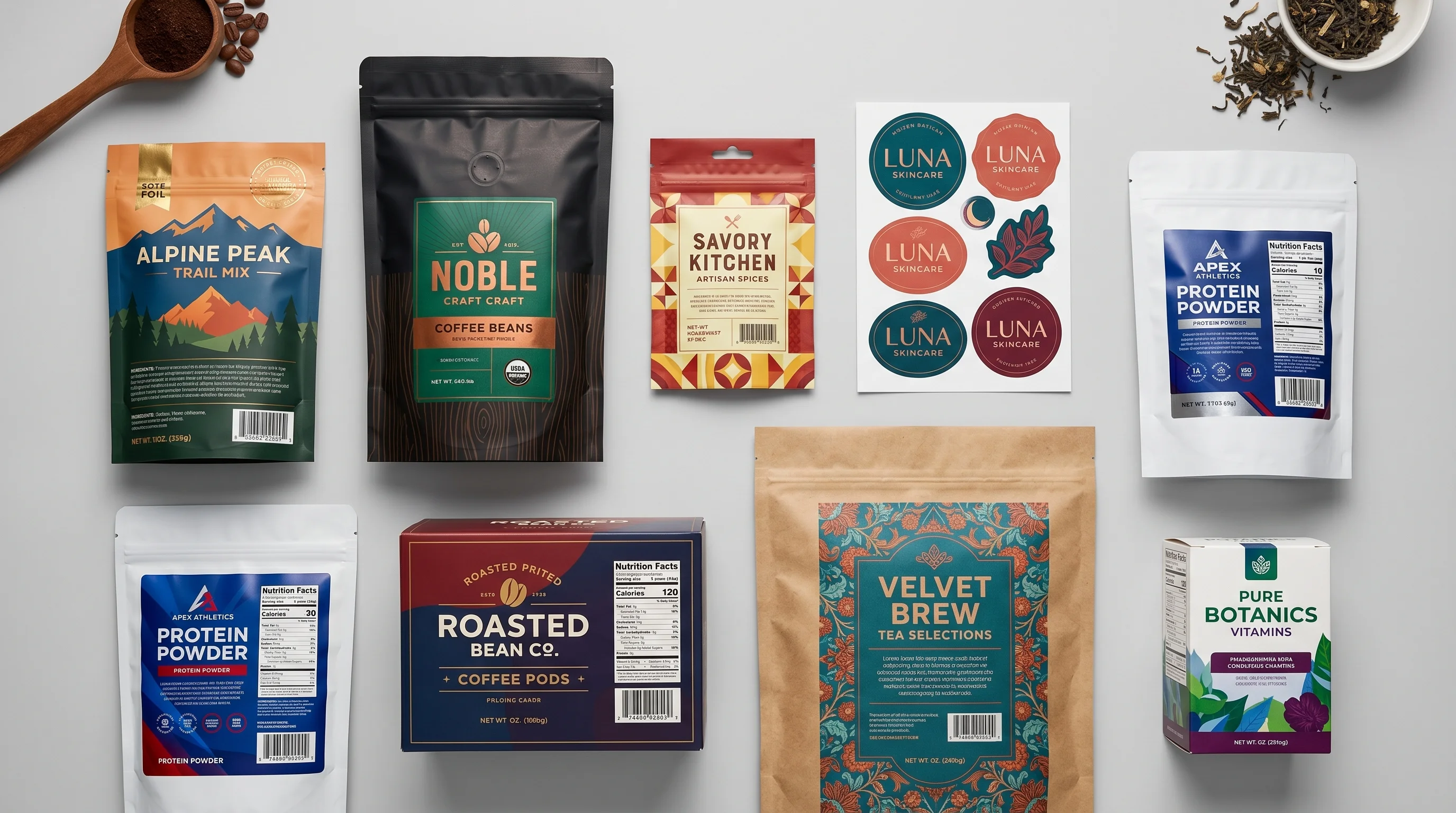
Custom Ziplock Stand-Up Pouches are modern, flexible packaging containers made from multiple layers of barrier films that stand upright on retail shelves while offering a built-in, resealable closure. For growing brands, these pouches are a reliable and cost-effective alternative to rigid packaging like jars and tins. They work well in the specialty food, pet treat, and beauty sectors. By combining high-definition printing with protective barrier layers, they help brands reduce shipping weight and extend shelf life.
Many retail and direct-to-consumer businesses are shifting to flexible structures because they lower operational costs. If you sell coffee, pet treats, or dry spices, your packaging choices directly affect transit survival and shelf presence. Selecting the correct materials and dimensions will help your products stay fresh. This guide covers how to choose the right materials, printing methods, and sizes for your brand's growth.
In this guide:
The packaging market has shifted toward flexible solutions over the past decade. Growing brands often start with stock rigid jars or folding cartons because they are easy to buy in low numbers. However, rigid packaging takes up significant warehouse space and is expensive to ship. Flexible pouch packaging resolves these storage and transit problems.
According to a study by the Flexible Packaging Association, 83% of consumers prefer flexible pouches over rigid containers due to reclosability. This preference means that choosing a resealable stand-up format can directly influence customer satisfaction and repeat sales. The built-in ziplock zipper lets customers seal the product after opening, keeping moisture out and maintaining freshness without requiring a secondary storage container.
From an operational perspective, the savings are clear. We find that custom Ziplock Stand-Up Pouches offer up to a 70% reduction in plastic weight compared to rigid plastic jars. This reduction translates directly into lower material costs and a lighter shipping weight. For example, shipping 1 million flat pouches requires just 3 truckloads, whereas the equivalent rigid bottles require 25 truckloads. This difference reduces transportation fuel use and lowers shipping bills.
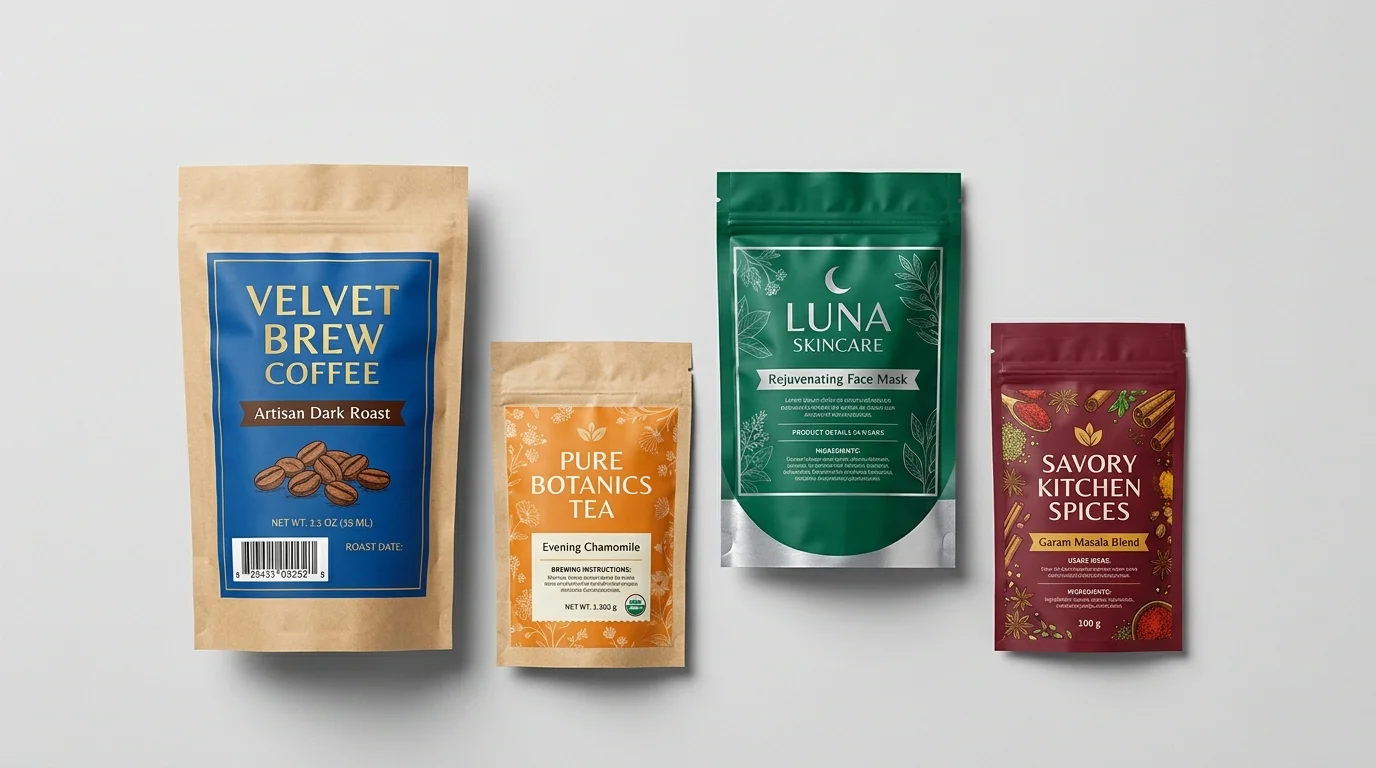 Custom stand-up pouches arranged on a wooden table
Storage is another major benefit. Flat, unfilled pouches arrive in compact boxes on pallets. A single pallet can hold over 15,000 flat pouches, whereas the same pallet might only hold 1,500 rigid jars. If warehouse space is tight or expensive, switching to pouches helps optimize your facility. You can explore our custom stand-up pouches product catalog to see the range of formats available for retail and e-commerce brands.
A high-performance pouch is not just a single piece of plastic. It is a laminated structure containing multiple layers of distinct materials, each performing a specific role. The outer layer carries the printed graphics and protects the package from scratches. The middle layer provides the gas and moisture barrier, and the inner layer allows the pouch to seal under heat.
Standard barrier films like 4.5 mil PET/AL/PE provide water vapor transmission rates (WVTR) below 0.01 g/100 sq in/24 hours. The outer layer is usually polyethylene terephthalate (PET) or oriented polypropylene (OPP), which accepts ink well and resists heat during the sealing process. The middle barrier layer is typically aluminum foil (AL) or metalized polyester (VMPET). This barrier blocks oxygen, light, and water vapor, which are the primary causes of product degradation. The inner sealant layer is made of linear low-density polyethylene (LLDPE), which melts easily when heated to form a strong, airtight seal.
All materials used in food packaging must comply with regulations set by the Food and Drug Administration (FDA) for direct food contact. To ensure safety, testing procedures follow ASTM International standards, such as ASTM F1249 for water vapor transmission. When choosing a manufacturer, verify that their films meet these requirements.
The ziplock mechanism itself comes in several variations. The standard press-to-close zipper is the most common and cost-effective option for light snacks and dry powders. For larger volumes of heavy products like dog food, a slider zipper is often easier for the end user. If you are packaging products that generate gas, such as freshly roasted coffee beans, a one-way degassing valve can be heat-sealed into the film below the zipper. This valve lets carbon dioxide escape while preventing oxygen from entering.
When ordering custom packaging, you must choose between two primary printing methods: digital printing and rotogravure printing. The right choice depends on your production volume, number of product variations (SKUs), and timeline.
Digital printing transfers ink directly to the film without using metal plates. This means there are no setup fees for plates, making digital printing perfect for smaller brands. Production setups for digital pouch printing can reduce minimum order quantities down to 500 units. It also allows brands to print multiple designs in a single run without extra fees, which is ideal if you have several product flavors or seasonal variations.
Rotogravure printing uses engraved metal cylinders to transfer ink. Each color in your design requires its own cylinder, which creates upfront costs of several hundred dollars per color. However, rotogravure printing offers the lowest per-unit cost for large-volume runs. If you are ordering 20,000 pouches or more of a single SKU, rotogravure is almost always the most economical path.
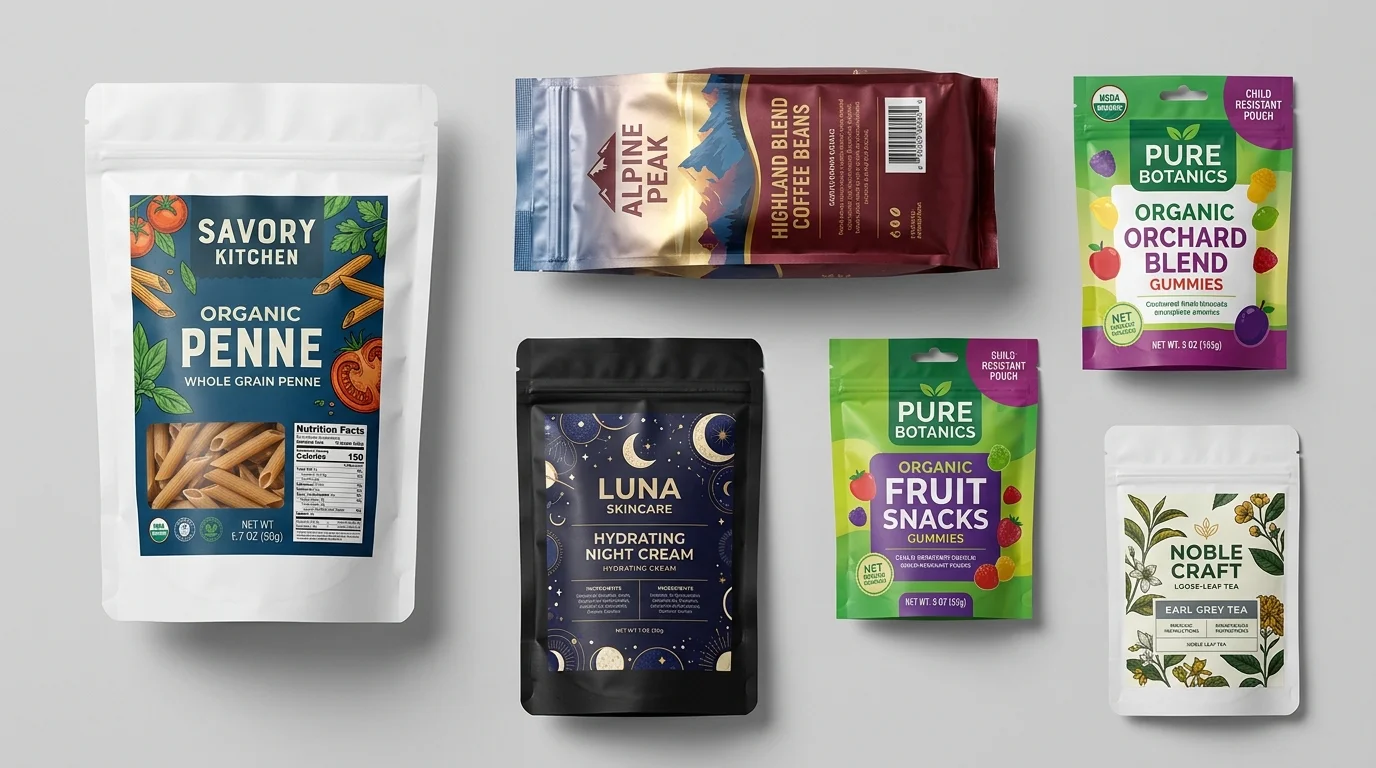 Digital pouch printing press running a multi-colored film roll
Here is a breakdown of how the two methods compare across key operational metrics:
| Operational Metric | Digital Printing | Rotogravure Printing |
|---|---|---|
| Minimum Order Quantity (MOQ) | 500 to 2,000 units | 10,000 to 25,000+ units |
| Upfront Plate/Setup Fees | $0 (No plates required) | $150 to $350 per color channel |
| Production Lead Time | 10 to 15 business days | 25 to 35 business days |
| Per-Unit Cost (Low Volume) | Moderate to high | Extremely high due to plate amortization |
| Per-Unit Cost (High Volume) | High (flat pricing) | Extremely low (high efficiency) |
| Multi-SKU Run Efficiency | Excellent (switch designs instantly) | Poor (requires separate cylinder setups) |
For brands just entering the retail market, digital printing allows you to test designs and respond to market feedback without tying up capital in inventory. If you need help with your files, you can access our free packaging dielines and templates to ensure your artwork aligns perfectly with physical measurements.
The products you put inside your packaging dictate the materials you need. If your product is highly sensitive to oxygen and light, like ground coffee or powdered milk, you will need a metalized layer like aluminum foil. This prevents oil oxidation and flavor loss over time.
For items like bath salts or organic snacks, you might prefer a natural Kraft paper outer layer. This outer paper layer is laminated to a plastic barrier film on the inside, protecting the product while giving a natural look on shelves. If you want customers to see your product before buying, you can choose a clear window design. Clear windows are made by leaving a portion of the metalized or printed layer blank, exposing the clear polyester film underneath.
Based on the packaging orders we process at Cubit, approximately 64% of brands ordering custom Ziplock Stand-Up Pouches for the first time opt for a matte finish with a clear window. This allows consumers to see the physical product inside, which helps establish retail trust.
Thickness is another key specification. Packaging thickness is measured in mils (thousandths of an inch). A standard pouch for light powders might be 3.5 to 4.0 mils thick. Heavy products like pet food or hardware items require a 5.0 to 5.5 mil structure to prevent punctures and tears during transport. When choosing materials, ask your packaging partner for physical samples to test how your specific product reacts with different barrier films. You can request material samples and learn more about film specifications through our packaging materials page.
Finding the right pouch dimensions is a common challenge for growing brands. A standard mistake is assuming that one ounce of one product will occupy the same volume as one ounce of another. For instance, 8 ounces of dense bath salts will fit into a small pouch, but 8 ounces of lightweight herbal tea requires a pouch three times larger.
To determine the correct size, you must measure the volume of your product in fluid ounces, not net weight. Fill a measuring cup with your product to see how much space it takes up. Once you have this volume, you can select the right height, width, and gusset depth.
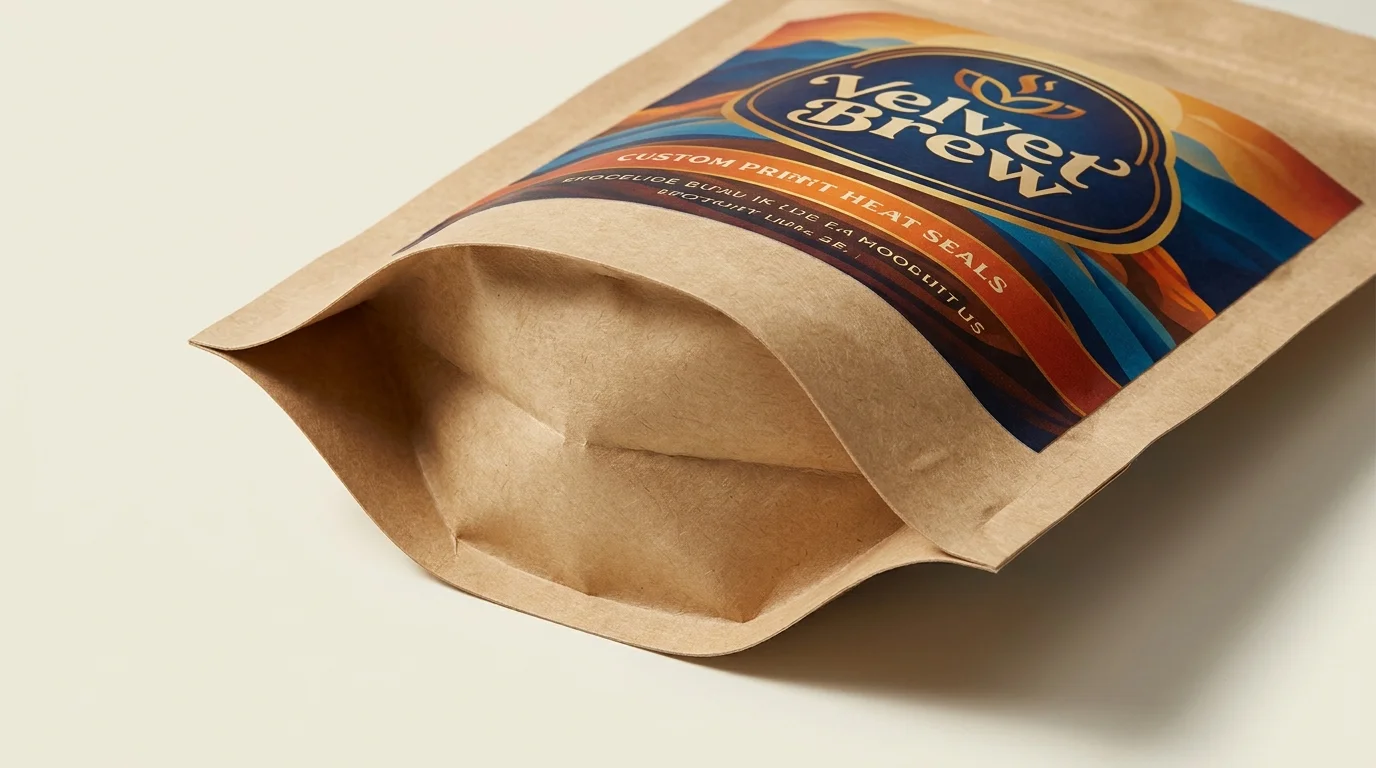 Close-up of a stand-up pouch bottom gusset showing structural support
The bottom gusset is the fold at the base of the pouch that expands when filled, allowing the bag to stand. The three main gusset styles are:
If you plan to fill pouches by hand, choose a standard press-to-close zipper with a wide top opening. For automated filling lines, you must ensure the packaging film works with your machinery's heat-sealing parameters. If you need standard-sized boxes to pack and ship your filled pouches to retail partners, explore our shipping box categories to find matching shipping containers.
At Cubit, our minimum order quantity for digitally printed custom Ziplock Stand-Up Pouches starts at 500 units per SKU. For high-volume rotogravure printing, the minimum run is typically 10,000 to 25,000 units depending on the pouch dimensions.
Yes, all of our custom Ziplock Stand-Up Pouches are manufactured using food-grade, FDA-compliant materials. The inner sealant layer is made of linear low-density polyethylene (LLDPE) which is safe for direct food contact and creates an airtight seal.
Yes, you can include a transparent window of any size or shape on your pouches. This is done during the printing and laminating process by leaving a specific area unprinted, exposing the clear barrier film underneath so customers can see your product.
Digitally printed pouches are produced and shipped within 10 to 15 business days after your artwork is approved. Rotogravure printed orders require extra time to engrave the steel cylinders. This makes the turnaround time 25 to 35 business days.
Because different products have different densities, you should measure your product's volume using a liquid measuring cup rather than net weight. Once you know the volume, our team can help you select the matching width, height, and gusset depth.
Selecting the right packaging is a major step in scaling your business. Making the transition from stock bags to custom Ziplock Stand-Up Pouches protects your product quality and helps establish your brand on retail shelves. The lower shipping weight and compact storage format will improve your profit margins from day one.
If you need a short run of 500 pouches to test a new product line or want 50,000 pouches for national retail distribution, our team at Cubit Packaging is here to help. We guide you through material selection, dieline preparation, and production to make sure you get the exact packaging your product deserves. Ready to get started? Get a free quote for your packaging project and speak with one of our packaging specialists today.
Get started on your custom branding with custom Ziplock Stand-Up Pouches directly from our online marketplace, or build a personalized quote at our RFQ Procurement portal.
Design your packaging free in 60s
Try the free AI packaging design toolNeed Custom Stand-Up Pouches?
Custom printed stand-up pouches from 500 units. Coffee, food, snack, and pet food packaging. Barrier films, resealable zippers, and degassing valves.