
Packaging Guides
Custom Mailer Boxes: The Complete Guide to E-Commerce Packaging (2026)
Cubit Team
June 2, 2026
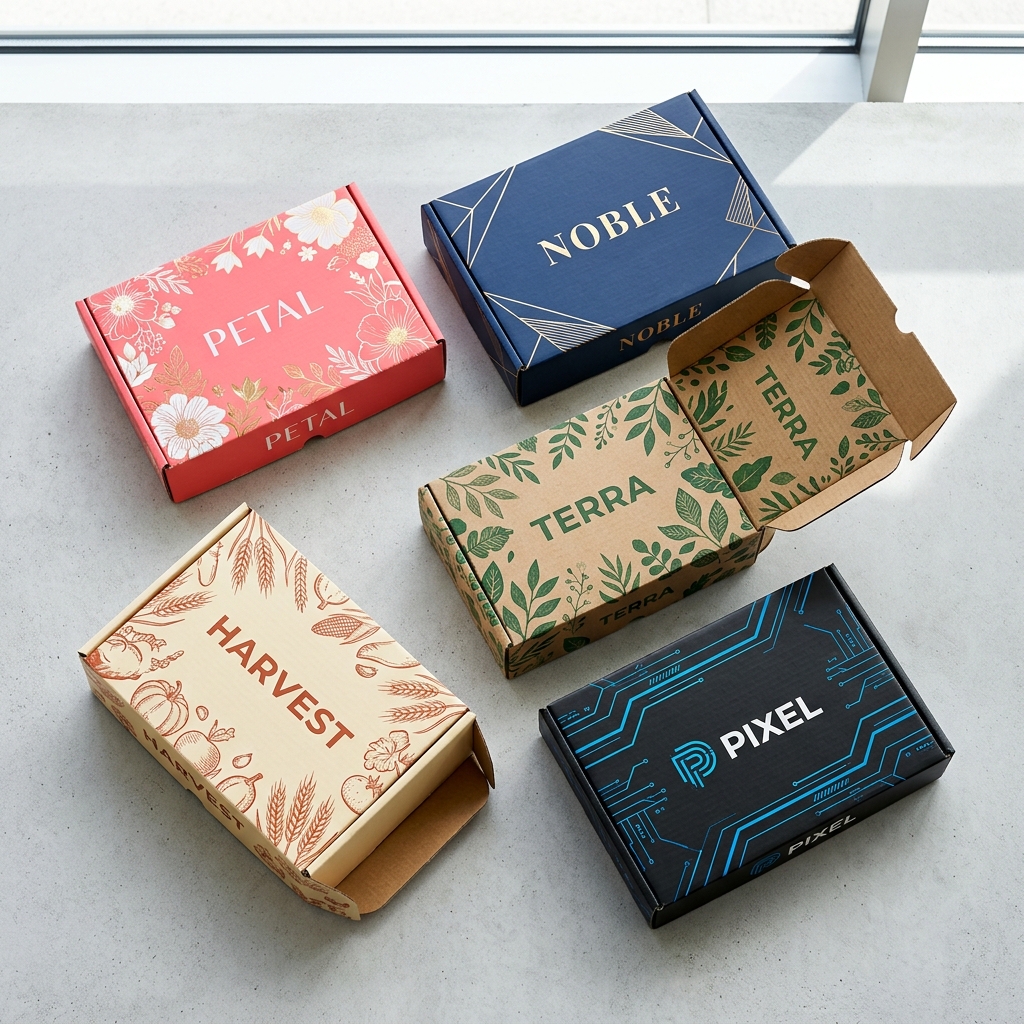
Your product is great. But the first thing your customer actually touches? The box.
Custom mailer boxes have become the most important piece of real estate in e-commerce. That 12x9x4 inch corrugated rectangle is your storefront, your first impression, and — if you get it right — your best marketing channel. Here is everything you need to know about choosing, designing, and ordering them.
A mailer box is a one-piece corrugated container that ships directly to consumers without needing an outer shipper. Unlike a regular shipping box (RSC) that needs packing tape on top and bottom, mailer boxes use built-in closures — tuck tops, tab locks, or crash lock bottoms — to seal shut.
The key difference from standard corrugated boxes: mailer boxes are designed to be the only box your customer sees. No brown outer carton. No tape residue. Just your brand, front and center.
Most custom mailer boxes use E-flute corrugated board — approximately 1.5mm thick with a 32 ECT (Edge Crush Test) rating. That is 32 pounds per inch of edge compression strength, enough to survive stacking 3-4 boxes high during transit.
Here is how the flute types compare:
| Flute | Thickness | ECT Rating | Best For |
|---|---|---|---|
| F-Flute | 0.8mm | 28 ECT | Ultra-thin mailers, documents |
| E-Flute | 1.5mm | 32 ECT | Most e-commerce products under 5 lbs |
| B-Flute | 3.0mm | 42+ ECT | Heavy items, glass, electronics |
| BC-Double Wall | 6.5mm | 55+ ECT | Industrial, 15+ lb products |
E-flute dominates because it prints beautifully. The thin profile creates a smooth surface that reproduces 175 LPI CMYK images almost as sharply as a folding carton — something B-flute cannot match due to its thicker, more pronounced fluting.
The industry standard. A tuck flap folds over the front of the box and slides behind the front panel. Clean look. Stays closed without tape. Works for 80% of DTC products.
A die-cut tab clicks into a matching slot. No tape needed at all — the customer lifts the tab and the box opens cleanly. Costs about 10-15% more than RETT due to the precision die-cutting, but creates a noticeably better unboxing experience.
The bottom is pre-glued at the factory. Squeeze the sides and the base snaps into place in under 2 seconds. This is the fulfillment center favorite — if you pack 500+ orders per day, crash lock bottoms cut assembly time by roughly 60% compared to manual fold-and-tuck.
Printing is where the real customization happens. The method you choose affects both the look and the price:
Digital Printing — No plates, no setup fees. Print-ready in 48 hours. Best for short runs (500-2,000 units) or brands testing multiple designs. Per-unit cost is higher but total cost is lower at small quantities.
CMYK Offset — The gold standard for runs above 1,000 units. Four-color process delivers photorealistic images at 175 LPI. Plate costs ($150-250 per color) are amortized across the run, so the more you order, the cheaper each box becomes.
Flexographic — Rubber plate printing for bold, simple designs. One to three spot colors maximum. Roughly 40% cheaper than offset on kraft board. Perfect for brands wanting the natural kraft look with a single-color logo.
The biggest design trend right now? Interior printing. Printing a pattern, message, or social media handle on the inside flaps adds $0.15-0.30 per unit but transforms the unboxing from opening a box to revealing a brand experience. According to a Dotcom Distribution survey, 40% of consumers share unboxing content on social media when the packaging is unique.
This is where most brands waste money. Order a box that is too large and you pay twice: once for excess material, and again for DIM weight shipping surcharges.
The formula is simple:
Most DTC brands land in the 9x6x3 to 14x10x4 inch range. For reference, a folded t-shirt fits a 12x9x3 box. A skincare set with 3-4 bottles needs a 10x8x4. A pair of sneakers needs approximately 14x10x5.
Pro tip: if you ship multiple product sizes, design 2-3 box sizes rather than one oversized box for everything. The material savings and reduced DIM weight charges will offset the cost of maintaining multiple SKUs within 2-3 months.
Custom mailer box pricing follows a steep volume curve. Here is what realistic 2026 pricing looks like for a standard 10x8x4 inch E-flute mailer with full-color exterior printing:
| Quantity | Per Unit | Total Cost | Per-Unit Savings |
|---|---|---|---|
| 500 | $4.50 | $2,250 | Baseline |
| 1,000 | $2.80 | $2,800 | 38% savings |
| 2,500 | $1.75 | $4,375 | 61% savings |
| 5,000 | $1.20 | $6,000 | 73% savings |
| 10,000 | $0.85 | $8,500 | 81% savings |
Add-ons that increase the unit price:
For a detailed comparison of e-commerce packaging costs, including poly mailers and rigid boxes, check our pricing guide.
Consumers are not just asking about sustainability — they are demanding it. 67% of shoppers consider packaging material when making purchase decisions (McKinsey, 2025).
The good news: corrugated mailer boxes are already one of the most recyclable packaging formats. Standard E-flute corrugated achieves 80-90% recovery rates through curbside recycling programs. To go further, consider:
500 units with digital printing. There are no plate fees so you pay the same per-unit rate whether you order 500 or 750. For CMYK offset, the minimum is 1,000 units because plate creation costs need to be spread across more boxes to keep pricing reasonable.
A mailer box is a one-piece box with a built-in closure (tuck top, tab lock) designed to ship directly to consumers without an outer carton. A shipping box (RSC) has four flaps on top and bottom that require packing tape. See our detailed breakdown in Mailer Box vs Shipping Box.
Yes. We provide a 3D digital mockup within 24 hours of receiving your artwork, plus a physical sample in 5-7 business days. The physical sample uses production-grade materials and printing so you can test fit, color accuracy, and structural integrity before committing.
Choose recycled corrugated board (100% PCW), soy-based inks, and skip the plastic lamination in favor of aqueous coating. The resulting box is 100% curbside recyclable and compostable. Add an FSC certification mark to your design so customers know your sourcing is verified.
Ready to design your custom mailer box? Start with your product dimensions and a rough idea of your artwork. Our design team creates a free 3D mockup so you can visualize the finished box before placing your order.
For brands just starting out, we recommend a 500-unit digital print run to test your design with real customers. Once you have your winner, scale up to offset printing at 1,000+ units for significant per-unit savings.
Design your packaging free in 60s
Try the free AI packaging design toolNeed Custom Packaging?
Get a free quote with pricing, MOQs, and turnaround time for your custom packaging project.