
The B2B Guide to Custom Parchment Paper for Commercial Bakeries and Kitchens
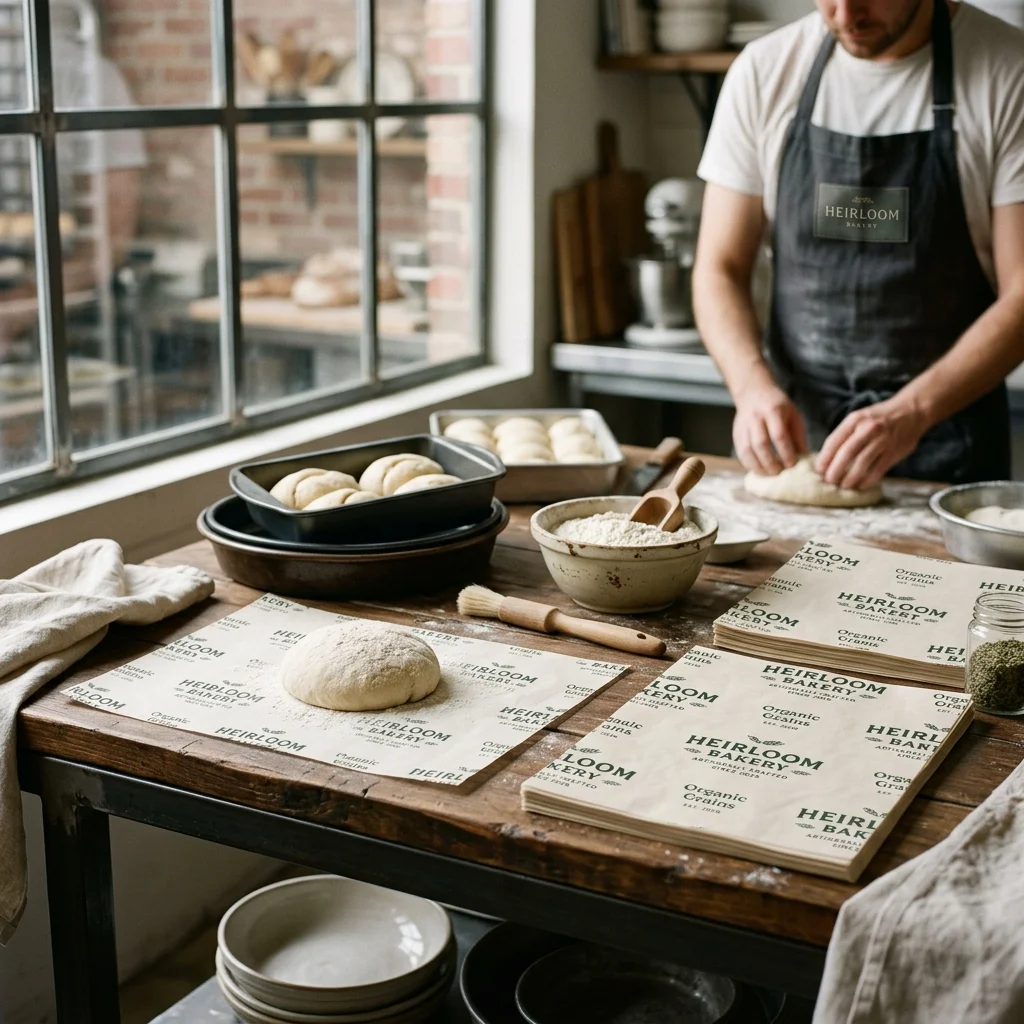
The B2B Guide to Custom Parchment Paper for Commercial Bakeries and Kitchens
In high-volume commercial bakeries, pizzerias, and restaurant kitchens, kitchen efficiency and food presentation are critical. Cleaning baked-on grease and sugar from hundreds of sheet pans daily requires substantial labor, water, and chemical detergent costs.
Custom Parchment Paper provides a food-safe, non-stick barrier that streamlines kitchen prep, eliminates pan scrubbing, and delivers consistent baking results. Printed with custom bakery logos, parchment paper also turns takeaway basket liners and box wraps into powerful branding assets.
In this B2B guide, we will analyze vegetable parchment manufacturing, silicone coating technology, temperature limits, and custom printing safety.
1. How Vegetable Parchment Paper is Manufactured
Unlike standard wood pulp paper, genuine vegetable parchment undergoes a unique transformation:
Sulfuric Acid Densification
Unsized paper sheets are passed through a bath of diluted sulfuric acid. The acid partially dissolves the surface cellulose fibers, causing them to swell and fuse into a dense, non-porous matrix. The paper is then thoroughly washed, neutralized, and dried.
Dual-Sided Food-Grade Silicone Coating
After parchmentization, both sides are coated with a micro-thin layer of food-grade silicone. This provides permanent hydrophobic (water-repellent) and oleophobic (oil-repellent) non-stick properties.
Extreme Heat Tolerance
Because the cellulose fibers are continuously bonded, parchment paper will not char, melt, or disintegrate at standard baking temperatures up to 425°F (220°C).
Order Your Packaging Today
Get started on your custom branding with custom Parchment Paper directly from our online marketplace, or build a personalized quote at our RFQ Procurement portal.
Design your packaging free in 60s
Try the free AI packaging design tool