
The B2B Guide to Custom NFC Labels for Smart Packaging
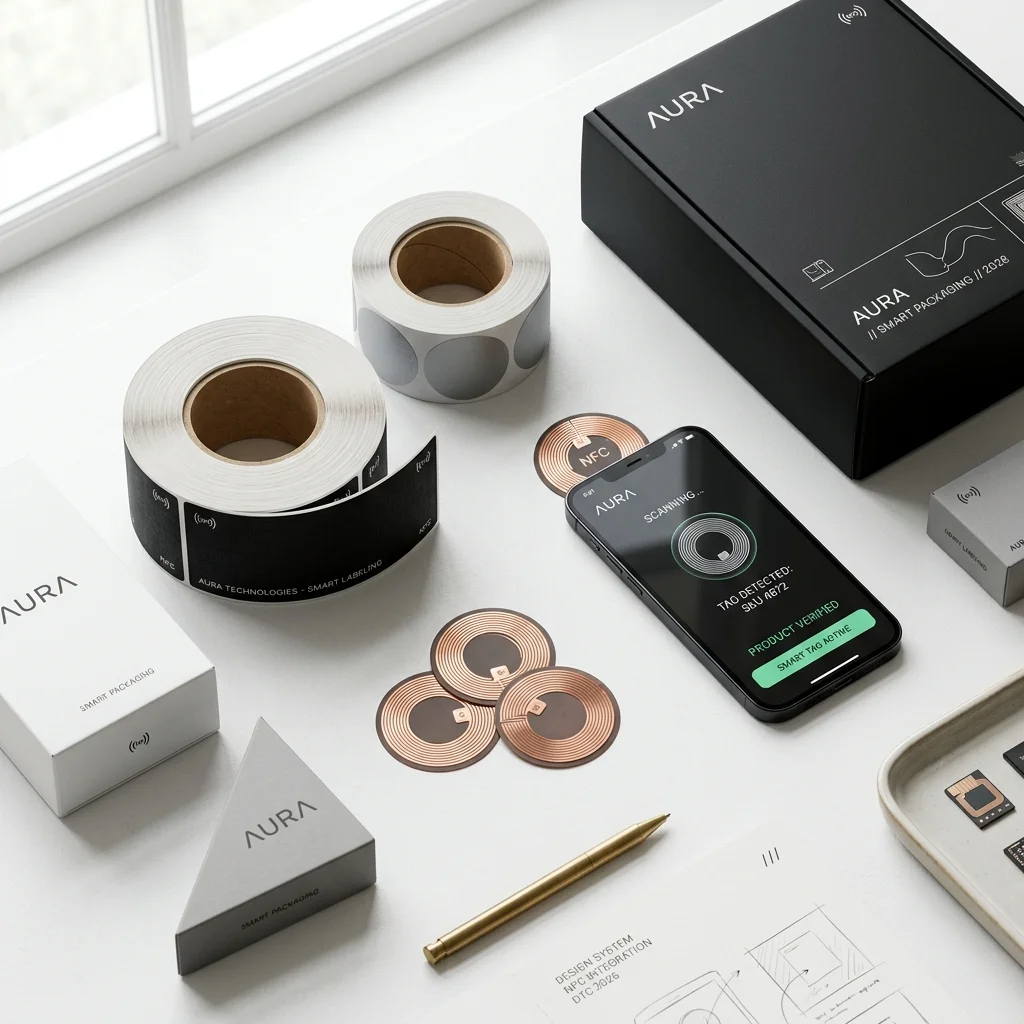
Interactive packaging is rapidly moving from a novelty to a critical brand asset. Modern consumers expect transparency, authentication, and digital engagement.
While QR codes are widely used, custom NFC labels offer a much smoother, higher-end alternative. NFC (Near Field Communication) technology allows smartphone scans without opening the camera app, creating a seamless bridge to digital brand experiences.
In this guide, we discuss NFC mechanics, material choices, chip selections, and B2B implementation strategies.
1. How NFC Labels Work
NFC operates at a frequency of 13.56 MHz. Each smart label contains three core components:
- The Silicon Microchip: Stores memory (such as a website link, serial code, or product description).
- The Antenna Loop: Made of etched aluminum or copper, this collects electromagnetic power from the smartphone reader to power the chip.
- The Substrate Material: Standard white BOPP, transparent PET, or natural paper backing.
When a customer holds their phone within 2 inches of the label, the chip is powered inductively, instantly sending the stored link to the browser.
2. Choosing Your NFC Chip (NTAG213 vs NTAG215)
The chip model dictates memory capacity and scan speeds:
NTAG213 (Industry Standard)
Features 144 bytes of usable memory. Ideal for standard web URLs, social media links, and product registration portals.
NTAG215 (High Capacity)
Features 504 bytes of usable memory. Recommended for encoding longer contact cards (vCards), secure double-encryption keys, or custom database strings.
3. Critical Material and Application Rules
When designing your labels, consider these structural parameters:
The Metal Interference Barrier
If applied to aluminum cans, copper lids, or steel hardware, you must select Anti-Metal Shielding labels. Standard antennas are detuned by metal, preventing the signal from reaching the phone.
Tamper Safety & Security
For high-value wines, spirits, and luxury items, choosing Fragile Destructible Paper ensures that if someone attempts to peel the label off, the antenna breaks instantly, rendering the chip unreadable.
Frequently Asked Questions
Can NFC labels coexist with standard barcodes?
Absolutely! We can print matching barcodes, QR codes, and custom product labels on the front, while the NFC chip is embedded inside. For variable scans, see our guide to QR code labels.
Can they handle outdoors and moisture?
Yes. Our BOPP materials combined with anti-UV overlaminates seal the antenna and chip from water, oil, and sun exposure.
Launch Smart Interactive Packaging Today
Browse our line of custom labels and stickers, or contact our engineers to get sample NFC tags for your product tests.