
Packaging Guides
The ultimate guide to custom kiss-cut stickers for growing brands
Cubit Team
July 8, 2026
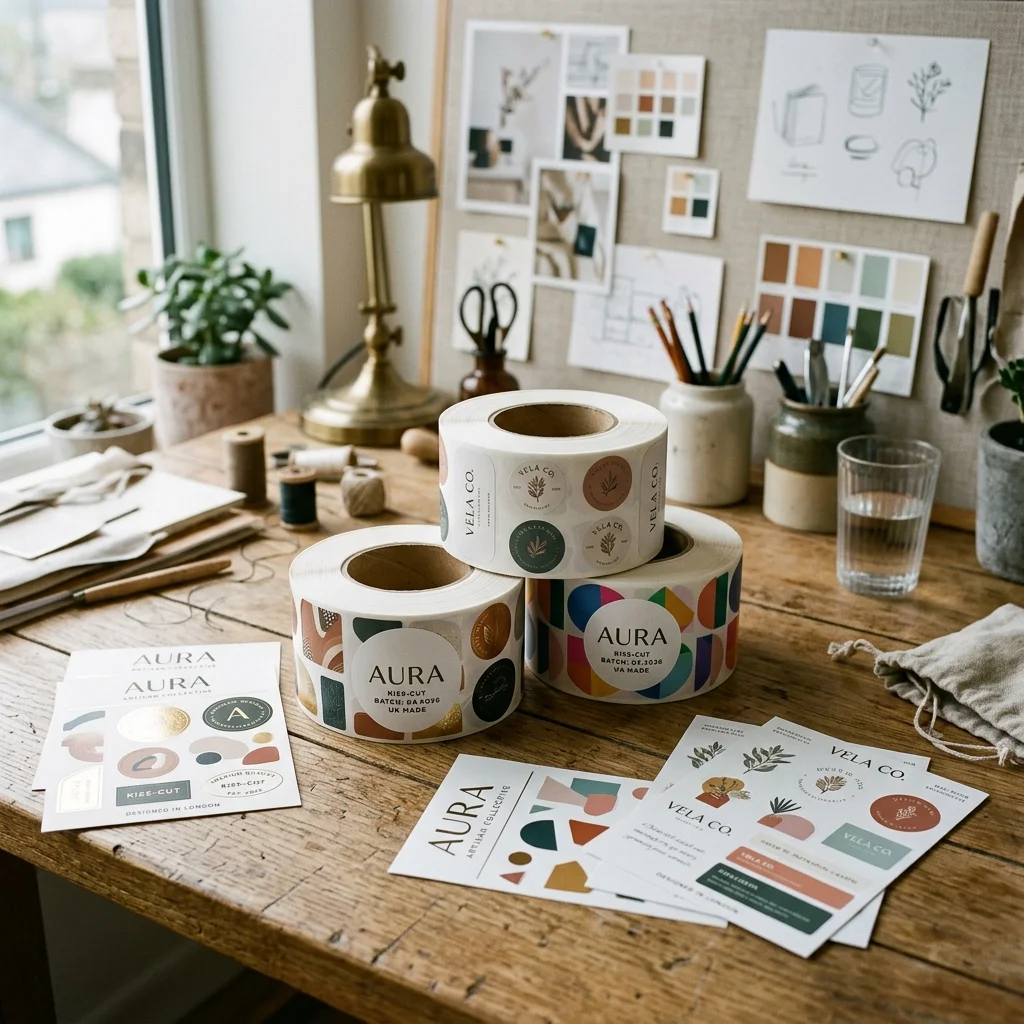
Custom kiss-cut stickers are specialized adhesive labels where only the top vinyl layer is cut to a specific shape, leaving the protective paper backing completely intact as a square or rectangular border. This design makes them incredibly easy to peel, protects delicate edges during shipping, and provides extra space on the backing paper for branding, social handles, or QR codes. For growing e-commerce businesses, these stickers are a cost-effective tool to brand plain shipping boxes, seal tissue paper, or hand out as promotional giveaways that customers actually want to keep.
Adding these labels to your packaging strategy does not require a massive budget. In fact, custom kiss-cut stickers offer a highly versatile way to test new branding elements without committing to large production runs of fully custom printed boxes. By applying a high-quality sticker to a stock shipping container, you can achieve a professional, branded look at a fraction of the cost. This approach allows early-stage companies to maintain a polished presentation while keeping upfront manufacturing costs low.
Whether you need to label glass jars, secure mailer boxes, or create collectible merchandise, understanding the technical specifications of sticker manufacturing will save you time and money. From choosing between matte and glossy finishes to selecting the right adhesive strength for your specific product surface, making the right choices up front ensures your labels perform well in transit and look excellent on retail shelves.
In this guide:
To make the right choice for your packaging project, you need to understand how the cutting process works. Die-cut stickers are cut through both the vinyl sticker layer and the paper backing, meaning the sticker and the backing share the exact same shape. Kiss-cut stickers are made using a lighter blade pressure that only slices through the top adhesive vinyl layer, leaving the square or rectangular backing paper completely whole.
This simple mechanical difference changes how the stickers function in the real world. Die-cut stickers are popular for individual retail sale because they look like finished, standalone products. However, because their edges are exposed, they are prone to curling, bending, or lifting when stored in bulk bins or packed tightly in shipping boxes. The square backing of a kiss-cut sticker acts as a protective shield, keeping the actual sticker edges flat and pristine until your customer is ready to peel and apply them.
Furthermore, the extra border space on a kiss-cut sticker is valuable real estate for marketing. We have seen brands print their website, a discount code, or a call-to-action on this border area. This keeps the sticker design itself clean and art-focused, making customers more likely to stick it on their laptops, water bottles, or notebooks, while still delivering your brand information on the discarded backing.
Selecting the right material depends on where and how your sticker will be used. A cosmetic brand labeling shampoo bottles in a wet shower needs an entirely different material than an apparel brand sealing dry tissue paper inside a custom shipper box. The most common material options are white vinyl, clear vinyl, and uncoated paper.
White vinyl is the industry standard for durability. It resists water, UV exposure, and oil, making it suitable for outdoor use or products that require refrigeration. Clear vinyl allows your product to show through the sticker, which is a popular choice for clear glass jars or minimalist PET plastic bottles. For brands focusing on environmental sustainability, uncoated paper stickers offer a textured, natural feel and decompose more easily, though they lack water resistance.
| Material Type | Durability | Best Use Case | Typical Lifespan | Water Resistance |
|---|---|---|---|---|
| Premium White Vinyl | High | Outdoor gear, water bottles, product labels | 3-5 years | 100% waterproof |
| Clear Polypropylene | High | Glass jars, cosmetic bottles, window decals | 2-4 years | 100% waterproof |
| Uncoated Kraft Paper | Low | Tissue paper seals, dry bakery boxes, shopping bags | 6-12 months | None (absorbs moisture) |
| Holographic Vinyl | High | Promotional giveaways, limited edition packaging | 2-3 years | 100% waterproof |
When ordering vinyl stickers, look for materials certified by testing organizations like Underwriters Laboratories (UL) or compliance standards set by the Consumer Product Safety Improvement Act (CPSIA) to ensure the adhesives and inks are safe for consumer products. Using high-quality materials ensures your labels will not peel or fade prematurely, protecting your brand image throughout the product lifecycle.
Many growing businesses face a common hurdle: custom printed boxes require high minimum order quantities (MOQs) that can strain cash flow. A smart workaround is to purchase plain kraft shipping boxes in bulk and use large, high-quality custom kiss-cut stickers to apply branding manually. This keeps packaging costs low while maintaining a professional, deliberate presentation.
Another highly effective application is sealing inner packaging. Wrapping your items in tissue paper and securing the fold with a branded sticker creates a structured, premium unboxing experience. This extra layer of physical interaction builds anticipation and makes the purchase feel like a gift, which encourages customers to share their unboxing experiences on social media platforms.
Based on the packaging orders we process at Cubit Packaging, brands that use custom stickers to brand stock boxes instead of buying fully custom-printed boxes in their first year save an average of 42% on upfront packaging costs. This allows them to allocate more capital toward product development and marketing during critical early growth stages.
For businesses selling gourmet food, honey, or cosmetics, kiss-cut stickers can double as tamper-evident seals. By designing a long, narrow sticker that runs from the side of a jar, over the lid, and down the other side, you provide visible proof that the container has not been opened. This builds trust with safety-conscious consumers.
Sticker pricing is heavily influenced by economy of scale. The initial setup time for printing presses and digital cutting plotters represents a fixed cost, which means your price per unit drops dramatically as your order volume increases. For example, ordering 50 stickers might cost $1.50 per sticker, whereas ordering 1,000 of the exact same sticker can bring your cost down to $0.15 per unit.
At Cubit Packaging, we recommend analyzing your monthly shipping volume before choosing a production method. For testing new designs or limited edition product drops, digital printing is ideal because it does not require expensive physical printing plates. If you are producing more than 5,000 stickers at a time, flexographic printing becomes much more economical, offering lower unit costs and faster production speeds.
It is also important to consider shipping and storage costs. Unlike bulky boxes, stickers are thin, lightweight, and easy to store. You can easily store 10,000 stickers in a single desk drawer, whereas 10,000 shipping boxes would require a small warehouse. This makes stickers an incredibly efficient branding asset for home-based businesses or companies operating out of tight retail spaces.
Creating a high-quality sticker requires proper file preparation. The most common mistake brands make is submitting low-resolution web images for physical printing. To ensure crisp text and sharp lines, always design your artwork in a vector format using programs like Adobe Illustrator, or export your files at a minimum resolution of 300 DPI (dots per inch) in CMYK color mode.
+-------------------------------------------------------+
|  Backing Paper (Bleed Area)                           |
|   +-----------------------------------------------+   |
|   |  Cut Line (Where the sticker is kissed)       |   |
|   |   +---------------------------------------+   |   |
|   |   |  Safe Zone (Keep text/logos here)     |   |   |
|   |   |                                       |   |   |
|   |   +---------------------------------------+   |   |
|   +-----------------------------------------------+   |
+-------------------------------------------------------+
When preparing your file, you must include three distinct design layers: the artwork layer, the cut line layer, and the bleed line layer. The cut line, also known as the die line, tells the cutting blade exactly where to cut the vinyl. The bleed line should extend at least 0.125 inches (3.175 mm) beyond the cut line. This ensures that if the printing material shifts slightly during the cutting process, there will be no white slivers along the edges of your finished sticker.
Keep key design elements, such as text and logos, at least 0.08 inches (2 mm) inside the cut line. This safe zone prevents important brand assets from being accidentally clipped during production. If you want a clear sticker, remember that white ink is not printed by default on standard digital printers. You must specify a separate white ink layer in your vector file so the printer knows to lay down a solid white base under your colored artwork, preventing it from appearing transparent on dark surfaces.
If you need help setting up your files or choosing the right dimensions, you can work with our team through our custom design services to ensure your artwork is perfectly prepared for production.
Kiss-cut stickers are cut only through the top vinyl layer, leaving the rectangular paper backing intact. Die-cut stickers are cut through both the vinyl and the backing, matching the exact shape of the sticker. Kiss-cut stickers are easier to peel and protect delicate edges from damage.
Yes, if you choose premium white vinyl with a protective matte or glossy laminate, your custom kiss-cut stickers will resist water, wind, and UV rays. Outdoor-grade vinyl stickers typically last between 3 to 5 years without significant fading or peeling, even when exposed to harsh weather.
For the best results, submit your artwork in a vector format such as PDF, AI, or EPS. If you are using raster images, ensure they are exported at 300 DPI or higher in CMYK color mode with all fonts outlined and cut lines clearly marked on a separate layer.
Uncoated paper stickers are generally more eco-friendly because they biodegrade more easily and use fewer synthetic polymers. However, they lack the water resistance of vinyl. For brands focused on sustainability, paper labels are an excellent choice for dry packaging applications like tissue paper seals.
Minimum order quantities vary depending on the printing method. At Cubit Packaging, we offer low minimums starting at 50 units for digitally printed custom kiss-cut stickers, allowing small brands to test designs before committing to larger production runs of 1,000 or more.
To find the perfect label size, material, and finish for your products, explore our full range of custom stickers and labels. Our team can help you design a solution that fits your brand identity and your budget.
Ready to start your next packaging project? Get a free quote for your packaging project and see how easy it is to elevate your brand presentation with custom kiss-cut stickers.
Get started on your custom branding with custom Kiss-Cut Stickers directly from our online marketplace, or build a personalized quote at our RFQ Procurement portal.
Design your packaging free in 60s
Try the free AI packaging design toolNeed Custom Packaging?
Get a free quote with pricing, MOQs, and turnaround time for your custom packaging project.