
Small Business
10 Packaging Mistakes That Kill Startup Brands (And How to Avoid Them)
Cubit Packaging Team
June 17, 2026
The temptation is real: per-unit prices drop significantly at higher quantities. A box that costs $2.50 at 250 units might cost $1.20 at 1,000. So founders order 1,000 to "save money."
Then their brand evolves, their product dimensions change, or they realize the design needs work. Now they have 800 boxes they cannot use.
The fix: Order 100–250 units for your first run. Yes, the per-unit cost is higher. But the total investment ($200–$600) is recoverable. One thousand units at a lower per-unit cost ($1,200) is not — especially when you need to redesign.
This mistake has two versions: too big (increases shipping costs and product movement) or too small (forces you to compress cushioning material, reducing protection).
The fix: Measure your product WITH packaging materials (tissue paper, bubble wrap, inserts). Add 1.5–2 inches on each side. Order samples at your target size and test-pack actual products before committing.
Colors on your monitor look nothing like colors printed on corrugated cardboard. Every substrate absorbs ink differently. That vibrant turquoise on your screen might print as a muddy teal on kraft.
The fix: Always request a pre-production sample or proof. Most suppliers, including Cubit, offer samples for $30–$75. This $50 investment can save you $500+ in reprints.
Jumping into packaging design without established brand guidelines leads to packaging that does not match your website, social media, or product aesthetics.
The fix: Before designing packaging, define your brand colors (specific Pantone or hex codes), typography, logo placement rules, and brand personality. Then design packaging that extends these elements consistently.
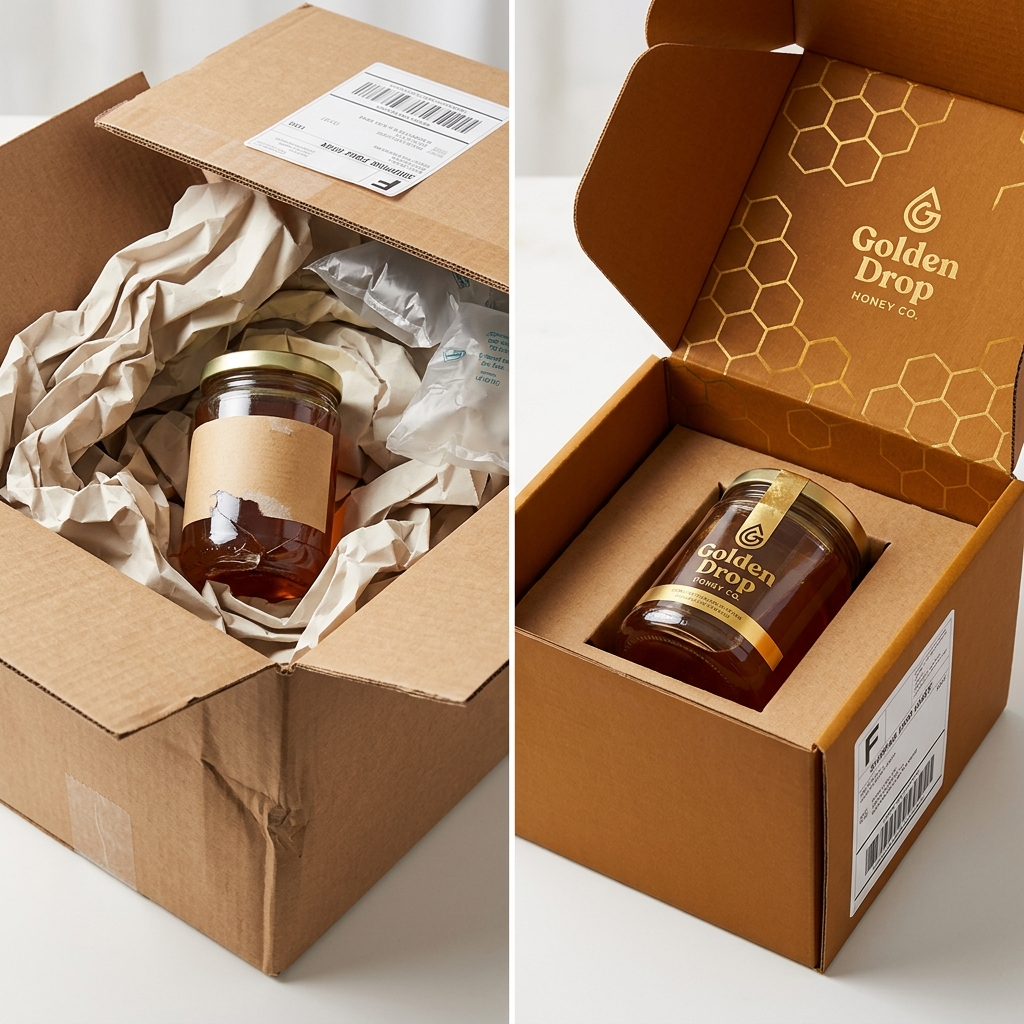
80% of the unboxing experience happens inside. A beautiful exterior with a messy, unbranded interior creates cognitive dissonance that diminishes the premium feel.
The fix: Budget for interior elements:
Your packaging looks beautiful on your desk. But can it survive USPS, UPS, or FedEx? Shipping packages experience drops from 3–5 feet, compression from stacking, vibration from trucks, and temperature extremes.
The fix: Perform a basic drop test. Pack your product in your packaging, seal it, and drop it from 3 feet onto a hard floor — once on each face and once on a corner. If your product survives, your packaging works.
Selling food in non-food-safe packaging, shipping CBD without child-resistant features, or making claims without proper labeling — these regulatory oversights can trigger fines, recalls, and lawsuits.
The fix: Research category-specific requirements BEFORE designing packaging:
The cheapest packaging option is almost never the best value. Thin corrugated damages products. Low-quality printing makes your brand look amateur. Weak adhesives cause boxes to open during shipping.
The fix: Ask for material specifications (board grade, ink type, lamination) and samples. A $0.30 cheaper box that looks and feels cheap costs you far more in brand perception.
Consumers increasingly reject excessive or non-recyclable packaging. 73% of consumers consider sustainability when making purchases (Nielsen, 2025). Starting with unsustainable packaging means a costly redesign later.
The fix: Choose recyclable materials from the start. Kraft corrugated is 100% curbside recyclable. Add recycling instructions to your packaging. Avoid mixed materials that cannot be separated.
Building your product, website, social media, and marketing strategy — then adding packaging as the last step — means your packaging never fully integrates with your brand experience.
The fix: Include packaging in your brand strategy from day one. Design your packaging alongside your visual identity. Budget for it in your product cost calculation. Treat it as a marketing channel, not a shipping necessity.
Before placing your order, verify:
Cubit's advice: "Every mistake on this list costs money, but Mistake #1 (over-ordering) and Mistake #3 (skipping samples) are the most expensive. Start small, validate, then scale. A 100-unit test order at a slightly higher per-unit cost is always cheaper than a 1,000-unit order you cannot use."
Ordering too many units on the first run. 42% of startups order 1,000+ units on their first custom packaging order, only to redesign within 6 months. Start with 100–250 units to test your design with real customers.
The average packaging mistake costs $800–$2,500 in wasted inventory, reprints, or redesign fees. Regulatory non-compliance mistakes can cost significantly more — up to $50,000+ in fines for food or cannabis packaging violations.
Always request a physical sample or press proof printed on the actual packaging material. Screen colors are calibrated differently than print colors, and corrugated cardboard absorbs ink differently than paper. A $50 sample prevents a $500 reprint.
If you are shipping fewer than 50 orders/month, start with plain boxes and branded stickers. Above 50 orders/month, custom mailer boxes become cost-effective and create a significantly better brand impression.
Cubit Packaging offers 100-unit minimums, making it affordable to test a new packaging design. At $2–$3 per unit, your test run costs $200–$300 total.
Avoid these mistakes from the start. Design your packaging with Cubit's AI studio — test concepts before you commit a single dollar.
Design your packaging free in 60s
Try the free AI packaging design toolNeed Custom Packaging?
Get a free quote with pricing, MOQs, and turnaround time for your custom packaging project.