
Packaging Guides
How to Package Products for Shipping: Complete 2025 Guide
Cubit Packaging Team
June 17, 2026
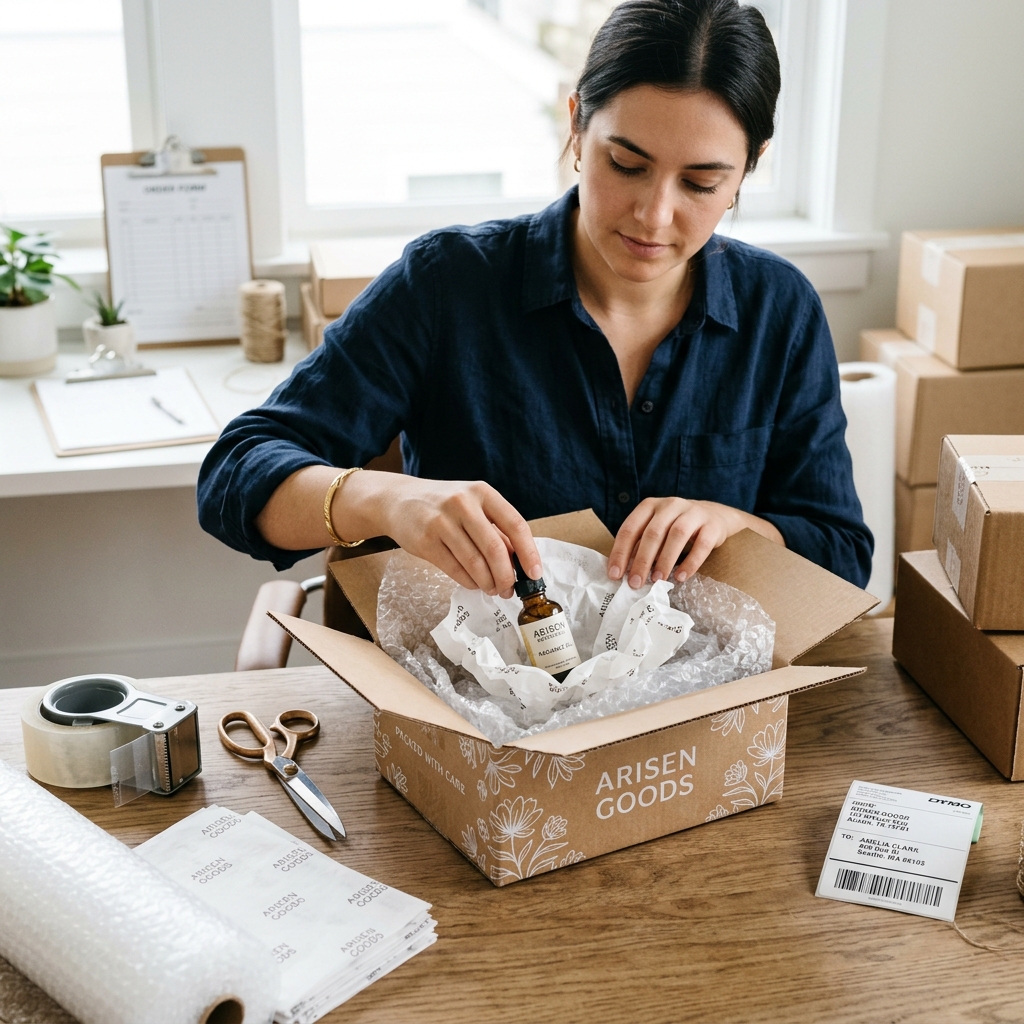
Shipping damage costs US e-commerce businesses over $8 billion annually (Packaging World, 2025). Beyond replacement costs, damaged deliveries generate negative reviews, reduce repeat purchase rates, and increase customer service workload.
The fix is straightforward: proper packaging technique. This guide walks through the exact process professional fulfillment centers use to achieve damage rates below 0.5%.
The golden rule: your box should be 1.5–2 inches larger than your product on each side. This leaves room for adequate cushioning without creating excessive void space.
| Product Size | Recommended Box Size | Cushioning Space |
|---|---|---|
| 4×3×2" (small item) | 7×6×5" | 1.5" per side |
| 8×6×4" (medium item) | 12×10×8" | 2" per side |
| 12×10×6" (large item) | 16×14×10" | 2" per side |
| Multiple items | Custom fit | 2" per side + between items |
Most products ship safely in 200# test or 32 ECT (Edge Crush Test) corrugated. Heavy items (over 20 lbs) need 275# test or 44 ECT. Fragile items benefit from double-wall corrugated regardless of weight.
| Material | Protection Level | Cost | Eco-Friendly | Best For |
|---|---|---|---|---|
| Bubble wrap | ★★★★★ | $$ | No (recyclable) | Fragile items, electronics |
| Crinkle paper | ★★★☆☆ | $ | Yes (recyclable) | Light items, aesthetic |
| Foam sheets | ★★★★☆ | $$$ | No | Electronics, glass |
| Air pillows | ★★★★☆ | $ | Varies | Void fill, light cushioning |
| Kraft paper | ★★★☆☆ | $ | Yes | Wrapping, void fill |
| Custom tissue paper | ★★☆☆☆ | $ | Yes | Brand experience, light items |
| Molded pulp | ★★★★★ | $$$ | Yes | Premium products, wine |
Apply packing tape in an "H" pattern:
All major carriers (USPS, UPS, FedEx) charge based on dimensional weight when it exceeds actual weight.
Dimensional weight formula: (L × W × H) ÷ DIM factor
| Carrier | DIM Factor (domestic) | DIM Factor (international) |
|---|---|---|
| USPS | 166 | 166 |
| UPS | 139 | 139 |
| FedEx | 139 | 139 |
| DHL | 139 | 139 |
Example: A 16×12×8" box weighing 5 lbs
This is why right-sizing your packaging matters. A box that is 2 inches too large in each dimension can double your shipping cost.
Pro tip from Cubit: "The most cost-effective shipping strategy is matching your packaging to your product. Custom-sized mailer boxes eliminate void fill costs, reduce dimensional weight charges, and create a better unboxing experience than a generic oversized box stuffed with packing peanuts."
Minimum 2 inches of cushioning material on all six sides of your product. For fragile items, increase to 3 inches and consider double-boxing.
Double-wall corrugated boxes with foam cushioning inserts provide the best fragile item protection. For high-value items, use a double-box method: pack the product in a snug inner box with foam, then place that box inside a larger outer box with 2–3 inches of cushioning between them.
Studies show that fragile labels have minimal impact on carrier handling practices. Proper cushioning and box construction protect your product far more effectively than labels. That said, labels can reduce damage claims disputes.
Three strategies: right-size your boxes to reduce dimensional weight charges, order custom-sized packaging to eliminate void fill costs, and use lightweight cushioning materials (crinkle paper, air pillows) instead of heavy foam.
Use poly mailers for soft, non-fragile items like clothing. Use boxes for anything rigid, fragile, or heavy. Poly mailers cost $0.15–$0.80 each compared to $0.75–$4.50 for boxes, so the savings are significant for appropriate products.
Need custom shipping packaging? Get a free quote on boxes sized perfectly for your products.
Design your packaging free in 60s
Try the free AI packaging design toolNeed Custom Packaging?
Get a free quote with pricing, MOQs, and turnaround time for your custom packaging project.