
Packaging Guides
The practical guide to custom printed mailer boxes for growing brands
Cubit Team
June 22, 2026
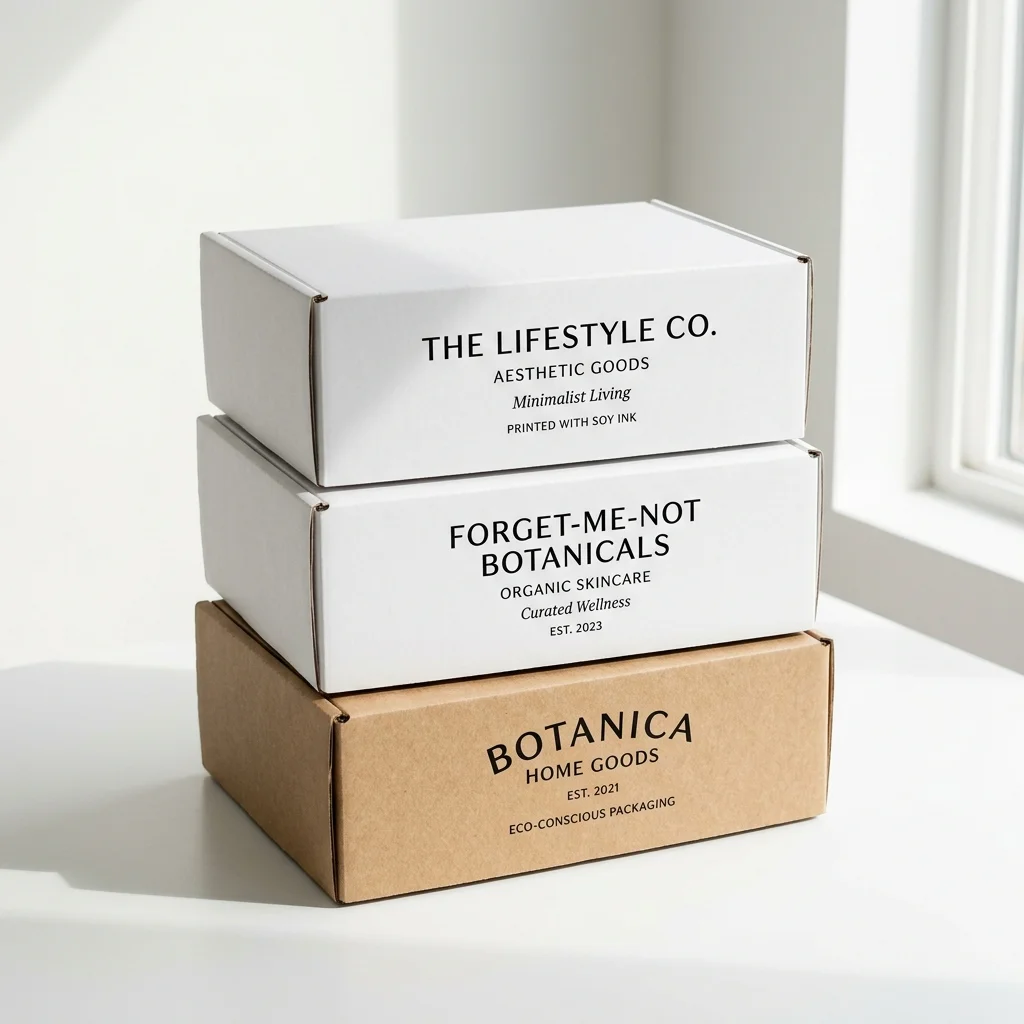
Custom printed mailer boxes are self-contained corrugated cardboard packaging solutions designed to store, protect, and ship products directly to customers without requiring an external shipping container. Unlike standard slotted cartons, they feature interlocking flaps and wings that secure the box without tape, making them the primary packaging choice for direct-to-consumer shipping and retail subscription boxes. When engineered correctly, these boxes protect products during shipping while displaying brand imagery on the exterior and interior surfaces.
Selecting the right shipping container involves understanding material grades, manufacturing tolerances, and printing technologies. Choosing the incorrect board thickness can lead to crushed shipments, while choosing the wrong printing method can inflate unit costs. This guide breaks down the technical details of corrugated packaging to help you select, design, and source the correct custom printed mailer boxes for your operations and budget.
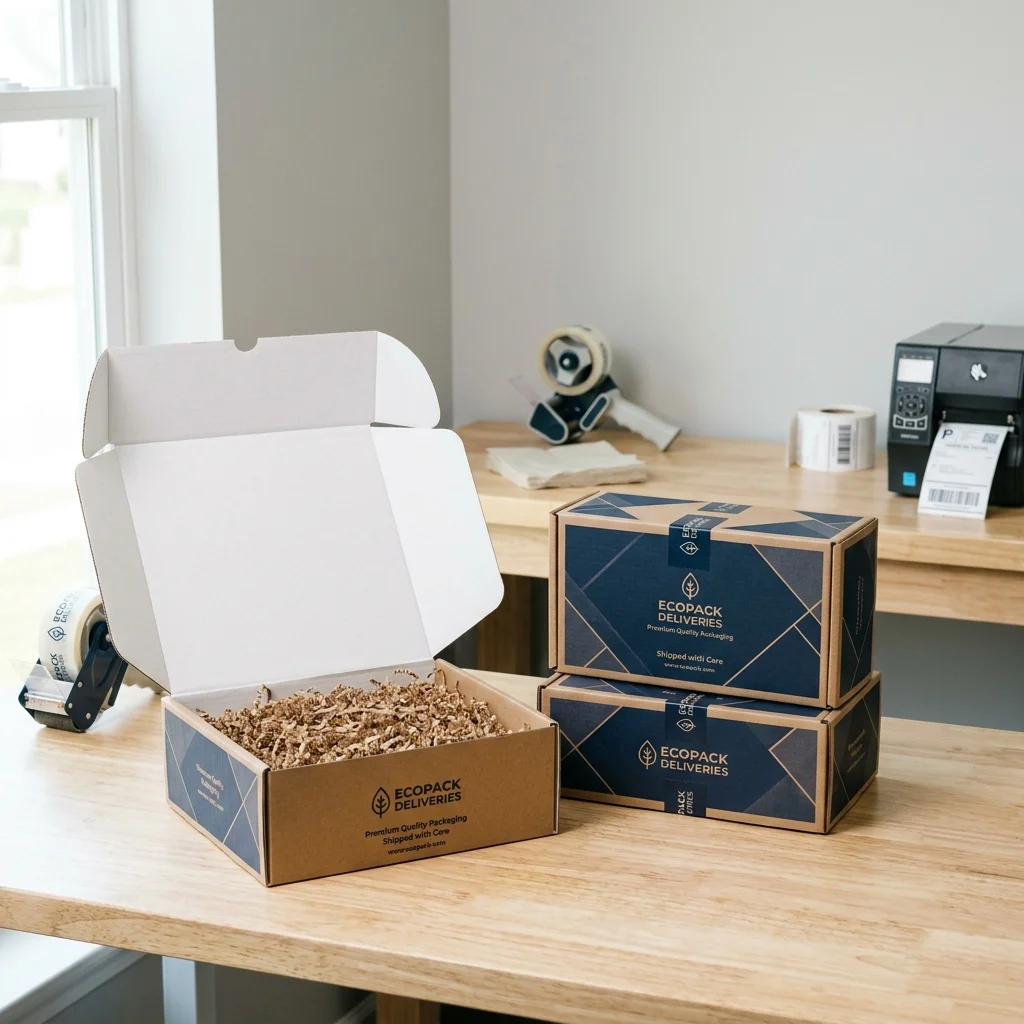 Custom printed mailer boxes arranged neatly in a shipping station
In this guide:
For businesses shipping directly to consumers, the shipping box is the physical connection between your brand and your customer. Using plain, oversized shipping cartons filled with plastic packing peanuts creates a poor unboxing experience and increases shipping costs. In contrast, custom mailers are engineered to fit your specific product dimensions, reducing the reliance on void fill and lowering your dimensional weight fees.
Shipping rates are calculated based on the space a package occupies on a delivery truck, not just its actual weight. Major carriers like United Parcel Service (UPS) and FedEx use dimensional weight formulas to charge higher rates for light but bulky packages. By using custom-sized e-commerce shipping boxes, you minimize wasted interior space. This can reduce dimensional weight charges by 15% to 30% per shipment, which directly improves your shipping margins.
Protection is the primary job of any shipping container. Mailer boxes feature double-walled side panels when folded, which provides high structural strength. This double-wall configuration protects fragile items from side-impact drops and stacking pressure during transit. It is a highly reliable shipping format that reduces product damage rates to less than 1% for most consumer goods categories.
Not all cardboard is the same. Corrugated board is composed of two flat linerboards sandwiching a wavy, fluted paper layer. The thickness of this fluted layer and the weight of the linerboard determine the overall strength, puncture resistance, and print quality of your custom printed mailer boxes.
Most mailer boxes are constructed from either E-flute or B-flute corrugated cardboard. E-flute board is approximately 1/16 inch (1.6 mm) thick, offering a flat surface that is ideal for high-resolution graphics and fine text. B-flute is thicker, measuring around 1/8 inch (3.2 mm), which provides greater cushioning and stacking strength for heavier items like wine bottles, books, or heavy glass jars.
Choosing the correct material depends on your product weight and the visual aesthetic you want to achieve. The table below outlines the differences between standard corrugated configurations used in corrugated packaging materials:
| Flute Type | Thickness (approx.) | Best Use Case | Maximum Load Capacity | Print Quality | This matters because... |
|---|---|---|---|---|---|
| E-flute | 1/16 inch (1.6 mm) | Cosmetics, electronics, jewelry, apparel | Up to 10 lbs (4.5 kg) | High resolution, crisp lines | The thin profile prevents folding creases from distorting small graphics. |
| B-flute | 1/8 inch (3.2 mm) | Heavy glass, liquid bottles, metal tools | Up to 25 lbs (11.3 kg) | Moderate resolution | The thicker core provides excellent crush protection for heavy retail items. |
| N-flute | 1/50 inch (0.5 mm) | Micro-packaging, premium retail boxes | Up to 3 lbs (1.4 kg) | Very high resolution | It mimics paperboard while providing a slight structural cushion for light goods. |
Linerboards are available in natural kraft or bleached white paper. Kraft board is biodegradable, recyclable, and gives an organic, natural appearance. White paperboard comes in matte or clay-coated finishes, which allow for bright, accurate color matching.
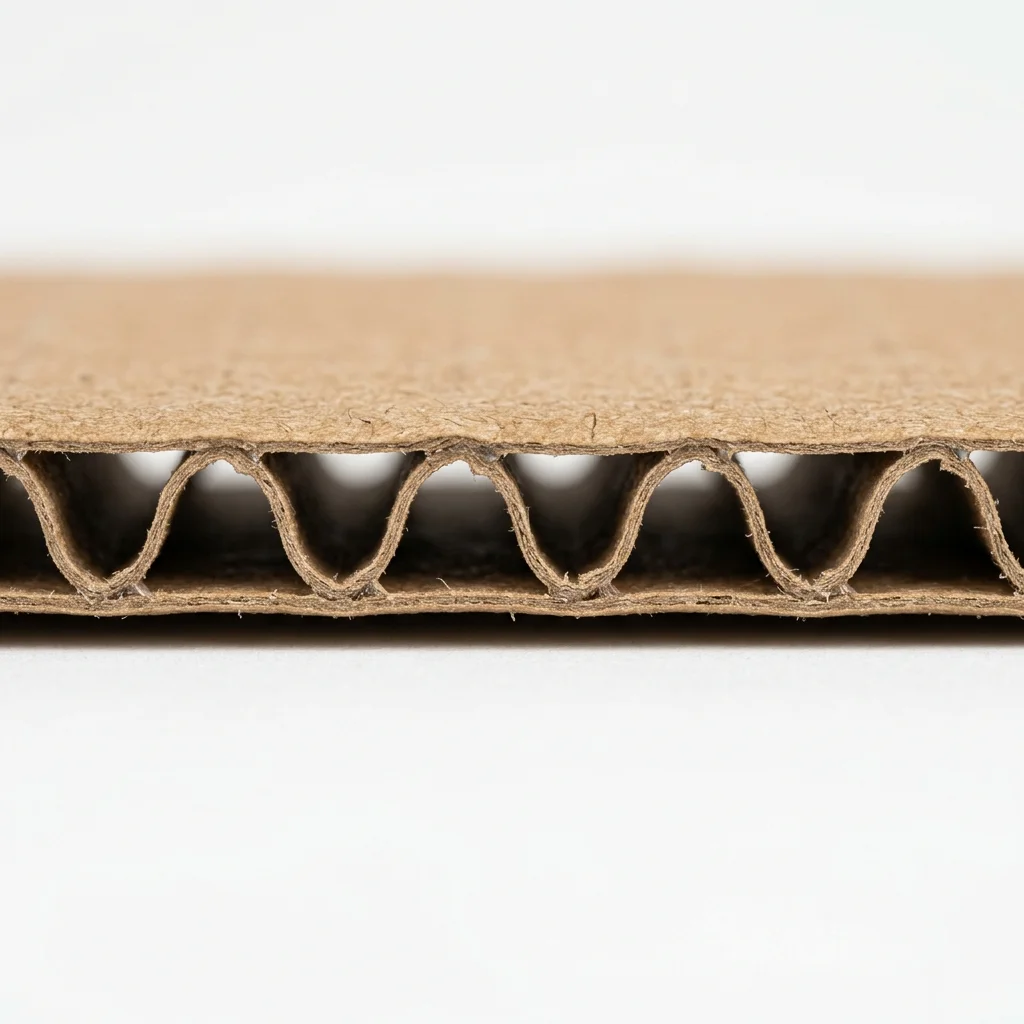 Close-up of corrugated board fluting layers
According to the Forest Stewardship Council (FSC), sourcing certified paperboard guarantees that the wood pulp originates from responsibly managed forests. At Cubit, we recommend specifying FSC-certified materials to satisfy both corporate environmental targets and retail compliance guidelines.
There are three primary printing methods used to produce custom printed mailer boxes. The right option for your brand depends on your total order volume, budget, and design complexity.
Digital printing works like a large industrial inkjet printer, applying ink directly onto the cardboard surface. Digital printing eliminates the need for physical printing plates, reducing initial tooling costs to $0 for small-batch runs under 500 units. It is highly flexible and cost-effective for test launches or seasonal campaigns, with production turnarounds typically averaging 10 to 12 business days. However, the per-unit cost remains flat regardless of volume, making it expensive for large production runs.
Flexographic printing uses flexible polymer plates wrapped around rotating cylinders to stamp quick-drying, water-based inks onto the linerboard. This is the industry standard for medium to high-volume orders. While it requires an upfront investment in printing plates (usually $150 to $350 per color), the run speeds are very fast. For orders over 1,000 units, flexography offers a significantly lower cost per unit than digital printing.
For retail-quality photographic graphics, brands use lithographic lamination. This process prints high-resolution designs onto a premium sheet of paper, which is then glued (laminated) onto the corrugated board. While this method produces sharp images and deep colors, the plate costs and setup fees are high. It is generally reserved for production runs of 2,000 units or more where visual presentation is the top priority.
When ordering packaging, you must distinguish between interior and exterior dimensions. Packaging manufacturers always measure boxes by their interior dimensions to ensure your product fits inside. The exterior dimensions will be slightly larger depending on the thickness of the corrugated board.
For example, an E-flute mailer box with interior dimensions of 9 x 6 x 3 inches will have exterior dimensions of roughly 9.25 x 6.15 x 3.15 inches. This difference is critical when calculating shipping volumes or when inserting the mailer box into a larger master shipping carton.
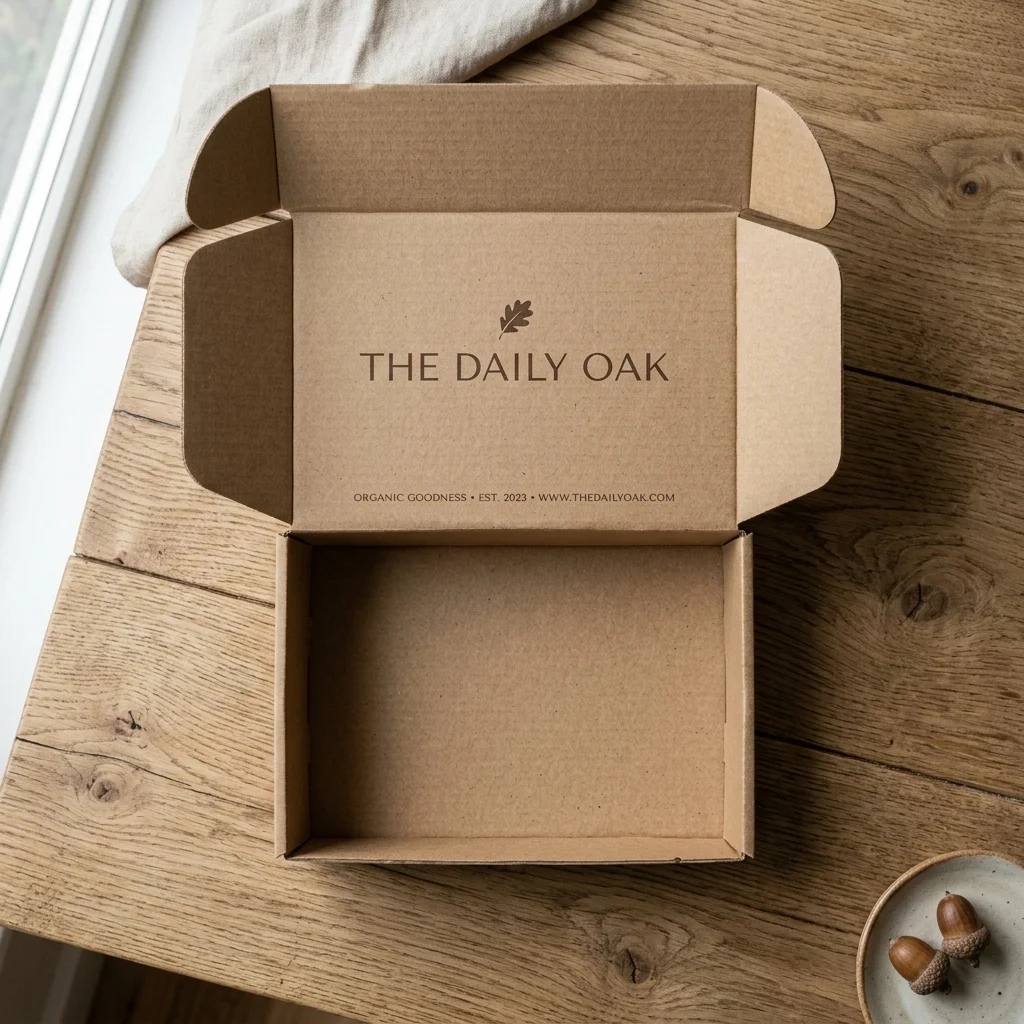 Branded kraft mailer box open on a wooden table
To construct custom packaging, you need a flat dieline, which is a two-dimensional vector pattern showing the cut lines, fold lines, and glue areas of your box. You can use online packaging design tools to place your artwork correctly on these dielines.
Standard mailer boxes are classified by their folding style. The Roll End Tuck Top (RETT) style is highly popular because the front lid tucks into the main body of the box, offering a clean exterior profile. If you require extra security without using tape, select the Roll End Front Tuck (REFT) style, which features locking dust flaps that secure into the front walls of the box.
Many brands overspend on packaging by choosing over-engineered materials or inefficient print options. To minimize your packaging spend while maintaining structural integrity, implement the following industrial design strategies.
First, optimize your box size to fit your product closely. Reducing your box volume by just 10% can reduce paperboard usage, which lowers material costs and can drop your shipping tier with postal carriers. If you ship multiple products of similar sizes, try to standardize on a single, versatile box size and use custom cardboard inserts or compostable tissue paper to fill any empty space.
Second, minimize your ink coverage. Printing a full-coverage flood coat of ink on both the inside and outside of a box requires more ink and slower press speeds, which increases production costs. Choosing a natural kraft paperboard with a simple, one-color black ink print on the exterior is a highly cost-efficient way to launch a product. As your business grows, you can transition to complex multi-color designs.
Finally, maximize your order quantities to reach price break thresholds. The setup time for a printing press is the same whether you print 100 boxes or 5,000 boxes. Purchasing a three-month or six-month supply of packaging at one time spreads these fixed setup costs over a larger number of units, reducing your individual box cost.
Based on the packaging orders we process at Cubit, brands that transition from small, frequent digital print runs of 100 units to a single flexographic run of 2,000 units reduce their average per-unit packaging cost by 45% to 60%, even after accounting for initial tooling plate charges.
To see how volume pricing affects your specific project, you can request a custom packaging quote based on your custom dimensions and ink requirements.
Custom printed mailer boxes typically cost between $0.85 and $3.50 per unit at volumes of 1,000 units. The final price depends on the overall box dimensions, the type of cardboard used, the printing method selected, and whether you print on one or both sides of the box.
At Cubit, our minimum order quantity for digital custom printed mailer boxes is 50 units, which is ideal for testing new designs. For flexographic printing, the minimum order is typically 1,000 units to offset the setup costs of the printing plates.
E-flute board is 1/16 inch thick and offers a smooth surface that is ideal for detailed printing on small to medium boxes. B-flute board is 1/8 inch thick, providing greater crush resistance and support for items weighing more than 10 pounds.
Yes, you can print on both the interior and exterior surfaces of your custom printed mailer boxes. Printing on the inside of the lid is a great way to display unboxing messages, instructions, or social media handles without affecting the shipping label space on the outside.
Standard production times for digital mailer orders range from 10 to 12 business days after artwork approval. For high-volume flexographic runs requiring tooling plates, production usually takes 15 to 20 business days, plus standard transit shipping times.
Selecting the correct packaging configuration is a balance of material strength, graphic design, and volume planning. By matching your production volumes with the correct printing process and optimizing your box sizes, you can build a reliable packaging pipeline that protects your products and keeps shipping costs low.
If you are ready to configure your own custom packaging, you can get a free quote for your packaging project or speak with our engineering team to review your structural requirements.
Get started on your custom branding with custom Printed Mailer Boxes directly from our online marketplace, or build a personalized quote at our RFQ Procurement portal.
Design your packaging free in 60s
Try the free AI packaging design toolNeed Custom Packaging?
Get a free quote with pricing, MOQs, and turnaround time for your custom packaging project.