
Packaging Guides
A practical guide to custom straight tuck end boxes for growing brands
Cubit Team
June 23, 2026

Custom Straight Tuck End Boxes are folding paperboard cartons where both the top and bottom closure flaps fold and tuck in the same direction, typically from the front of the box to the rear. This design creates a completely flat, clean front panel with no visible raw edges, making it highly desirable for high-end retail presentation. For consumer brands, choosing custom Straight Tuck End Boxes is a practical way to package lightweight goods like cosmetics, pharmaceuticals, and small electronics. This packaging style is easy to assemble on manual pack-out lines and integrates perfectly with high-speed automated carton-filling machinery.
Selecting the right retail carton requires an understanding of structural mechanics, board calipers, and production costs. While various folding carton styles exist, the straight tuck design offers a specific balance of visual appeal and structural simplicity. This guide walks you through the technical details of the straight tuck style, material options, and practical ways to manage production costs for your business.
In this guide:
To understand why this box style is so popular in retail, you have to look at its mechanical layout. A straight tuck box consists of a single piece of paperboard that is die-cut, creased, folded, and glued along a single side seam. The top and bottom closure flaps fold along parallel creases, tucking into the same side of the box body.
This layout ensures that the front display panel remains completely uninterrupted. When a customer looks at a product on a retail shelf, they do not see any exposed paperboard edges or raw cuts on the top or bottom of the face panel. All raw cut edges are positioned at the rear of the box, which creates a neat, professional appearance.
In addition to the main tuck flaps, straight tuck end cartons feature small dust flaps on the sides of the openings. These dust flaps fold inward first, blocking dust and debris from entering the box. A standard straight tuck carton can be assembled manually in under 4 seconds, reducing production line labor times compared to snap-lock bottom structures. This speed makes it highly useful for high-volume hand-packaging setups and automatic filling machines.
 A series of straight tuck folding cartons sitting on a modern retail shelf showing clean front panels
When designing custom folding cartons, packaging buyers often compare straight tuck end (STE) boxes with reverse tuck end (RTE) boxes. The primary difference is the direction in which the top and bottom flaps fold. While the flaps on a straight tuck box fold toward the same side, the flaps on a reverse tuck box fold in opposite directions.
This structural difference affects both the visual presentation of the box and the cost of production. On a reverse tuck box, the bottom flap folds toward the front, leaving a visible raw cut edge on the lower front face of the box. For premium brands, this small detail can detract from the clean aesthetic of the package. However, reverse tuck cartons nest together much more tightly on a flat sheet of paperboard during the manufacturing process. This nesting efficiency reduces raw material waste during die-cutting.
To help you choose between the two options, we have compiled the main mechanical differences in the comparison table below.
| Feature | Straight Tuck End (STE) | Reverse Tuck End (RTE) | Auto-Bottom Folding Box |
|---|---|---|---|
| Front Panel Appearance | Clean, flat edges with no visible raw seams | Visible raw cut paperboard edge at the bottom seam | Clean front, but visible heavy seams on the bottom |
| Sheet Nesting Efficiency | Lower efficiency, higher paperboard waste | High efficiency, minimal paperboard waste | Lowest efficiency, complex die cuts leave waste |
| Manual Assembly Speed | Fast (3 to 5 seconds per box) | Fast (3 to 5 seconds per box) | Instant bottom pop-up, but requires top tucking |
| Weight Capacity | Lightweight (under 1.5 lbs depending on board) | Lightweight (under 1.5 lbs depending on board) | Medium to heavy (up to 5 lbs) |
| Common Use Cases | Cosmetics, skincare, glass vials, small tech | Pharmaceuticals, toothpaste tubes, hardware | Heavy cosmetic jars, candles, diffusers, glass bottles |
For most premium retail applications, the slightly higher paperboard cost of a straight tuck box is justified by the cleaner presentation on store shelves. The choice depends on your budget, shipping requirements, and product weight.
The durability and feel of your packaging depend heavily on the paperboard substrate you select. Using the correct board weight, or caliper, prevents the box from bowing or tearing under the weight of the product. Paperboard thickness is measured in points (pt), where 1 pt equals 0.001 inches.
For retail goods, Solid Bleached Sulfate (SBS) paperboard is the industry standard. It is a premium, pure white board that offers excellent print quality and high brightness. It is ideal for high-definition graphics and intricate foil finishes. For brands looking for an organic, natural look, unbleached kraft paperboard is highly durable and contains natural wood fibers that resist tearing.
We recommend choosing your material based on these industry metrics:
To maintain high quality, we ensure our materials comply with recognized industry standards. For cosmetic and beauty brands, using Forest Stewardship Council (FSC) certified boards shows customers that your packaging is sourced from responsibly managed forests. If your products are sold in grocery or wellness spaces, the packaging must comply with US Food and Drug Administration (FDA) regulations for indirect food contact.
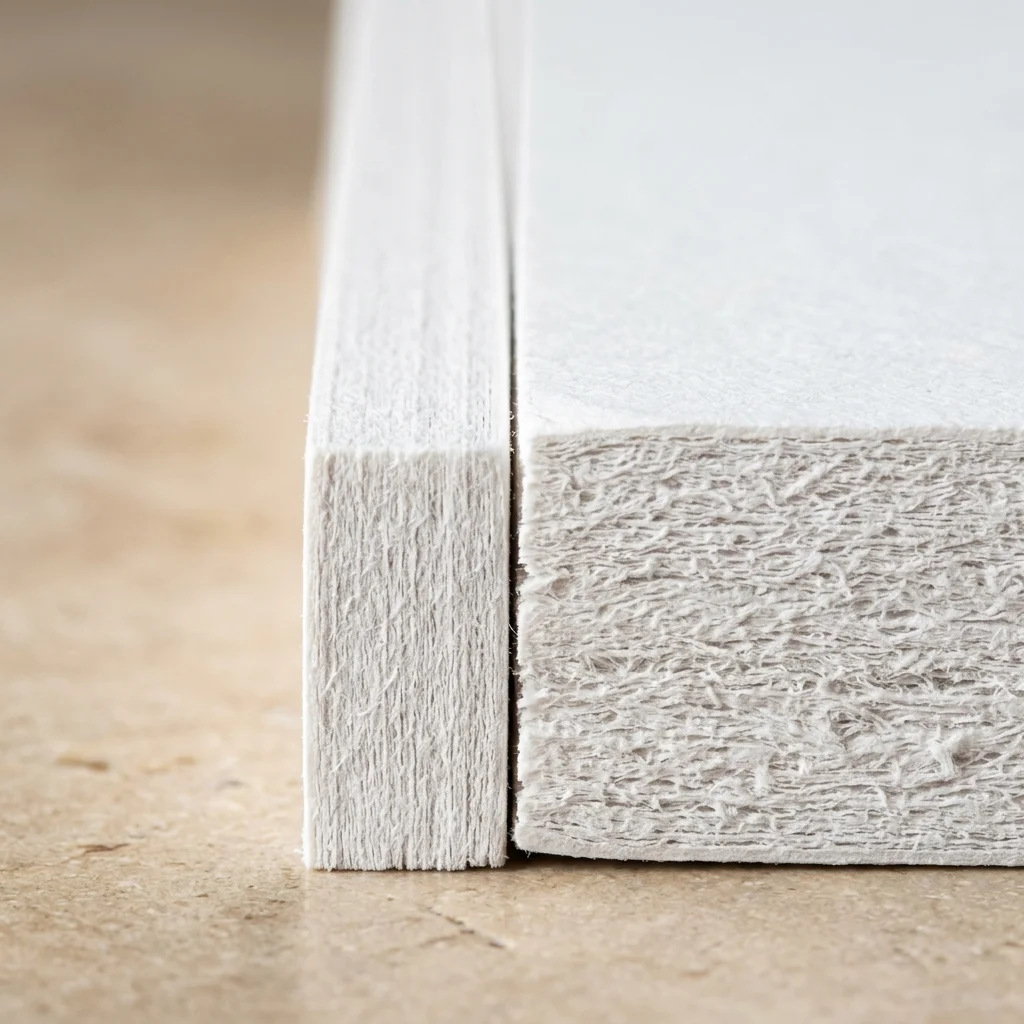 Close-up of paperboard thicknesses showing the differences between 16 pt and 24 pt SBS board
Designing custom Straight Tuck End Boxes requires attention to structural detail. The box dieline is the flat blueprint that guides the printing press, die-cutter, and gluing machines. To ensure your artwork prints perfectly, your design file must account for specific bleeds and clearance zones.
First, always include a 0.125-inch bleed around the entire dieline. This bleed ensures that your background colors and graphics extend past the cut lines, preventing thin white raw edges from showing if the paper shifts slightly on the printing press. Keep text, logos, and critical design elements at least 0.0625 inches away from all crease lines to prevent them from cracking or warping when the box is folded.
Second, consider the locking mechanisms on the tuck flaps. Friction fit flaps rely on the tight tolerance of the paperboard rubbing against the dust flaps to stay closed. For heavier items or products that may slide around, we recommend using slit locks. Slit locks are small, curved cuts on the dust flaps that catch the edges of the tuck flap when inserted, securing the package against opening during transport.
Third, choose your finishes carefully based on your target market. A matte aqueous coating protects the ink from scuffing and fingerprints without adding shine. For premium items, adding a spot gloss UV coating on top of a soft-touch lamination creates a tactile contrast that draws the eye to your logo.
Based on testing from the Technical Association of the Pulp and Paper Industry (TAPPI), proper crease scoring during manufacturing is vital. Without precise score lines, heavier paperboard grades can split or crack along the edges when folded, ruining the premium look of your custom packaging.
Managing packaging costs requires a clear view of how order volume affects production expenses. Setting up an industrial offset printing press and automatic gluing folder involves significant labor, plate making, and machine adjustments. These fixed setup costs are spread across your entire order, which means larger production runs yield lower unit prices.
We recommend that growing brands start by evaluating their sales volume before committing to a specific print run size. If you are launching a new product and need to test the market, digital printing is a cost-effective choice for runs under 1,000 units because it does not require expensive printing plates. However, for established products, offset lithography provides the lowest unit prices.
To give you a clear picture of how volume impacts pricing, we have compiled historical run metrics from our operations:
Based on the packaging orders we process at Cubit Packaging, ordering 5,000 units instead of 1,000 units typically reduces the per-unit cost of a 16 pt SBS folding carton by 55% to 62% due to shared setup costs of litho-laminated plates.
For example, a custom 3x3x6 inch straight tuck end carton made from FSC-certified 18 pt SBS board might cost $1.35 per box at a 1,000-unit minimum order quantity. If you scale that same order to 10,000 units, the price drops to approximately $0.34 per unit.
Another major benefit of this packaging style is shipping and storage efficiency. Straight tuck end boxes ship flat, meaning a single pallet can hold up to 25,000 flat boxes. This compact storage method reduces your incoming freight costs and saves valuable warehouse floor space compared to rigid setup boxes, which must be shipped and stored fully assembled.
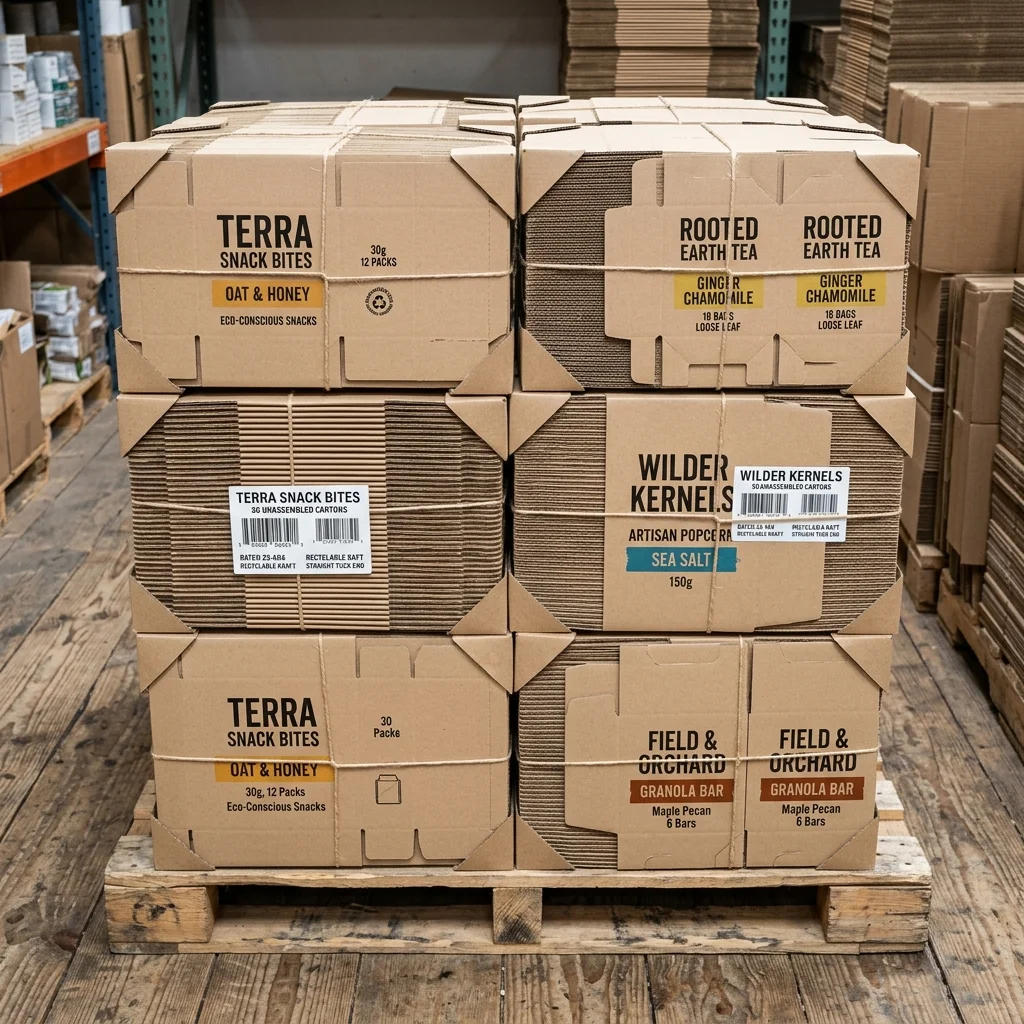 A stack of flat-packed straight tuck boxes neatly organized on a shipping pallet inside a clean warehouse
Straight tuck boxes have both the top and bottom closure flaps folding toward the same side, creating a clean front display panel. On reverse tuck boxes, the flaps fold in opposite directions, which allows the die-cut blanks to nest together more tightly on paperboard sheets, reducing raw material waste during production.
Yes, custom Straight Tuck End Boxes are highly compatible with automated cartoning machinery. The parallel alignment of the tuck flaps allows automated equipment to open, fill, and seal the boxes rapidly, making this style a preferred choice for high-volume cosmetics, health, and pharmaceutical pack-out operations.
The standard thickness for custom Straight Tuck End Boxes ranges from 16 pt to 24 pt paperboard. Most retail cosmetics and lightweight serums use 18 pt Solid Bleached Sulfate board because it provides optimal structural stiffness, holds its shape during shipping, and offers a smooth surface for high-resolution printing.
No, these boxes do not require tape or glue to close. The structural panels are designed with friction fit flaps or slit locks that tuck securely into the body of the box. Only the side seam of the carton is permanently glued during the high-speed manufacturing process at our facility.
Yes, straight tuck end boxes made from paperboard are fully recyclable in standard residential recycling programs. If you use FSC-certified board and soy-based inks without heavy plastic laminations, the boxes are also biodegradable and compostable, which helps your brand meet environmental sustainability goals.
Finding the right structural design, board material, and finish for your products is straightforward when you work with experienced packaging specialists. Our team can help you map out the correct dimensions, select the ideal paperboard caliper for your product weight, and avoid common design issues that cause ink cracking along fold lines.
If you want to review materials firsthand, you can order a pre-printed sample pack from our store to test different board thicknesses and finishes. When you are ready to begin production, you can easily upload your custom artwork to our dieline templates.
To start designing your custom Straight Tuck End Boxes, reach out to our team of structural packaging engineers. We will work with you to find the most cost-effective run size and material for your brand.
Get a free quote for your packaging project
Get started on your custom branding with custom Straight Tuck End Boxes directly from our online marketplace, or build a personalized quote at our RFQ Procurement portal.
Design your packaging free in 60s
Try the free AI packaging design toolNeed Custom Packaging?
Get a free quote with pricing, MOQs, and turnaround time for your custom packaging project.