
Industry Guides
Custom Medical Device Packaging: Sterile Barriers, ISO 11607 & FDA Compliance (2026)
Cubit Packaging Team
May 22, 2026
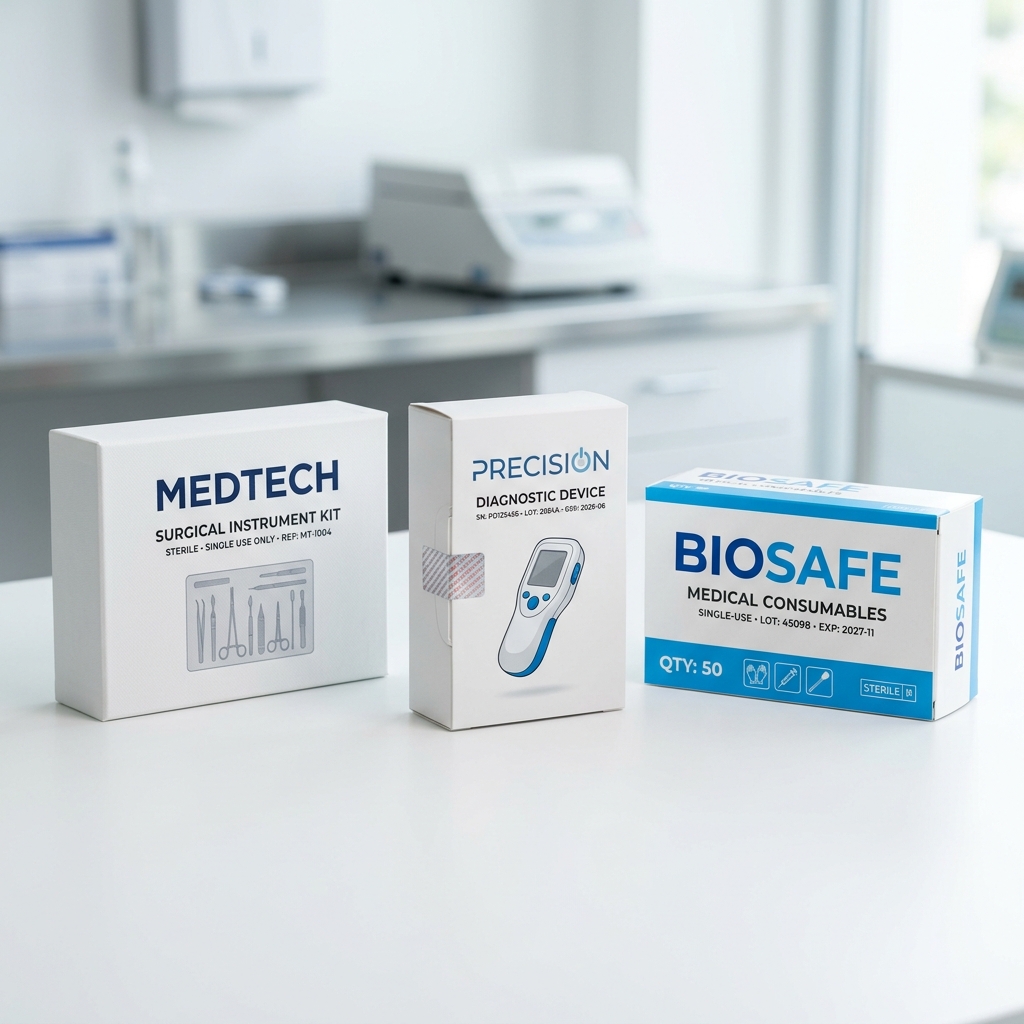
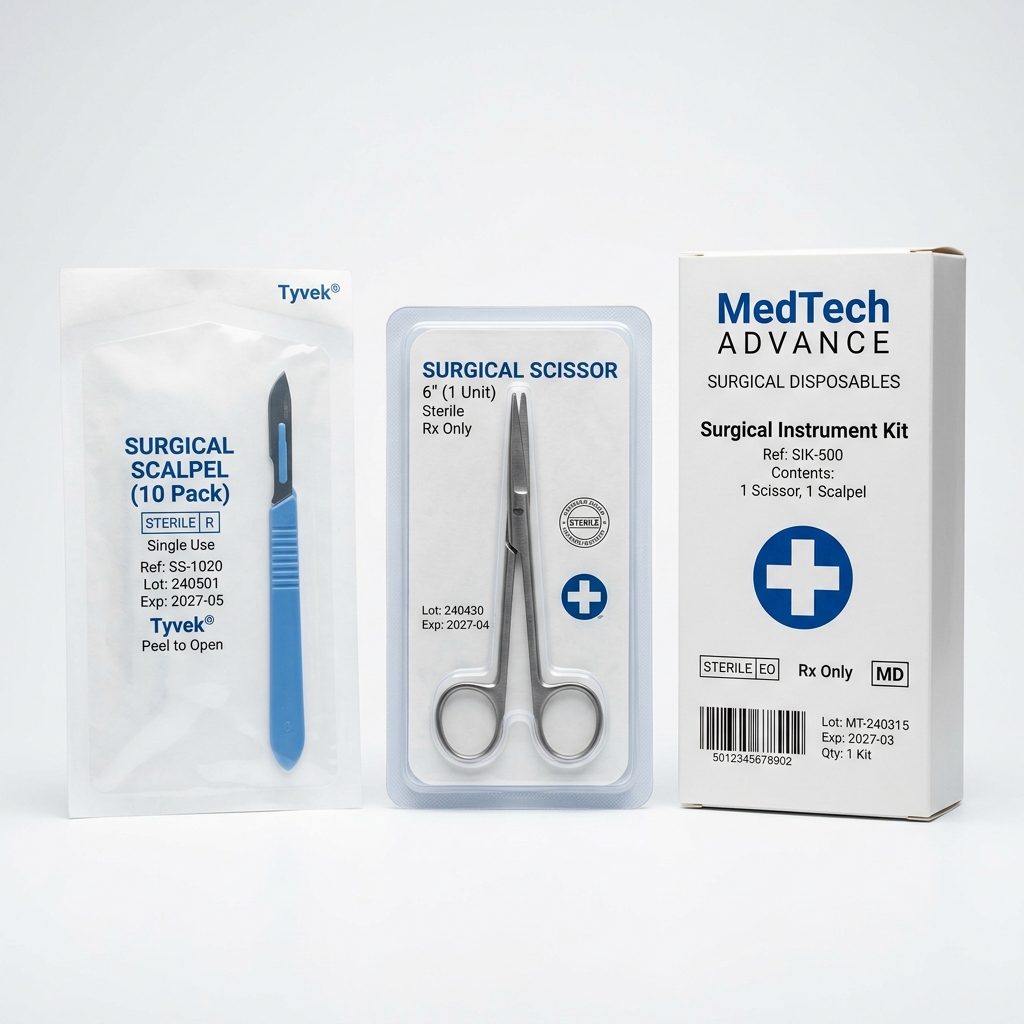
Medical device packaging is a validated sterile barrier system (SBS) that maintains device sterility from the point of sterilization through distribution, storage, and point-of-use opening by healthcare professionals. Unlike consumer packaging, every aspect of medical packaging — materials, sealing processes, aging stability, and transit performance — must be documented and validated per ISO 11607 and reviewed during FDA premarket submissions.
The stakes are uniquely high: a sterile barrier failure means a contaminated device reaches a patient. The FDA reported 72 packaging-related recalls in 2024, with causes including seal integrity failures (38%), labeling errors (28%), and material compatibility issues (18%). Each recall costs manufacturers an average of $5–$10 million in direct costs plus immeasurable brand damage.
The most common format for single-use sterile devices. Combines a Tyvek (HDPE spunbond) lidding material with a clear or semi-clear film web for product visibility and sterile containment.
| Feature | Specification |
|---|---|
| Material | 1073B or 1059B Tyvek + PET/PE or nylon/PE film |
| Sterilization | EO, gamma, e-beam compatible |
| Seal Type | Chevron or straight peel seal (validated per ASTM F88) |
| Best For | Surgical instruments, catheters, disposable devices |
| MOQ | 1,000 units |
| Cost Range | $0.25–$1.50/unit at 5,000 qty |
Custom-molded trays that cradle devices in precise cavities, sealed with a Tyvek or foil lid. Provides both sterile containment and mechanical protection for complex device geometries.
| Feature | Specification |
|---|---|
| Material | PETG, HIPS, or APET tray + Tyvek lid |
| Sterilization | EO, gamma, e-beam, steam (material-dependent) |
| Best For | Implants, kits, complex assemblies, orthopedic devices |
| MOQ | 500 units (soft tooling), 2,000+ (hard tooling) |
| Cost Range | $1.50–$8.00/unit at 5,000 qty |
Printed cartons that serve as secondary packaging around the sterile barrier (pouch or tray). Carry labeling, UDI codes, directions for use, and branding. Required by FDA for retail distribution.
| Feature | Specification |
|---|---|
| Material | 14pt–18pt SBS with aqueous or UV coating |
| Best For | All medical devices requiring retail/hospital shelf presentation |
| MOQ | 500 units |
| Cost Range | $0.45–$2.20/unit at 1,000 qty |
ISO 11607 is the mandatory standard for packaging of terminally sterilized medical devices. It has two parts:
| ISO 11607 Part | Scope | Key Requirements |
|---|---|---|
| Part 1: Materials & Design | Sterile barrier system requirements | Microbial barrier, biocompatibility, sterilization compatibility, seal integrity, aging stability |
| Part 2: Validation | Forming, sealing & assembly processes | IQ/OQ/PQ for sealing equipment, process parameters (temp, pressure, dwell time), ongoing process control |
| Test | Standard | Purpose |
|---|---|---|
| Seal strength | ASTM F88 | Measures peel force to validate consistent seals |
| Burst testing | ASTM F1140 / F2054 | Tests seal under internal pressure |
| Dye penetration | ASTM F1929 | Detects seal channel defects |
| Visual inspection | ASTM F1886 | Non-destructive seal evaluation |
| Accelerated aging | ASTM F1980 | Validates shelf life claims |
| Distribution simulation | ASTM D4169 / ISTA 3A | Transit and handling survival |
Compliance note: All medical device packaging must include accelerated AND real-time aging studies. The Q10 rule (10°C temperature increase doubles reaction rate) is used for accelerated aging. A 5-year shelf life claim requires approximately 10 weeks of accelerated aging at 55°C plus ongoing real-time data collection.
The FDA Unique Device Identification (UDI) system requires specific label elements on all medical device packaging:
ISO 11607 applies specifically to packaging for terminally sterilized medical devices. Non-sterile devices (e.g., mobility aids, reusable instruments) do not require sterile barrier validation but still need FDA-compliant labeling, UDI codes, and transit-tested shipping containers.
Sterile peel pouches cost $0.25–$1.50/unit at 5,000 qty. Custom thermoformed trays with Tyvek lids cost $1.50–$8.00/unit. Secondary cartons cost $0.45–$2.20/unit. Validation testing (IQ/OQ/PQ + aging + distribution) is a one-time cost of $15,000–$50,000 per package system.
Thermoformed tray tooling: 4–8 weeks. Production after tooling: 3–4 weeks. Peel pouches: 2–4 weeks. Cartons: 2–3 weeks. Validation testing: 8–16 weeks (including accelerated aging). Plan 6–9 months from design to validated, production-ready packaging.
Cubit provides custom-printed secondary packaging (cartons, labels, IFU inserts) for medical devices with FDA-compliant labeling and UDI integration. For primary sterile barriers (pouches, trays), we partner with ISO 13485-certified sterile packaging specialists to provide complete package system solutions.
Need compliant medical packaging? Get a custom quote or explore medical packaging solutions.
All packaging types mentioned in this guide are available from Cubit with custom printing, low MOQ, and free design support:
Mailer Boxes · Poly Mailers · Folding Cartons · Rigid Boxes · Stand-Up Pouches · Labels · Tissue · Get a Free Quote
Order custom packaging for your brand. Custom Mailer Boxes → | Custom Folding Cartons → | Custom Labels → — full-color printing, premium materials. From 500 units. Get a free quote →
Design your packaging free in 60s
Try the free AI packaging design toolNeed Custom Packaging?
Get a free quote with pricing, MOQs, and turnaround time for your custom packaging project.