
Industry Guides
Custom Electronics Packaging: Foam Inserts, ESD Protection & Tech Box Design (2026)
Cubit Packaging Team
May 22, 2026
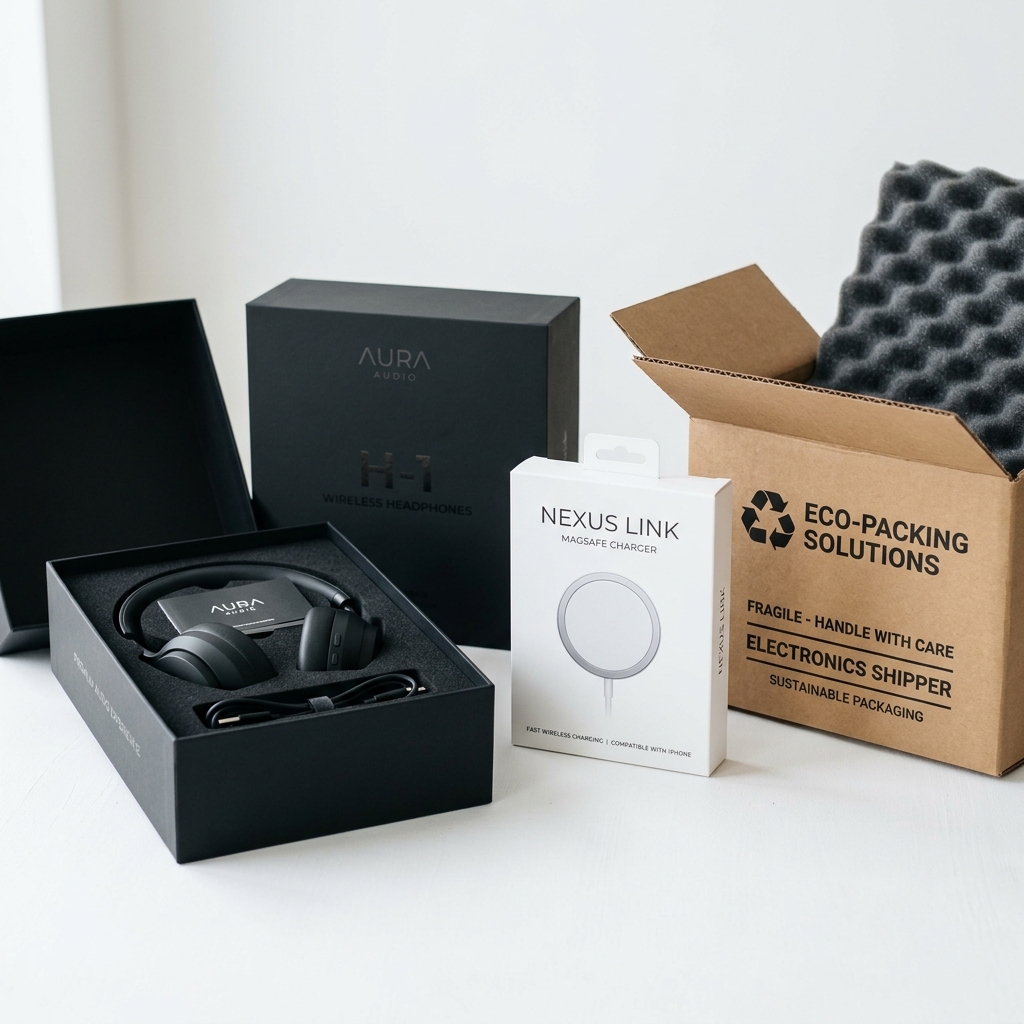
Custom electronics packaging is engineered protective enclosures designed specifically for consumer electronics, tech accessories, components, and devices. Unlike standard packaging, electronics packaging must address three simultaneous challenges: physical impact protection (drops, compression, vibration), electrostatic discharge prevention (ESD-safe materials rated to MIL-PRF-81705), and brand presentation (the "Apple-quality" unboxing standard that consumers now expect from all tech products).
According to a 2024 Packaging Digest survey, 81% of consumer electronics brands consider packaging a critical component of their product experience strategy — up from 56% in 2019. The shift reflects the "unboxing economy," where 35% of YouTube's most-watched product review videos focus specifically on packaging and first impressions (Dotcom Distribution, 2024).
Two-piece or hinged rigid boxes are the standard for premium electronics — smartphones, headphones, smartwatches, and high-end accessories. Built from heavy chipboard with paper wrapping and custom foam inserts, they deliver the "lift-the-lid" experience consumers associate with Apple, Bose, and Samsung.
| Feature | Specification |
|---|---|
| Material | 1,200–2,000 GSM chipboard, paper-wrapped |
| Insert | Die-cut EVA/PE foam or molded pulp |
| Best For | Headphones, earbuds, smartwatches, premium speakers |
| ESD Rating | Optional — anti-static coating available |
| MOQ | 500 units |
| Cost Range | $4.50–$12.00/unit at 1,000 qty |
| Lead Time | 15–20 business days |
SBS folding cartons with die-cut inserts are the cost-effective standard for tech accessories — phone cases, cables, chargers, adapters, and peripherals. They provide strong retail shelf presence at 60–70% less cost than rigid boxes.
| Feature | Specification |
|---|---|
| Material | 350–450 GSM SBS or C1S paperboard |
| Insert | Die-cut cardboard or plastic blister tray |
| Best For | Phone cases, cables, chargers, USB accessories |
| MOQ | 500 units |
| Cost Range | $0.65–$2.20/unit at 1,000 qty |
| Lead Time | 10–14 business days |
Custom-printed corrugated boxes with die-cut foam inserts for shipping electronics direct-to-consumer. Serves dual purpose: shipping protection and brand experience upon delivery.
| Feature | Specification |
|---|---|
| Material | B-flute or E-flute corrugated, 200# ECT-32 |
| Insert | PE foam, EPE, or molded pulp cradles |
| Best For | DTC electronics, monitors, small appliances |
| MOQ | 250 units |
| Cost Range | $1.80–$5.50/unit at 1,000 qty |
Static-dissipative and shielding bags, trays, and boxes that protect sensitive electronic components from electrostatic discharge during handling and shipping.
| Feature | Specification |
|---|---|
| Material | Metallized polyester bags, PE foam (anti-static), conductive corrugated |
| ESD Rating | Surface resistance: 10⁵–10¹¹ ohms (dissipative) or <10⁵ ohms (conductive) |
| Best For | PCBs, semiconductors, sensitive components, repair parts |
| MOQ | 1,000 units |
| Cost Range | $0.15–$0.85/unit (bags), $0.80–$3.50/unit (trays) |
Thermoformed PET or RPET plastic shells sealed to printed cardboard backer cards. Standard retail format for accessories sold on peg hooks at Best Buy, Target, and Amazon retail.
| Feature | Specification |
|---|---|
| Material | PET/RPET blister + 18pt SBS backer card |
| Best For | Small electronics, USB drives, earbuds, adapters |
| MOQ | 1,000 units |
| Cost Range | $0.35–$1.20/unit at 3,000 qty |
The right insert is critical for electronics packaging — it must absorb shock, prevent movement, and present the product in a "floating" display that emphasizes premium quality:
| Insert Type | Cost/Unit | Protection | Best For |
|---|---|---|---|
| Die-cut EVA foam | $0.40–$1.50 | Excellent — custom-shaped cavities | Headphones, controllers, tools |
| EPE foam (expanded PE) | $0.30–$1.20 | Very good — shock absorption | Small appliances, speakers |
| Molded pulp trays | $0.25–$0.80 | Good — sustainable alternative | Earbuds, chargers (Apple-style) |
| Die-cut corrugated | $0.15–$0.50 | Moderate — basic protection | Lightweight accessories |
| Flocked plastic inserts | $0.50–$1.80 | Excellent — premium presentation | Luxury audio, watches |
| Anti-static PE foam | $0.45–$1.60 | Excellent — ESD + shock protection | PCBs, components, repair parts |
Industry trend: Molded pulp inserts grew 42% in consumer electronics adoption between 2023 and 2025 (Smithers Packaging Intelligence), driven by Apple's transition from plastic trays to fiber-based inserts in iPhone, AirPods, and MacBook packaging.
Understanding ESD protection standards is critical for component and device packaging. The three levels defined by ANSI/ESD S541:
| Level | Surface Resistance | Function | Use Cases |
|---|---|---|---|
| Insulative | >10¹¹ ohms | Standard packaging (no ESD protection) | Finished consumer products |
| Dissipative | 10⁵–10¹¹ ohms | Safely drains static charge to ground | Components, repair parts, PCBs |
| Conductive | <10⁵ ohms | Rapidly removes charge + Faraday cage shielding | Bare ICs, sensitive semiconductors |
According to a 2024 Deloitte survey, 64% of consumers aged 18–34 prefer electronics brands that use sustainable packaging. Key eco-friendly options for tech packaging:
A typical tech startup packaging stack includes: a folding carton or rigid box (primary container), a die-cut foam or molded pulp insert (product protection), a corrugated shipping box (transit protection), and printed inserts (quick-start guide, warranty card). Total cost per unit: $2.50–$8.00 depending on product size and premium level. MOQ starts at 500 units.
Custom electronics packaging costs $0.65–$12.00+ per unit. Folding cartons for accessories: $0.65–$2.20. Rigid boxes with foam inserts for premium devices: $4.50–$12.00. Corrugated shipping boxes with inserts: $1.80–$5.50. Anti-static bags: $0.15–$0.85. Volume discounts of 25–40% apply at 5,000+ units.
Finished consumer electronics in plastic enclosures (phones, tablets, headphones) generally do not need ESD packaging — the device housing provides adequate protection. ESD packaging is essential for exposed PCBs, bare components, semiconductors, repair parts, and devices without protective enclosures.
Standard lead times: folding cartons 10–14 business days, corrugated boxes 7–12 days, rigid boxes 15–20 days. Foam insert tooling adds 3–5 days on first orders. Rush production is available at 15–25% premium with 7–10 day turnaround.
Yes. The "Apple packaging standard" uses rigid chipboard boxes with magnetic closures, molded fiber inserts, soft-touch lamination, and minimal exterior printing. At 1,000-unit orders, this level of packaging costs $6.00–$12.00/unit — achievable for premium electronics brands. Cubit replicates this construction with custom dimensions and branding.
Ready to package your tech product? Get a custom electronics packaging quote or explore electronics packaging solutions.
All packaging types mentioned in this guide are available from Cubit with custom printing, low MOQ, and free design support:
Mailer Boxes · Poly Mailers · Folding Cartons · Rigid Boxes · Stand-Up Pouches · Labels · Tissue · Get a Free Quote
Order custom packaging for your brand. Custom Mailer Boxes → | Custom Folding Cartons → | Custom Labels → — full-color printing, premium materials. From 500 units. Get a free quote →
Design your packaging free in 60s
Try the free AI packaging design toolNeed Custom Packaging?
Get a free quote with pricing, MOQs, and turnaround time for your custom packaging project.