
Packaging Guides
A practical guide to custom clear labels for growing brands
Cubit Team
July 8, 2026
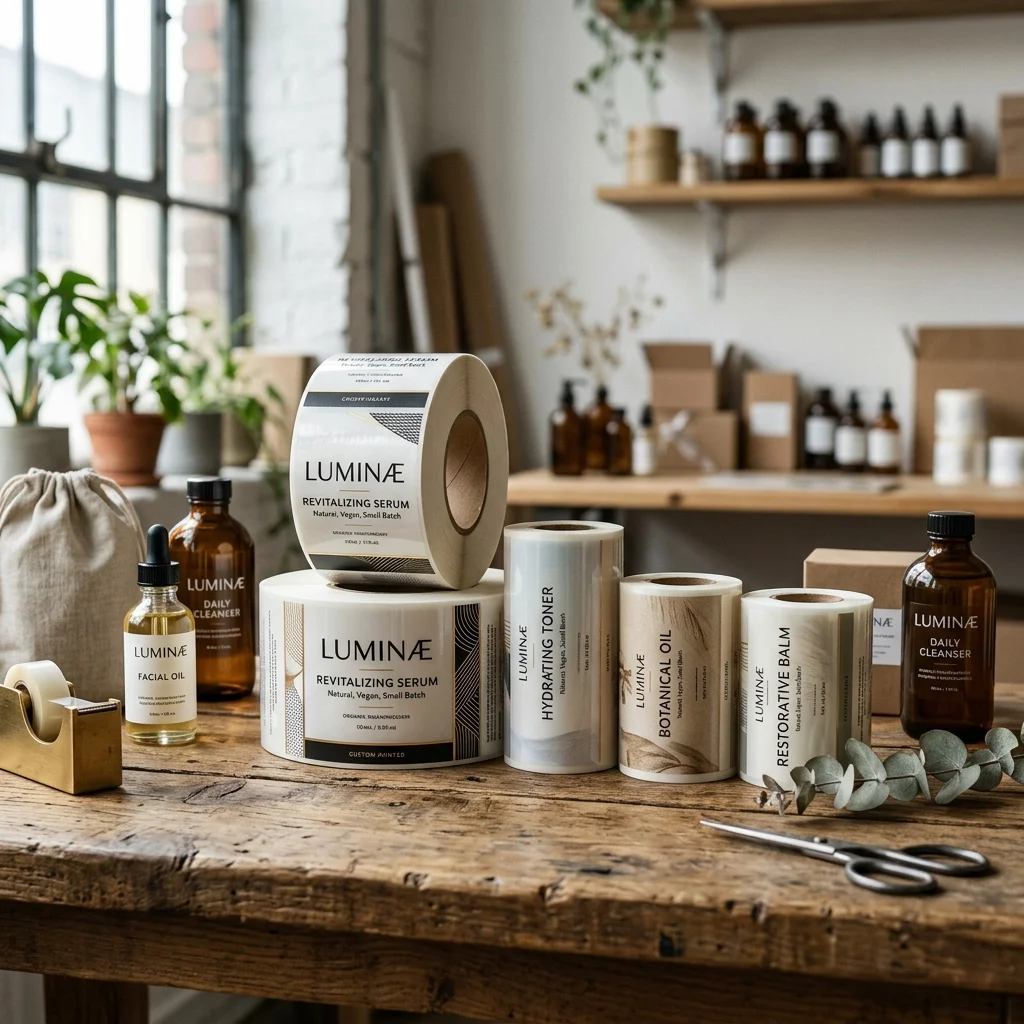
Custom clear labels are transparent pressure-sensitive stickers made from plastic films like polypropylene or polyester that allow the container or product inside to show through, creating a clean, modern 'no-label' look. For growing brands, using custom clear labels is a cost-effective alternative to direct-to-bottle printing, offering a high-end, minimalist aesthetic at a fraction of the cost. When applied correctly to glass, plastic, or metal, these labels virtually disappear into the container, highlighting the color and texture of the product itself.
But achieving this seamless look requires careful planning. Unlike paper stickers, clear labels show every speck of dust, trapped air bubble, or adhesive smear underneath. Choosing the right material, liner, and adhesive determines whether your packaging looks professionally finished or cheaply made. This guide covers everything you need to know about designing, sourcing, and applying clear stickers for your product line.
In this guide:
Many brands choose clear packaging because it builds immediate trust with shoppers. When a customer can see the actual color of a cold-pressed juice, the texture of a bath salt, or the clarity of a facial serum, they feel more confident in their purchase. Standard paper labels block this view, creating a physical barrier between the buyer and the product. Transparent labels solve this issue by keeping the focus on your product contents.
This design approach works particularly well in the personal care, beverage, and specialty food industries. For example, a honey jar with a transparent label allows the natural golden hue of the honey to catch the light on a grocery shelf. In the cosmetic space, brands use clear labels on frosted glass bottles to create a soft, elegant look that rivals high-end luxury brands.
Before ordering, you must consider the color of your product. Dark liquids or textured scrubs can make dark text on a transparent label completely unreadable. We always recommend testing your label design against a filled container, not just an empty one, to ensure your branding remains legible under real-world conditions.
Not all clear labels are made from the same plastic. The two most common materials are Biaxially Oriented Polypropylene (BOPP) and Polyethylene Terephthalate (PET) polyester. Your choice depends on your product's environment and the flexibility of your container.
BOPP is the workhorse of the product packaging industry. It is highly resistant to moisture, oils, and acids, making it the standard choice for bath products, craft beers, and kitchen condiments. PET polyester is thinner but tougher, offering excellent heat resistance and durability for industrial applications or products that undergo high-temperature processing.
| Material / Liner Feature | BOPP (Polypropylene) | PET (Polyester) | Paper Liner | PET (Polyester) Liner |
|---|---|---|---|---|
| Best Use Case | Squeezable bottles, food, bath products | Rigid glass, high-temperature uses | Manual label application | High-speed machine application |
| Flexibility | High (stretches slightly) | Low (rigid and tough) | N/A | N/A |
| Moisture Resistance | Excellent | Outstanding | Poor | Impervious |
| Clarity Level | High | Ultra-clear | Standard | Maximum transparency |
| Relative Cost | Moderate | Higher | Budget-friendly | Premium |
The liner, which is the backing paper you peel the label off of, also plays a critical role in the final appearance. Standard paper liners leave microscopic dust fibers on the adhesive back when peeled. These tiny fibers create a slight haze under the applied label. For absolute clarity, we recommend specifying a PET polyester liner. PET liners are completely smooth, leaving the adhesive perfectly clear and free of dust during application.
Because printer inks are naturally translucent, printing directly onto a clear substrate makes your graphics look faint and washed out. To prevent this, professional label printers use a technique called white underprinting.
By laying down a solid layer of opaque white ink beneath your colored artwork, the printer creates a barrier that blocks out the color of the product behind it. This ensures your logos and text remain bright and readable, even on dark glass or colored liquids.
You can also choose to leave some design elements without a white backing to create a stained-glass effect. This is highly effective for botanical illustrations or geometric patterns where you want the light to filter through the ink.
According to the Association of Plastic Recyclers (APR) design guidelines, the choice of inks and adhesives also impacts the recyclability of the container. Using washable inks helps municipal recycling facilities process plastic bottles more efficiently, which is an important consideration for environmentally conscious brands.
Applying a clear sticker is much more unforgiving than applying a paper one. Any air trapped during application will show as a silver bubble. To avoid this, you need the right adhesive and a controlled application process.
Adhesives come in permanent, removable, and repositionable options. For most retail products, a permanent acrylic emulsion adhesive is best because it resists water and oil. If you are applying labels by hand, a repositionable adhesive gives your assembly team a few seconds to peel the label back and correct any crooked placements before the bond cures.
Based on the packaging orders we process at Cubit, over 74% of clear label application issues are caused by manual application on uncleaned surfaces. Simple prep steps can reduce label failure rates to under 0.5%.
To achieve a bubble-free application, follow these steps:
Many emerging brands love the look of direct screen printing on glass bottles, but the high minimum order quantities (MOQs) and setup costs are often prohibitive. Custom clear labels offer an identical look at a fraction of the cost, especially at lower volumes.
Direct screen printing typically requires minimum runs of 5,000 to 10,000 bottles per SKU, and you must ship your empty bottles to a decorator, adding heavy freight costs. If a design changes, any pre-printed bottle inventory must be discarded.
With clear labels, you can order as few as 100 to 500 labels at a time from our custom labels store. You can buy generic blank bottles in bulk and only label what you need for each production run. This flexibility keeps your cash flow healthy and prevents wasted packaging inventory when formulas or regulatory texts change.
To see how your custom packaging fits into your overall budget, you can design your matching boxes using our 3D design tool or browse our custom product boxes to build a complete retail presentation.
Yes, custom clear labels made from BOPP or polyester with acrylic adhesives are completely waterproof. They easily withstand wet bathroom environments, kitchen condensation, and direct immersion in ice chests without wrinkling, peeling, or ink running.
White underprinting is the process of printing a solid layer of white ink directly beneath your colored design on a clear material. This white layer blocks out the color of the container, ensuring your branding colors remain bright, accurate, and easy to read.
Standard glossy transparent labels cannot be written on with regular pens. If you need to write batch numbers or expiration dates on your labels by hand, you must specify a matte clear laminate and use a permanent fine-tip marker.
To prevent bubbles, clean the application surface with alcohol to remove oil and dust. Apply the label from one side to the other, or from the center outward, using a firm squeegee to push air out as the adhesive makes contact.
At Cubit Packaging, we offer low minimums starting at just 100 units for digital runs, making it easy for growing brands to test new designs. You can quickly request a custom size and quantity through our online RFQ page.
If you want to create a clean, modern look for your next product launch, clear labels are one of the most reliable ways to make your product the star of the show. By choosing the right materials and prep steps, you can get professional, retail-ready results on almost any container.
Ready to start your next packaging project? Get a free quote for your packaging project and let our team help you find the perfect labeling solution for your brand.
Get started on your custom branding with custom Clear Labels directly from our online marketplace, or build a personalized quote at our RFQ Procurement portal.
Design your packaging free in 60s
Try the free AI packaging design toolNeed Custom Packaging?
Get a free quote with pricing, MOQs, and turnaround time for your custom packaging project.