
7 Types of Rigid Boxes: Magnetic, Drawer, Book-Style & More (2026 Guide)
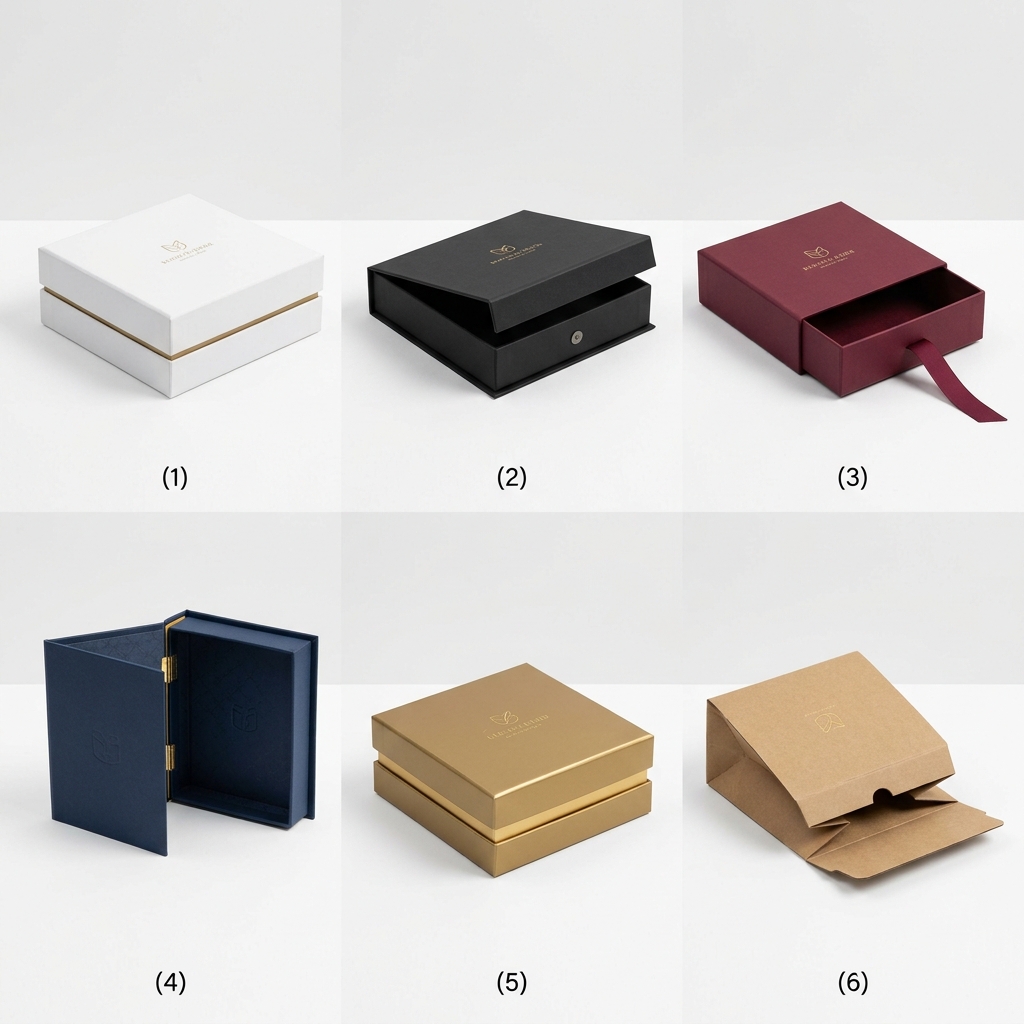
7 Types of Custom Rigid Boxes: Which Style Is Right for Your Brand?
Not all rigid boxes are created equal. The structural style you choose determines the unboxing experience, production cost, storage efficiency, and brand perception. This guide covers the seven most popular rigid box styles, their construction, cost impact, and ideal use cases.
1. Two-Piece Lid and Base Box
The classic rigid box format. A separate lid (top) telescopes over a base (bottom), held in place by friction fit.
- Construction: Two separate rigid trays — the lid is slightly larger than the base
- Cost: Baseline (most affordable rigid style)
- Assembly: Ships fully assembled, takes moderate storage space
- Best for: Gift boxes, general luxury retail, cosmetics sets
- Pros: Simple, elegant, easy to open, cost-effective manufacturing
- Cons: Lid can slide off if not friction-fit precisely; no locking mechanism
- Industries: Cosmetics, apparel, corporate gifts, food/confectionery
2. Magnetic Closure Box
A hinged box with embedded neodymium magnets that create a satisfying "snap" closure. The lid opens on a hidden hinge and snaps shut magnetically.
- Construction: One-piece with integrated hinge and embedded magnet pairs
- Cost: +25–40% vs baseline
- Assembly: Ships assembled; the magnetic mechanism adds weight
- Best for: Luxury cosmetics, premium retail, high-end electronics
- Pros: Secure closure, dramatic reveal, premium feel, reusable
- Cons: Higher cost, heavier, magnets can interfere with some electronics
- Industries: Beauty, jewelry, tech accessories, luxury fashion
3. Drawer (Slide-Out) Box
An inner tray slides out of an outer sleeve, often using a ribbon pull tab or thumb notch for easy access.
- Construction: Two nested components — outer sleeve + inner sliding tray
- Cost: +30–50% vs baseline
- Assembly: Requires precise tolerance matching between sleeve and tray
- Best for: Jewelry, watches, small luxury items, premium chocolate
- Pros: Theatrical reveal, multi-layered experience, secure during transit
- Cons: Complex manufacturing, tight tolerance requirements, higher cost
- Industries: Fine jewelry, watches, premium confectionery, luxury accessories
4. Book-Style Hinged Box
Opens like a hardbound book, with a hinged lid attached to the base. Often features a magnetic or ribbon closure.
- Construction: One-piece with fabric or paper hinge connecting lid to base
- Cost: +20–35% vs baseline
- Assembly: Ships assembled; hinge adds durability
- Best for: PR kits, media boxes, corporate welcome kits, spirits
- Pros: Dramatic "book opening" reveal, lies flat when open, excellent for layered contents
- Cons: Requires reinforced hinge; large footprint when open
- Industries: Corporate gifting, spirits, luxury fashion, influencer kits
5. Shoulder and Neck Box
A sophisticated three-part design: the lid rests on a raised "shoulder" that sits above the base, creating a visible "neck" between lid and base.
- Construction: Three components — lid, shoulder ring (neck), and base
- Cost: +35–50% vs baseline
- Assembly: Complex; requires precise alignment of three pieces
- Best for: Perfume, spirits, ultra-luxury products
- Pros: Highest perceived value, layered reveal, iconic luxury packaging format
- Cons: Most expensive style, complex assembly, significant storage footprint
- Industries: Perfume/fragrance, premium spirits, haute couture, fine jewelry
6. Collapsible Rigid Box
A space-saving innovation: the box folds flat for shipping and storage, then pops into a fully rigid structure using hidden magnets or adhesive strips.
- Construction: Rigid panels with engineered fold points and magnetic assembly
- Cost: +15–25% vs baseline
- Assembly: Ships flat; assembles in 3–5 seconds
- Best for: E-commerce luxury brands, international shipping, space-constrained warehouses
- Pros: Saves 60–70% shipping/storage volume, premium look when assembled
- Cons: Slightly visible fold lines, less structural rigidity than traditional setup boxes
- Industries: E-commerce, DTC luxury, subscription gifts, international exports
7. Clamshell Box
A one-piece box with a hinged lid that opens upward like a shell. The base and lid are permanently connected.
- Construction: One continuous piece with integrated hinge
- Cost: +15–25% vs baseline
- Assembly: Ships assembled; compact footprint
- Best for: Media kits, stationery sets, luxury pens, corporate welcome packages
- Pros: Simple opening, professional look, secure closure
- Cons: Limited interior depth; best for flat or shallow products
- Industries: Corporate stationery, luxury pens, tech accessories, media kits
Cost Comparison Table
| Style | Cost vs Baseline | Price Range (1,000 qty, 6×6×3") | Complexity |
|---|---|---|---|
| Two-Piece Lid & Base | Baseline | $5.00–$8.00 | Low |
| Magnetic Closure | +25–40% | $6.50–$11.00 | Medium |
| Drawer Slide-Out | +30–50% | $6.50–$12.00 | High |
| Book-Style Hinged | +20–35% | $6.00–$10.50 | Medium |
| Shoulder & Neck | +35–50% | $7.00–$12.00 | High |
| Collapsible | +15–25% | $5.75–$10.00 | Medium |
| Clamshell | +15–25% | $5.75–$10.00 | Low-Medium |
How to Choose the Right Style
Ask these three questions:
- What is the unboxing moment you want to create? — Dramatic reveal (drawer, shoulder & neck), simple elegance (two-piece, clamshell), or secure snap (magnetic)
- What are your storage and shipping constraints? — Warehouse space limited? Choose collapsible. International shipping? Also collapsible. Local retail? Any style works
- What is your per-unit packaging budget? — Under $6? Two-piece or clamshell. $6–$10? Magnetic or book-style. $10+? Drawer or shoulder & neck
Frequently Asked Questions
Which rigid box style is most popular?
The two-piece lid and base is the most commonly ordered style due to its balance of cost, elegance, and versatility. Magnetic closure boxes are the fastest-growing style due to the premium unboxing trend.
Can I combine styles (e.g., magnetic closure with drawer)?
Yes — hybrid designs are possible but increase complexity and cost. A magnetic-closure drawer box, for example, combines the best of both but costs 50–70% more than a standard two-piece.
Which style ships the most efficiently?
Collapsible rigid boxes are the clear winner — they fold flat, saving 60–70% of shipping volume. All other styles ship fully assembled.
Ready to order custom rigid boxes? Browse all styles or get a free quote for your preferred configuration. Our AI packaging consultant can recommend the best style for your product.
Order custom rigid boxes. Custom Rigid Boxes → — magnetic closure, foil stamping, velvet inserts. From $3.50/unit, 500 MOQ. Browse rigid boxes →