
Corrugated Box Types: RSC, FOL, HSC & Die-Cut Explained (2026)
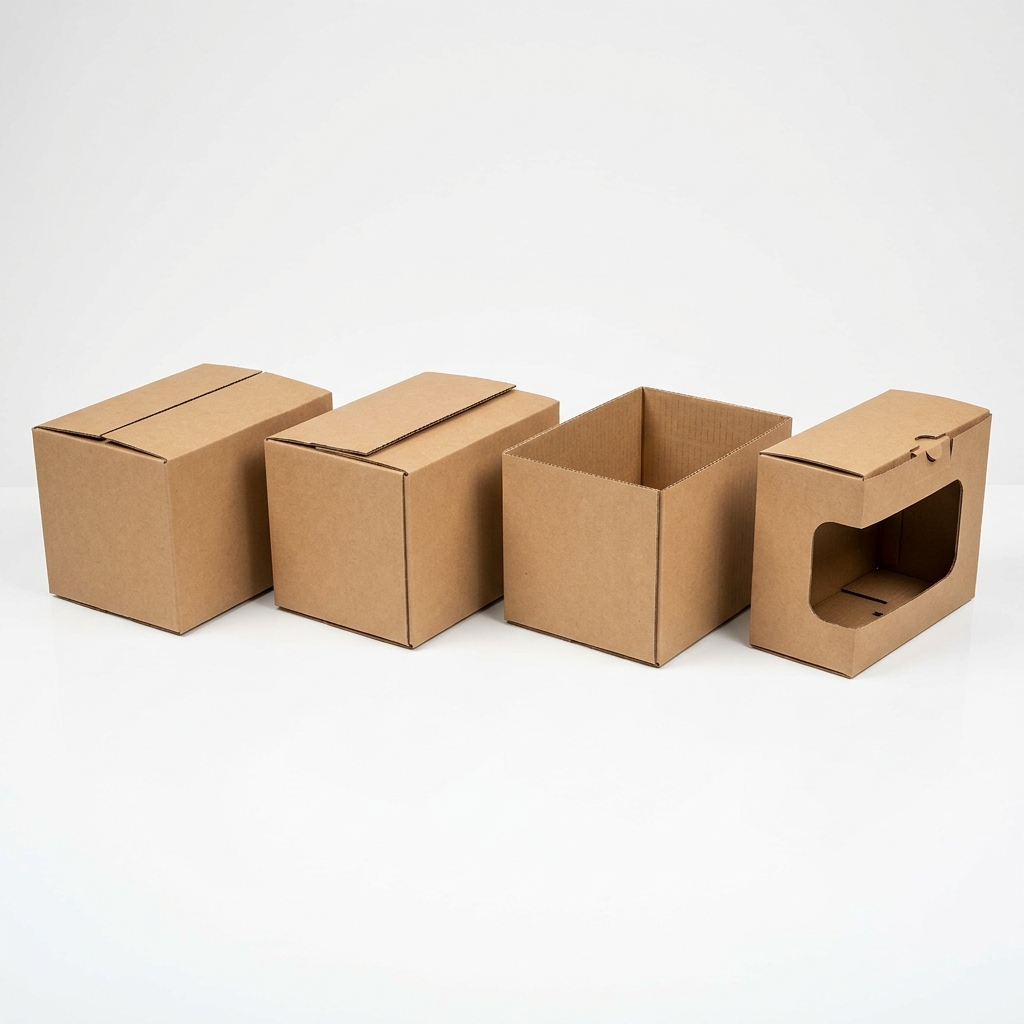
Corrugated Box Types: A Complete Guide to Every Style
Corrugated boxes come in dozens of standardized styles, each designed for specific shipping, storage, and retail applications. Understanding the differences helps you choose the most cost-effective and protective packaging for your products. Here are the six most common styles used in modern logistics.
1. Regular Slotted Container (RSC)
The RSC accounts for over 80% of all corrugated boxes manufactured worldwide. It is the industry standard for shipping and storage.
- Construction: Single blank scored and folded into four sides. Four flaps on top and bottom meet at the center when closed
- Cost: Most affordable — produces minimal manufacturing waste
- Closure: Requires tape on top and bottom flaps
- Best for: General shipping, e-commerce, warehousing, moving
- Limitations: Flaps only meet at center (not fully overlapping), so top/bottom strength is moderate
- FEFCO Code: 0201
When to choose RSC: If you need a standard shipping box with no special requirements, RSC is always the default choice. It is the cheapest, fastest to produce, and universally compatible with automated packing lines.
2. Full Overlap Container (FOL)
The FOL features flaps that fully extend across the box, creating double-layer protection on top and bottom.
- Construction: Same as RSC but with extended outer flaps that overlap completely
- Cost: +15–20% vs RSC due to extra material
- Closure: Tape or staples; overlap provides added security
- Best for: Heavy items (40+ lbs), fragile goods, rough shipping conditions
- Limitations: Uses more material; slightly heavier
- FEFCO Code: 0203
When to choose FOL: Products over 40 lbs, items shipped via LTL freight with rough handling, or any application requiring extra stacking strength.
3. Half Slotted Container (HSC)
The HSC is an RSC with one set of flaps removed (typically the top), creating an open-top box.
- Construction: Four sides with flaps on bottom only; open top
- Cost: 5–10% cheaper than RSC (less material)
- Closure: Typically used with a separate lid or left open
- Best for: Retail displays, bins, packing trays, reusable containers
- Limitations: Requires separate lid for shipping; not suitable for stacking without lid
- FEFCO Code: 0200
When to choose HSC: Retail display bins, warehouse picking trays, or any application where the top must remain accessible.
4. Die-Cut Custom Boxes
Die-cut boxes use a custom steel-rule die to create precise shapes, slots, tabs, and locking mechanisms.
- Construction: Custom die cuts the blank into any shape; may include auto-lock bottoms, tuck flaps, or display features
- Cost: +25–50% vs RSC (die tooling $150–$400 + per-unit premium)
- Closure: Self-locking tabs, tuck flaps, or glue
- Best for: Retail packaging, subscription boxes, products needing custom inserts
- Limitations: Higher tooling cost; not ideal for standard bulk shipping
- FEFCO Code: Various
When to choose die-cut: When your box needs to double as retail packaging, include built-in inserts, or have a non-rectangular shape.
5. Telescoping Boxes
A two-piece design where the lid slides over the base, similar to a gift box construction but in corrugated.
- Construction: Separate top (lid) and bottom (base) pieces
- Cost: +20–30% vs RSC (two separate pieces)
- Closure: Friction fit between lid and base
- Best for: Flat items (artwork, mirrors), heavy items needing top access, presentation packaging
- Limitations: Two pieces to track; higher material cost
When to choose telescoping: Artwork, mirrors, heavy equipment where top-loading is essential, or when a more premium corrugated presentation is needed.
6. Five-Panel Folder
A single-piece wrap designed for long, narrow, or flat items that don't fit standard box proportions.
- Construction: Five panels fold around the product; the fifth panel creates a double-layer on one side
- Cost: Similar to RSC for the material used
- Closure: Tape or staples
- Best for: Long items (fishing rods, curtain rods, pipes), flat items (signs, panels)
- Limitations: Not suitable for heavy or cube-shaped products
Cost Comparison Table
| Style | Cost vs RSC | MOQ at Cubit | Best Application |
|---|---|---|---|
| RSC | Baseline | 500 units | Standard shipping |
| FOL | +15–20% | 500 units | Heavy/fragile items |
| HSC | -5–10% | 500 units | Displays, open bins |
| Die-Cut | +25–50% | 500 units | Retail, subscriptions |
| Telescoping | +20–30% | 1,000 units | Flat/heavy items |
| Five-Panel | ~Same | 1,000 units | Long/narrow items |
Frequently Asked Questions
What is the most common corrugated box type?
The RSC (Regular Slotted Container) is by far the most common, representing over 80% of all corrugated boxes produced. Its cost efficiency, easy assembly, and compatibility with automated packing systems make it the default choice.
Can I mix box types in one order?
Yes — Cubit Packaging can produce multiple box styles in a single order. Many brands use RSC boxes for standard shipping and die-cut boxes for retail or subscription products.
Which box type is strongest?
For standard single-wall board, the FOL (Full Overlap) is strongest due to the double-layer top and bottom. For maximum strength overall, choose double-wall corrugated in any style — it provides 40–60% more crush resistance than single-wall.
Need help choosing the right corrugated box type? Browse our corrugated collection or get a free quote. Our AI consultant can recommend the ideal style for your product.
🛠️ Free Packaging Tools
Use our Box Size Finder to determine the right corrugated box dimensions for your product. Check the ECT Ratings Cheat Sheet for strength guidance. Compare material sustainability with the Carbon Footprint Calculator. Also browse mailer boxes, folding cartons, and rigid boxes.
📦 Order Custom Corrugated Boxes
Need RSC, FOL, HSC, or die-cut corrugated boxes for your products? Cubit offers custom corrugated boxes in every style with full-color printing, custom sizes, and 32-44 ECT grades. 500 unit MOQ.
Ready to order? Custom Corrugated Boxes → — any size, 32-44 ECT, full-color printing. From $0.50/unit, 500 MOQ. Get a free quote →
Need Custom Corrugated Boxes?
Cubit manufactures custom corrugated boxes in RSC, FOL, HSC, and mailer styles. Full-color printing, any size. From $0.50/unit, 500 MOQ.
Browse Corrugated Boxes → Browse Mailer Boxes →